
Published · Updated
asset finance guide 2026Asset Finance Guide 2026: Funding Complex UK Projects
By James Dawes, CeMAP, Founder, James William & Co Capital

Securing the right asset finance can define the future of even the most ambitious United Kingdom property development. For high-net-worth developers and institutional investors, a misstep at the planning stage may limit access to critical capital and stall major projects. A comprehensive assessment of funding requirements supported by strategic structuring and robust documentation is crucial for building confidence with sophisticated financial partners and ensuring optimal outcomes across every stage of your investment journey.
Table of Contents
- Step 1: Assess Your Funding Requirements
- Step 2: Identify Optimal Asset Finance Structures
- Step 3: Engage The Right Funding Partners
- Step 4: Prepare Robust Documentation Packages
- Step 5: Verify Deal Execution And Compliance
Quick Summary
| Key Insight | Explanation |
|---|---|
| 1. Assess Your Funding Needs | Conduct a detailed financial audit to identify your total funding requirements for the project, including costs for land, construction, and contingencies. |
| 2. Choose the Right Finance Structure | Select the most suitable asset finance structure, considering aspects such as ownership, tax implications, and the specific needs of your project. |
| 3. Build Relationships with Funding Partners | Cultivate connections with diverse funding partners early to tailor solutions that align with your project goals and financial needs. |
| 4. Prepare Comprehensive Documentation | Create a well-structured documentation package that includes financial statements, feasibility reports, and legal documents to assure lenders of your project’s viability. |
| 5. Ensure Compliance and Verification | Implement a robust verification process for the financing deal and maintain ongoing compliance checks to align with your project’s financial and strategic objectives. |
Step 1: Assess your funding requirements
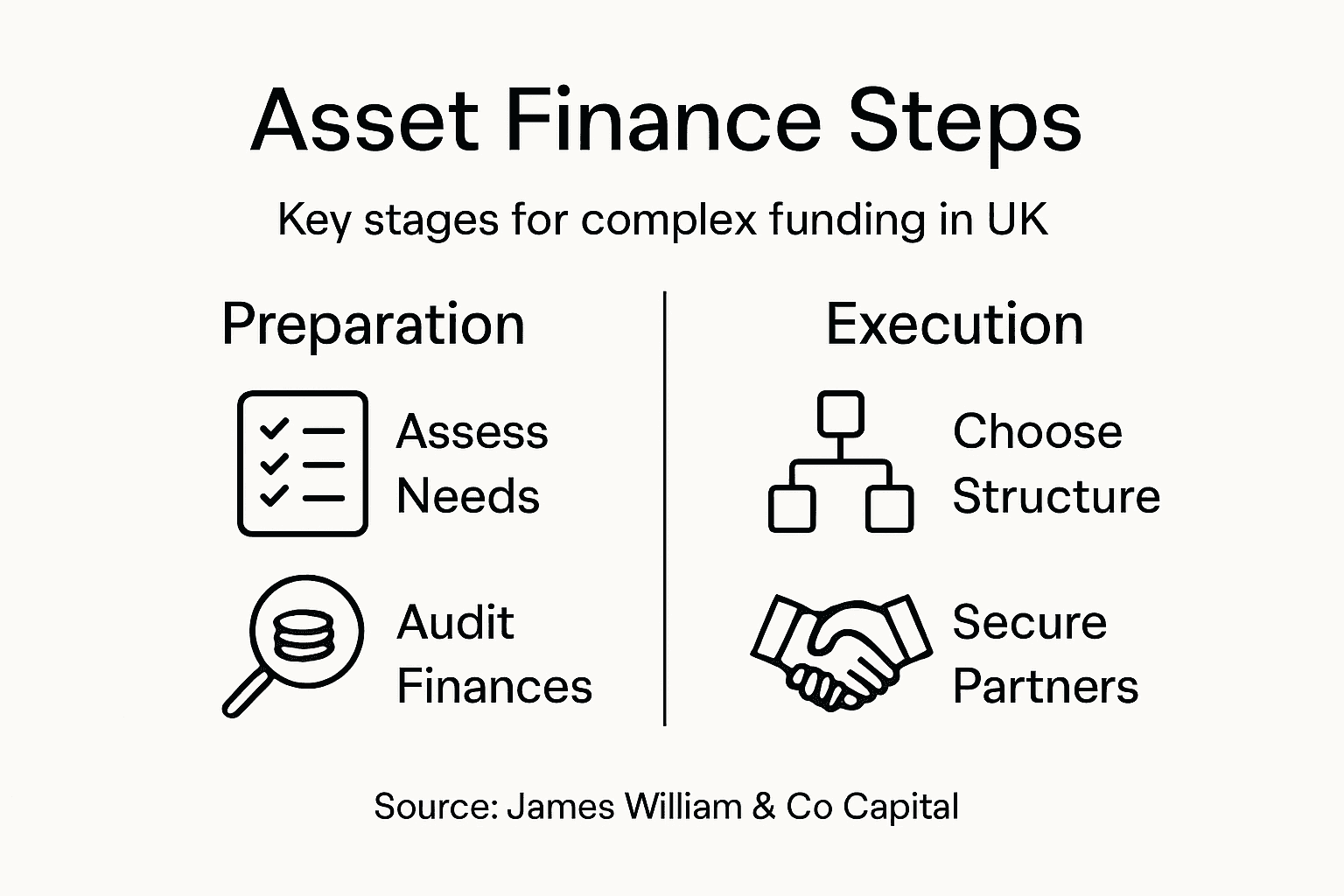
Successfully securing asset finance begins with a strategic and comprehensive assessment of your funding requirements. This crucial first step will determine the financial pathways available to your property development or investment project.
Start by conducting a detailed financial audit that maps out your entire project scope, potential capital needs, and anticipated cash flow requirements. You want a granular understanding of exactly how much funding you need, when you need it, and what specific assets or development stages will require financial support. This means meticulously documenting projected expenses, including land acquisition costs, construction expenses, professional fees, potential contingency buffers, and expected returns.
The UK government emphasises the importance of comprehensively evaluating finance needs by identifying potential barriers and understanding suitable finance providers. Break down your requirements into distinct categories: working capital, asset acquisition, development financing, and potential refinancing strategies. Consider factors like project duration, risk profile, and your organisation’s financial health when determining the most appropriate funding mix.
Map out multiple funding scenarios to provide flexibility. This might include exploring traditional bank lending, specialist property finance routes, private equity investments, mezzanine debt structures, or hybrid funding approaches. Each option carries different terms, costs, and strategic implications for your project.
Top Tip: Engage a specialist capital advisory team early to help you forensically analyse your funding requirements and design a bespoke financial strategy tailored to your specific project parameters.
Step 2: Identify optimal asset finance structures
Successfully structuring asset finance requires a nuanced approach that matches your specific project requirements with the most suitable financial instrument. This step is about strategic alignment between your development goals and the most appropriate funding mechanism.
Begin by understanding the core asset finance structures available in the United Kingdom. These typically include hire purchase, finance leasing, equipment loans, and specialised property development financing. Each structure carries distinct characteristics regarding ownership, tax implications, and financial flexibility. Your goal is to select a structure that minimises cost while maximising strategic advantages for your specific asset acquisition or development project.
Analyse your project through multiple lenses: cash flow projections, asset lifecycle, tax efficiency, and long term financial strategy. Consider how different financing structures impact your balance sheet, operational flexibility, and potential future refinancing options. For instance, hire purchase might suit assets with predictable depreciation, while leasing could provide greater liquidity for rapidly evolving development projects.
Carefully evaluate the risk profile and financial covenants associated with each potential structure. Some financing routes will require personal guarantees, while others might offer more flexible security arrangements. Pay close attention to interest rates, repayment schedules, and potential early settlement conditions that could impact your overall financial performance.
Here is a quick comparison of key asset finance structures for property projects:
| Structure Type | Ownership Model | Tax Treatment | Ideal Use Case |
|---|---|---|---|
| Hire Purchase | Ownership at end of term | Potential capital allowances | Predictable-asset acquisition |
| Finance Lease | Lender retains ownership | Lease payments deductible | Rapidly changing or short-term assets |
| Equipment Loan | Immediate ownership | Interest deductible | Asset-heavy development |
| Property Development Finance | Security over property | Interest may be rolled up | Large-scale construction projects |
Top Tip: Engage a specialist capital advisory team to conduct a forensic analysis of your specific funding requirements, ensuring you select the most optimal asset finance structure tailored precisely to your project parameters.
Step 3: Engage the right funding partners
Successfully securing complex asset finance requires strategic engagement with funding partners who understand your specific project landscape. This step focuses on identifying and cultivating relationships with financial stakeholders who can provide tailored capital solutions for your development objectives.
Begin by researching potential funding partners through a strategic lens. Look beyond traditional banking institutions and explore innovative green finance strategies that align with your project’s specific requirements. Consider a diverse ecosystem of potential partners including specialist property finance houses, family offices, private credit funds, institutional investors, and government backed financing programmes. Each potential partner brings unique strengths and investment perspectives that could significantly impact your funding approach.
Carefully evaluate each potential partner by examining their track record in similar project types, their appetite for your specific asset class, and their alignment with your financial structuring requirements. Conduct thorough due diligence by reviewing their previous investments, understanding their risk assessment methodologies, and determining their capacity to provide flexible funding solutions. Pay particular attention to their expertise in complex property development financing, their speed of execution, and their willingness to develop bespoke funding packages.
Prepare a comprehensive investment proposition that clearly articulates your project’s strategic value, financial projections, risk mitigation strategies, and potential returns. This should be a professional document that demonstrates your technical expertise, market understanding, and professional credibility. Be prepared to engage in detailed discussions, provide extensive financial documentation, and showcase your track record of successful project delivery.
Top Tip: Build relationships with potential funding partners well before you require capital by attending industry conferences, participating in property development networks, and proactively sharing your professional insights and project vision.
Step 4: Prepare robust documentation packages
Building a comprehensive documentation package is critical for securing complex asset finance in the United Kingdom. Your goal is to create a meticulously structured collection of documents that demonstrates your project’s credibility, financial integrity, and investment potential.

Begin by understanding the comprehensive standards framework required for asset finance documentation. Your package should include detailed financial statements, project feasibility reports, comprehensive business plans, asset valuations, legal entity documentation, and thorough risk assessments. Each document must be professionally prepared, accurately reflecting your project’s strategic vision and financial robustness.
Ensure your documentation addresses regulatory compliance comprehensively. This means preparing materials that not only showcase your project’s potential but also demonstrate adherence to Financial Conduct Authority guidelines. Include precise income projections, detailed asset descriptions, ownership verification documents, and transparent financial history. Pay particular attention to providing clear evidence of your project’s economic viability, including market research, competitive analysis, and potential return on investment metrics.
Organise your documentation with strategic precision. Create a logical, easily navigable structure that allows potential funding partners to quickly understand your project’s core fundamentals. Use high quality professional formatting, include executive summaries for each key document, and ensure all financial projections are supported by rigorous underlying analysis. Your documentation should tell a compelling narrative about your project potential while providing granular technical details that demonstrate your professional expertise.
The following table summarises essential documentation items needed for robust asset finance applications:
| Document Type | Key Purpose | Relevance for Lenders |
|---|---|---|
| Financial Statements | Demonstrate financial health | Authenticate business viability |
| Project Feasibility Report | Assess project potential | Justify funding decision |
| Legal Entity Documents | Verify project ownership status | Ensure legal compliance |
| Asset Valuations | Evidence asset worth | Secure collateral requirements |
| Business Plan | Outline project vision and strategy | Evaluate project sustainability |
Top Tip: Engage a specialist commercial finance consultant to review your documentation package before submission to identify any potential weaknesses or areas requiring additional clarification.
Step 5: Verify deal execution and compliance
The final stage of your asset finance journey involves meticulous verification of deal execution and comprehensive compliance assessment. Your objective is to ensure every aspect of the financial agreement meets regulatory standards and aligns precisely with your strategic objectives.
Begin by conducting thorough financial due diligence that goes beyond surface level documentation. This means forensically examining every contractual clause, financial projection, and compliance requirement. Review all documentation for accuracy, cross reference financial statements, validate asset valuations, and ensure complete alignment between your original project proposal and the final funding agreement. Pay particular attention to regulatory requirements, tax implications, and any potential hidden compliance risks that could impact your project’s long term financial performance.
Establish a structured verification process that includes multiple layers of independent review. Engage external legal counsel specialising in asset finance to conduct an independent audit of the transaction documents. Verify that all financial covenants are clearly defined, understand the precise conditions of funding release, and confirm that the funding structure matches your original strategic requirements. This might involve multiple rounds of document review, clarification discussions with potential funding partners, and potentially renegotiating specific terms to ensure absolute clarity and alignment.
Implement a robust ongoing compliance monitoring framework that allows you to track the financial agreement’s performance against original projections. This means establishing clear reporting mechanisms, creating milestone tracking systems, and building in regular review points to ensure continued alignment with your project’s financial and strategic objectives. Your verification process should be dynamic and adaptable, capable of identifying and addressing potential compliance issues before they become significant problems.
Top Tip: Create a dedicated compliance tracking spreadsheet that maps every key contractual requirement, enabling you to monitor and evidence ongoing adherence throughout the entire project lifecycle.
Unlock Tailored Asset Finance Solutions with James William & Co Capital
If you found yourself challenged by assessing funding requirements or selecting optimal asset finance structures in complex UK property projects this guide will resonate with you. Many developers and investors struggle to navigate multi-layered debt stacks and bespoke covenant packages while maintaining compliance and speed. The concepts of bridging finance, mezzanine debt, and joint venture equity can feel overwhelming yet vital for securing fast, flexible capital.
At James William & Co Capital we specialise in precisely these intricate funding solutions for large-scale developments and sophisticated acquisitions across the United Kingdom. Our “capital concierge” approach means you gain a dedicated partner who structures, negotiates, and executes customised finance packages rapidly under pressure. Whether you need asset finance advisory or commercial mortgages tailored for high-net-worth clients our network of family offices and specialist lenders delivers the expertise you need.
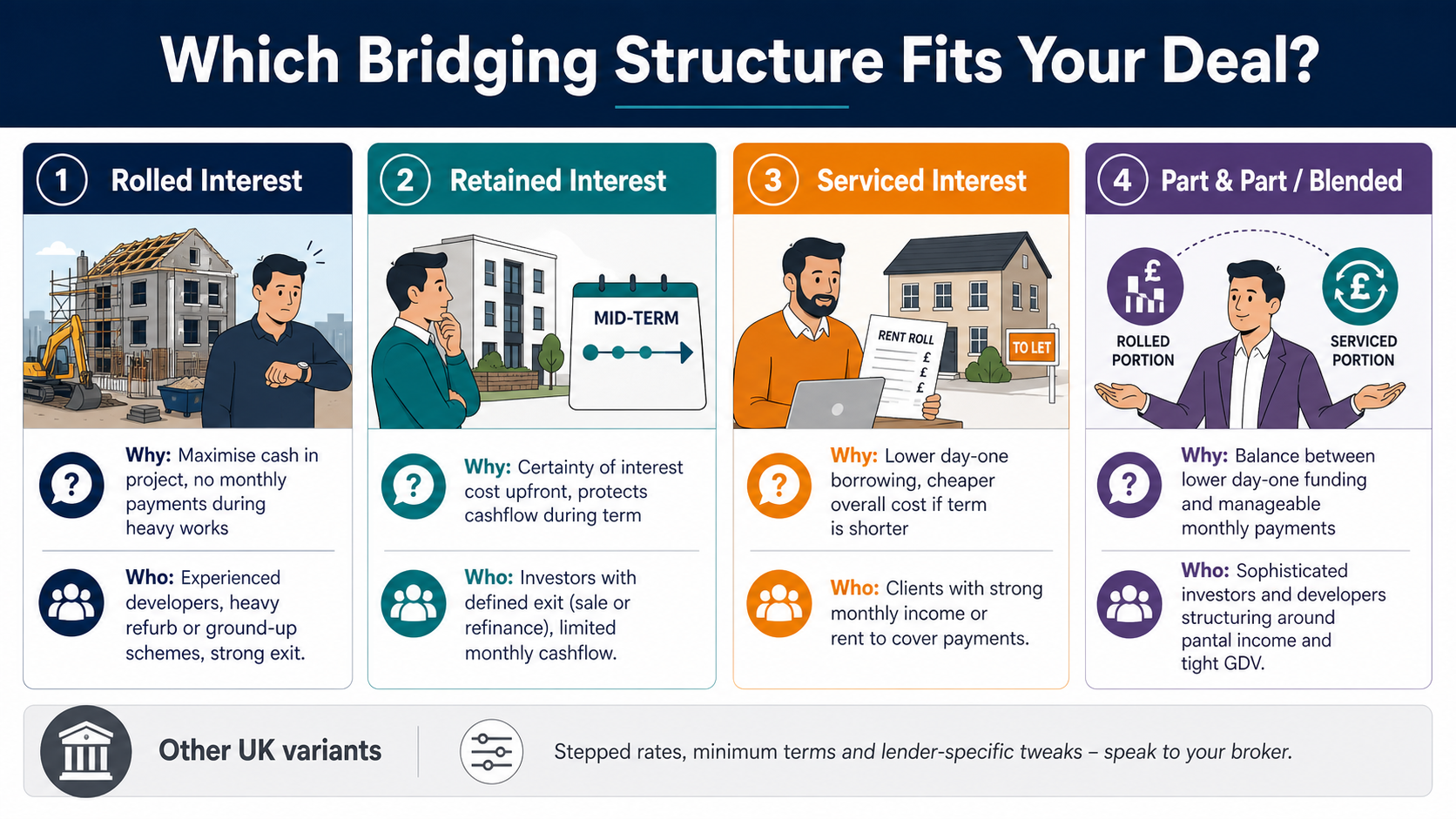
Discover how to turn your project ambitions into secured funding without unnecessary delays. Visit James William & Co Capital today to explore expert guidance on bridging and development finance and tap into bespoke solutions that perfectly align with your project goals. Do not let complex documentation or compliance concerns hold you back from rapid execution connect with us now for your competitive advantage.
Frequently Asked Questions
What are the first steps to assess my funding requirements for asset finance?
Start by conducting a detailed financial audit of your project, mapping out all potential capital needs and anticipated cash flow requirements. Document projected expenses, including land acquisition and construction costs, to gain clarity on how much funding you need and when.
How can I identify the most suitable asset finance structures for my project?
Begin by researching the various asset finance structures available, such as hire purchase, finance leasing, and specialised property development financing. Analyse each structure’s characteristics in terms of ownership, tax implications, and cash flow to determine which one best aligns with your specific project needs.
What should I look for when engaging potential funding partners?
Evaluate funding partners based on their track record with similar projects, their appetite for your asset class, and their ability to offer flexible funding solutions. Prepare a compelling investment proposition that outlines your project’s strategic value and financial projections to attract the right partners.
What essential documents do I need to include in my asset finance documentation package?
Your documentation package should include thorough financial statements, project feasibility reports, legal entity documentation, asset valuations, and a detailed business plan. Ensure each document is well-prepared and clearly articulates your project’s credibility and financial integrity.
How can I ensure compliance and deal execution throughout the financing process?
Conduct thorough financial due diligence to review all documentation for accuracy and alignment with your project proposal. Implement an ongoing compliance monitoring framework that tracks performance and adheres to your financial agreement’s requirements throughout the project lifecycle.
Recommended
- James William & Co Capital | Specialist Property Finance
- James William & Co Capital | Specialist Property Finance
- James William & Co Capital | Specialist Property Finance
- James William & Co Capital | Specialist Property Finance
- Financing Options for Investors: Building Wealth in Real Estate | Bold Street AI
Related Topics
Speak to a specialist
Discuss your finance with James directly
Whole-of-market specialist finance — bridging, development, commercial and residential. No call centres, no obligation. James reviews every enquiry personally.
New to specialist finance? How unbiased broker advice works · Deals we have completed
Explore Related Finance