
Published · Updated
asset finance process for real estateMaster Asset Finance Process for Real Estate Transactions
By James Dawes, CeMAP, Founder, James William & Co Capital

Securing tailored asset finance for large-scale British real estate projects demands more than traditional bank loans. With over 58 percent of property deals in the United Kingdom now involving layered funding structures, high-net-worth developers and institutional investors face mounting complexity in aligning capital with unique project needs. This guide offers a clear, practical approach to dissecting funding requirements, structuring optimal solutions, and negotiating terms that protect your British investment interests.
Table of Contents
- Step 1: Assess Transaction Requirements And Funding Needs
- Step 2: Structure Optimal Asset Finance Solution
- Step 3: Engage Suitable Lenders And Negotiate Terms
- Step 4: Verify Funding Offer And Legal Documentation
- Step 5: Complete Due Diligence And Close Transaction
Quick Summary
| Key Insight | Explanation |
|---|---|
| 1. Assess funding requirements | Conduct a detailed financial analysis to quantify all capital needs, including acquisition and operational costs, ensuring project feasibility. |
| 2. Create flexible finance structures | Develop a resilient financial model incorporating multiple funding sources to adapt to market volatility and ensure cash flow alignment. |
| 3. Prepare a robust lender package | Compile comprehensive financial projections and market analysis to effectively communicate project viability to potential lenders. |
| 4. Review legal documentation thoroughly | Meticulously verify funding agreements and legal commitments to safeguard your investment and ensure compliance with project objectives. |
| 5. Execute thorough due diligence | Conduct exhaustive checks on property and financial documentation to mitigate risks and assure a seamless transaction process. |
Step 1: Assess transaction requirements and funding needs
Successfully managing real estate transactions starts with a comprehensive assessment of your project’s financial landscape. This critical first step involves thoroughly examining your specific transaction requirements and mapping out precise funding needs to ensure smooth project execution.
Begin by conducting a detailed financial impact analysis across multiple dimensions. Start by quantifying the total capital required, including acquisition costs, development expenses, potential renovation budgets, and contingency reserves. Break down your funding requirements into distinct categories: initial investment, ongoing operational costs, potential refinancing needs, and strategic reserve funds. Consider both traditional financing routes and alternative funding mechanisms such as mezzanine debt, private equity partnerships, or specialist property development finance.
Carefully evaluate your risk profile by examining factors like market volatility, project complexity, location-specific economic indicators, and your own financial capacity. Comprehensive finance assessments help you understand which funding structures align best with your specific transaction parameters. This might involve stress-testing potential scenarios, understanding lender criteria, and preparing robust financial documentation that demonstrates your project’s viability and potential return on investment.
Practical insight: Always maintain a 20-25% buffer in your funding calculations to accommodate unexpected market shifts or project complexities.
Here is a summary of common real estate funding sources and their key advantages:
| Funding Source | Key Benefit | Typical Use Case |
|---|---|---|
| Senior Debt | Lowest interest rates | Large-scale, stable projects |
| Mezzanine Capital | Flexible repayment terms | Bridging funding gaps |
| Private Equity | Access to active investment partners | High-growth or complex developments |
| Specialist Development | Tailored for niche sectors | Unusual or high-risk property projects |
| Bank Financing | Established approval processes | Traditional buy-to-let or refurbishment |
Step 2: Structure optimal asset finance solution
Creating an optimal asset finance solution requires strategic financial engineering tailored to your specific real estate project’s unique characteristics and investment objectives. This critical step transforms complex funding requirements into a coherent and financially robust structure that maximises your investment potential.
Begin by developing comprehensive real estate financial models that map out detailed funding scenarios. Your financial structure should incorporate multiple funding layers including senior debt, subordinated debt, and strategic equity contributions. Carefully analyse how each funding component interacts with your project timeline and anticipated cash flow projections. Consider blending traditional bank financing with alternative funding mechanisms such as mezzanine capital, private equity partnerships, or specialised property development finance instruments.

Evaluate your funding structure through multiple lenses by assessing project finance strategies that optimise risk management and financial efficiency. This involves stress testing your proposed financial model against various market scenarios, understanding potential volatility in funding costs, and ensuring your capital stack provides sufficient flexibility for potential market fluctuations. Your goal is to create a resilient financial architecture that can adapt to changing economic conditions while maintaining strong investor confidence and project viability.
Practical insight: Always build flexible funding structures with at least two alternative financing pathways to mitigate potential market disruptions.
Step 3: Engage suitable lenders and negotiate terms
Successfully navigating the lending landscape requires a strategic approach that matches your project’s unique financial requirements with the most appropriate funding partners. Your primary objective is to secure financing terms that align with your investment goals while maintaining maximum financial flexibility.
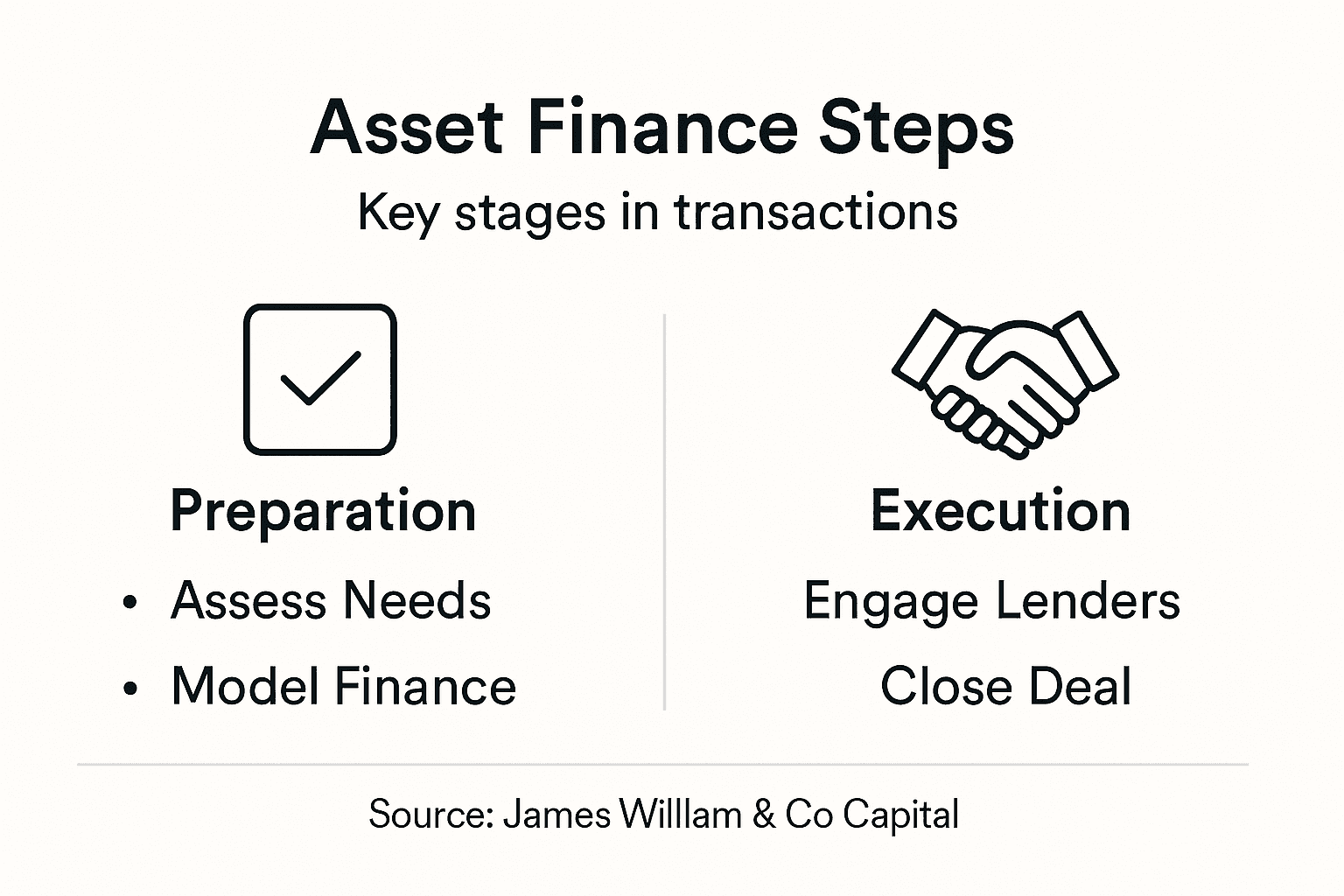
Start by understanding lending product offerings across multiple financing categories. Research potential lenders comprehensively, examining their specialisations in commercial real estate, development finance, and property investment sectors. Evaluate each lender’s appetite for your specific project type, considering factors such as loan size, asset class, geographical focus, and risk tolerance. Prepare a robust information package that demonstrates your project’s viability, including detailed financial projections, comprehensive market analysis, and a clear strategic business plan that highlights potential returns and risk mitigation strategies.
When entering negotiations, adopt a proactive and transparent approach. Communicating effectively with potential lenders involves presenting a compelling narrative about your project while remaining open to constructive feedback. Focus on key negotiation parameters including interest rates, loan duration, repayment structures, covenant requirements, and potential refinancing options. Be prepared to discuss alternative funding mechanisms and demonstrate your financial resilience by showcasing multiple revenue streams and comprehensive risk management strategies.
Practical insight: Develop comprehensive financial models that showcase at least three funding scenario variations to demonstrate your strategic adaptability to potential lenders.
Step 4: Verify funding offer and legal documentation
This critical stage transforms your financial negotiations into a concrete, legally binding agreement that protects your investment and clarifies all transactional expectations. Your goal is to meticulously review every aspect of the funding documentation to ensure complete alignment with your initial project objectives.
Begin by obtaining comprehensive proof of funds documentation that validates the lender’s financial commitment. This involves carefully examining bank statements, investment certificates, and official funding letters that confirm the precise amount and terms of your proposed financing. Cross reference these documents against your initial funding proposal to verify that all key parameters including loan amount, interest rates, repayment schedules, and any specific covenants remain consistent with your earlier negotiations.
Proceed with a thorough legal review by preparing detailed funding agreement documentation that comprehensively captures all transactional nuances. Engage a specialist property finance solicitor who can meticulously analyse each clause, identifying potential risks, ambiguities, or unfavourable terms that could impact your project’s financial flexibility. Pay special attention to provisions related to early repayment penalties, refinancing options, default conditions, and any performance linked covenants that might restrict your operational autonomy.
Practical insight: Allocate a minimum of five working days for comprehensive legal document review, ensuring no critical clauses are overlooked.
The table below outlines critical legal checks at the funding verification stage:
| Legal Check | Why It Matters | Typical Document Involved |
|---|---|---|
| Proof of Funds Verification | Confirms genuine capital availability | Bank statement, funding letter |
| Loan Agreement Scrutiny | Identifies hidden obligations or risks | Formal loan contract |
| Title Review | Ensures property ownership is accurate | Land registry documents |
| Covenant Condition Analysis | Assesses impact on project flexibility | Agreement schedules and covenants |
Step 5: Complete due diligence and close transaction
The final stage of your asset finance journey demands meticulous attention to detail to transform your carefully planned investment into a legally secured, fully executed transaction. Your objective is to conduct a comprehensive verification process that mitigates risks and ensures a seamless ownership transfer.
Begin by executing a comprehensive commercial real estate closing process that systematically addresses every potential transactional complexity. This involves coordinating multiple professional assessments including property condition surveys, title searches, environmental risk evaluations, and comprehensive financial audits. Engage specialist solicitors and independent surveyors to scrutinise each aspect of the property documentation, verifying legal ownership, checking for any existing encumbrances, and confirming that all regulatory compliance requirements are comprehensively satisfied.
Proceed with rigorous due diligence investigations that extend beyond surface level documentation review. This means conducting in depth analyses of historical property performance, investigating potential planning constraints, examining lease structures if applicable, and validating all financial projections. Your goal is to create an unassailable documentation trail that protects your investment interests and provides complete transparency regarding the asset’s historical and potential future performance.
Practical insight: Allocate a dedicated independent third party to cross verify all transaction documentation to eliminate potential confirmation bias.
Simplify Complex Real Estate Funding with Expert Support
Navigating the master asset finance process for real estate transactions can be challenging. From assessing detailed transaction requirements and crafting multi-layered funding structures to engaging the right lenders and finalising legal documentation each step demands precision and expert handling. Key concerns include securing flexible funding solutions, managing risk with robust financial models, and ensuring thorough due diligence to protect your investment.
At James William & Co Capital, we specialise in working alongside UK property developers, investors, and high-net-worth clients to deliver tailored capital advisory and debt structuring solutions. Whether you require bridging and development finance, mezzanine debt, commercial mortgages, or joint venture equity, our bespoke “capital concierge” approach provides you with a single point of contact guiding you through every stage from negotiation to execution. Our expertise in structuring complex multi-layered debt stacks and bespoke covenant packages ensures you can confidently complete transactions on time and under pressure.
Explore our comprehensive solutions designed for sophisticated real estate projects and start transforming your asset finance strategy today.
Discover how we can support your next transaction

Take control of your real estate funding journey with tailored advice and rapid execution. Contact James William & Co Capital now to align your project with the right financial partners and secure optimal financing swiftly.
Frequently Asked Questions
What is the first step in the asset finance process for real estate transactions?
Successfully managing real estate transactions begins with assessing your transaction requirements and funding needs. Conduct a detailed financial impact analysis to quantify total capital required, including acquisition costs and contingencies, within the first two weeks of your project initiation.
How do I structure an optimal asset finance solution?
To structure an optimal asset finance solution, develop comprehensive financial models that incorporate multiple funding layers. Begin by analysing how each funding component will impact your project timeline and cash flow projections, aiming to complete this analysis within 30 days.
What should I consider when engaging potential lenders for financing?
When engaging potential lenders, research their specialisations and evaluate their appetite for your project type. Prepare a robust information package that details your project’s viability and financial projections to facilitate well-informed negotiations within a week.
How can I verify a funding offer and the associated legal documents?
To verify a funding offer, carefully examine proof of funds documentation and cross-reference it with your initial funding proposal. Allocate at least five working days for a thorough legal review to ensure all key parameters remain consistent and any potential risks are addressed.
What does the due diligence process entail before closing a real estate transaction?
The due diligence process involves conducting comprehensive assessments including property condition surveys, title searches, and financial audits. Coordinate these evaluations and confirm all regulatory compliance within a dedicated timeframe of 30 days before the transaction closes.
How do I handle unexpected challenges during the asset finance process?
To manage unexpected challenges, always maintain a financial buffer of 20-25% in your funding calculations. This flexibility will help mitigate potential market shifts or complexities that may arise during the project execution.
Recommended
Related Topics
Speak to a specialist
Discuss your finance with James directly
Whole-of-market specialist finance — bridging, development, commercial and residential. No call centres, no obligation. James reviews every enquiry personally.
New to specialist finance? How unbiased broker advice works · Deals we have completed
Explore Related Finance