
Published · Updated
capital concierge workflowCapital concierge workflow: a guide for investors
By James Dawes, CeMAP, Founder, James William & Co Capital

TL;DR:
- Complex property deals often fail due to disjointed processes rather than price issues, emphasizing the need for organized workflows. Implementing a connected, role-defined system with exception handling and human oversight improves speed, accuracy, and client experience in high-value transactions. Continuous KPI monitoring and iterative improvements ensure scalable, compliant, and efficient capital concierge operations.
Complex property deals rarely fail on price. They fail on process. When a developer is juggling bridging finance, mezzanine debt, and a commercial mortgage across multiple lenders, a disjointed capital concierge workflow can cost weeks of timeline and, in competitive markets, the deal itself. The firms closing transactions at speed are not necessarily the best capitalised. They are the best organised. This guide breaks down how to design, implement, and refine a capital concierge workflow built specifically for structured property financing and high-value transaction management.
Table of Contents
- Key takeaways
- Prerequisites for an effective capital concierge workflow
- Designing and implementing an optimised workflow
- Workflow optimisation tools and continuous improvement
- Troubleshooting common workflow issues
- Expected outcomes from an optimised workflow
- My perspective on where most workflows actually fail
- How James William & Co can support your workflow
- FAQ
Key takeaways
| Point | Details |
|---|---|
| Build before you automate | Map your existing process and define roles before introducing any workflow automation tools. |
| Design for exceptions, not just the ideal path | Exception handling is what separates a resilient workflow from one that breaks under pressure. |
| Human oversight is non-negotiable | Automated communications and approvals must have a human review layer to maintain audit trails and compliance. |
| Monitor with metrics, not instinct | Set KPIs for turnaround time, error rates, and client response to measure and improve concierge operations strategy. |
| Single point of contact drives results | A consolidated capital management solution reduces duplication, miscommunication, and deal friction across lender networks. |
Prerequisites for an effective capital concierge workflow
Before you build a workflow, you need to be honest about what you are starting with. Most property finance operations are running on a patchwork of spreadsheets, email threads, and legacy software that do not speak to each other. That patchwork is your baseline problem.
The technology stack does not need to be cutting-edge. It needs to be connected. At minimum, you need a centralised deal tracking platform, a document management system with version control, and a communication layer that logs every client and lender interaction. AI-powered platforms work most effectively when deployed as an overlay on existing systems rather than a full replacement, automating data entry and communication without forcing teams through disruptive migrations.
Here is what the core infrastructure table looks like for a structured capital workflow:
| Component | Tool type | Primary function |
|---|---|---|
| Deal tracking | CRM or project management platform | Centralise deal stages and milestones |
| Document control | Cloud-based DMS | Manage term sheets, valuations, and credit packs |
| Communication logging | Integrated email and messaging | Maintain auditable contact records |
| Approval management | Workflow automation software | Route decisions to the correct stakeholder |
| Reporting and analytics | Dashboard or BI tool | Track KPIs and flag delays |
Team roles matter as much as tools. Assign a named workflow owner for each transaction. Define who has sign-off authority at each stage, who liaises with lenders, and who is responsible for client updates. Without clear accountability, even the best software becomes a shared inbox nobody owns.
Pro Tip: Before selecting any workflow optimisation tools, run a single deal through your current process and time every handoff. The bottlenecks will show themselves within 48 hours.
Designing and implementing an optimised workflow
With your infrastructure in place, you can build the workflow itself. The goal is a repeatable, documented process that any team member can follow and that scales without degrading the quality of concierge service management.
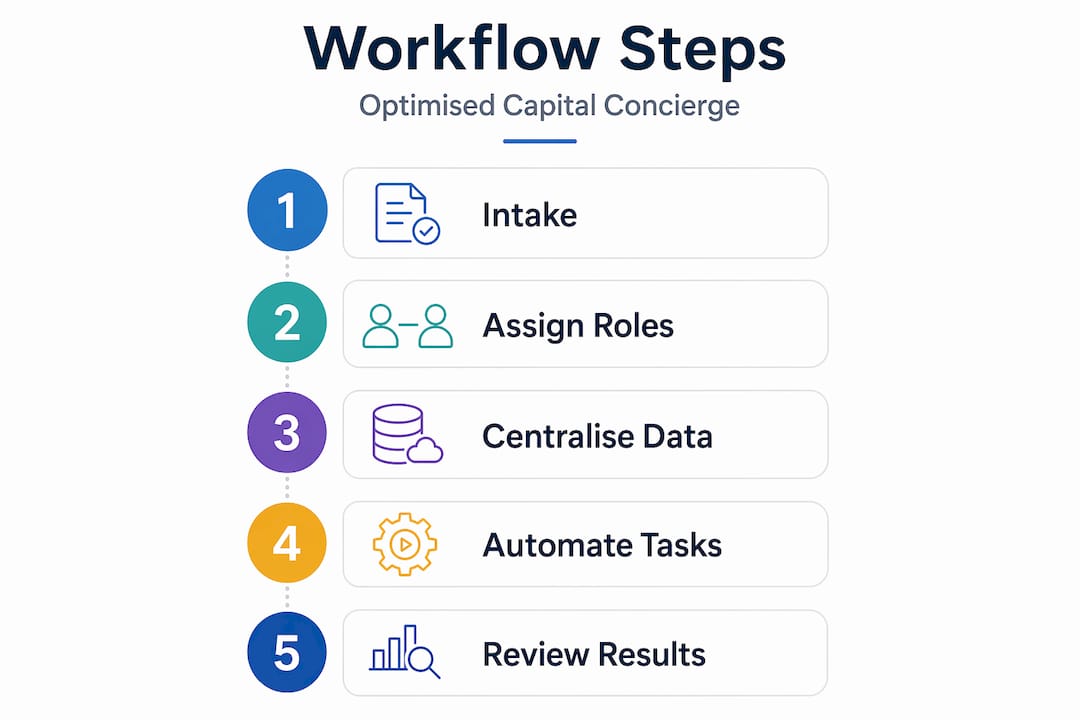
Here are the key phases:
-
Transaction intake and qualification. Define a standard intake form covering loan type, security, borrower structure, and target close date. Every deal enters the same gateway. This prevents custom processes for every client and ensures nothing is missed during initial assessment.
-
Lender matching and initial approach. Map each deal to a lender shortlist based on pre-defined criteria such as loan-to-value, asset class, and deal size. Document the approach and response for every lender contact. Automate follow-up reminders so no lender communication goes cold.
-
Term sheet management. Centralise all term sheets in your document management system with automatic versioning. Set up a comparative view so clients see options side by side. Approval to proceed should route through a defined sign-off path, not an email chain.
-
Due diligence and credit pack assembly. Create a master checklist specific to each loan type, covering valuations, planning permissions, borrower accounts, and legal structure documents. Use your workflow platform to assign and track each item. Flag overdue items automatically rather than chasing manually.
-
Legal and drawdown coordination. Define the handoff points between your team, the borrower’s solicitors, and the lender’s legal panel. Set conditional alerts: drawdown cannot proceed until all conditions are cleared on the checklist. This single discipline eliminates the most common cause of last-minute delays.
-
Post-completion review and relationship management. Log the outcome, timelines, and any deviations from the planned process. Feed that data back into the next iteration of your workflow. Proactive client communication post-completion is what separates a transactional service from a genuine concierge relationship.
AI agents embedded in modern work management platforms can now plan and coordinate tasks autonomously within existing governance frameworks. That means automation does not have to mean losing control. It means the routine work happens without manual input while your team focuses on the judgment calls that matter.
Pro Tip: Always design your workflow for the exception, not just the ideal path. A deal with a complex offshore borrowing vehicle or a non-standard covenant package will break a workflow built only for straightforward transactions. Map your three most complicated recent deals and build those exception routes in from day one.

Workflow optimisation tools and continuous improvement
Selecting the right workflow optimisation tools is less about features and more about fit. A tool your team will not use is worse than a spreadsheet they will.
The most practical comparison is between manual and automated monitoring:
| Monitoring type | Speed | Accuracy | Scalability | Cost |
|---|---|---|---|---|
| Manual review | Slow | Variable | Poor | High (time) |
| Automated dashboards | Real-time | Consistent | High | Low (ongoing) |
| AI-assisted anomaly detection | Instant | Very high | Very high | Medium (setup) |
For most property finance operations handling between 10 and 50 live transactions, a mid-tier workflow platform with automated dashboards will deliver the most immediate return. Full AI-assisted anomaly detection becomes worthwhile when deal volume justifies the setup investment, typically above 50 concurrent transactions.
The KPIs worth tracking are straightforward:
- Average time from instruction to term sheet: Measures lender engagement efficiency
- Document completion rate at intake: Identifies whether clients are being properly briefed upfront
- Number of manual overrides per workflow stage: Flags where your process design is failing
- Client response times: Monitors service quality against your concierge standards
- Deal fall-through rate by stage: Pinpoints where transactions are most vulnerable
Set a quarterly review cadence. Pull the data, identify the two or three stages with the worst performance, and redesign those specific steps. Financial concierge services that have automated approval workflows have demonstrated the ability to scale client management to a wider base without proportionally increasing headcount, which is the clearest proof that optimisation compounds over time.
Troubleshooting common workflow issues
The most persistent problem in capital concierge workflows is not technology failure. It is data siloing. When the deal information your credit analyst holds does not automatically flow to the client-facing account manager, you get contradictory updates and eroded client trust.
The practical fixes are unglamorous but effective:
- Enforce a single deal record. All notes, documents, and communications must live in one place. If a team member updates information via email, it should be logged to the deal record within the same session, not at end of day.
- Build escalation triggers. Any deal stalled for more than 48 hours without a logged activity should auto-escalate to the workflow owner. Do not rely on people noticing delays.
- Create a manual override log. Every time someone bypasses the workflow, it should be recorded with a reason code. Over a quarter, this log will tell you exactly which parts of your process design do not reflect reality.
- Maintain compliance-ready documentation. Human-in-the-loop governance for high-stakes transactions is not optional. Every automated communication or approval should have a human review point attached to maintain audit trails.
Change management is consistently underestimated. A workflow that the senior deal team ignores because it feels bureaucratic will never reach its potential. Involve your highest-volume deal-makers in the design process. Their buy-in converts the workflow from a compliance exercise into a competitive advantage.
Pro Tip: When rolling out a new workflow to an existing team, run it in parallel with the old process for two to four weeks on live transactions. You will catch design gaps without putting active deals at risk, and your team will trust the new system before they rely on it.
Expected outcomes from an optimised workflow
When the design, tooling, and governance elements come together, the results are measurable and they compound. Here is what a well-executed capital concierge workflow delivers in practice:
- Faster deal closure. Removing manual handoffs and automating document chasing routinely reduces average transaction timelines by 20 to 35 per cent on complex structured deals.
- Fewer errors at critical stages. Standardised intake and checklist-driven due diligence eliminate the most common sources of lender rejection at credit submission.
- Scalable concierge operations. AI-powered concierge layers allow firms to manage significantly higher deal volumes without proportional increases in staffing, because routine task management is automated.
- Improved client experience. When clients receive proactive updates at each workflow milestone rather than waiting to chase progress, satisfaction scores improve and referral rates increase.
- Audit-ready records. Every decision, communication, and approval is logged, which protects the firm during regulatory reviews and strengthens lender relationships built on transparency.
Consider a scenario where a property developer is managing a ground-up development finance arrangement alongside a mezzanine finance tranche and a separate asset refinance. Without a structured workflow, each of those three threads runs through different people, different email chains, and different documents. With an integrated capital workflow, all three are visible on one deal board, with dependencies mapped, alerts set, and a single account manager holding the overall client relationship.
My perspective on where most workflows actually fail
I have worked on enough complex, multi-lender transactions to know that the gap between a good workflow and an effective one is almost never technical. The systems exist. The integrations are available. What derails most capital concierge operations is the assumption that once you have built the process, the work is done.
In my experience, the real test of a workflow is what happens on the fifteenth transaction, not the first. By that point, the team has found the shortcuts. The exception routes that nobody designed properly are getting handled with workarounds that live in someone’s inbox. The manual override log has not been reviewed in six weeks.
What I have found actually works is treating the workflow as a live document with a named owner who has genuine authority to change it. Not a committee. One person who reviews the performance data monthly and can mandate process changes without a three-week approval cycle.
I am also sceptical of the instinct to automate everything as quickly as possible. Anticipating client needs proactively is the defining characteristic of genuine concierge service, and that quality is relational, not algorithmic. Automation should handle the administrative burden so your team has more time for the human judgement that actually builds client relationships and wins repeat business.
The firms I have seen execute this well share one trait: they are comfortable with the process being imperfect at launch and committed to improving it continuously. That mindset beats a perfect theoretical workflow that nobody follows.
— James
How James William & Co can support your workflow
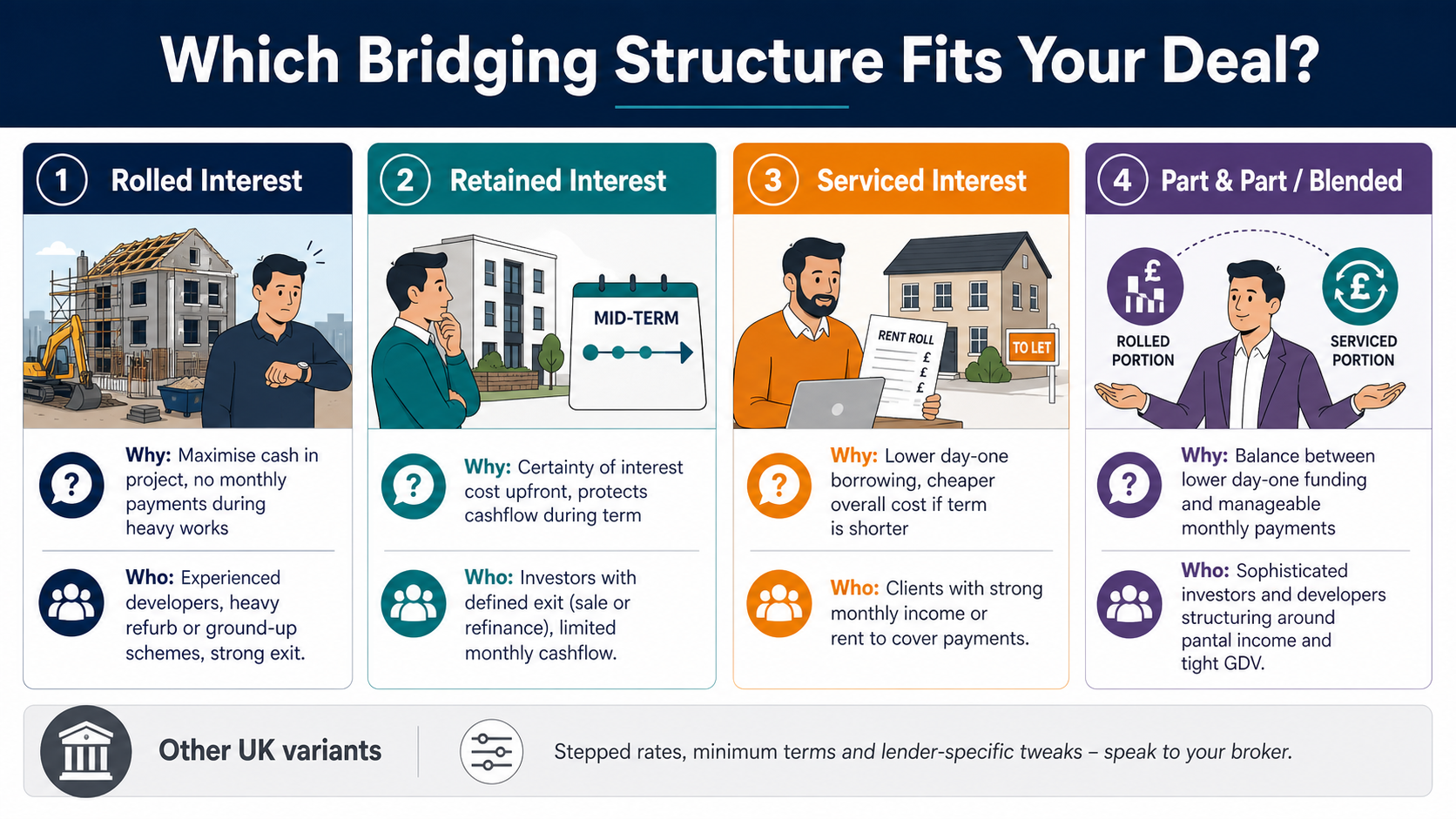
If you are a property developer, investor, or asset manager looking to bring genuine structure to how you manage complex finance transactions, James William & Co operates precisely this kind of capital concierge approach for every client engagement. The firm acts as a single point of contact across development finance, bridging, commercial mortgages, mezzanine debt, and JV equity, managing the full structuring and lender negotiation process so nothing falls between the cracks.
Whether you are arranging a ground-up development stack or refinancing a portfolio of commercial assets, the team brings the workflow discipline, lender relationships, and deal-execution speed that high-value transactions demand. Explore what a structured approach looks like in practice through real client outcomes, or speak directly with the team at James William & Co Capital to discuss your current transaction.
FAQ
What is a capital concierge workflow?
A capital concierge workflow is a structured, repeatable process for managing complex property finance transactions from initial instruction through to drawdown, delivered through a single point of contact. It combines deal tracking, document management, lender coordination, and client communication into one governed system.
How do you improve a capital concierge workflow?
Start by mapping your current process and timing every handoff to identify delays. Then introduce standardised intake, automated document chasing, and defined sign-off authorities before adding any further technology. Continuous improvement comes from reviewing KPIs quarterly and redesigning the stages with the worst performance data.
What tools are best for capital workflow automation?
The most effective capital workflow automation tools are those that integrate with your existing systems rather than replacing them. A centralised CRM, a cloud-based document management system, and a workflow platform with automated alerts and approval routing cover the core requirements for most property finance operations.
How does human oversight fit into an automated workflow?
Human-in-the-loop governance means every automated action, whether a lender communication or a document approval, has a defined review point where a team member confirms accuracy before the workflow proceeds. This maintains compliance, audit readiness, and client trust.
What KPIs should I track for concierge operations strategy?
Track average time from instruction to term sheet, document completion rates at intake, number of manual overrides per workflow stage, and deal fall-through rates by stage. These four metrics will identify where your concierge operations strategy is losing time and where it is performing well.
Recommended
Related Topics
Speak to a specialist
Discuss your finance with James directly
Whole-of-market specialist finance — bridging, development, commercial and residential. No call centres, no obligation. James reviews every enquiry personally.
New to specialist finance? How unbiased broker advice works · Deals we have completed
Explore Related Finance