
Published · Updated
what is corporate property financeCorporate Property Finance in the UK: Key Solutions
By James Dawes, CeMAP, Founder, James William & Co Capital

Securing the right funding for corporate property transactions is rarely a straightforward task. For high-net-worth property developers and institutional investors in the United Kingdom, complex legal frameworks and strategic financial decisions make every acquisition and refinance a sophisticated process. This article provides clarity by breaking down corporate property finance, highlighting key misconceptions and offering insight into how specialist solutions help maximise portfolio performance while safeguarding against regulatory risk and financial pitfalls.
Table of Contents
- Defining Corporate Property Finance And Misconceptions
- Types Of Corporate Property Finance In The UK
- How Corporate Property Finance Is Structured
- Legal And Regulatory Framework For Property Funding
- Risks, Costs And Common Mistakes To Avoid
Key Takeaways
| Point | Details |
|---|---|
| Understanding Corporate Property Finance | It encompasses strategic financial activities to maximise property portfolio value through optimal capital deployment and risk management. |
| Types of Financing Solutions | Different financial instruments like Development Finance and Mezzanine Debt serve distinct strategic purposes tailored to corporate objectives. |
| Regulatory Compliance | A robust legal framework governs corporate property funding, necessitating thorough compliance to mitigate risks and ensure stability. |
| Risk Management Strategies | Investors should be wary of common mistakes such as overleveraging and inadequate due diligence, implementing comprehensive strategies to mitigate these risks. |
Defining corporate property finance and misconceptions
Corporate property finance represents a sophisticated financial strategy specifically tailored to managing property-related assets within corporate environments. Unlike traditional property investment approaches, this specialised domain integrates complex legal, financial, and strategic considerations that extend far beyond simple real estate transactions.
At its core, corporate property finance encompasses strategic financial activities that enable corporations to optimise their property portfolio’s value and performance. These activities include:
- Raising capital for property acquisitions
- Structuring complex financing arrangements
- Managing property-related investment risks
- Developing strategic property investment frameworks
- Evaluating potential property assets for corporate growth
The multifaceted nature of corporate property finance frequently leads to significant misconceptions among property developers and institutional investors. Many professionals mistakenly view this discipline as a straightforward transactional process, when in reality, it involves intricate legal and financial integration across multiple regulatory domains.
Understanding these nuanced financial strategies requires deep comprehension of how property assets interact with broader corporate financial objectives. Professional investors must recognise that corporate property finance is not merely about purchasing real estate, but about creating strategic value through intelligent capital deployment, risk management, and long-term portfolio optimisation.
Pro tip: Always consult specialist financial advisors who understand the intricate legal and financial landscape of corporate property finance to develop a comprehensive investment strategy.
Types of corporate property finance in the UK
Corporate property finance in the United Kingdom encompasses a diverse range of sophisticated financial instruments designed to support property-related strategic objectives for businesses. These specialised financing solutions enable corporations to acquire, develop, and optimise their property portfolios through carefully structured financial mechanisms.
The primary types of corporate property finance in the UK include:
- Development Finance: Funding for ground-up property construction and major renovation projects
- Commercial Mortgages: Long-term property acquisition financing for business premises
- Bridging Finance: Short-term funding to facilitate rapid property transactions
- Asset-Based Lending: Finance secured against existing property portfolio value
- Mezzanine Debt: Hybrid financing that combines elements of debt and equity investment
Each financing type serves distinct strategic purposes within the corporate property investment landscape. Development finance, for instance, provides crucial capital for transformative projects, while commercial mortgages offer stable, long-term property ownership solutions for expanding businesses.
Institutional investors and corporate property developers must carefully evaluate these financing options based on their specific investment objectives, risk tolerance, and portfolio composition. The complexity of these financial instruments requires deep understanding of how different funding mechanisms interact with broader corporate financial strategies.
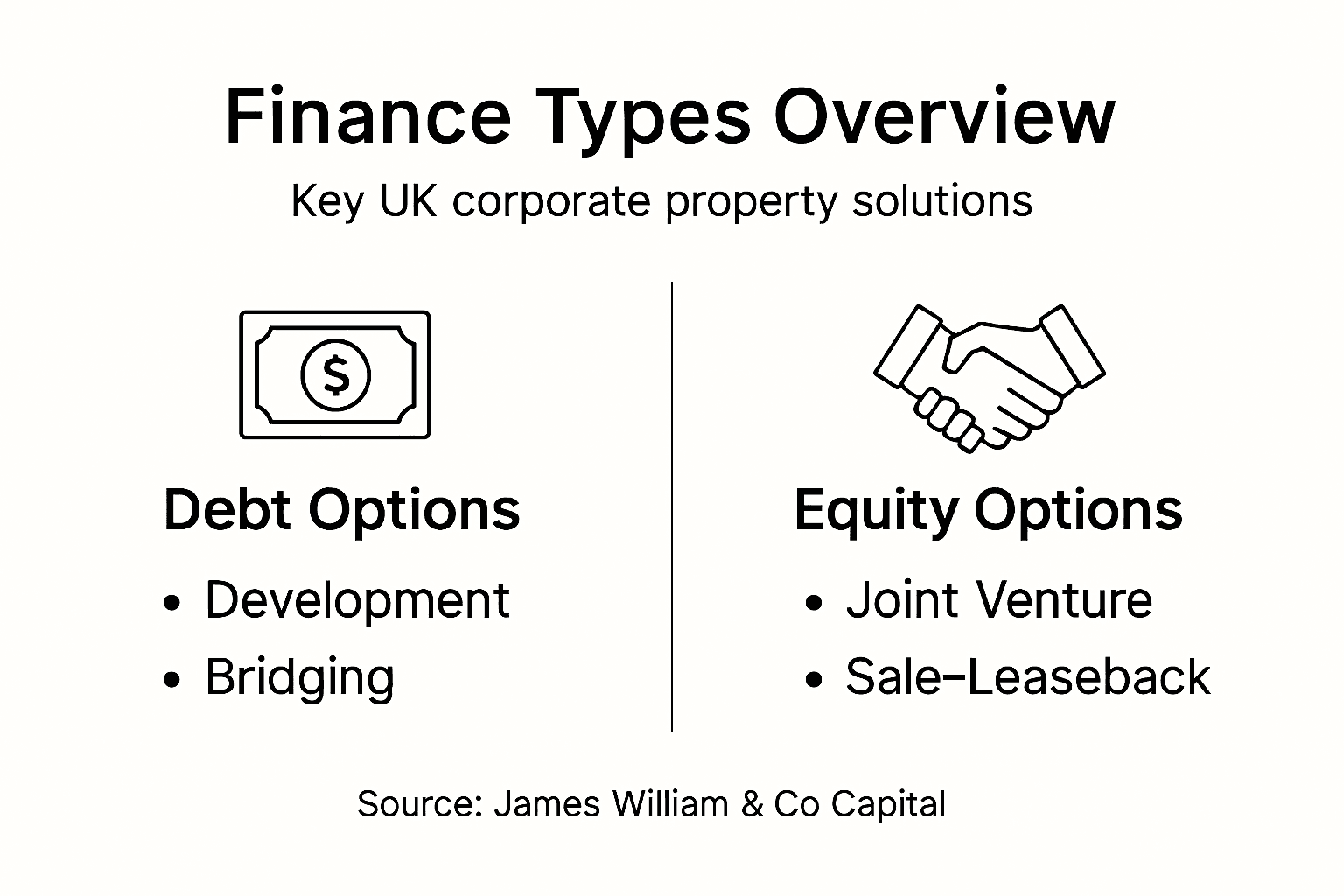
To clarify how various corporate property finance types align with different strategic business objectives, see the following comparison table:
| Finance Type | Typical Purpose | Business Impact | Common Users |
|---|---|---|---|
| Development Finance | New builds & renovations | Enables property expansion | Property developers |
| Commercial Mortgages | Acquisition of premises | Secures long-term asset ownership | Established corporations |
| Bridging Finance | Rapid transaction funding | Facilitates swift asset movement | Opportunistic investors |
| Asset-Based Lending | Leverage existing assets | Unlocks capital flexibility | Firms with large portfolios |
| Mezzanine Debt | Support growth projects | Enhances funding stack options | Investors seeking leverage |
Pro tip: Always conduct comprehensive due diligence and consult specialist financial advisors to match the most appropriate property finance solution with your specific corporate investment requirements.
How corporate property finance is structured
Corporate property finance represents a complex financial ecosystem where strategic decisions about capital allocation intersect with sophisticated investment mechanisms. The structure fundamentally revolves around balancing multiple financial instruments to optimise property-related investment potential while managing inherent risks and maximising potential returns.
The core structural components of corporate property finance typically include:
- Debt Financing: External capital sourced through bank loans, bonds, and credit facilities
- Equity Financing: Shareholder investments and internal capital reserves
- Hybrid Instruments: Mezzanine financing and convertible securities
- Risk Mitigation Strategies: Hedging mechanisms and diversification approaches
- Capital Allocation Frameworks: Strategic fund deployment methodologies
Understanding the nuanced capital structure and investment dynamics is crucial for corporate property investors. The intricate balance between debt and equity determines not just the immediate funding capabilities, but also long-term financial flexibility and risk exposure.

Institutional investors must carefully analyse how different financing structures interact, considering factors such as expected returns, bankruptcy costs, and agency risks. Each financing mechanism carries unique implications for corporate strategy, with managers strategically selecting approaches that align with specific investment objectives and market conditions.
Pro tip: Regularly review and rebalance your corporate property finance structure to ensure optimal alignment with evolving market conditions and organisational strategic goals.
Legal and regulatory framework for property funding
Corporate property funding in the United Kingdom operates within a stringent legal landscape designed to ensure financial stability, transparency, and robust consumer protection. The complex regulatory environment demands meticulous compliance from financial institutions, property developers, and corporate investors seeking to navigate the sophisticated property finance ecosystem.
The primary regulatory bodies governing corporate property finance include:
- Financial Conduct Authority (FCA): Overseeing market conduct and consumer protection
- Prudential Regulation Authority (PRA): Managing financial institution stability
- HM Revenue & Customs: Monitoring tax compliance and financial reporting
- Financial Reporting Council: Ensuring accounting and governance standards
- Insolvency Service: Regulating corporate financial restructuring
Understanding the comprehensive regulatory framework for financial services is crucial for corporate property investors. These regulatory mechanisms establish strict guidelines for capital management, risk assessment, and operational transparency, creating a robust environment that protects both investors and the broader financial system.
Corporate property finance entities must navigate a complex web of legal requirements, including detailed authorization processes, capital adequacy standards, and stringent risk management protocols. These regulations are designed to prevent systemic financial risks and ensure that property funding mechanisms operate with the highest levels of financial prudence and ethical standards.
Pro tip: Engage specialist legal and financial consultants who understand the intricate regulatory landscape to ensure full compliance and strategic alignment in your corporate property finance initiatives.
Risks, costs and common mistakes to avoid
Corporate property finance involves navigating a complex landscape of potential financial pitfalls that can significantly impact investment outcomes. Understanding and mitigating these risks is crucial for sophisticated property developers and institutional investors seeking sustainable long-term returns.
The most critical risks and common mistakes in corporate property finance include:
- Overleveraging: Taking on excessive debt beyond sustainable levels
- Inadequate Due Diligence: Failing to comprehensively research property assets
- Market Timing Miscalculations: Misreading economic cycles and property market trends
- Insufficient Risk Management: Neglecting comprehensive risk mitigation strategies
- Poor Portfolio Diversification: Concentrating investments in narrow market segments
Institutional investors must be particularly vigilant about common investment mistakes that can erode portfolio performance. These errors often stem from rushed decision-making, incomplete market analysis, and a lack of strategic financial planning.
Financial risk management in corporate property finance demands a holistic approach that integrates thorough market research, precise financial modelling, and adaptive investment strategies. Successful investors develop robust frameworks that anticipate potential market fluctuations, regulatory changes, and economic disruptions, ensuring resilience and sustained financial performance.
For a concise overview of key risks and mitigation strategies in corporate property finance, consult the following table:
| Risk Area | Example Issue | Recommended Mitigation |
|---|---|---|
| Overleveraging | Unsustainable debt load | Set conservative debt ratios |
| Market Volatility | Unpredictable trends | Use scenario analysis |
| Regulatory Changes | New compliance demands | Regular legal reviews |
| Poor Due Diligence | Incomplete asset analysis | Invest in thorough research |
| Concentration Risk | Narrow asset coverage | Diversify across markets |
Pro tip: Develop a comprehensive risk assessment matrix that systematically evaluates potential financial, market, and regulatory risks before committing to any corporate property investment.
Unlock Tailored Corporate Property Finance Solutions with James William & Co Capital
Navigating the complex world of corporate property finance in the UK requires expert guidance to overcome challenges such as structuring multi-layered debt stacks, managing bridging and development finance, and aligning funding strategies with long-term business goals. If you aim to mitigate risks like overleveraging or market timing errors while optimising your property portfolios, understanding sophisticated instruments like mezzanine debt and asset-based lending is essential. Our approach recognises these demands, providing bespoke financial strategies that align perfectly with your corporate objectives.
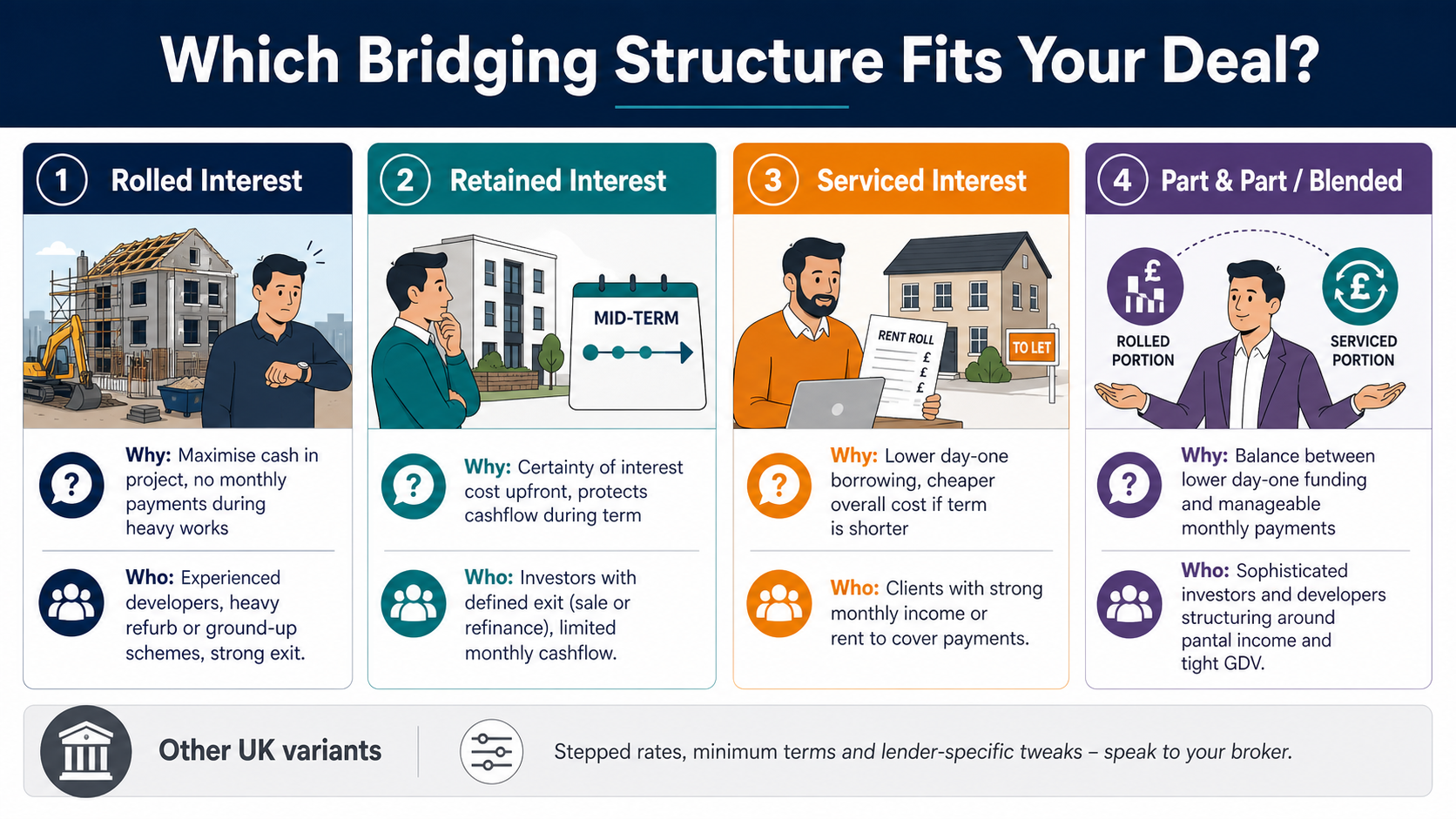
Experience the benefits of working with a specialist mortgage broker and debt structuring partner dedicated to high-net-worth clients, property developers, and institutional investors. At James William & Co Capital, we act as your single point of contact for end-to-end property finance solutions, arranging complex funding for large-scale acquisitions and development projects. Discover how our “capital concierge” service can accelerate your investment outcomes today by visiting James William & Co Capital. Ready to structure your next property finance deal with confidence and speed Browse our offered services including development finance and commercial mortgages to find the ideal solution tailored for your business needs.
Frequently Asked Questions
What is corporate property finance?
Corporate property finance refers to a specialised financial strategy that manages property-related assets within corporate environments, integrating complex legal, financial, and strategic considerations for portfolio optimisation.
What are the main types of corporate property finance available?
The primary types of corporate property finance include development finance, commercial mortgages, bridging finance, asset-based lending, and mezzanine debt, each serving specific strategic purposes for businesses.
How is corporate property finance structured?
Corporate property finance is structured around a mixture of debt financing, equity financing, hybrid instruments, risk mitigation strategies, and capital allocation frameworks, all designed to optimise investment potential and manage risks.
What are common risks in corporate property finance?
Common risks include overleveraging, inadequate due diligence, market timing miscalculations, insufficient risk management, and poor portfolio diversification, which can significantly impact investment outcomes.
Recommended
- James William & Co Capital | Specialist Property Finance
- James William & Co Capital | Specialist Property Finance
- James William & Co Capital | Specialist Property Finance
- James William & Co Capital | Specialist Property Finance
- Real Estate Financing Options Explained for Beginners | Bold Street AI
- How to Structure Property Loans for Maximum Investment Returns | Elite Wealth Creators
Related Topics
Speak to a specialist
Discuss your finance with James directly
Whole-of-market specialist finance — bridging, development, commercial and residential. No call centres, no obligation. James reviews every enquiry personally.
New to specialist finance? How unbiased broker advice works · Deals we have completed
Explore Related Finance