
Published · Updated
development finance workflowDevelopment Finance Workflow: Cut Costs 15% Multi-Layered Funding
By James Dawes, CeMAP, Founder, James William & Co Capital

Securing complex development finance for large UK property projects often involves juggling multiple lenders, navigating intricate debt structures, and enduring lengthy negotiations that can derail timelines and inflate costs. Poor workflows lead to missed funding windows, inflated interest rates, and risk exposure that could be avoided. This article reveals a proven stepwise workflow that can reduce your finance costs by 10 to 15%, shorten timelines by up to 30%, and mitigate risks through strategic multi layered financing, specialist lender engagement, and disciplined execution.
Table of Contents
- Prerequisites: What You Need Before Starting
- Stepwise Workflow For Securing Development Finance
- How To Structure Multi Layered Finance Stacks
- Engaging Specialist Lenders And Family Offices
- Common Mistakes And Their Fixes In Funding Workflows
- Expected Timelines And Success Metrics
- Transform Your Development Finance With James William & Co Capital
- FAQ
Key Takeaways
| Point | Details |
|---|---|
| Structured workflows reduce timelines | Following a clear process can shorten funding timelines by up to 30% compared to ad hoc approaches. |
| Multi layered finance cuts costs | Combining bridging, mezzanine, and JV equity can reduce overall finance costs by 10 to 15%. |
| Feasibility boosts approvals | Thorough pre application feasibility studies improve approval chances by 50%. |
| Lender engagement is critical | Over 40% of failed deals result from poor lender communication and due diligence gaps. |
| Specialist lenders offer bespoke solutions | Private credit and family offices provide tailored, rapid financing unavailable from traditional banks. |
Prerequisites: What You Need Before Starting
Before approaching lenders, you must complete essential groundwork that demonstrates project viability and positions you as a credible borrower. Conducting a detailed feasibility study increases approval rates significantly. Projects with thorough pre application feasibility achieve a 50% higher approval rate than those without.
Your feasibility study should include market analysis, demand forecasting, detailed cost assessment, and projected returns. This validates your assumptions and gives lenders confidence in your ability to execute and repay. Understanding the various types of property finance available is equally important. Familiarise yourself with bridging loans for short term interim finance, mezzanine debt as subordinated capital, commercial mortgages for long term funding, and joint venture equity for capital injection.
Set clear project timelines, milestones, and exit strategies. Lenders want to see how and when they will be repaid, whether through refinancing, sale, or rental income. Early preparation reduces financing delays and positions you to negotiate better terms.
Pro Tip: Dedicate at least four weeks to feasibility and research before your first lender conversation. This upfront investment pays dividends by streamlining approvals and reducing costly rework.
Key preparation steps include:
- Conduct comprehensive market and cost feasibility analysis
- Research finance instruments: bridging, mezzanine, JV equity, commercial mortgages
- Define project timelines, phases, and realistic exit strategies
- Assemble a professional team including solicitors, surveyors, and finance advisors
- Prepare initial financial projections and stress test scenarios
Stepwise Workflow for Securing Development Finance
Following a disciplined, sequential workflow is the fastest path to securing funding. The typical process spans 10 to 14 weeks, but capital concierge services reduce negotiation time by 30%, bringing closure within eight weeks or less.
Step 1: Conduct Comprehensive Feasibility and Financial Modelling
Validate your project’s market demand, costs, and returns. Run sensitivity analyses to stress test assumptions under adverse scenarios. Lenders scrutinise feasibility rigorously, so address potential weaknesses upfront.
Step 2: Engage Specialist Lenders and Credit Funds
Identify and approach lenders whose appetite matches your project profile. Specialist lenders, private credit funds, and family offices offer tailored, rapid funding options in the UK that traditional banks cannot match. Prepare a compelling executive summary and be ready to share detailed financials.
Step 3: Structure Multi Layered Finance Packages
Combine bridging loans, mezzanine debt, commercial mortgages, and JV equity to optimise real estate funding. Multi layered stacks provide flexibility and reduce overall costs by accessing different tranches at competitive rates.
Step 4: Negotiate Covenants and Loan Terms Meticulously
Carefully review and negotiate interest rates, loan to value ratios, covenants, repayment schedules, and early exit penalties. Poor covenant negotiation delays or inflates deal costs in approximately 35% of cases. Engage legal and finance advisors to ensure terms are sustainable and favourable.
Step 5: Complete Due Diligence, Finalise Documentation, and Secure Drawdown
Provide all requested documentation promptly, respond to lender queries transparently, and coordinate valuations and legal searches. Once conditions are satisfied, finalise loan agreements and arrange drawdown to commence works.
Pro Tip: Maintain weekly communication with lenders throughout the process. Proactive updates build trust and accelerate approvals.
How to Structure Multi Layered Finance Stacks
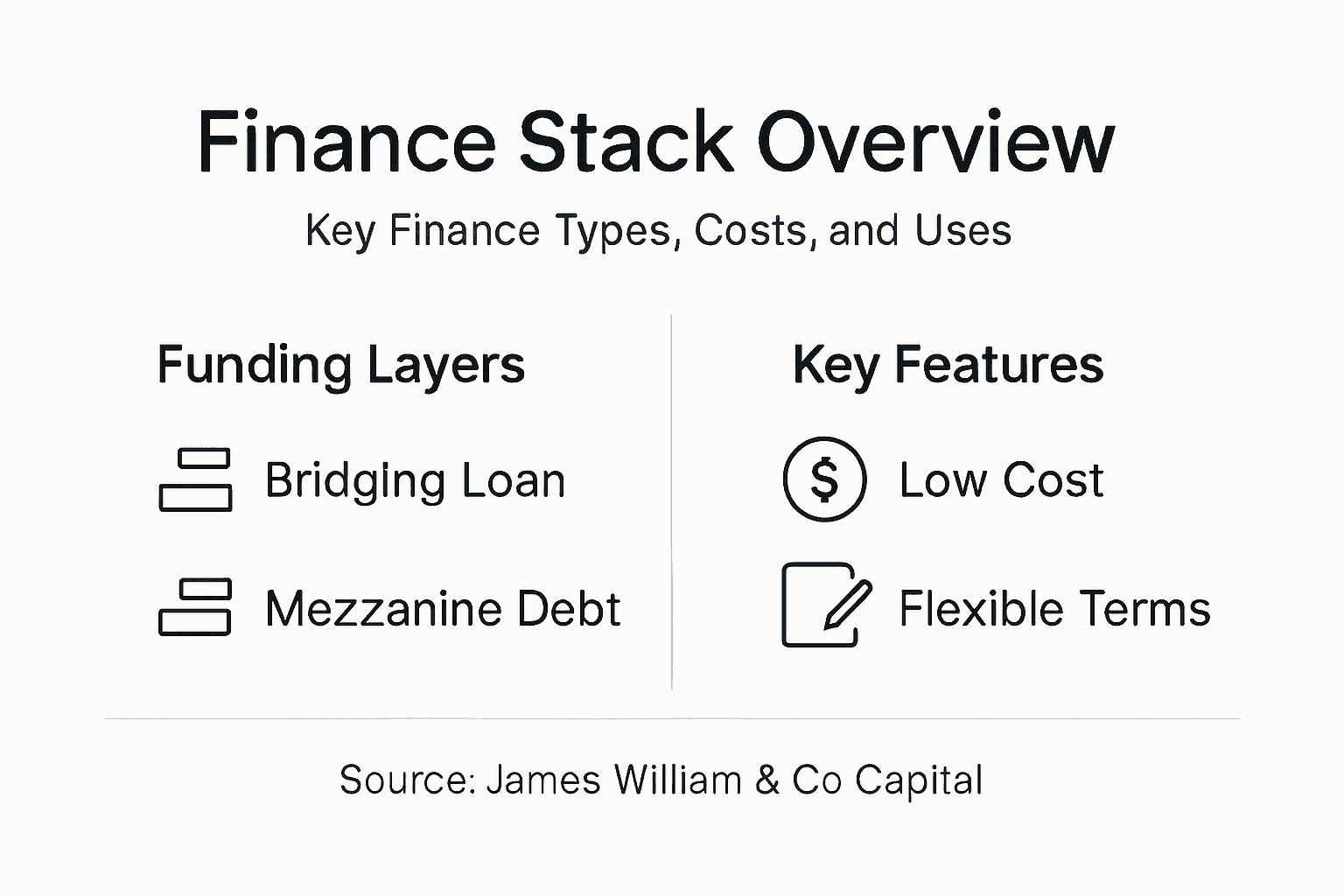
Designing an optimal finance stack involves blending multiple instruments to balance cost, flexibility, and control. Multi layered debt stacks can reduce overall finance costs by 10 to 15% compared to single source funding. Understanding each layer’s role is essential.

Bridging Loans provide short term interim finance, typically for 12 to 24 months, used to acquire land or property before longer term funding is arranged. They carry higher interest rates but offer speed and flexibility.
Mezzanine Debt sits subordinate to senior debt, filling the gap between senior loans and equity. It carries higher interest and often includes equity kickers, but allows you to maximise leverage without diluting ownership significantly.
Commercial Mortgages offer long term, lower cost capital for income producing or stabilised assets. They require strong cash flow and asset valuations but provide predictable repayment schedules.
Joint Venture Equity involves bringing in capital partners who share risk and reward. JV equity can provide up to 40% of total project capital when structured correctly. It reduces your personal exposure but requires giving up some control and profit.
When you structure development finance, coordinate covenant structures across layers to satisfy all lenders simultaneously. Senior lenders require priority security and covenants limiting further borrowing. Mezzanine lenders accept subordination but demand higher returns and additional covenants. Equity partners expect transparency and alignment of interests.
Comparison of Common Finance Layers:
| Finance Type | Typical Cost | Loan Term | Security Position | Best Use Case |
|---|---|---|---|---|
| Bridging Loan | 0.75% to 1.5% monthly | 12 to 24 months | Senior secured | Acquisitions, interim funding |
| Mezzanine Debt | 10% to 15% annually | 2 to 5 years | Subordinated | Gap funding, leverage maximisation |
| Commercial Mortgage | 4% to 7% annually | 5 to 25 years | Senior secured | Stabilised assets, long term hold |
| JV Equity | Profit share 20% to 50% | Project duration | Equity stake | High leverage, risk sharing |
Pro Tip: Balance equity and debt carefully. Too much debt increases risk and covenant burden. Too much equity dilutes returns. Target a senior loan to value of 60 to 70%, mezzanine to fill 10 to 20%, and equity for the remainder.
Engaging Specialist Lenders and Family Offices
Traditional banks often lack appetite for complex, large scale developments or unconventional structures. Specialist lenders, private credit funds, and family offices fill this gap. Private credit accounts for 25% of UK non bank real estate financing and offers fast, tailored deals.
Identifying the right lenders starts with understanding their investment criteria, sector focus, ticket size, and geographic preferences. Research online, attend property finance conferences, and leverage networks to build a shortlist. Approach lenders with a concise executive summary, clear ask, and evidence of project viability.
Building long term relationships with specialist lenders mitigates future funding delays and unlocks preferential terms. Lenders value repeat borrowers who deliver on commitments, communicate transparently, and demonstrate professionalism. By engaging real estate funding sources strategically, you position yourself for rapid, bespoke financing.
Best Practices for Engaging Specialist Lenders:
- Research lender criteria thoroughly before approaching to avoid wasting time
- Prepare a compelling executive summary with clear financial projections and exit strategy
- Be transparent about risks and how you plan to mitigate them
- Respond to lender queries promptly and provide requested documentation without delay
- Maintain regular communication and provide project updates even after funding is secured
- Build relationships during good times so you have options during challenging periods
Family offices, in particular, appreciate personal relationships and long term partnerships. They often move faster than institutional lenders and can provide flexible terms tailored to your project’s unique needs.
Common Mistakes and Their Fixes in Funding Workflows
Even experienced developers make avoidable errors that delay or derail funding. Over 40% of failed finance deals cite poor lender engagement and due diligence gaps. Recognising these pitfalls and applying fixes keeps your workflow on track.
Inadequate Covenant Negotiation is a frequent mistake. Accepting overly restrictive covenants without pushback limits your operational flexibility and can trigger defaults. Fix this by engaging experienced finance advisors who negotiate covenants that protect lenders while preserving your ability to manage the project effectively.
Poor Lender Engagement and Communication causes frustration, mistrust, and deal failure. Lenders need confidence that you are reliable and transparent. Fix this by scheduling regular updates, responding promptly to queries, and flagging issues early rather than hiding them.
Skipping Feasibility Studies to save time or cost is a false economy. Lenders will uncover gaps during due diligence, causing delays or rejections. Fix this by investing in thorough feasibility and market analysis upfront, even if it adds a few weeks to your timeline.
Underestimating Timeline and Cost Contingencies leads to funding shortfalls and stress. Fix this by building realistic contingencies of 10 to 15% into budgets and timelines, and maintaining open dialogue with lenders about potential overruns.
Top Mistakes and Direct Solutions:
- Mistake: Accepting restrictive covenants without negotiation. Solution: Engage finance specialists early to negotiate balanced terms.
- Mistake: Infrequent or reactive lender communication. Solution: Schedule regular updates and proactively share project progress.
- Mistake: Inadequate feasibility analysis. Solution: Invest in comprehensive feasibility studies before approaching lenders.
- Mistake: Unrealistic budgets and timelines. Solution: Include 10 to 15% contingencies and stress test assumptions.
- Mistake: Relying on a single lender source. Solution: Diversify lender relationships and have backup options ready.
By applying these funding tips for UK developers, you minimise risk and keep your workflow efficient.
Expected Timelines and Success Metrics
Understanding realistic timelines helps you plan resources and set stakeholder expectations. Typical development finance deals close within 10 to 14 weeks from initial lender engagement to drawdown. However, broker facilitated deals leveraging expert networks can reduce closure times to under eight weeks.
Phases typically break down as follows: feasibility and preparation take two to four weeks, lender engagement and initial offers take three to four weeks, due diligence and documentation take three to five weeks, and final approval and drawdown take one to two weeks. Using thorough feasibility studies increases approval rates by 50%, and capital concierge services shorten negotiation phases by 30%.
Key success metrics to track include:
Timeline Comparison Across Workflows:
| Workflow Phase | Standard Process | Broker Facilitated Process |
|---|---|---|
| Feasibility and Preparation | 3 to 4 weeks | 2 to 3 weeks |
| Lender Engagement and Offers | 4 to 5 weeks | 2 to 3 weeks |
| Due Diligence and Documentation | 4 to 5 weeks | 3 to 4 weeks |
| Final Approval and Drawdown | 1 to 2 weeks | 1 week |
| Total Timeline | 12 to 16 weeks | 8 to 11 weeks |
| Approval Rate | 60% to 70% | 80% to 90% |
| Cost Reduction vs Baseline | Baseline | 10% to 15% |
Tracking these metrics allows you to benchmark performance, identify bottlenecks, and refine your workflow continuously. Staying aware of property finance timelines and metrics helps you remain competitive and agile.
Transform Your Development Finance with James William & Co Capital
Securing optimal development finance requires expertise, networks, and time that many developers lack. James William & Co Capital delivers expert property finance solutions tailored to large scale UK property developments, leveraging deep relationships with specialist lenders, private credit funds, and family offices.
Our capital concierge service acts as your single point of contact, coordinating every aspect of finance structuring, negotiation, and execution. We reduce your negotiation time by 30%, access multi layered finance packages including bridging, mezzanine, and JV equity, and structure bespoke covenant packages that balance lender requirements with your operational needs. Whether you are acquiring land, funding ground up developments, or refinancing complex portfolios, our team accelerates your funding and mitigates risks.
Discover how we can optimise your real estate funding and unlock tailored structured property finance guidance for your next project. Contact James William & Co Capital today to transform your development finance journey.
FAQ
How long does it take to secure development finance in the UK?
Typical timelines range from 10 to 14 weeks from initial engagement to drawdown. Broker facilitated processes leveraging specialist lender networks can reduce this to under eight weeks, especially when thorough preparation and documentation are in place upfront.
What are the typical costs of multi layered development finance?
Bridging loans cost 0.75% to 1.5% monthly, mezzanine debt 10% to 15% annually, and commercial mortgages 4% to 7% annually. JV equity involves profit sharing of 20% to 50%. Blending these strategically can reduce overall finance costs by 10% to 15% compared to single source funding.
Which lenders provide bespoke development finance in the UK?
Specialist lenders, private credit funds, and family offices offer tailored, rapid financing for complex UK developments. They provide flexible terms, higher leverage, and faster approvals than traditional banks, particularly for unconventional structures or high value projects.
How can I avoid common mistakes in development finance workflows?
Engage finance specialists early to negotiate balanced covenants, maintain regular transparent communication with lenders, invest in thorough feasibility studies upfront, and build realistic contingencies into budgets and timelines. Diversifying lender relationships also mitigates risk.
What success metrics should I track during the finance process?
Track total timeline from engagement to drawdown, approval rates, cost reductions versus baseline, covenant flexibility, and lender responsiveness. Benchmark against industry standards to identify bottlenecks and continuously refine your workflow for improved efficiency and outcomes.
Recommended
- James William & Co Capital | Specialist Property Finance
- James William & Co Capital | Specialist Property Finance
- James William & Co Capital | Specialist Property Finance
- James William & Co Capital | Specialist Property Finance
- meinetarife24.de - Alles vergleichen, alles sparen
- Financing | Buffalo Roofing & Exteriors | San Antonio to Corpus Christi, TX
Related Topics
Speak to a specialist
Discuss your finance with James directly
Whole-of-market specialist finance — bridging, development, commercial and residential. No call centres, no obligation. James reviews every enquiry personally.
New to specialist finance? How unbiased broker advice works · Deals we have completed
Explore Related Finance