
Published
explaining loan covenantsExplaining loan covenants in UK property finance
By James Dawes, CeMAP, Founder, James William & Co Capital

TL;DR:
- Loan covenants are legally binding conditions in loan agreements that require or restrict borrower actions throughout the loan’s duration. They fall into three types: affirmative, negative, and financial, each with specific obligations and consequences. Managing them proactively and understanding their triggers is essential to retain project control and avoid default risks.
Loan covenants are legally binding obligations written into a loan agreement that require or restrict specific borrower actions throughout the life of the facility. Every property developer, investor, and financial analyst working in UK real estate will encounter them. Yet they remain one of the most misread and underestimated elements of any loan agreement. Understanding how covenants work, what triggers a breach, and how to negotiate realistic terms is not optional for professionals operating at scale. It is the difference between retaining control of a project and handing it to your lender.
What are the main types of loan covenants in property finance?

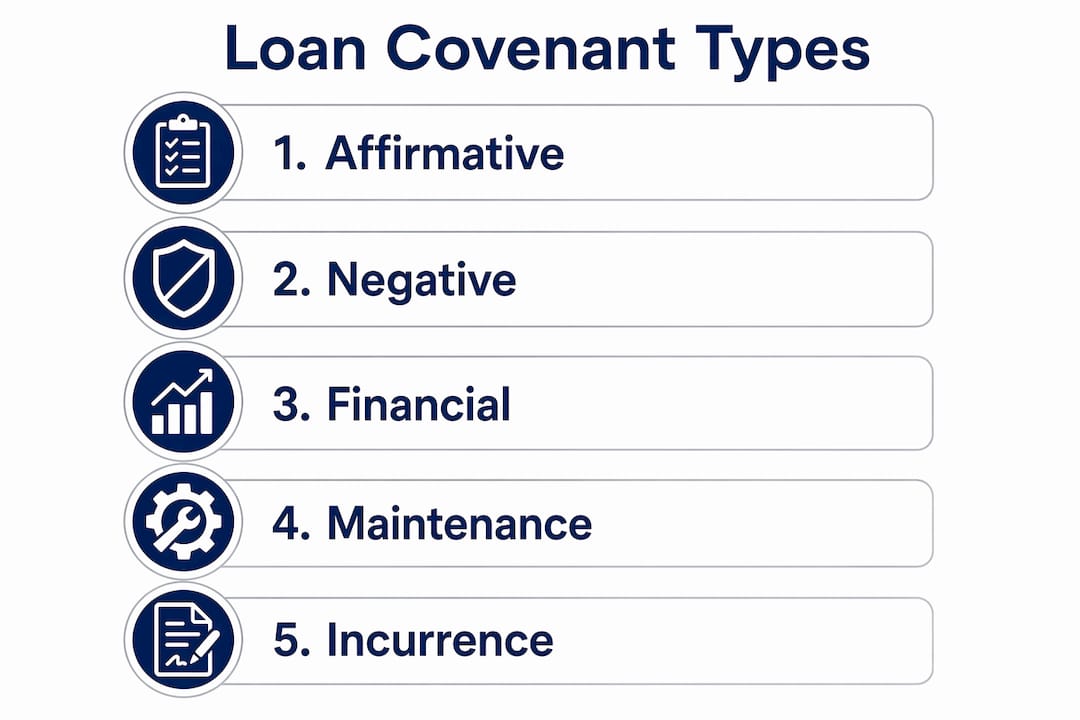
Loan covenants fall into three core categories: affirmative, negative, and financial. Each category imposes a different type of obligation, and each carries distinct consequences when breached.
Affirmative covenants require the borrower to take specific actions during the loan term. Common examples in property finance include maintaining adequate insurance on the asset, providing audited accounts within a set timeframe, and notifying the lender of material changes to the project. These are the housekeeping obligations most borrowers accept without much scrutiny. That is precisely where problems begin.
Negative covenants restrict what a borrower can do without lender consent. Typical restrictions include prohibitions on selling the secured asset, taking on additional debt, or making distributions to shareholders above an agreed threshold. In development finance, negative covenants often prevent a developer from changing the project specification or appointing a new contractor without prior written approval.
Financial covenants are the most technically demanding category. Financial covenants are tied to objective, verifiable metrics drawn directly from financial statements, which limits subjective interpretation and gives lenders clear grounds for enforcement. The two most common metrics in UK property lending are:
- Debt Service Coverage Ratio (DSCR): typically set at a minimum of 1.2x, meaning net operating income must cover debt service by at least 20%
- Loan to Value (LTV): usually tested at drawdown and at defined intervals, with thresholds varying by asset class and lender appetite
- Total debt to EBITDA: common financial thresholds cap this ratio between 3x and 5x in institutional lending
Beyond category, covenants divide into two structural types: maintenance covenants and incurrence covenants. Maintenance covenants are tested regularly, often quarterly or semi-annually, regardless of borrower activity. Incurrence covenants only trigger when the borrower takes a specific action, such as raising additional debt or paying a dividend. Cov-lite loan structures rely entirely on incurrence tests, removing the ongoing maintenance obligation. That reduces reporting pressure on the borrower but leaves lenders with far less early warning of deteriorating performance.
| Covenant type | Trigger | Typical test frequency |
|---|---|---|
| Affirmative | Ongoing obligation | Continuous or event-driven |
| Negative | Borrower action | Event-driven |
| Financial (maintenance) | Calendar date | Quarterly or semi-annual |
| Financial (incurrence) | Specific borrower action | Event-driven |
How do covenants impact real estate project financing?
Loan covenant complexity rises directly with loan size and the involvement of institutional lenders. A small bridging facility from a private lender may carry minimal covenants. A senior development loan from a clearing bank or debt fund will carry a full covenant package, often running to several pages of the facility agreement.
For property developers, covenants create real operational constraints. A negative covenant preventing additional borrowing can block a developer from raising mezzanine debt to fund a cost overrun. A financial covenant requiring a minimum interest cover ratio can force a developer to delay a dividend at exactly the moment they need liquidity. These are not hypothetical scenarios. They are routine friction points in active development programmes.
Covenants also function as early warning systems for lenders. A quarterly DSCR test that shows a ratio slipping from 1.4x to 1.25x does not trigger a default, but it signals stress. Lenders use that signal to open dialogue, request additional information, or begin internal credit reviews. The borrower who understands this dynamic uses covenant reporting as a relationship tool, not just a compliance exercise.
The power asymmetry during a covenant breach is significant. Once a technical default is declared, the lender holds most of the cards. They can impose conditions on any waiver, demand additional security, or simply accelerate the loan. Borrowers who have not built a strong lender relationship before a breach find themselves negotiating from a position of weakness.
Pro Tip: Review your covenant package against your project cashflow model before signing. If your base case DSCR sits at 1.22x and the covenant threshold is 1.20x, you have almost no headroom. Negotiate the threshold down or build a contingency reserve before drawdown.
Common covenant terms in real estate finance include:
- Minimum net asset value requirements for the borrowing entity
- Restrictions on changes to the development programme or planning consent
- Obligations to maintain a debt service reserve account
- Requirements to appoint a monitoring surveyor acceptable to the lender
- Restrictions on related-party transactions above a defined value
What happens when you breach a loan covenant?
A covenant breach creates what is known as a technical default. This is distinct from a payment default. Technical defaults can be triggered by non-payment issues such as late financial reporting, failure to maintain insurance, or missing a notification obligation. The loan payments may be entirely current, yet the borrower is still in default. That distinction catches many developers off guard.
The consequences of a technical default follow a broadly predictable sequence:
- Lender notification: The borrower must notify the lender upon becoming aware of a breach, or the lender discovers it through regular reporting.
- Standstill period: Most facility agreements include a cure period, typically 15 to 30 days, during which the borrower can remedy the breach.
- Waiver request: If the breach cannot be cured, the borrower must formally request a waiver or amendment from the lender.
- Amendment fees and repricing: Covenant waivers are not free. Lenders routinely demand amendment fees and interest rate increases, which consolidate their control and raise the borrower’s cost of capital.
- Acceleration: If no waiver is agreed, the lender can invoke an acceleration clause, demanding full immediate repayment of the outstanding facility.
- Enforcement: Breach of loan covenants can ultimately lead to collateral seizure or foreclosure, with the lender appointing a Law of Property Act receiver over the secured asset.
“The moment a covenant breach is declared, the borrower’s negotiating position changes fundamentally. Speed of communication and quality of financial information become the borrower’s primary tools.”
The practical lesson is clear. Proactive communication before a breach is always preferable to reactive negotiation after one. Lenders are far more willing to discuss a waiver when they hear about a problem from the borrower first, rather than discovering it themselves through a missed report.
How to manage and negotiate loan covenants effectively
Effective covenant management starts before the loan is signed. Borrowers frequently review only summaries, missing challenging terms buried within the full loan document’s covenant and default sections. The term sheet is a commercial summary. The facility agreement is the legal reality. Always read the full document, specifically the definitions, representations, covenants, and events of default sections.
Negotiating realistic thresholds
Covenant thresholds should reflect your actual projected financial performance, not the lender’s preferred starting position. If a lender proposes a minimum DSCR of 1.25x and your cashflow model shows a trough of 1.22x in month 18, that covenant will breach. Push for a threshold of 1.10x or negotiate a seasonal adjustment mechanism. Lenders expect pushback on covenants. Accepting the first draft without negotiation is a common and costly mistake.
Monitoring and reporting discipline
Build a covenant monitoring calendar into your project management process. Know every test date, every reporting deadline, and every notification obligation. Assign clear internal ownership for each obligation. A missed insurance renewal or a late management accounts submission can trigger a technical default that has nothing to do with the financial health of the project.
Pro Tip: Set internal covenant alert thresholds at 10–15% above the contractual minimum. If your DSCR covenant is 1.20x, flag internally when the ratio drops below 1.35x. That gives you time to act before you are in breach.
Understanding cov-lite structures
Cov-lite loan structures reduce reporting obligations and remove maintenance covenant testing. For borrowers, that feels like freedom. The risk is that without regular financial testing, problems compound undetected until a specific trigger event forces a reckoning. Cov-lite is not inherently better or worse. It is a different risk profile, and borrowers should understand what they are trading away in exchange for reduced compliance burden.
For complex development finance structures, where cashflows are lumpy and project milestones drive drawdowns, a bespoke covenant package negotiated with the lender from the outset will almost always outperform a standard institutional template. James William & Co structures exactly these kinds of bespoke packages for UK developers, working with private credit funds and family offices who have the appetite to negotiate terms that reflect the actual project rather than a generic credit policy.
When seeking a waiver or amendment, prepare a detailed financial pack before approaching the lender. Include updated cashflow projections, a clear explanation of the cause of the breach, and a proposed remedy timeline. Lenders respond to evidence and preparation. Vague reassurances achieve nothing.
Key takeaways
Loan covenants are the primary mechanism through which lenders monitor and control borrower behaviour across the life of a facility, and managing them proactively is the single most effective way to protect project control.
| Point | Details |
|---|---|
| Three core covenant types | Affirmative, negative, and financial covenants each impose distinct obligations and triggers. |
| Financial thresholds matter | DSCR minimums of 1.2x and debt-to-EBITDA caps of 3x–5x are standard benchmarks in UK property lending. |
| Technical defaults are common | Late reports or lapsed insurance can trigger default even when loan payments are current. |
| Waivers carry a cost | Lenders charge amendment fees and raise interest rates on waivers, increasing the borrower’s cost of capital. |
| Negotiate before signing | Covenant thresholds should reflect actual projected cashflows, not lender starting positions. |
What I have learned about covenants after years in property finance
Borrowers treat covenants as a compliance exercise. That is the single most expensive mistake I see in property finance. Covenants are not bureaucratic box-ticking. They are the contractual architecture through which a lender retains the right to intervene in your project. Covenants function as an oxygen tank: full compliance gives you operational freedom; a breach hands control to the lender.
The developers who get into serious trouble are rarely the ones with bad projects. They are the ones who signed covenant packages without stress-testing them against downside scenarios. A DSCR covenant that works in your base case but fails in a 15% revenue shortfall scenario is a ticking clock, not a safety net.
Personal guarantees attached to covenant breaches deserve particular attention. Many facility agreements include cross-default provisions, meaning a breach in one facility can trigger default across all facilities with the same lender. Developers with multiple projects and a single banking relationship need to map this exposure carefully.
The relationship with your lender is also a covenant management tool. Lenders who know and trust a borrower are materially more likely to grant a waiver quickly and on reasonable terms. That relationship is built through consistent, transparent reporting, not through silence until a problem becomes unavoidable.
My strongest advice: read the full facility agreement before you sign it, model your covenants against a downside cashflow scenario, and appoint an adviser who has negotiated these terms before. The cost of good advice at heads of terms is a fraction of the cost of a covenant breach at month 18.
— James
Specialist finance structured around your project
Property developers and investors working on complex UK transactions need a finance partner who understands covenant structures from both sides of the table.
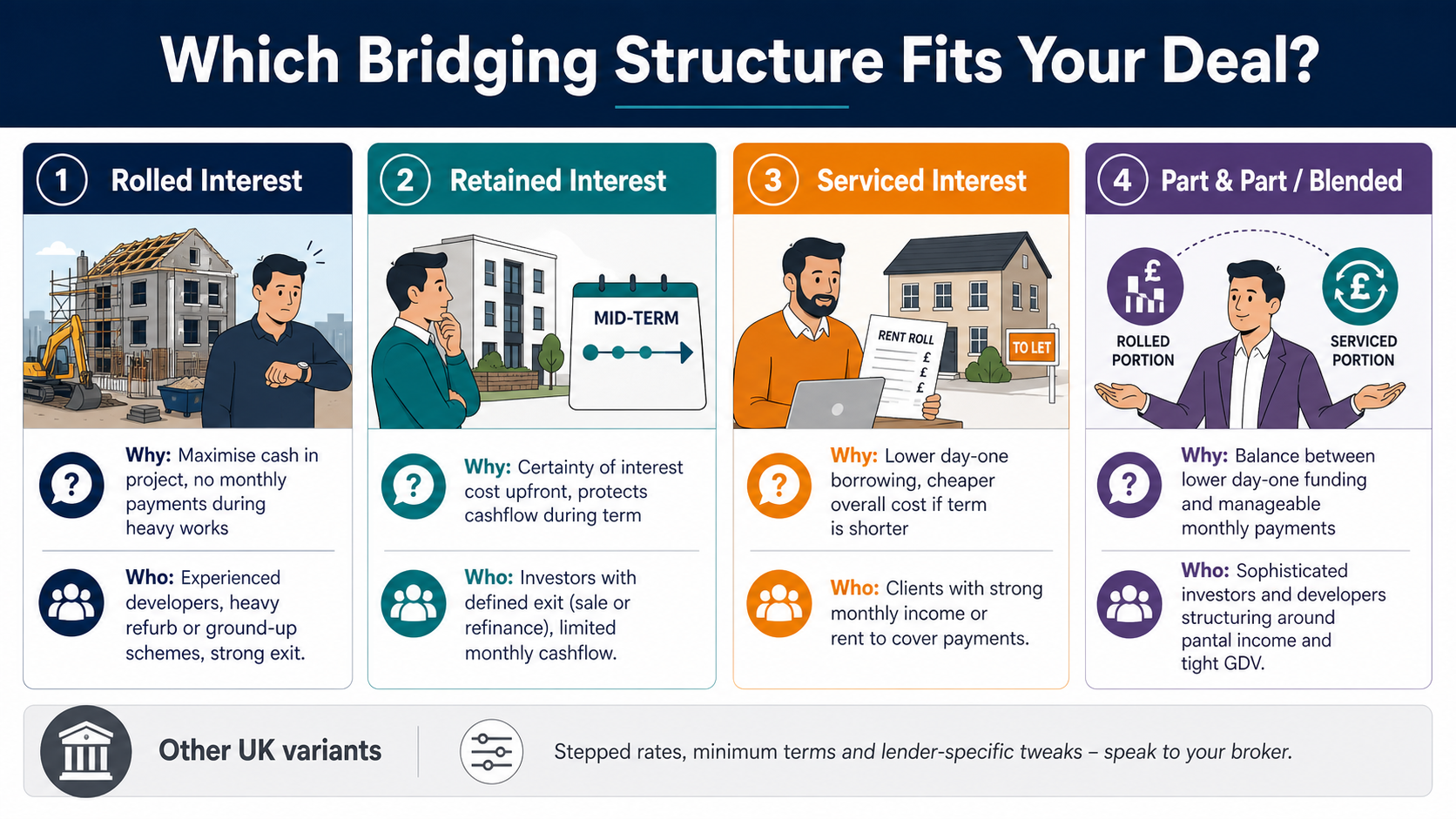
James William & Co arranges specialist property finance across bridging, development, mezzanine, and commercial lending, working with private credit funds, family offices, and specialist lenders who have the flexibility to negotiate bespoke covenant packages. Whether you are structuring a ground-up development, a large-scale acquisition, or a complex refinance, James William & Co acts as your single point of contact for end-to-end structuring and negotiation. Explore the full range of services or review real-world transaction examples in the case studies to understand how covenant-aware structuring works in practice.
FAQ
What are loan covenants in simple terms?
Loan covenants are legally binding conditions in a loan agreement that require or restrict specific borrower actions. They protect the lender’s position by ensuring the borrower maintains financial health and operational standards throughout the loan term.
What is the difference between maintenance and incurrence covenants?
Maintenance covenants are tested on a regular schedule, typically quarterly, regardless of borrower activity. Incurrence covenants only trigger when the borrower takes a specific action, such as raising additional debt or paying a dividend.
Can a lender call in a loan for a covenant breach?
Yes. A covenant breach creates a technical default, which can activate an acceleration clause allowing the lender to demand full immediate repayment. This applies even if all scheduled loan payments are current.
What is a cov-lite loan structure?
A cov-lite loan removes maintenance covenant testing and relies solely on incurrence-based tests. It reduces reporting obligations for the borrower but gives the lender less visibility of deteriorating financial performance between trigger events.
How do you negotiate better covenant terms?
Model your covenant thresholds against downside cashflow scenarios before signing, and push back on any threshold that your base case sits within 10% of breaching. Engage a specialist adviser who has negotiated with your target lender type before, and treat the full facility agreement, not just the term sheet, as the document that governs your obligations.
Recommended
Related Topics
Speak to a specialist
Discuss your finance with James directly
Whole-of-market specialist finance — bridging, development, commercial and residential. No call centres, no obligation. James reviews every enquiry personally.
New to specialist finance? How unbiased broker advice works · Deals we have completed
Explore Related Finance