
Published · Updated
guide to complex refinanceGuide to complex refinance for UK property investors
By James Dawes, CeMAP, Founder, James William & Co Capital

TL;DR:
- Complex refinancing involves restructuring layered debt on commercial assets to secure better loan terms and manage maturities. Proper planning begins 12 to 18 months before maturity, with thorough financial assessment, legal review, and expert advice essential for success. Timing, accurate modeling, and independent legal review are critical to avoiding costly pitfalls and adding value.
Complex refinancing is defined as the process of replacing or restructuring existing debt on commercial properties, multi-unit portfolios, or assets with layered debt structures, with the goal of securing better loan terms, managing balloon maturities, or releasing equity. Unlike a straightforward residential remortgage, this process involves multiple lender criteria, financial modelling, and legal review that most standard guides ignore. This guide to complex refinance gives UK property investors and developers a clear, step-by-step framework for executing these transactions with confidence. James William & Co works with clients across exactly these scenarios, from multi-layered debt stacks to offshore vehicles and bespoke covenant packages.
What are the key prerequisites for a complex refinance?
Strong financial metrics are the entry point for any complex refinancing process. Lenders assess Debt Service Coverage Ratio (DSCR) as a primary qualifier. DSCR minimums typically exceed 1.25, with lenders preferring ratios closer to 2.00 for the most competitive terms. A ratio below 1.25 signals to lenders that the property’s income may not reliably cover debt obligations.
Equity position matters just as much as income. Conventional loans often require 40% equity for favourable terms on commercial assets. That threshold is higher than most residential remortgage requirements, and it catches investors off guard when they move from buy-to-let portfolios into commercial or mixed-use assets.
Seasoning rules add another layer of complexity. Residential loans often require six months before refinancing is permitted, while commercial seasoning varies by lender and risk profile. Investors who acquire assets and immediately seek to refinance will almost always face a waiting period, regardless of how strong the underlying numbers are.
The documentation required for a complex refinance goes well beyond a standard mortgage application. Lenders expect:
- Current rent rolls showing occupancy and passing rent for each unit or tenant
- Two to three years of operating statements and profit and loss accounts
- A current independent appraisal or RICS valuation
- Net Operating Income (NOI) calculations and cash flow projections
- Details of any existing debt, including intercreditor agreements on layered structures
Pro Tip: Calculate your NOI before approaching any lender. Lenders will do this themselves, and arriving with your own figure shows preparation and reduces the risk of surprises during underwriting.
How does the complex refinance process work step by step?
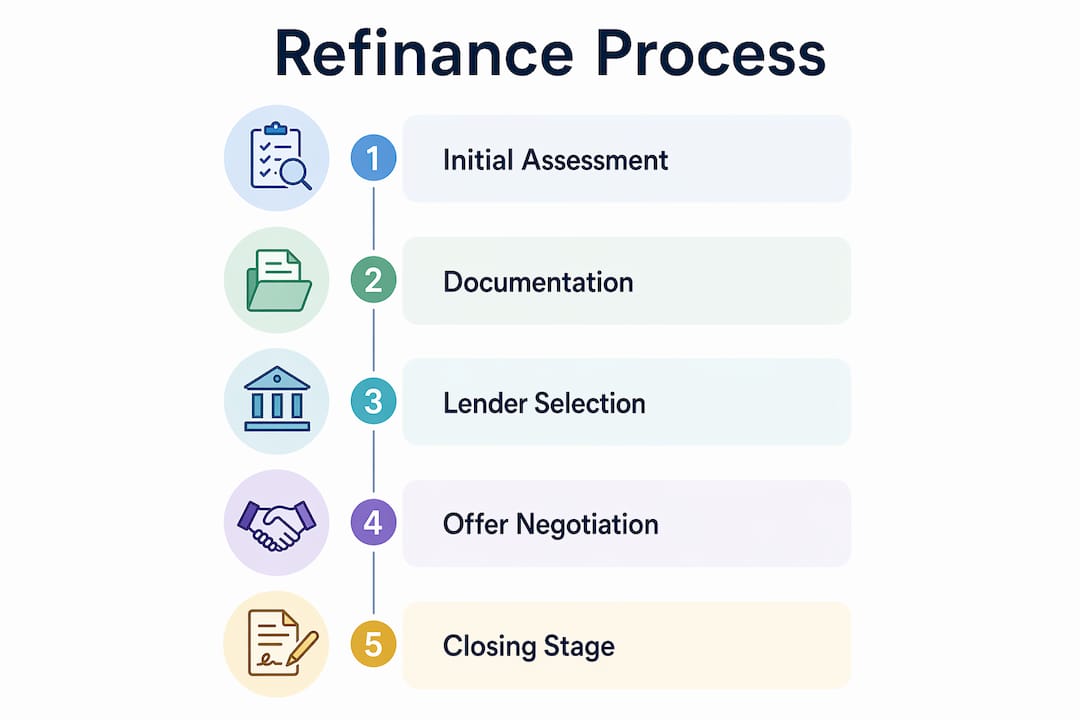
Timing is the single most underestimated factor in commercial refinancing. Commercial property owners should begin the refinance process 12–18 months before loan maturity. That runway accounts for lender due diligence, third-party reports, legal review, and the inevitable delays that arise in complex transactions. Starting late creates pressure that weakens your negotiating position.
The process follows a clear sequence:
- Initial financial assessment. Review your DSCR, loan-to-value (LTV), NOI, and existing debt terms. Identify whether the refinance objective is rate reduction, equity release, term extension, or debt restructuring.
- Appoint a specialist broker. A broker with experience in complex commercial structures, such as James William & Co, can access private credit funds, family offices, and specialist lenders that are not available through standard channels.
- Prepare and submit documentation. Compile rent rolls, operating statements, appraisals, and existing loan documents. Multi-property portfolios require consolidated financials as well as asset-level data.
- Request and compare term sheets. Evaluate offers across rate, LTV, recourse terms, covenant packages, and arrangement fees. Do not focus solely on the headline rate.
- Navigate due diligence. Lenders will commission third-party reports including structural surveys, environmental assessments, and independent valuations. Budget time and cost for these.
- Legal review and negotiation. Instruct a specialist real estate solicitor to review all loan documents before signing. Pay particular attention to recourse provisions, prepayment penalties, and covenant conditions.
- Loan closing. Once documents are agreed, funds are drawn and existing debt is repaid. Timelines from term sheet to close typically run eight to sixteen weeks for complex transactions.
Pro Tip: Request term sheets from at least three lenders before committing. The difference in covenant packages and recourse terms can be as significant as the rate differential, particularly for portfolio refinances.
The table below summarises the key stages and typical timeframes:
| Stage | Typical timeframe |
|---|---|
| Initial assessment and broker appointment | Weeks 1–2 |
| Documentation preparation | Weeks 2–6 |
| Term sheet requests and comparison | Weeks 4–8 |
| Due diligence and third-party reports | Weeks 6–12 |
| Legal review and negotiation | Weeks 10–14 |
| Loan closing | Weeks 12–16 |

For investors managing real estate funding sources across multiple assets, running these stages in parallel across a portfolio requires careful coordination and a single point of contact who understands the full picture.
Does refinancing actually add value? Financial modelling explained
The most common mistake investors make is relying on simplified rules of thumb to decide whether to refinance. NPV analysis outperforms simplified heuristics like the “1% rule” because it accounts for the time value of money, the reset of loan terms, and the actual cost of capital. A refinance that reduces your monthly payment may still destroy value if closing costs are high and the remaining loan term is short.
Closing costs for property refinancing typically range between 2% and 6% of the total loan amount. On a £2,000,000 facility, that is £40,000 to £120,000 in upfront costs before any benefit is realised. Those costs must be recovered through savings or income improvement over the life of the new loan.
A sound financial model for a complex refinance should account for:
- Total closing costs including arrangement fees, appraisal costs, and legal fees
- The break-even period: how many months of savings are needed to recover upfront costs
- The remaining term on the existing loan versus the reset term on the new facility
- Any prepayment penalties on the existing debt
- The impact on cash-on-cash return and overall portfolio yield
Consider two scenarios. In the first, an investor refinances a commercial asset with eight years remaining on the existing loan, paying £80,000 in closing costs to save £1,200 per month. The break-even point is 67 months. With only 96 months remaining, the net benefit is modest. In the second scenario, the same investor refinances a portfolio with fifteen years remaining, paying the same closing costs for the same monthly saving. The break-even is identical, but the value created over the remaining term is substantially greater.
Maturity date is more critical than interest rate in commercial refinancing. Waiting for rates to fall is a risky strategy unless your lender can offer a formal extension. Balloon payment defaults are a real consequence of poor timing, and they are far more damaging than a slightly higher rate on a well-timed refinance.
What are the common pitfalls in complex mortgage refinancing?
The most dangerous assumption in complex refinancing is that the lender is working in your interest. Lenders primarily protect their own interests, not those of borrowers. This is especially true in transactions involving layered debt structures, non-recourse provisions, or bespoke covenant packages where the terms are not standardised.
“Engaging independent real estate counsel is not optional in a complex refinance. It is the minimum standard of care for any transaction involving recourse debt, mezzanine layers, or multi-property portfolios.” — FindLaw
Key pitfalls to avoid:
- Moving between recourse and non-recourse debt without legal review. Switching from non-recourse to recourse debt exposes personal assets to lender claims. This change is sometimes buried in refinance documentation and missed without specialist legal input.
- Refinancing above market value. Lenders will not fund beyond their own valuation, but investors sometimes proceed with inflated expectations. An independent RICS valuation before approaching lenders prevents wasted time and abortive costs.
- Ignoring covenant conditions. Loan covenants can restrict future sales, further borrowing, or changes in use. Review every condition before signing, not after.
- Underestimating fees. Arrangement fees, exit fees on existing debt, and legal costs compound quickly. Model the full cost of the transaction, not just the new rate.
- Failing to account for seasoning rules. Lender-imposed waiting periods can delay a refinance by six months or more. Factor this into your timeline, particularly after a recent acquisition.
For investors dealing with complex loan terms and recourse distinctions, independent legal review is the single most effective risk mitigation available.
Key takeaways
Complex refinancing creates value only when it is planned early, modelled rigorously, and executed with specialist support.
| Point | Details |
|---|---|
| Start 12–18 months early | Commercial refinancing requires significant lead time to avoid balloon payment pressure. |
| DSCR above 1.25 is the baseline | Lenders prefer ratios near 2.00 for the most competitive terms and structures. |
| Model closing costs carefully | Costs of 2%–6% of the loan must be recovered through savings before value is created. |
| Legal review is non-negotiable | Independent counsel must review recourse terms, covenants, and mezzanine provisions. |
| Maturity date drives timing | Waiting for rate drops is secondary to managing loan maturity and balloon payment risk. |
Refinancing is a process, not a one-off event
The investors I see execute complex refinances well share one habit: they treat refinancing as a recurring part of their portfolio management, not a crisis response. By the time a balloon payment is six months away, your options have already narrowed. The lenders with the best terms need time to underwrite properly, and that time disappears when you leave things late.
I have seen investors with strong assets and solid income lose significant negotiating power simply because they started the process too late. Lenders can sense urgency, and they price for it. Starting 12–18 months out is not conservative. It is the minimum required to run a proper process.
The other pattern I see consistently is over-reliance on simplified rules of thumb. The “1% rule” tells you nothing about the time value of money, the cost of resetting your loan term, or the impact of closing costs on your actual return. NPV modelling is not complicated. It is a spreadsheet exercise that takes a few hours and can save you from a decision that looks attractive on the surface but destroys value over time.
Finally, the legal review step is where I see the most avoidable damage. Borrowers sign documents they have not read carefully, miss covenant restrictions that limit future flexibility, and discover recourse provisions only when things go wrong. A specialist real estate solicitor costs a fraction of what a poorly structured loan costs over its term. There is no good reason to skip that step.
Refinancing strategy should also respond to property finance trends in the broader market. Lender appetite, credit conditions, and valuation benchmarks shift, and a strategy built on 2023 assumptions may not hold in 2026.
— James
How James William & Co supports complex refinance transactions
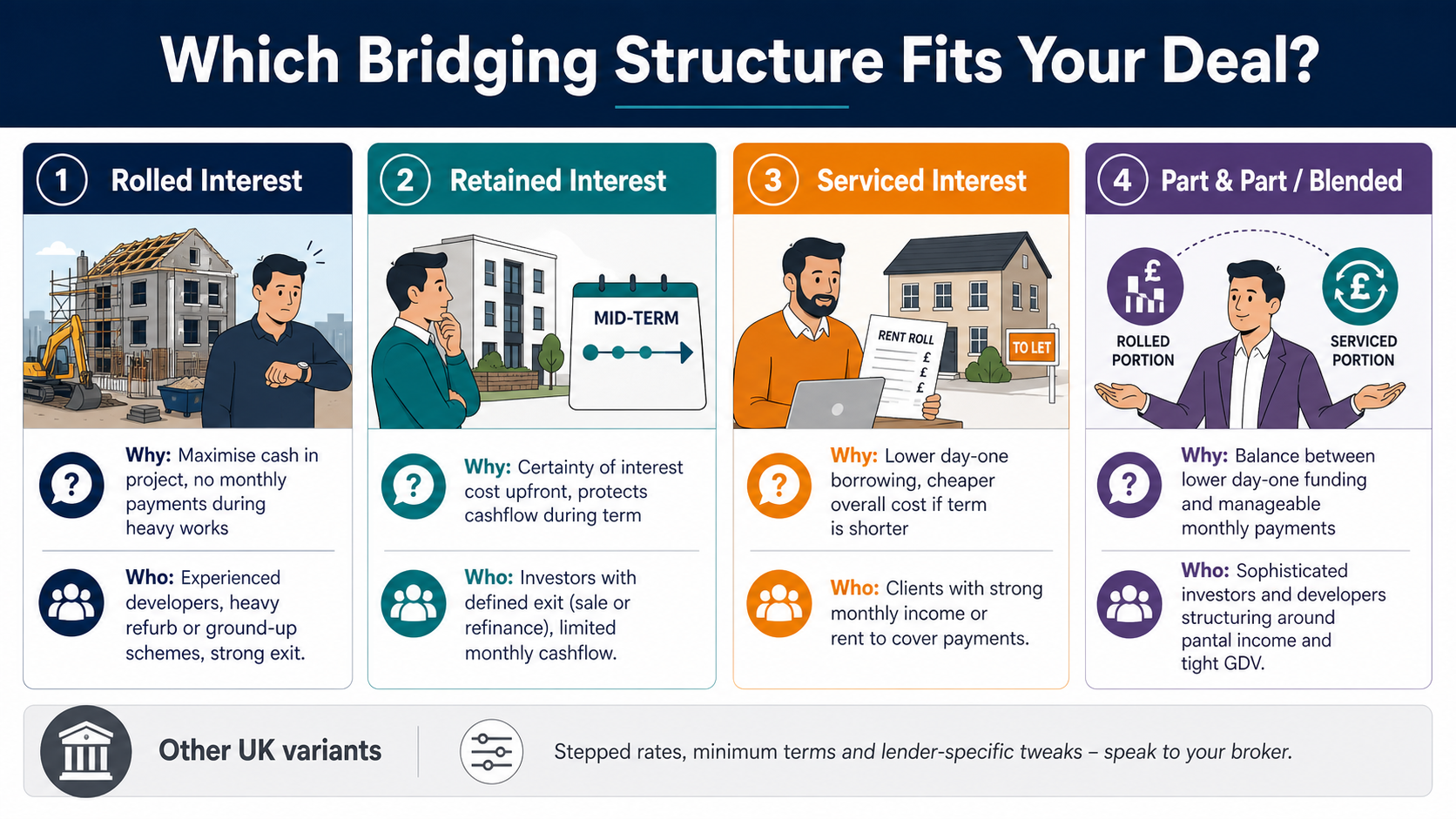
James William & Co Capital works with UK property investors, developers, and high-net-worth clients who need more than a standard remortgage. The firm structures specialist property finance across commercial mortgages, mezzanine debt, bridging facilities, and multi-layered debt stacks, giving clients a single point of contact from initial assessment through to closing.
For investors facing balloon maturities, portfolio restructuring, or equity release on complex assets, James William & Co accesses a network of private credit funds, family offices, and specialist lenders to deliver terms that high-street lenders cannot match. The capital concierge approach means clients receive structured advice, lender negotiation, and execution support under one roof. Contact James William & Co to discuss your refinancing position and get a clear view of your options before the clock starts running.
FAQ
What is a complex refinance?
A complex refinance is the restructuring or replacement of existing debt on commercial properties, multi-unit portfolios, or assets with layered debt structures. It differs from a standard remortgage in its documentation requirements, lender criteria, and legal complexity.
How early should I start a commercial refinance?
Start the process 12–18 months before loan maturity. This allows sufficient time for lender due diligence, third-party reports, legal review, and negotiation without pressure from an approaching balloon payment.
What DSCR do lenders require for complex refinancing?
Most lenders set a minimum DSCR of 1.25, but lenders prefer ratios near 2.00 for the most competitive terms. A ratio below 1.25 will limit your lender options significantly.
How much do closing costs add to a refinance?
Closing costs typically range from 2% to 6% of the total loan amount. On a large commercial facility, this can represent a six-figure sum that must be factored into any financial model before proceeding.
Do I need a solicitor for a complex refinance?
Independent legal counsel is essential, not optional. Lenders protect their own interests, and a specialist real estate solicitor will identify recourse provisions, covenant restrictions, and fee structures that could otherwise go unnoticed until they cause real damage.
Recommended
Related Topics
Speak to a specialist
Discuss your finance with James directly
Whole-of-market specialist finance — bridging, development, commercial and residential. No call centres, no obligation. James reviews every enquiry personally.
New to specialist finance? How unbiased broker advice works · Deals we have completed
Explore Related Finance