
Published · Updated
how to optimize real estate fundingHow to Optimise Real Estate Funding for UK Developers
By James Dawes, CeMAP, Founder, James William & Co Capital

Securing the right funding for a significant United Kingdom property development is never just a question of access, but of precision and strategy. As project values grow, aligning your capital stack with evolving project goals becomes the linchpin of long-term success. This guide clarifies how to assess capital requirements, build a robust capital stack, and structure finance layers for compliance and maximum flexibility, empowering you to remain a step ahead in a competitive market.
Table of Contents
- Step 1: Assess Capital Requirements And Project Goals
- Step 2: Select Suitable Funding Structures And Debt Layers
- Step 3: Engage Specialist Lenders And Advisory Partners
- Step 4: Structure Multi-Layered Financing And Legal Covenants
- Step 5: Verify Funding Efficiency And Manage Ongoing Compliance
Quick Summary
| Key Insight | Explanation |
|---|---|
| 1. Assess capital requirements | Thoroughly estimate total costs, funding phases, and returns to secure needed finance. |
| 2. Choose effective funding layers | Create a balanced capital stack using senior debt, mezzanine finance, and equity contributions. |
| 3. Engage with specialists | Build relationships with experienced lenders and advisors to access tailored funding solutions. |
| 4. Structure legal covenants | Draft financial covenants that define clear project metrics and compliance criteria. |
| 5. Monitor funding compliance | Implement a rigorous funding assurance programme to ensure financial discipline and accountability. |
Step 1: Assess capital requirements and project goals
Successfully navigating real estate development funding begins with a rigorous assessment of your project’s capital needs and strategic objectives. Understanding your precise financial requirements forms the foundation for securing appropriate financing and ensuring project viability.
To effectively assess capital requirements, start by conducting a comprehensive performance metrics evaluation. This involves breaking down your project into granular financial components: total development costs, land acquisition expenses, construction budget, contingency reserves, and anticipated returns. Calculate your exact capital stack requirements by mapping out each project phase and identifying potential funding sources such as senior debt, mezzanine financing, equity investment, and potential government grants.
During this assessment, leverage detailed financial modelling to stress test your projections and understand potential risk scenarios. Work closely with financial advisors who specialise in property development to validate your capital requirements against market benchmarks and funding application guidelines. Pay particular attention to alignment between your project goals, anticipated returns, and the specific capital structures available in the current market.
Insider Tip: Create multiple financial scenarios with varying capital allocation strategies to provide flexibility and demonstrate robust planning to potential investors.
Step 2: Select suitable funding structures and debt layers
Choosing the right funding structures and debt layers is critical for maximising your property development project’s financial efficiency and risk management. Your goal is to create a balanced capital stack that provides adequate funding while minimising overall financing costs.
To achieve this, carefully analyse the capital stack composition across different financing tranches. Senior debt typically represents the foundation of your funding strategy, offering lower interest rates and being secured by first charge on the property. Complement this with mezzanine finance to bridge potential funding gaps, understanding that this layer carries higher risk and correspondingly higher interest rates. Strategically blend these debt instruments to optimise your leverage while maintaining flexibility for potential market fluctuations.
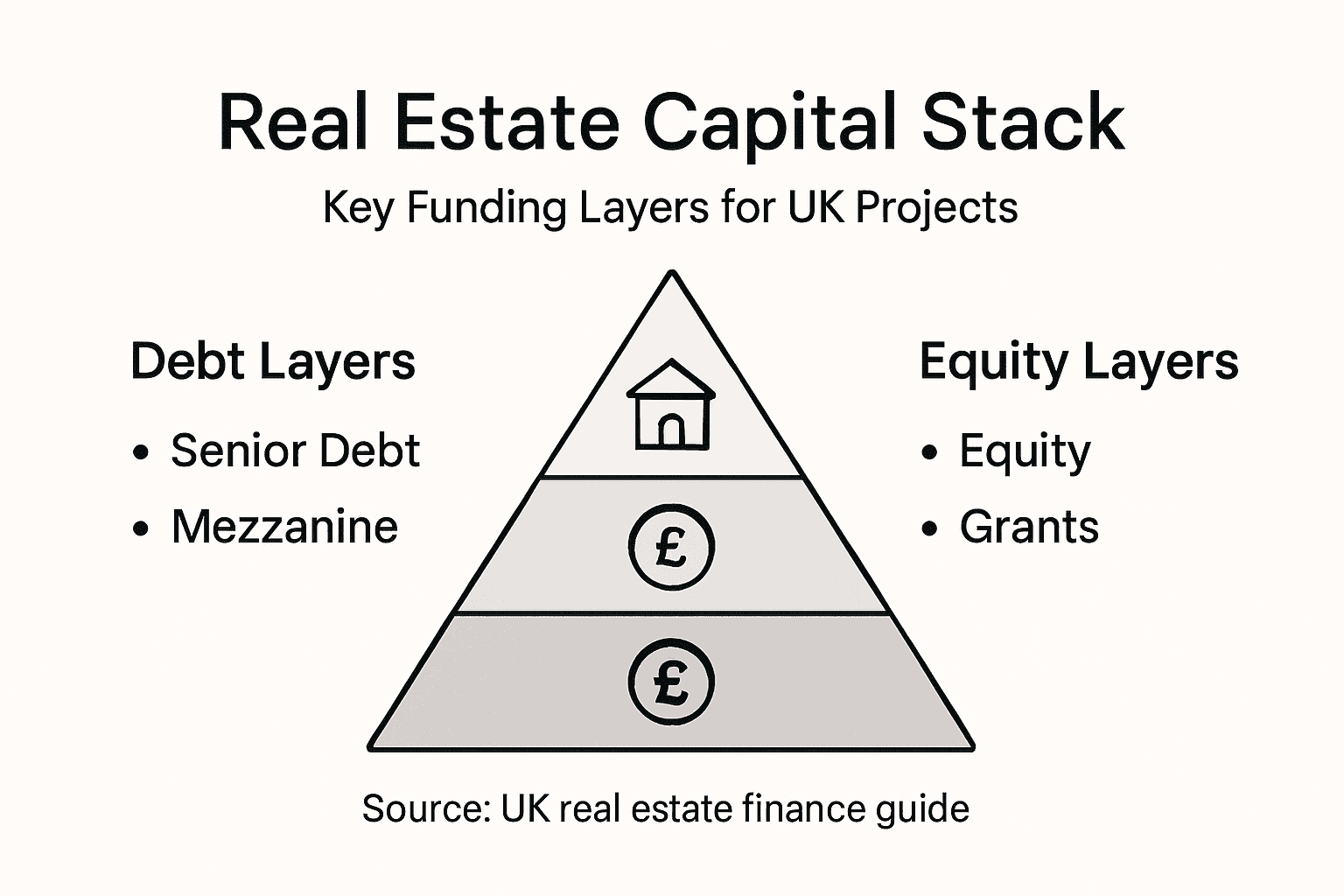
Consider constructing a multi-layered funding approach that includes senior debt from traditional banks, mezzanine financing from specialist lenders, and equity contributions. Each layer should be carefully negotiated to balance risk, cost of capital, and repayment terms. Engage with financial advisors who specialise in property development funding to help structure a debt package that aligns with your specific project characteristics, anticipated returns, and risk profile.
Insider Tip: Maintain a minimum 20% equity contribution to demonstrate project commitment and improve your chances of securing more favourable debt terms.
The following table summarises the key components of a typical real estate development capital stack:
| Capital Stack Layer | Description | Risk Level |
|---|---|---|
| Senior Debt | First charge loan from mainstream banks | Low |
| Mezzanine Financing | Subordinate loan bridging funding gap | Medium |
| Equity Contribution | Developer/Investor’s direct capital | High |
| Government Grants | Public funding for qualifying schemes | Varies by programme |
Step 3: Engage specialist lenders and advisory partners
Successfully navigating real estate development financing requires building strategic relationships with specialist lenders and experienced advisory partners who understand the nuanced landscape of property investment. Your objective is to create a network of financial experts who can provide tailored guidance and access to sophisticated funding solutions.

Start by researching and connecting with specialist lending networks that focus exclusively on property development financing. These professionals typically have deep understanding of market dynamics, risk assessment, and funding structures specific to real estate projects. Look for advisory partners with proven track records in your specific development segment whether residential, commercial, or mixed use developments. Prioritise firms that demonstrate comprehensive knowledge of complex financial instruments including mezzanine finance, senior debt arrangements, and equity structuring.
When approaching potential lenders and advisors, prepare a comprehensive investment prospectus that clearly articulates your project’s unique value proposition, financial projections, and risk mitigation strategies. Be prepared to demonstrate your expertise, track record, and the specific expertise of your development team. Cultivate relationships that go beyond transactional interactions seek partners who can provide strategic insights, market intelligence, and potential future funding opportunities.
Insider Tip: Attend property finance conferences and industry networking events to expand your professional connections and gain direct access to specialist lenders and advisory professionals.
Here is a comparison of specialist lender and advisory partner benefits:
| Partner Type | Core Expertise | Strategic Value |
|---|---|---|
| Specialist Lender | Property project finance solutions | Access to tailored funding |
| Advisory Partner | Structuring, compliance, risk review | Increased legal, financial rigour |
| Independent Auditor | Third-party compliance verification | Strengthened investor confidence |
Step 4: Structure multi-layered financing and legal covenants
Constructing a robust multi-layered financing strategy requires meticulous attention to legal covenants and strategic financial structuring. Your primary objective is to create a comprehensive financing framework that protects both lender and developer interests while maintaining maximum financial flexibility.
Begin by carefully drafting financial covenant structures that establish clear performance triggers and compliance mechanisms. These legal agreements should define precise metrics for project milestones, financial performance, and potential intervention points for lenders. Pay special attention to creating equity cure rights, cash flow management provisions, and reporting requirements that provide transparency while preserving your operational autonomy. Consider incorporating graduated covenant structures that allow for adaptive responses as your development progresses through different stages.
When negotiating legal documentation, engage specialised property finance solicitors who understand the nuanced landscape of real estate financing. These professionals can help you navigate complex security interests, asset charges, and registration requirements. Focus on creating covenant definitions that are sufficiently flexible to accommodate potential project variations while providing clear protections for lending partners. Ensure that each financing layer has well-defined priority levels, security mechanisms, and performance expectations that align with your overall project strategy.
Insider Tip: Always include professional indemnity insurance and maintain comprehensive documentation to strengthen your negotiating position with potential lenders.
Step 5: Verify funding efficiency and manage ongoing compliance
Ensuring your property development project maintains financial discipline and regulatory compliance requires systematic monitoring and proactive management of funding performance. Your objective is to create a robust verification framework that demonstrates financial accountability and project viability to current and potential investors.
Implement a comprehensive funding assurance programme that establishes regular financial review mechanisms. This approach involves developing detailed tracking systems to monitor key performance indicators, cash flow management, and adherence to original project budgets. Create monthly reporting templates that capture granular financial data including expenditure against projected costs, variance analyses, and milestone achievements. These reports should provide transparent insights into your project’s financial health and demonstrate your commitment to precise fiscal management.
Collaborate closely with financial advisors and independent auditors to conduct periodic compliance reviews. These professionals can help identify potential risk areas, validate your financial controls, and recommend improvements to your funding management strategies. Focus on maintaining meticulous documentation that evidences how project funds are being utilised, ensuring alignment with original funding agreements and regulatory requirements. Develop a proactive approach to addressing any potential compliance issues before they become significant challenges.
Insider Tip: Create a dedicated financial compliance folder with real-time digital updates to streamline audit processes and provide immediate transparency to stakeholders.
Streamline Your Real Estate Funding with Expert Capital Advisory
Navigating the complex layers of development finance, from multi-tiered debt structures to bespoke legal covenants, can be overwhelming. This article highlights key challenges such as optimising your capital stack, balancing senior debt with mezzanine finance, and ensuring ongoing compliance. If you are striving to enhance funding efficiency while managing risk and regulatory demands, James William & Co Capital offers tailored expertise to transform these challenges into opportunities.
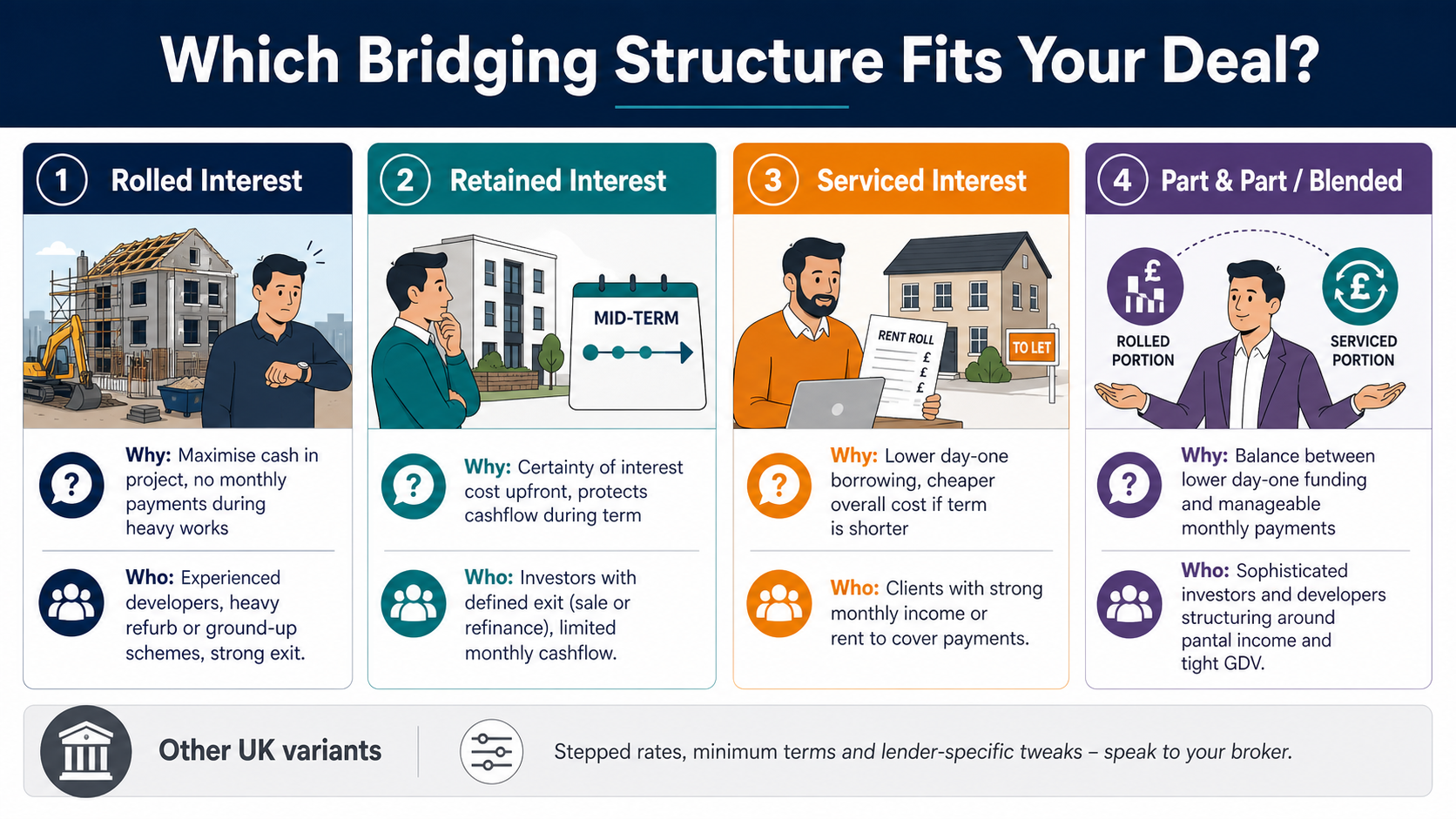
Partner with a specialist capital advisory firm that understands sophisticated property funding inside out. Whether you need bridging finance, mezzanine debt, or structured JV equity solutions James William & Co Capital provides a seamless “capital concierge” approach designed for UK developers, investors and high-net-worth clients. Visit James William & Co Capital now to explore how rapid, bespoke funding arrangements can drive your next project forward with confidence and speed. Unlock tailored funding strategies today and turn your real estate ambitions into concrete success. Discover more at specialist lending solutions and take control of your project financing journey.
Frequently Asked Questions
How can I assess my project’s capital requirements effectively?
To assess your project’s capital requirements, conduct a comprehensive evaluation of all financial components, including total development costs and anticipated returns. Break down your project into phases and identify potential funding sources, then create multiple financial scenarios to demonstrate flexible planning.
What are the key components of a capital stack in property development?
The key components of a capital stack include senior debt, mezzanine financing, equity contributions, and government grants. Understanding how these layers interact can help you structure your funding approach effectively and reduce overall financing costs.
How do I select suitable funding structures for my development project?
To select suitable funding structures, analyse the composition of your capital stack and consider blending senior debt and mezzanine financing. Engage with financial advisors to negotiate terms that balance risk and minimises costs, ideally aiming for at least a 20% equity contribution to improve creditor confidence.
What role do specialist lenders play in real estate funding?
Specialist lenders provide tailored financing solutions specific to property development, enabling you to access nuanced funding options. Establish relationships with these lenders by preparing a detailed investment prospectus showcasing your project’s unique value and financial projections.
How can I ensure ongoing compliance with funding agreements?
To ensure ongoing compliance, implement a funding assurance programme that includes regular financial reviews and transparent reporting mechanisms. Create detailed tracking systems to monitor performance indicators and maintain meticulous documentation to evidence fund utilisation and adherence to agreements.
What legal considerations should I account for in multi-layered financing?
When structuring multi-layered financing, pay careful attention to drafting clear financial covenants that outline performance metrics and compliance mechanisms. Engage with specialised property finance solicitors to navigate complex security interests and ensure protective measures are in place for both lenders and developers.
Recommended
- James William & Co Capital | Specialist Property Finance
- James William & Co Capital | Specialist Property Finance
- James William & Co Capital | Specialist Property Finance
- James William & Co Capital | Specialist Property Finance
- Cost Planning for Developers | Construction Estimating UK
- 7 Key Benefits of House Extensions for UK Homeowners
Related Topics
Speak to a specialist
Discuss your finance with James directly
Whole-of-market specialist finance — bridging, development, commercial and residential. No call centres, no obligation. James reviews every enquiry personally.
New to specialist finance? How unbiased broker advice works · Deals we have completed
Explore Related Finance