
Published · Updated
how to structure development financeHow to Structure Development Finance for Complex Projects
By James Dawes, CeMAP, Founder, James William & Co Capital

Securing the right debt structure for ambitious real estate projects often begins with a single challenge—accurately defining requirements that stand up to investor scrutiny. For property developers and institutional investors operating across the UK, each stage of financing demands diligence and precision to align with the complexities of modern markets. With foundations in a comprehensive financial feasibility analysis, this guide demystifies layered debt stacks, strategic partnerships, and bespoke security packages tailored for British and European project success.
Table of Contents
- Step 1: Assess Project Requirements And Funding Needs
- Step 2: Identify Suitable Finance Structures And Partners
- Step 3: Build Multi-Layered Debt Stacks Strategically
- Step 4: Negotiate Bespoke Covenant And Security Packages
- Step 5: Verify Compliance And Funding Execution
Quick Summary
| Key Point | Explanation |
|---|---|
| 1. Assess Financial Feasibility Diligently | Conduct a thorough financial analysis covering all capital requirements to secure robust funding options. |
| 2. Identify Compatible Finance Structures | Match project needs with appropriate financial solutions, considering risk levels and sources of funding. |
| 3. Construct a Multi-Layered Debt Stack | Strategically balance different financing components to optimise returns and manage risks effectively. |
| 4. Negotiate Effective Covenants and Security Packages | Protect lender interests while ensuring project flexibility through well-designed contractual agreements. |
| 5. Ensure Compliance and Execute Funding Rigorously | Maintain strict documentation and reporting for smooth funding processes and project integrity throughout the lifecycle. |
Step 1: Assess Project Requirements and Funding Needs
When structuring development finance for complex projects, your first critical task is comprehensive requirement assessment. This foundational stage determines the entire financial trajectory of your real estate development, demanding meticulous attention to multiple interconnected variables.
Begin by conducting a thorough financial feasibility analysis that encompasses several key dimensions. Your assessment should systematically explore:
- Total project capital requirements
- Expected development timelines
- Projected investment returns
- Potential risk mitigation strategies
- Specific funding mechanism compatibility
Your financial evaluation must drill into granular details, examining everything from land acquisition costs to construction expenses, professional fees, and contingency reserves. This means creating robust financial models that can withstand rigorous investor and lender scrutiny. Sophisticated financial modelling becomes your strategic foundation for attracting appropriate funding partners.
Precision in your initial assessment determines the quality and flexibility of future funding options.
Understanding your project’s unique financial DNA requires mapping out precise funding requirements across different project stages. This involves calculating exact capital needs, identifying potential funding gaps, and developing a nuanced strategy that matches your specific development profile with appropriate financial instruments.
Professional advice: Always build a 15-20% contingency buffer into your initial financial projections to accommodate unexpected market fluctuations and development challenges.
Step 2: Identify Suitable Finance Structures and Partners
Identifying the right finance structures and strategic partners is crucial for successfully navigating complex development projects. Your goal is to match your specific project requirements with financing solutions that provide optimal risk management and capital efficiency.
Start by understanding the diverse landscape of finance structures for development projects. These typically include:
Here is an overview of how key finance structures compare for real estate development projects:
| Finance Structure | Risk Level | Typical Use Case | Funding Source |
|---|---|---|---|
| Senior Debt | Low | Core project foundation | Banks, institutional lenders |
| Mezzanine Financing | Moderate | Bridging funding gaps | Specialist lenders |
| Joint Venture | Medium | Shared ownership and risk | Developers, investors |
| Public-Private Partnership | Variable | Large infrastructure schemes | Government, corporates |
| Equity Investment | High | Growth and expansion | Private investors, funds |
- Public-private partnership models
- Joint venture arrangements
- Mezzanine financing
- Senior debt facilities
- Equity investment partnerships
Your selection process must consider multiple critical factors. Evaluate potential partners based on their track record, financial capacity, risk appetite, and alignment with your project’s strategic objectives. Look beyond pure financial metrics to assess cultural compatibility and long-term collaborative potential.
The right financing partner transforms a good project into an exceptional investment opportunity.
Engaging specialist development finance brokers can significantly streamline this complex matching process. These professionals understand nuanced market dynamics and can connect you with lenders who have specific expertise relevant to your project’s unique characteristics.
Professional advice: Always conduct comprehensive due diligence on potential finance partners, examining their historical performance, sector specialisation, and previous project outcomes.
Step 3: Build Multi-Layered Debt Stacks Strategically
Constructing a sophisticated multi-layered debt stack requires meticulous planning and an intricate understanding of financial engineering. Your objective is to design a capital structure that balances risk, maximises returns, and provides strategic financial flexibility for your development project.
Begin by understanding the fundamental components of capital stack composition. These typically include:
- Senior debt (primary foundational layer)
- Mezzanine financing
- Preferred equity
- Common equity
- Subordinated debt instruments
Each layer serves a distinct purpose in your overall financing strategy. Senior debt provides core funding, typically offered by traditional banks with lower interest rates and more stringent requirements. Mezzanine financing and preferred equity can fill crucial funding gaps, offering more flexible terms while providing additional risk cushioning for primary lenders.
A well-structured debt stack transforms financial complexity into strategic opportunity.
Prioritise transparent risk allocation and ensure each financial layer has clear repayment priorities. This approach helps attract diverse investors by demonstrating a structured, professional approach to project financing.

Professional advice: Always model multiple debt stack scenarios to understand potential variations in project returns and investor risk profiles.
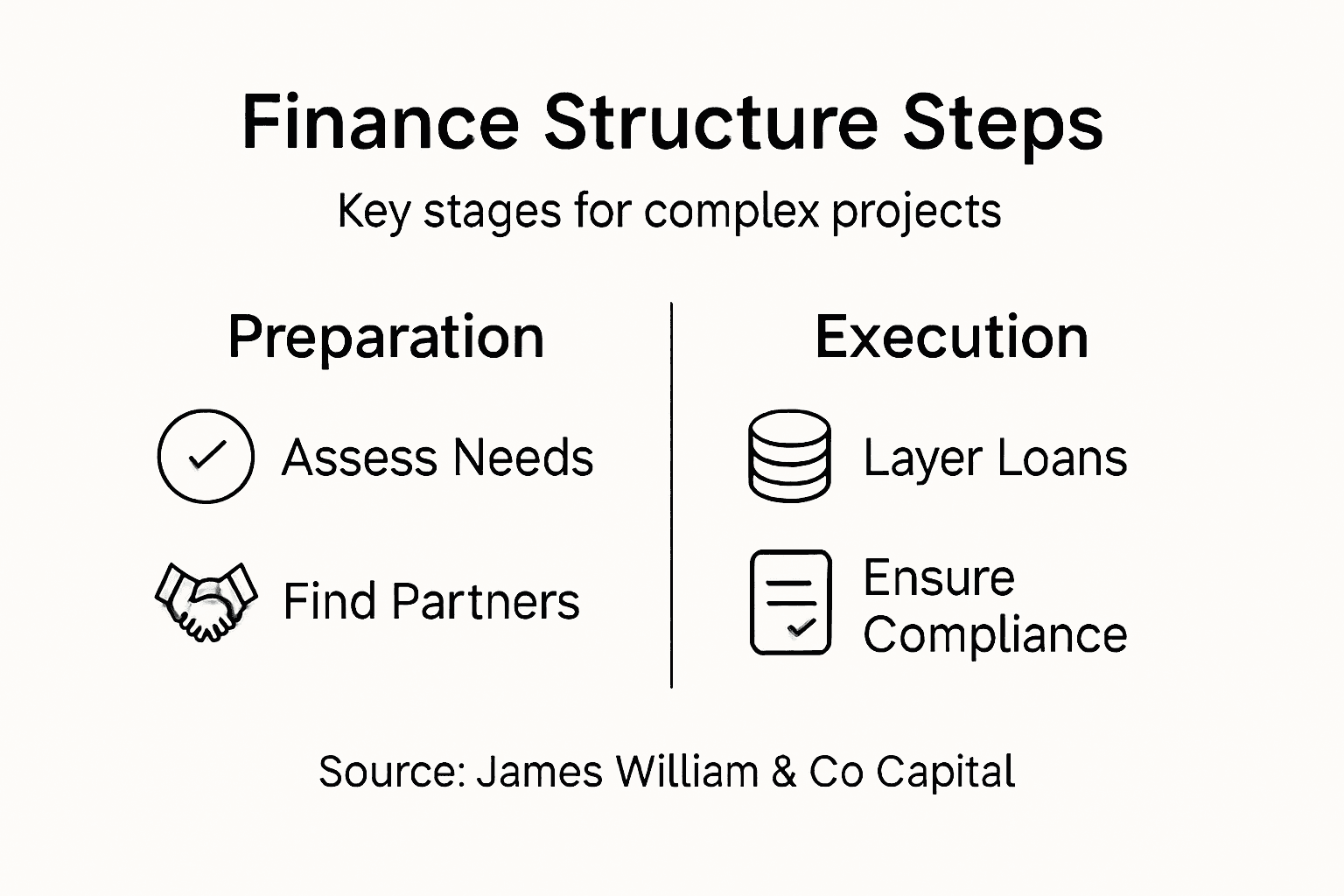
Step 4: Negotiate Bespoke Covenant and Security Packages
Negotiating sophisticated covenant and security packages requires strategic precision and deep understanding of financial contractual nuances. Your goal is to craft a comprehensive security framework that protects lender interests while maintaining sufficient operational flexibility for your development project.
Understand the critical components of sponsor security package negotiation. These typically encompass:
- Specific performance covenants
- Asset charge arrangements
- Guarantee structures
- Enforcement trigger mechanisms
- Reporting requirements
Your negotiation strategy must balance protecting lender interests while preserving your project’s strategic manoeuvrability. This means carefully designing covenant thresholds that demonstrate financial discipline without unnecessarily restricting project development potential.
Effective covenant negotiation transforms potential financial constraints into strategic partnership opportunities.
Pay particular attention to defining clear, measurable performance metrics that align with your project’s unique characteristics. Anticipate potential future scenarios and build sufficient flexibility into your covenant language to accommodate unexpected market shifts.
Below is a summary of typical covenant and security features negotiated in development finance:
| Negotiated Feature | Purpose | Business Benefit |
|---|---|---|
| Performance Covenant | Ensures project benchmarks | Protects lender from project delays |
| Asset Charge | Collateral against loan | Lender can recover funds if needed |
| Guarantee Structure | Backup obligation | Additional security for loan repayment |
| Reporting Requirement | Ongoing project transparency | Enables prompt risk management actions |
Professional advice: Always engage specialised legal counsel experienced in complex property finance to review and refine your proposed covenant package.
Step 5: Verify Compliance and Funding Execution
Ensuring robust compliance and seamless funding execution is the critical final stage in your development finance strategy. Your objective is to meticulously validate every financial commitment and regulatory requirement throughout the project lifecycle.
Implement a comprehensive compliance audit strategy that encompasses:
- Detailed documentation management
- Regular financial milestone tracking
- Independent verification processes
- Systematic reporting mechanisms
- Proactive risk monitoring
Funding drawdown protocols require disciplined execution, with each finance tranche strictly linked to predetermined project milestones. This means developing a granular tracking system that provides lenders transparent evidence of progress, expenditure, and adherence to original project specifications.
Meticulous compliance transforms potential financial obstacles into strategic project momentum.
Establish clear communication channels with your funding partners, ensuring real-time updates and immediate resolution of any potential compliance concerns. Your goal is to demonstrate professional transparency and operational excellence throughout the project development journey.
Professional advice: Maintain a dedicated compliance folder with all critical documentation, updated in real-time to streamline potential audit processes and demonstrate project integrity.
Master Complex Development Finance with Expert Guidance
Structuring development finance for complex projects involves navigating multi-layered debt stacks, bespoke covenant negotiations and strict compliance demands. If you find yourself facing challenges such as identifying the right finance partners or creating a tailored capital stack, you are not alone. Many developers struggle to balance risk, secure appropriate funding, and maintain operational flexibility throughout the project lifecycle.
At James William & Co Capital, we specialise in arranging sophisticated funding for large-scale developments, combining extensive expertise in mezzanine financing, bridging loans and joint venture equity. Our capital concierge approach ensures you receive bespoke solutions that align with your project needs, backed by a trusted network of private credit funds and specialist lenders. Let us transform your complex financing obstacles into strategic opportunities with speed and confidence.
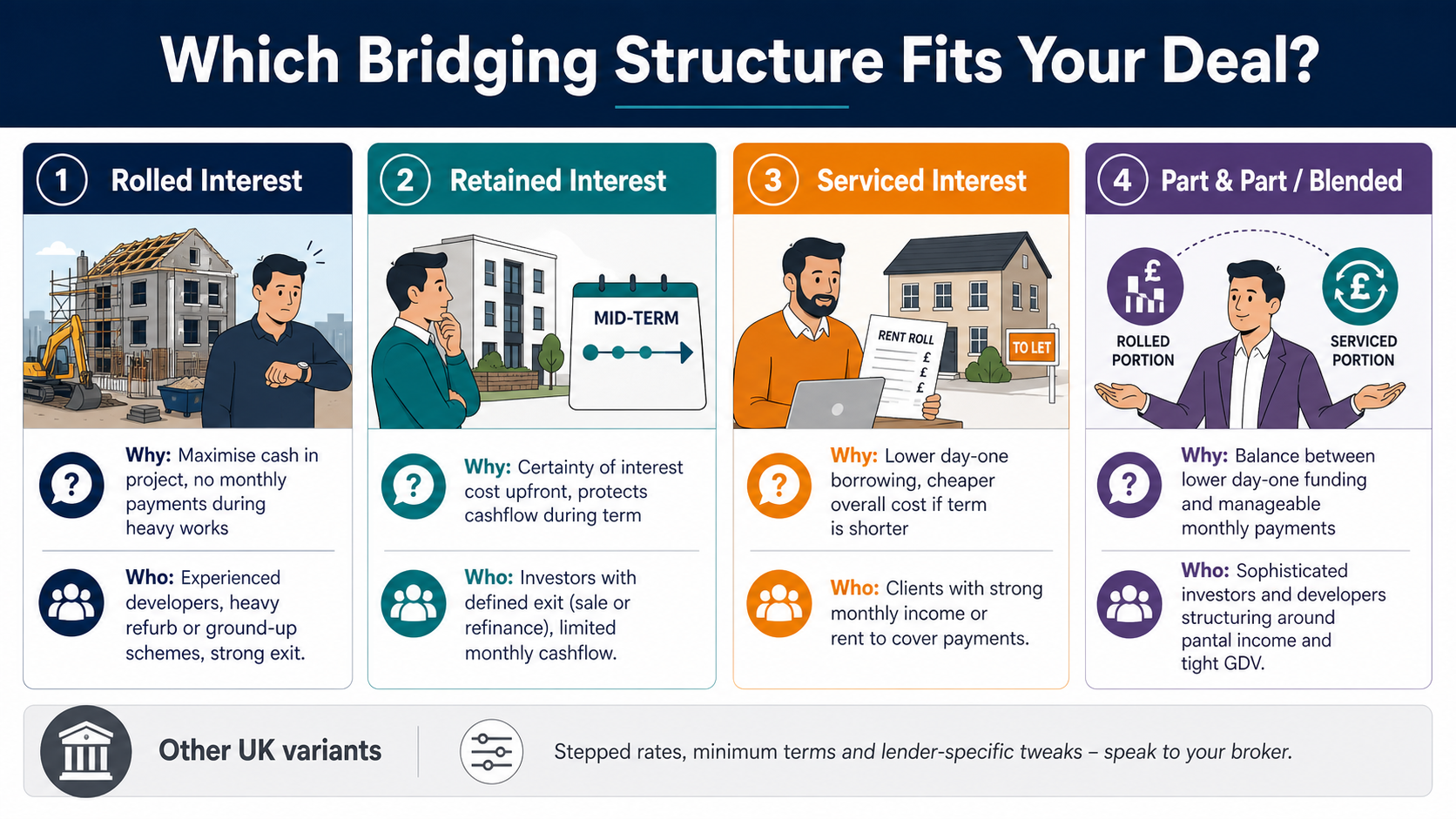
Discover how our tailored development finance structures can accelerate your project success. Contact us today via James William & Co Capital to start unlocking flexible funding options and optimise your capital stack with expert support.
Frequently Asked Questions
What are the key steps to assess project requirements for development finance?
To assess project requirements, begin with a thorough financial feasibility analysis that examines total capital needs, development timelines, expected returns, risk mitigation strategies, and funding mechanisms. Create detailed financial models to attract potential funding partners within 30–60 days.
How can I identify suitable finance structures for my development project?
To identify suitable finance structures, evaluate the different options such as senior debt, mezzanine financing, and public-private partnerships. Consider your project’s specific needs and risk profile to match with the most appropriate financing solutions.
What factors should I consider when selecting finance partners for complex projects?
When selecting finance partners, assess their track record, financial capacity, risk appetite, and cultural compatibility. Conduct thorough due diligence to ensure they align with your project’s strategic objectives.
How do I build an effective multi-layered debt stack for my development project?
To build an effective multi-layered debt stack, understand each financial layer’s purpose, including senior debt, mezzanine financing, and equity. Model multiple debt stack scenarios to assess how different structures can maximise returns and manage risk effectively.
What elements are essential in negotiating covenant and security packages?
In negotiating covenant and security packages, focus on specific performance metrics, asset charge arrangements, and clear reporting requirements. Craft terms that balance lender protection with operational flexibility to enhance project viability.
How can I ensure compliance and effective funding execution throughout my project?
To ensure compliance and effective funding execution, implement a comprehensive compliance audit strategy that includes regular tracking of financial milestones and transparent communication with funding partners. Maintain up-to-date documentation to support project integrity and facilitate any audits.
Recommended
Related Topics
Speak to a specialist
Discuss your finance with James directly
Whole-of-market specialist finance — bridging, development, commercial and residential. No call centres, no obligation. James reviews every enquiry personally.
New to specialist finance? How unbiased broker advice works · Deals we have completed
Explore Related Finance