
Published · Updated
investment due diligence checklistInvestment due diligence checklist for UK investors
By James Dawes, CeMAP, Founder, James William & Co Capital

TL;DR:
- A comprehensive due diligence process is essential to identify risks that become apparent only after the transaction.
- Investors should use a structured, multi-category checklist, verifying details directly with authorities and specialists.
Every significant property transaction carries risk that becomes visible only after the money has moved. A well-structured investment due diligence checklist is what separates investors who price risk accurately from those who discover it expensively. The due diligence process is not a formality you complete to satisfy a solicitor. It is a proactive investigation that shapes your negotiating position, your pricing, and ultimately your decision to proceed. This guide covers every major category you need to assess before committing capital to a UK property transaction.
Table of Contents
- Key takeaways
- 1. The investment due diligence checklist: core categories
- 2. Financial due diligence: what to examine in detail
- 3. Operational, environmental, and zoning due diligence
- 4. Fiduciary and risk management compliance
- 5. Checklist implementation: priority, pitfalls, and best practice
- My view on how investors get due diligence wrong
- How Jwcapital supports your property due diligence
- FAQ
Key takeaways
| Point | Details |
|---|---|
| Use a structured framework | A checklist covering financial, legal, operational, and environmental categories prevents costly oversights. |
| Verify zoning independently | Never rely on seller claims; consult official local authority maps and planning records directly. |
| Document every decision | Regulators and courts assess the quality of your decision process, not just the outcome. |
| Negotiate your timeline | Standard windows of 30 to 90 days may not suffice for complex sites; push for extensions when needed. |
| Treat it as a pricing tool | Due diligence findings should inform renegotiation, not just a binary proceed or withdraw decision. |
1. The investment due diligence checklist: core categories
Before examining individual checklist items, you need a working framework. Comprehensive data rooms for mid-market acquisitions typically span 100 to 200 line items across seven categories. For UK real estate specifically, those categories map to: financial, legal and title, operational, commercial, environmental, planning and zoning, and HR or employment where applicable.
Each category is not independent. A contamination finding under environmental due diligence will immediately affect your financial model, your legal position on indemnities, and your lender’s appetite. A restrictive covenant buried in the title register can undermine an entire planning strategy. The categories interact constantly, which is why a linear checklist is less useful than a matrix approach where findings in one area automatically trigger review in another.
- Financial: Three years of accounts, rent rolls, service charge reconciliations, tax compliance, capital expenditure history
- Legal and title: Title register and title plan, lease abstracts, corporate ownership structure, charges registered at Companies House
- Operational: Existing contracts with managing agents, facilities management agreements, break clauses, insurance schedules
- Commercial: Tenancy schedules, covenant strength of occupiers, void rates, market comparable evidence
- Environmental: Phase I and Phase II Environmental Site Assessments, flood risk mapping, Japanese knotweed surveys
- Planning and zoning: Permitted use class, planning history, outstanding conditions, any article 4 directions
- HR and employment: TUPE obligations where staff transfer, pension liabilities, ongoing disputes
Pro Tip: Build your checklist as a shared document with ownership assigned to each line item. Legal counsel owns title items, your surveyor owns structural and environmental, and your finance team owns the numbers. Without assigned ownership, items slip through.
2. Financial due diligence: what to examine in detail
Financial due diligence for property is less about auditing a trading business and more about validating income sustainability, cost accuracy, and debt exposure. Start with the rent roll and cross-reference every tenancy against the actual signed leases. Discrepancies between the headline rent roll presented by a vendor and the actual passing rents are more common than most buyers expect.
- Three years of audited accounts or management accounts where audited figures are unavailable. Look for trends in NOI (net operating income), not just headline revenue.
- Service charge accounts for the last three years. Examine any shortfalls not recovered from tenants and whether the sinking fund balance is adequate.
- Historic capital expenditure records. A building that has received no material capex in a decade carries hidden liability.
- Tax compliance documentation. VAT elections on commercial property directly affect your acquisition structure and ongoing costs.
- Existing debt schedules. Any charges registered against the title need to be understood before you can structure your own financing. UK real estate debt structures can be complex, particularly where offshore SPVs or mezzanine layers are involved.
- Rent arrears history. A clean arrears position at the point of sale does not mean the vendor has not recently written off significant sums to present a clean picture.
- Insurance claim history. Repeated claims signal either a structural problem or a difficult claims environment with the current insurer.
Pro Tip: Request bank statements alongside management accounts. When the two do not reconcile closely, that discrepancy needs an explanation before you proceed.
Legal due diligence for UK property centres on the title register at HM Land Registry. Review the title register and title plan carefully for any restrictions, overriding interests, or third-party rights such as rights of way and easements. Examine every registered charge and confirm the discharge mechanics. Where the property is leasehold, obtain the freehold title as well and check for any head lease covenants that restrict the use or alteration of the property.

3. Operational, environmental, and zoning due diligence
Operational due diligence is frequently underweighted by investors focused on financial returns. The contracts and relationships running a commercial or mixed-use asset often have significant embedded costs or exit penalties that a buyer inherits.
Operational items to examine:
- Managing agent agreements: notice periods, performance metrics, termination fees
- Facilities management contracts: HVAC, lifts, fire safety systems and compliance certificates
- Utility supply agreements: any long-term contracts at above-market rates
- Tenant fit-out licences: outstanding obligations for reinstatement at lease end
Environmental assessments are non-negotiable for any site with industrial history or proximity to former manufacturing. Phase I Environmental Site Assessments are standard practice and will reveal historical uses from Ordnance Survey maps, aerial photography, and regulatory records. Where a Phase I identifies a potential source of contamination, a Phase II intrusive investigation follows. The cost of Phase II work is modest compared to the remediation costs you could inherit unknowingly.
| Environmental risk item | Typical cost to investigate | Potential remediation exposure |
|---|---|---|
| Phase I ESA | £1,500 to £4,000 | N/A (desktop review) |
| Phase II intrusive investigation | £5,000 to £25,000+ | £50,000 to several million |
| Japanese knotweed survey | £500 to £2,000 | £5,000 to £50,000+ |
| Flood risk assessment | £2,000 to £10,000 | Affects insurability and value |
On zoning and planning, the single most important rule is this: never rely on seller representations or even tax records to verify permitted use. Always go directly to the local planning authority and examine the current planning register, the site’s use class, and any extant planning permissions or conditions. Rezoning or seeking a change of use is not a quick fix. The process typically takes 4 to 12 months and can cost between £20,000 and £100,000 or more in professional and legal fees, with no guarantee of approval.
4. Fiduciary and risk management compliance
Whether you are investing as a fund manager, trustee, or on behalf of a high-net-worth client structure, documenting your pre-investment assessment against a defined framework is not optional. It is how you demonstrate prudence.
The fiduciary investment evaluation framework most relevant to professional investors covers six analytical factors: performance track record, fee and cost analysis, liquidity profile, valuation methodology, benchmarking against comparable investments, and complexity relative to investor sophistication. In UK investment structures, the Financial Conduct Authority and Pensions Regulator apply broadly analogous expectations.
Regulators assess the quality of your decision-making process. A poor outcome arrived at through a rigorous, documented process is defensible. A good outcome arrived at through no documented process is not.
What this means practically is that committee meeting minutes must record not just the conclusion but the alternatives considered, the risks identified, and the rationale for accepting or rejecting each. A well-documented investment committee minute is worth more in a regulatory dispute than any number of spreadsheet models saved in a folder.
Ongoing monitoring is equally part of the obligation. Build a post-acquisition review schedule into your governance calendar. Quarterly reviews of occupancy, lease events, and capital expenditure requirements against the original underwriting keep you ahead of problems rather than reacting to them.
5. Checklist implementation: priority, pitfalls, and best practice
A checklist is only useful if it is actually used consistently. The table below summarises the main categories, where investors most commonly cut corners, and what to do instead.
| Checklist category | Common pitfall | Recommended action |
|---|---|---|
| Financial | Accepting management accounts without bank reconciliation | Request bank statements and VAT returns for cross-referencing |
| Legal and title | Missing restrictions in the proprietorship register | Instruct a specialist property solicitor, not a generalist |
| Environmental | Skipping Phase II after a qualified Phase I | Always follow the Phase I recommendation chain |
| Planning and zoning | Relying on the vendor’s planning summary | Obtain a formal planning search directly from the LPA |
| Operational | Assuming contracts transfer on standard terms | Review every material contract for change of control clauses |
| Fiduciary / risk | No documented investment committee record | Produce written investment papers before any commitment |
Standard due diligence windows run between 30 and 90 days. For a straightforward residential investment, 30 days may be workable. For a mixed-use commercial acquisition with environmental complexity or planning risk, 90 days is a minimum, not a ceiling.
Treat your checklist as a living document. Each deal will surface issues specific to that asset class, geography, or tenant profile. Log findings and update your master template accordingly. Over time, a pattern of consistent issues in specific deal types will emerge, allowing you to front-load those investigations and save both time and money.
Pro Tip: Include due diligence contingencies in your purchase contracts. These give you the right to withdraw and recover your deposit if investigations reveal issues that fundamentally change the risk profile of the investment.
My view on how investors get due diligence wrong
I have structured financing for a considerable number of UK property acquisitions, and the pattern I see most often is not carelessness. It is compression. Investors under competitive pressure to secure a deal agree to shortened timelines, defer the environmental investigation, or accept a vendor data room that is conspicuously light on documents. Then they close, and the problems arrive.
What I have learned is that due diligence is a negotiation tool as much as an investigation. The findings from a thorough process create legitimate grounds to renegotiate price, demand indemnities, or require the vendor to remediate before completion. Investors who rush through the process lose that leverage entirely.
The documentation point is one I feel strongly about. I have seen deals fall apart during lender credit processes not because the investment was bad, but because the investor could not produce a credible paper trail showing how the decision was reached. Lenders, like regulators, want to see that you thought this through. A rigorous written investment paper, supported by your full due diligence findings, makes the financing process materially faster and smoother.
Experienced investors also push hard to extend due diligence periods on complex sites. A vendor who refuses any extension on an environmental investigation is telling you something. That refusal is itself a data point worth taking seriously.
— James
How Jwcapital supports your property due diligence
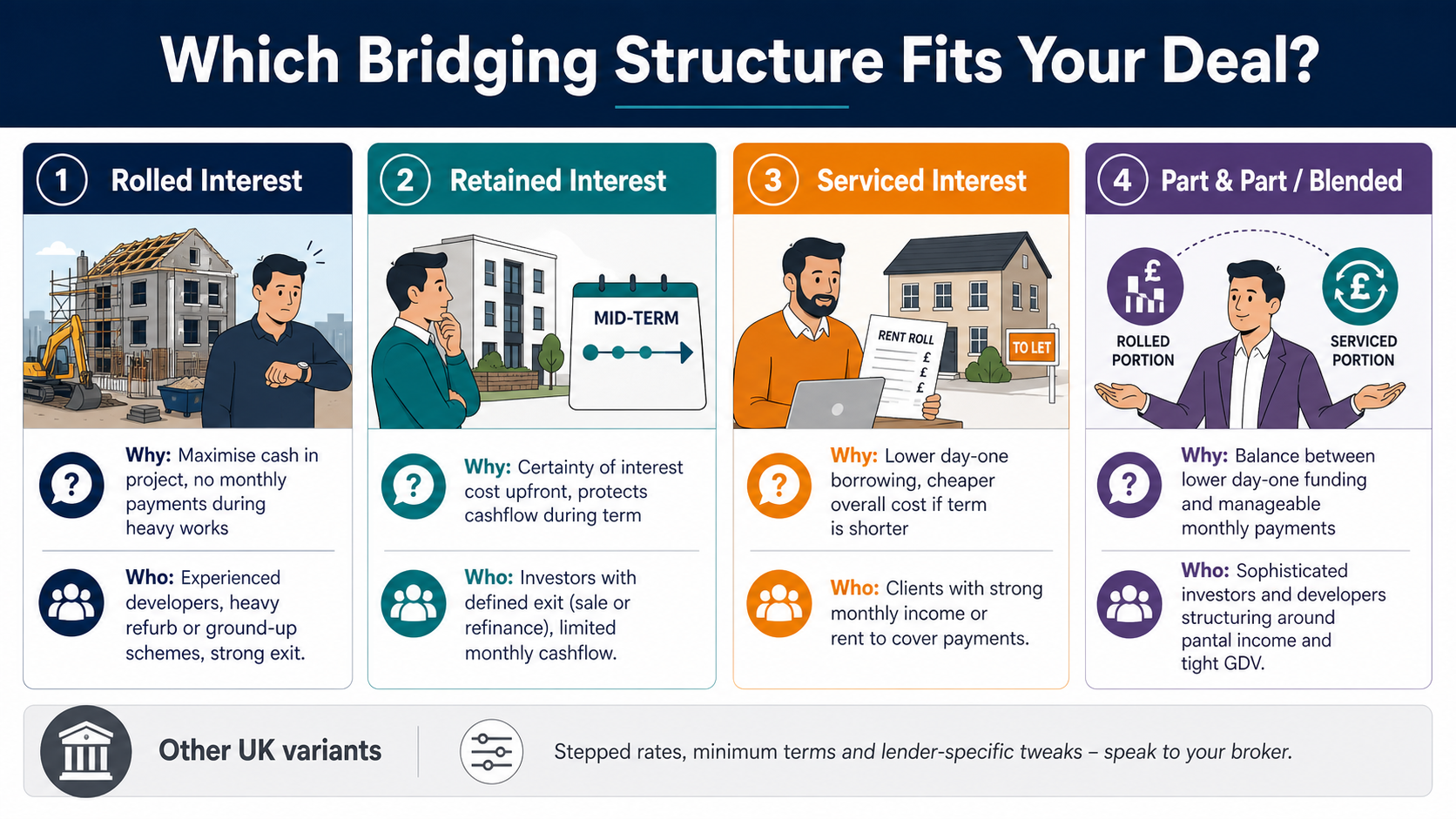
A thorough due diligence process requires the right financial structure to match. At Jwcapital, we work alongside UK property investors and developers throughout the acquisition and financing process, structuring specialist property finance solutions that reflect the full picture your due diligence reveals. Whether that means a commercial mortgage, a bridging facility pending planning, mezzanine debt, or a multi-layered development finance stack, we build funding structures around your investment thesis. Explore our client case studies to see how we have executed at pace on complex acquisitions, or review our finance services to understand the full range of structures we can arrange.
FAQ
What should an investment due diligence checklist include?
A thorough investment due diligence checklist covers financial statements, legal title, environmental assessments, planning and zoning verification, operational contracts, and fiduciary documentation. For UK property, include VAT elections, registered charges, and TUPE obligations where relevant.
How long does the due diligence process take for UK property?
Standard due diligence periods run from 30 to 90 days. Complex sites with environmental or planning issues require longer windows, and experienced investors negotiate for extensions rather than compress the investigation.
What is financial due diligence in property investment?
Financial due diligence involves reviewing audited accounts, rent rolls, service charge reconciliations, debt schedules, arrears histories, and tax compliance records to validate the income, cost, and risk profile of the asset before committing capital.
Why is zoning verification critical in a pre-investment assessment?
Permitted use class directly determines what you can do with a property. Rezoning can take 4 to 12 months and carry significant costs with no certainty of approval, so confirming the existing position with the local planning authority before exchange is non-negotiable.
How do I protect myself if due diligence reveals problems?
Include due diligence contingencies in your purchase contract. These allow you to withdraw and recover your deposit if investigations reveal issues that materially change the deal. Use findings to renegotiate price or require vendor remediation before proceeding.
Recommended
Related Topics
Speak to a specialist
Discuss your finance with James directly
Whole-of-market specialist finance — bridging, development, commercial and residential. No call centres, no obligation. James reviews every enquiry personally.
New to specialist finance? How unbiased broker advice works · Deals we have completed
Explore Related Finance