
Published · Updated
what is mezzanine financeMezzanine Finance for UK Property Developers
By James Dawes, CeMAP, Founder, James William & Co Capital

Many UK property developers mistakenly believe that mezzanine finance always demands large equity stakes. In reality, equity give-up ranges from 0% to 20% depending on deal terms. Mezzanine finance fills the capital gap between senior debt and equity in UK property projects, enabling higher leverage without sacrificing control. This real estate funding sources guide will clarify mezzanine finance’s structure, costs, risks, and strategic uses for high net worth developers.
Table of Contents
- Introduction To Mezzanine Finance In UK Property Development
- Capital Stack Placement And Mechanics Of Mezzanine Finance
- Risk, Pricing, And Return Tradeoffs In Mezzanine Finance
- Comparison With Senior Debt And Equity Financing
- Common Misconceptions About Mezzanine Finance
- Practical Applications And Loan Eligibility
- How To Choose The Right Mezzanine Finance Provider And Structure Your Deal
- Summary And Future Outlook For Mezzanine Finance In UK Real Estate
- Explore Specialist Mezzanine Finance Solutions With James William & Co Capital
- Frequently Asked Questions About Mezzanine Finance In UK Property Development
Key Takeaways
| Point | Details |
|---|---|
| Capital gap solution | Mezzanine finance is subordinated debt bridging senior loans and equity in UK property projects. |
| Higher leverage | Typically offers loan to cost ratios up to 90%, reducing developer equity needs. |
| Premium pricing | Carries higher interest rates (8% to 30%) reflecting increased lender risk. |
| Flexible terms | Does not always require equity dilution; terms are flexible and negotiable. |
| Strategic tool | Supports developers in complex, large scale UK real estate developments. |
Introduction to Mezzanine Finance in UK Property Development
Mezzanine finance is subordinated debt positioned between senior debt and equity in a property capital stack. Mezzanine finance fills the gap between senior debt and equity allowing higher leverage without major equity dilution, making it crucial for developers who need more capital than senior lenders provide.
High net worth individuals and institutional investors involved in complex UK property projects benefit most. When senior lenders cap loan to value ratios at 60% to 70%, mezzanine finance bridges the remaining shortfall without forcing developers to inject excessive equity or surrender ownership control.
Typical UK capital stack layers include:
- Senior debt (first charge, 60% to 70% LTV)
- Mezzanine finance (second charge, additional 10% to 30%)
- Equity (developer and investor capital)
Mezzanine loans feature flexible terms and subordinated security. Lenders accept higher risk because their claim sits behind senior debt in repayment priority. However, this structure allows developers to push total leverage up to 90% loan to cost while retaining ownership.
The subordinated nature means mezzanine lenders rely on project success and exit proceeds for repayment. This explains both the premium interest rates and the flexibility in structuring covenant packages. Understanding these fundamentals helps you evaluate whether mezzanine finance suits your real estate funding sources strategy.
Capital Stack Placement and Mechanics of Mezzanine Finance
Mezzanine finance sits as second charge subordinated debt behind senior loans in the capital stack. Mezzanine finance loans offer up to 90% loan to cost and up to 75% loan to value with terms 6 to 36 months, giving developers substantial additional capital beyond senior debt limits.
Typical mezzanine loan characteristics include:
- Loan to cost ratios reaching 90%
- Loan to value ratios up to 75%
- Loan durations from 6 to 36 months
- Capitalised interest structures
- Repayment triggered at project exit or refinance
The chronological steps in using mezzanine finance for UK developments are:
- Secure senior debt facility from primary lender
- Identify remaining capital shortfall for project costs
- Engage mezzanine lender to fill the gap
- Negotiate subordination terms with senior lender
- Complete legal documentation and security registration
- Draw mezzanine funds alongside senior debt drawdowns
- Repay mezzanine loan at project exit or refinance
Flexibility in structuring allows you to combine mezzanine finance with senior debt and equity for capital stack optimization. You can structure development finance to match specific project cash flow profiles and risk appetites.

Capitalised interest means monthly interest payments roll up into the loan balance rather than requiring cash servicing during construction. This preserves working capital for project delivery. At exit, you repay the principal plus accumulated interest from sale proceeds or refinancing into stabilised debt.
Risk, Pricing, and Return Tradeoffs in Mezzanine Finance
Mezzanine lenders accept higher risk due to subordinated claims. If a project fails, senior lenders recover first from asset sales, leaving mezzanine lenders exposed to losses. This elevated risk directly impacts pricing.
Interest rates on mezzanine loans range from 8% to 30%, reflecting increased risk from subordinate status. Your total cost of capital rises with mezzanine finance, but the tradeoff preserves equity ownership and control.
Key pricing and return considerations:
- Higher interest compensates lenders for subordinated position
- Rates vary based on project risk, developer track record, exit clarity
- Paying premium interest costs less than diluting equity in high return projects
- Mezzanine finance increases return on equity by reducing equity needed
Consider a £10 million development requiring £2 million equity with senior debt alone. Adding mezzanine finance to cover £1.5 million reduces your equity to £500,000. If the project generates £3 million profit, your return on equity jumps from 150% to 600%.
The balance between paying higher interest versus preserving equity ownership depends on projected returns. In high margin developments, mezzanine finance dramatically amplifies your returns despite premium costs. In marginal projects, the additional interest burden may erode profitability.
Pro tip: Negotiate mezzanine pricing by demonstrating strong exit routes and experienced team credentials. Lenders price risk, so reducing perceived risk through robust planning and track record evidence can lower rates by 3% to 5%. Compare multiple develop funding tips to benchmark competitive terms.
Comparison with Senior Debt and Equity Financing
Senior debt provides first charge security with lower interest rates (3% to 7%). Lenders advance 60% to 70% loan to value, requiring substantial equity to bridge the gap. Senior debt offers the lowest cost of capital but limits total leverage.
Mezzanine finance occupies the middle ground as second charge debt. It carries higher risk and costs (8% to 30%) but enables greater leverage without equity dilution. Mezzanine finance offers higher leverage without equity dilution but costs more than senior debt and less control loss than equity.
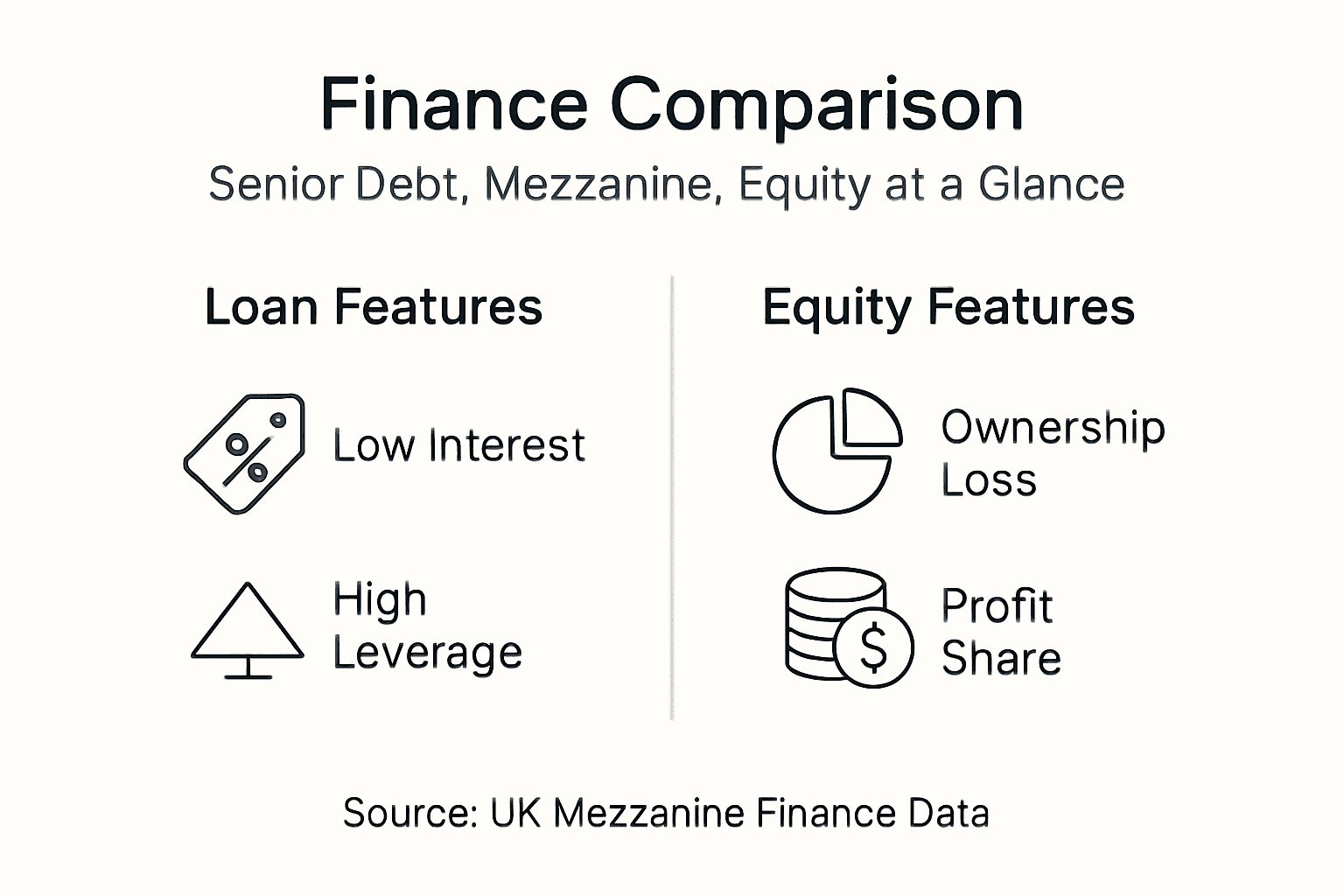
Equity involves no fixed repayments but dilutes ownership and control. Equity investors demand profit shares or ownership stakes, accepting higher risk for potentially unlimited returns. Equity funding often takes longer to secure than debt facilities.
| Aspect | Senior Debt | Mezzanine Finance | Equity |
|---|---|---|---|
| Cost | 3% to 7% | 8% to 30% | Profit share |
| Security | First charge | Second charge | Ownership stake |
| Risk to lender | Lowest | Medium | Highest |
| Control impact | Minimal | Minimal | Significant |
| Speed | Fast | Fast | Slower |
| Leverage | 60% to 70% LTV | Up to 90% LTC | Variable |
Mezzanine finance’s unique position enables higher leverage without typical equity dilution or control loss. You maintain ownership while accessing capital beyond senior debt limits. This makes mezzanine particularly valuable for experienced developers confident in project returns who want to maximise equity efficiency.
The strategic choice depends on your capital structure goals. If minimising cost matters most, maximise senior debt. If preserving ownership and control is paramount while achieving high leverage, mezzanine finance provides the optimal solution. Understanding real estate debt in UK property structures helps you select the right mix.
Common Misconceptions About Mezzanine Finance
Many UK developers hold outdated or incorrect beliefs about mezzanine finance that prevent them from accessing valuable funding. Clearing these misconceptions helps you make informed financing decisions.
Many believe mezzanine finance always involves large equity give up; in reality, many deals are pure debt with no equity stakes. Mezzanine finance is subordinated debt, not quasi equity. While some lenders request equity kickers or warrants, pure debt structures without ownership dilution are common.
Key misconceptions to dispel:
- Myth: Mezzanine always requires significant equity give up. Reality: Most mezzanine loans are pure debt with no equity component.
- Myth: Mezzanine is another form of senior debt. Reality: Mezzanine is explicitly subordinated, ranking behind senior debt in repayment priority.
- Myth: Terms are rigid and standardised. Reality: Mezzanine finance offers significant flexibility in security structures, covenants, and repayment triggers.
- Myth: Only huge institutional projects qualify. Reality: Mezzanine loans start from £250,000, serving mid market developers.
The flexibility in mezzanine terms allows tailoring to specific developer needs. You can negotiate payment structures, security packages, and covenant requirements based on project characteristics and your track record. This bespoke approach differs from standardised senior debt products.
Pro tip: Understanding these nuances aids strategic financing decisions. Recognise mezzanine finance as a debt tool that complements senior loans without forcing equity dilution. This perspective opens additional property finance types for UK developments that pure senior debt cannot fund.
Practical Applications and Loan Eligibility
Mezzanine finance serves multiple strategic purposes in UK property development. Common applications include:
- Site acquisition when senior debt alone falls short
- Bridging shortfall in development funding for construction costs
- Refinancing existing facilities to release equity or extend terms
- Capitalising interest reserves and professional fees
- Funding cost overruns or scope changes mid project
Mezzanine loans typically range from £250,000 to over £10 million with terms from 6 to 36 months for eligible developers. Eligibility requirements focus on developer experience, project viability, and senior debt contingency.
Typical eligibility criteria include:
- Experienced developers with proven track records
- Secured planning permission or strong planning prospects
- Senior debt facility confirmed or in advanced stages
- Clear exit strategy via sale or refinance
- Viable project economics supporting debt service
Capitalised interest structures mean you do not pay interest monthly during construction. Instead, interest accrues and adds to the loan balance. At project exit, you repay principal plus accumulated capitalised interest from sale proceeds or refinancing.
Repayment timing aligns with project exit events. When you sell the completed development or refinance into long term investment debt, exit proceeds repay both senior and mezzanine lenders according to their priority ranking. This structure matches debt repayment to cash generation.
Mezzanine finance accelerates project execution by eliminating equity fundraising delays. You can proceed immediately once senior debt and mezzanine facilities are in place, rather than waiting months for equity investor commitments. This speed advantage often makes the difference in competitive site acquisitions. Explore structured property finance approaches to integrate mezzanine effectively.
How to Choose the Right Mezzanine Finance Provider and Structure Your Deal
Selecting suitable mezzanine lenders requires evaluating multiple factors beyond interest rates. Provider selection criteria include:
- Specialisation in property sector and development types
- Speed of decision making and fund deployment
- Flexibility in structuring bespoke covenant packages
- Transparent pricing with no hidden fees
- Track record of supporting similar projects
Negotiating bespoke covenants and integrating mezzanine terms with senior debt and equity requires coordination. Your mezzanine lender must agree subordination terms with the senior lender, establishing clear intercreditor arrangements that protect both parties while enabling the project to proceed.
Tradeoffs between minimising cost of capital and preserving equity and control shape deal structure. Lower mezzanine rates may come with tighter covenants or partial equity participation. Higher rates typically offer pure debt structures with minimal restrictions. Your choice depends on project confidence and capital efficiency goals.
Specialist brokers play a crucial role in packaging multi layered finance solutions quickly. They understand lender appetites, negotiate terms across senior and mezzanine facilities, and structure integrated capital stacks that optimise your position. Brokers access wholesale markets and specialist lenders unavailable to direct applicants.
Pro tip: Complete thorough due diligence before committing to mezzanine finance. Verify total costs including arrangement fees, legal expenses, and exit penalties. Confirm subordination terms do not create conflicts with senior lenders. Model cash flow scenarios to ensure debt service remains viable under various exit timing assumptions. Following these steps avoids common pitfalls and aligns financial goals with project realities. Review strategies to optimise real estate funding across all capital stack layers.
Summary and Future Outlook for Mezzanine Finance in UK Real Estate
Mezzanine finance serves as an essential hybrid funding tool bridging senior debt and equity for UK property developers. It enables higher leverage without ownership dilution, supporting complex projects that senior debt alone cannot fund.
The UK mezzanine market is expanding. Specialist lenders and private capital sources increasingly offer mezzanine products tailored to mid market and institutional developers. This growing availability improves competition and pricing transparency.
Structuring sophistication continues advancing. Bespoke multi layer finance arrangements combining senior debt, mezzanine finance, and selective equity now serve as standard practice for high value developments. Developers gain access to capital stack engineering that optimises returns while managing risk.
Engaging expert advisors and brokers delivers tailored, efficient capital solutions. Specialist intermediaries navigate complex lender requirements, structure integrated facilities, and accelerate funding deployment. Their market knowledge and relationships provide competitive advantages in securing optimal terms.
As UK property development demands more sophisticated financing, mezzanine finance will remain central to capital stack strategies. Understanding its mechanics, costs, and strategic applications positions you to leverage this powerful funding tool effectively. Stay informed on evolving property finance trends UK to maintain competitive advantage.
Explore Specialist Mezzanine Finance Solutions with James William & Co Capital
Need to bridge your funding gap without diluting equity? James William & Co Capital specialises in mezzanine finance for UK property developers, offering bespoke structuring, fast funding decisions, and integrated multi layer capital solutions.
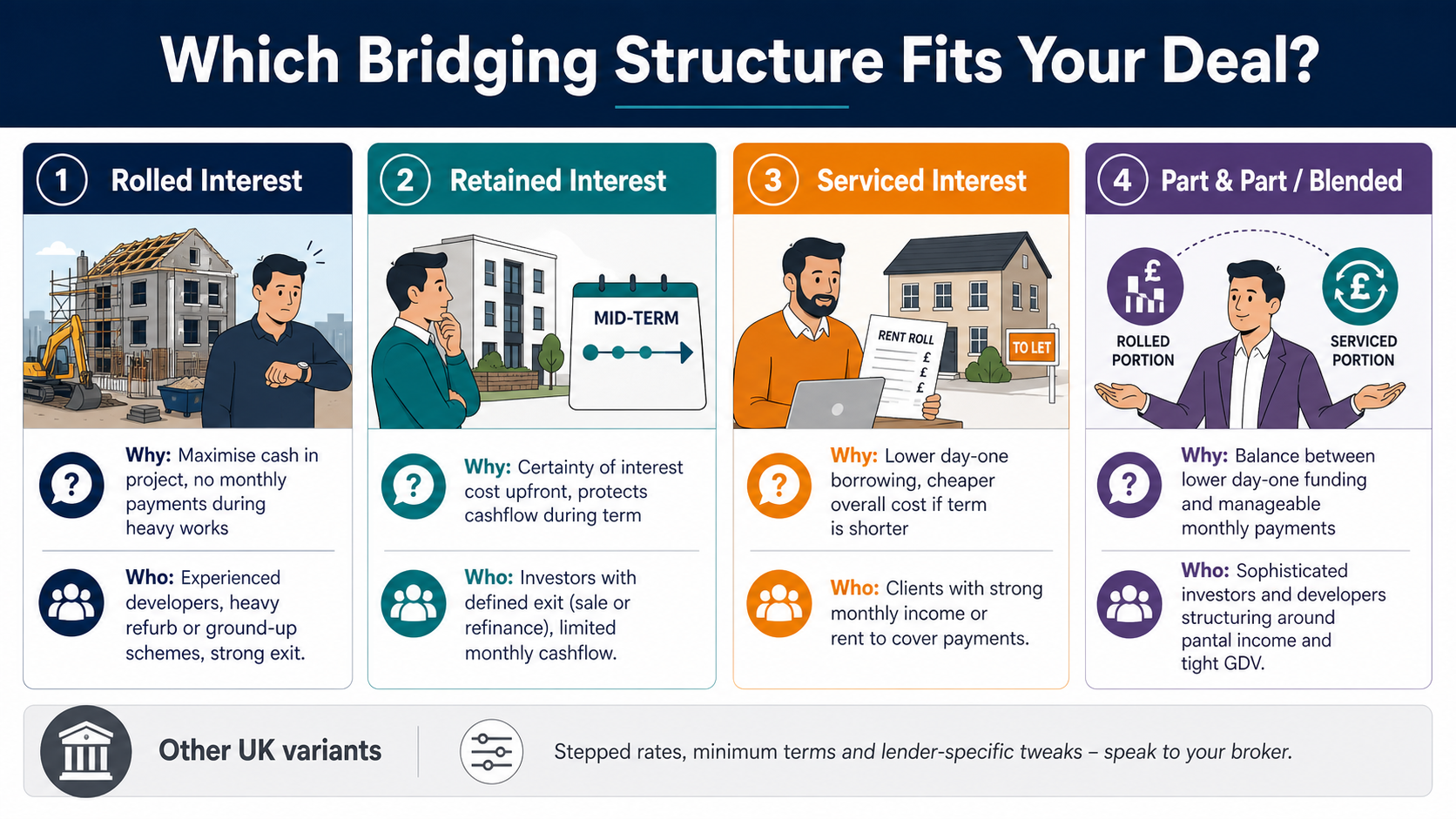
Our team arranges sophisticated mezzanine debt alongside senior facilities, working with specialist lenders and private capital sources to deliver tailored packages for complex developments. We structure deals from £250,000 to £10 million plus, supporting experienced developers through our capital concierge approach.
Explore our comprehensive property funding guide to understand all available options. Discover proven methods to optimise real estate funding across your capital stack. Visit our specialist property finance services page to discuss your project requirements with our expert advisors.
Frequently Asked Questions About Mezzanine Finance in UK Property Development
What exactly is mezzanine finance in UK property development?
Mezzanine finance is subordinated debt that sits between senior loans and equity in a property capital stack. It provides additional leverage beyond senior debt limits without requiring equity dilution, typically offering up to 90% loan to cost.
Who qualifies for mezzanine finance in the UK?
Experienced property developers with proven track records, secured planning permission, confirmed senior debt facilities, and clear exit strategies qualify. Lenders assess project viability, developer capability, and exit route strength when evaluating applications.
How much does mezzanine finance cost compared to senior debt?
Mezzanine finance costs 8% to 30% annually, significantly higher than senior debt rates of 3% to 7%. The premium reflects subordinated risk position, but it enables higher leverage without equity dilution, often improving overall returns on equity.
What loan sizes and terms are typical for UK mezzanine finance?
Mezzanine loans range from £250,000 to over £10 million with terms from 6 to 36 months. Interest typically capitalises during the project, with repayment occurring at exit via sale proceeds or refinancing into stabilised debt.
Does mezzanine finance always require giving up equity?
No, most mezzanine finance structures are pure debt without equity participation. While some lenders may request equity kickers, many deals involve only subordinated debt with no ownership dilution, preserving full developer control.
How does mezzanine finance affect project timelines?
Mezzanine finance accelerates timelines by eliminating lengthy equity fundraising. Once senior and mezzanine facilities are arranged, you can proceed immediately rather than waiting months for equity investor commitments, crucial for competitive site acquisitions.
Recommended
Related Topics
Speak to a specialist
Discuss your finance with James directly
Whole-of-market specialist finance — bridging, development, commercial and residential. No call centres, no obligation. James reviews every enquiry personally.
New to specialist finance? How unbiased broker advice works · Deals we have completed
Explore Related Finance