
Published · Updated
what is multi layered financeMulti-Layered Finance and Offshore Structures in UK Property
By James Dawes, CeMAP, Founder, James William & Co Capital

Many high-net-worth UK developers assume multi-layered finance adds prohibitive cost and complexity to large-scale real estate transactions. In reality, blended capital costs can be optimised between 5 and 8 percent through strategic layering of senior debt, mezzanine finance, and equity. Approximately 60% of major UK property transactions now incorporate offshore structures within multi-layered finance stacks. This guide explains how these sophisticated funding mechanisms work, debunks common misconceptions, and outlines practical steps for institutional investors and developers seeking to optimise real estate funding across complex UK projects.
Table of Contents
- Introduction To Multi-Layered Finance In UK Real Estate
- Core Components And Types Of Multi-Layered Finance
- Risk Management And Covenant Structures
- Use Of Offshore Vehicles And Tax Considerations
- Common Misconceptions About Multi-Layered Finance
- Case Studies Illustrating Multi-Layered Finance Benefits And Risks
- Practical Steps To Implement Multi-Layered Finance For Your Project
- Summary And Strategic Takeaways
- Explore Expert Multi-Layered Finance Solutions With James William & Co Capital
- Frequently Asked Questions
Key Takeaways
| Point | Details |
|---|---|
| Layered Capital Optimises Risk | Multi-layered finance combines senior debt, mezzanine debt, and equity to balance cost and risk allocation across lenders. |
| Covenant Customisation Matters | Bespoke covenant packages enable flexible lender risk management tailored to project-specific cash flows and milestones. |
| Offshore Vehicles Are Legal Tools | Offshore structures provide legitimate tax efficiency and asset protection when used within UK compliance frameworks. |
| Misconceptions Inflate Perceived Cost | Properly structured multi-layered finance often delivers blended rates of 5 to 8 percent, not the inflated figures many assume. |
| Expert Structuring Accelerates Execution | Specialist brokers with diverse lender networks enable rapid deployment and covenant negotiation for time-sensitive deals. |
Introduction to Multi-Layered Finance in UK Real Estate
Multi-layered finance refers to a structured capital stack that combines senior debt, mezzanine debt, and equity investment to optimise capital deployment and risk allocation. This approach divides funding into distinct layers, each with its own security position, cost profile, and return expectations. Large-scale ground-up developments, complex refinances, and high-value acquisitions in the UK property market increasingly rely on this method to access diverse lender pools and manage leverage prudently.
For institutional investors and high-net-worth developers, multi-layered finance offers critical advantages. It enables access to capital beyond traditional bank lending limits while maintaining manageable equity contributions. The structure distributes risk among senior lenders, mezzanine providers, and equity partners, reducing exposure for any single party. This risk diversification becomes essential when project scale or complexity exceeds the appetite of conventional mortgage products.
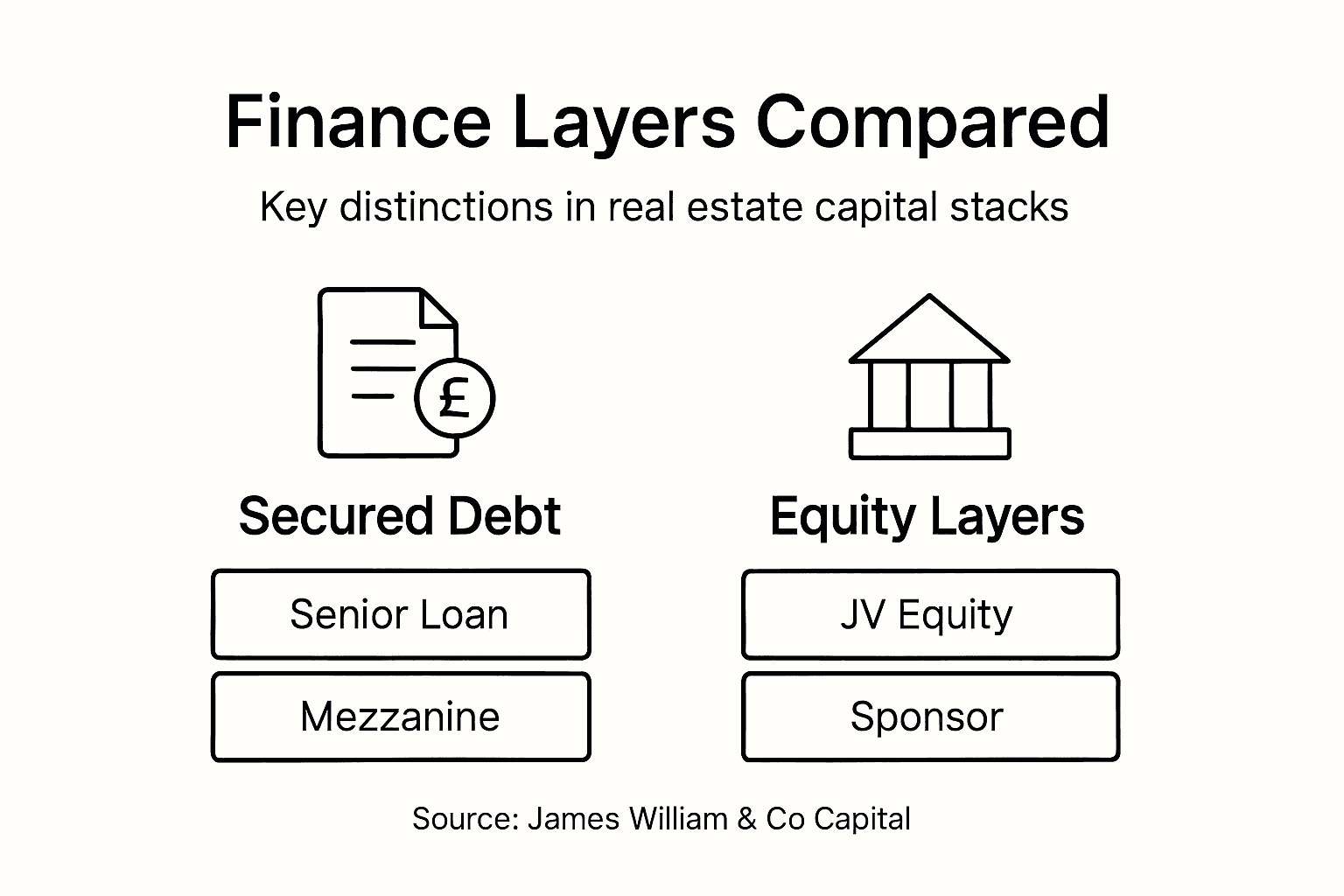
The basic layering principle balances three competing priorities: cost of capital, risk exposure, and control retention. Senior debt sits at the foundation with first charge security and lowest interest rates. Mezzanine debt occupies the middle layer, accepting subordinate positions in exchange for higher returns. Equity caps the stack, bearing maximum risk but gaining profit participation and strategic control.
Typical UK property debt landscapes now feature these layered structures across diverse asset classes:
- Ground-up residential and mixed-use developments requiring phased capital releases
- Commercial acquisitions needing bridge funding before permanent refinancing
- Portfolio refinances involving multiple properties and lender coordination
- Complex corporate real estate transactions with offshore holding structures
Understanding how these layers interact and align with 2026 UK property finance trends equips developers to structure optimal funding solutions. The key lies in matching each layer’s characteristics to project cash flow timing, lender risk appetite, and borrower equity preservation goals.
Core Components and Types of Multi-Layered Finance
Each finance layer serves distinct roles within the capital stack, attracting different lender types with corresponding risk and return profiles.
Senior debt forms the foundation, typically provided by banks or institutional lenders holding first charge security over assets. This layer offers the lowest interest rates, usually between 4 and 6 percent in 2026 UK markets, reflecting minimal default risk. However, senior lenders impose strict covenants covering loan-to-value ratios, debt service coverage ratios, and development milestones. These constraints protect lender capital but can limit borrower flexibility during project execution.
Mezzanine debt serves as a subordinated layer between senior loans and equity, offering flexible bridge funding with higher returns for lenders. Positioned junior to senior debt in repayment priority, mezzanine finance accepts elevated risk in exchange for interest rates ranging from 8 to 15 percent. Specialist mezzanine funds, family offices, and private credit providers dominate this space, offering bespoke terms that can include flexible repayment schedules, profit participation, or conversion rights.
Equity and joint venture stakes occupy the top of the capital stack, bearing maximum risk with no fixed repayment obligations. Equity partners share in project profits and asset appreciation, typically targeting internal rates of return exceeding 15 to 20 percent. Private equity firms, institutional investors, and development partners provide equity capital, often securing governance rights and strategic input proportional to their stake.
| Finance Layer | Typical LTV | Interest Rate Range | Security Position | Primary Lender Types |
|---|---|---|---|---|
| Senior Debt | 50-65% | 4-6% | First charge | Banks, institutional lenders |
| Mezzanine Debt | 10-20% | 8-15% | Subordinate/second charge | Specialist funds, private credit |
| Equity/JV | 15-30% | 15-20% IRR target | Unsecured profit share | Private equity, family offices |
Different property finance types suit specific project phases and risk profiles. Senior debt works best for stabilised assets or projects with proven cash flows. Mezzanine finance bridges equity gaps during construction or lease-up periods when senior lenders cap exposure. Equity capital becomes essential when projected returns justify diluting ownership or when covenant restrictions from debt layers would constrain operational flexibility.
Pro Tip: When structuring your capital stack, model blended cost across all layers rather than focusing solely on individual rates. A well-balanced mix of 60% senior debt at 5%, 20% mezzanine at 10%, and 20% equity at 18% yields a blended cost around 7.6%, often lower than single-source alternatives and with superior risk distribution.
Loan-to-value proportions vary based on asset quality, project risk, and sponsor experience. Conservative developments might achieve 75% total leverage split across senior and mezzanine layers, while speculative projects require 30 to 40 percent equity buffers. Understanding these ratios enables developers to negotiate optimal terms while maintaining lender confidence throughout project lifecycles.
Risk Management and Covenant Structures
Multi-layered finance manages risk through bespoke covenant packages that allocate control and monitoring rights among lenders based on their security positions. These covenants function as contractual safeguards, triggering lender interventions if project performance deviates from agreed parameters.
Custom covenant packages typically monitor financial metrics including loan-to-value ratios, debt service coverage ratios, and internal rate of return targets. Senior lenders demand strict LTV covenants, often requiring borrowers to inject additional equity if property values decline beyond specified thresholds. Mezzanine lenders focus on cash flow coverage and development milestone achievement, accepting more volatile metrics in exchange for higher returns.
Risk allocation strategies between senior and mezzanine lenders create a carefully balanced hierarchy. Senior lenders maintain veto rights over major decisions affecting asset security. Mezzanine providers negotiate intercreditor agreements defining their rights during default scenarios, often including standstill periods before enforcing security. This layered control structure protects all parties while preserving borrower operational flexibility during normal project execution.
Covenant flexibility tied to project milestones becomes critical in development finance scenarios. Rather than applying uniform restrictions throughout the loan term, sophisticated structures adjust covenant thresholds as projects progress through land acquisition, planning approval, construction, and stabilisation phases. This staged approach aligns lender protection with actual risk evolution.
Common covenant categories include:
- Financial covenants: LTV ratios, interest coverage ratios, minimum liquidity requirements
- Development covenants: construction milestones, cost overrun limits, pre-sale or pre-let thresholds
- Operational covenants: insurance maintenance, property management standards, reporting frequency
- Material change covenants: restrictions on ownership transfers, major contract amendments, or refinancing attempts
Expert brokers play essential roles negotiating these covenant packages across multiple lender relationships. Their market knowledge and lender network access enable alignment of sometimes competing interests. Skilled structuring can secure covenant waivers, extended grace periods, or flexible amendment procedures that would prove difficult for borrowers negotiating directly with lenders.
Pro Tip: Negotiate covenant cure rights into your agreements from the outset. These provisions allow temporary breaches to be remedied through equity injections or operational adjustments before lenders can enforce default remedies, preserving project momentum during unforeseen challenges.
Maintaining regular communication with all lenders across the capital stack prevents covenant surprises and builds trust. Quarterly reporting that exceeds minimum requirements, proactive disclosure of challenges, and early discussion of potential covenant stress points typically result in more accommodating lender responses when adjustments become necessary. Understanding development finance structuring principles ensures covenant packages support rather than constrain project success.
Use of Offshore Vehicles and Tax Considerations
Offshore vehicles have become standard strategic tools within UK multi-layered finance structures, offering legitimate tax efficiency and asset protection benefits when properly implemented.

Developers and institutional investors incorporate offshore entities for several strategic reasons beyond tax optimisation. Asset protection ranks prominently, with offshore holding companies shielding real estate portfolios from unrelated business liabilities or litigation risks. Regulatory compliance considerations drive offshore structuring when projects involve international investors subject to different tax jurisdictions or when fund structures require specific legal frameworks.
Common offshore jurisdictions in UK real estate finance include Jersey, Guernsey, Luxembourg, and the Cayman Islands. These locations provide political stability, established legal frameworks, and tax treaties with the UK that prevent double taxation while enabling efficient profit repatriation. Jersey and Guernsey particularly suit UK property investments due to their proximity, English common law heritage, and transparent regulatory environments accepted by UK lenders and tax authorities.
Legal and tax implications of offshore structures require careful navigation of UK anti-avoidance legislation. The 2026 economic substance requirements mandate that offshore entities demonstrate genuine business activity and decision making within their jurisdiction of incorporation. Non-compliance can trigger UK tax residency treatment, negating intended benefits. Proper structuring includes maintaining board meetings, employing local directors, and documenting substantive commercial rationale beyond tax reduction.
Offshore entities interact with multi-layered finance through various mechanisms:
- Holding company structures where offshore vehicles own UK property-owning entities, enabling tax-efficient profit distributions
- Borrower entities incorporated offshore while UK assets secure lending through charge structures recognised by English courts
- Investor entities pooling international capital through offshore funds that then deploy into UK property debt or equity
Myth busting around offshore usage remains essential given persistent misconceptions. Using offshore vehicles for UK property investment is entirely legal when structured compliantly with transparent reporting to HMRC. The distinction between legitimate tax planning and illegal tax evasion centres on disclosure, substance, and commercial purpose. Properly advised structures involve full UK tax filings, beneficial ownership registration, and documented business rationale beyond mere tax avoidance.
High-net-worth developers benefit from offshore incorporation when projects involve complex ownership structures, multiple investor jurisdictions, or succession planning objectives. The key lies in engaging specialist tax and legal advisers who structure compliant arrangements while maximising legitimate efficiency. Transparency with UK authorities and lenders throughout the process maintains credibility and avoids future complications.
Common Misconceptions About Multi-Layered Finance
Several persistent misconceptions deter developers and investors from considering multi-layered finance despite its strategic advantages.
-
Multi-layered finance always costs prohibitively more than traditional funding. Reality: Blended capital costs typically range between 5 and 8 percent when properly structured across senior, mezzanine, and equity layers. This often compares favourably to alternative single-source funding when considering total availability and flexibility. The higher rate on mezzanine tranches gets offset by lower senior debt costs and preserved equity returns.
-
Complexity makes multi-layered structures impractical and slow to execute. Reality: Experienced brokers with established lender networks regularly close multi-layered deals within 8 to 12 weeks, matching or beating conventional financing timelines. Template intercreditor agreements, standardised covenant frameworks, and pre-negotiated lender relationships streamline execution. The perceived complexity primarily affects unfamiliar parties lacking specialist advisory support.
-
Offshore vehicles automatically indicate tax evasion or unethical practices. Reality: Offshore incorporation serves multiple legitimate purposes including asset protection, international investor accommodation, and regulatory compliance. UK tax authorities recognise and permit offshore structures provided they meet economic substance requirements and maintain transparent reporting. The legal framework explicitly allows tax-efficient structuring distinct from illegal evasion.
-
Mezzanine debt terms uniformly impose harsh conditions and excessive control rights. Reality: Mezzanine terms vary dramatically based on sponsor quality, asset strength, and market conditions. Competitive mezzanine markets in 2026 offer flexible repayment profiles, limited covenant restrictions, and partnership-oriented structures. Experienced sponsors with strong track records negotiate favourable mezzanine terms approaching senior debt flexibility.
“The biggest barrier to optimal capital structuring is not cost or availability but rather misconceptions about complexity and offshore legitimacy. Once developers understand the mechanics and engage proper advice, multi-layered finance becomes a powerful competitive advantage.” — Senior Partner, UK Property Finance Advisory
These misconceptions often stem from outdated market perceptions or experiences with poorly structured deals lacking expert advisory input. The 2026 UK property finance landscape offers sophisticated multi-layered solutions accessible to qualified developers through specialist brokers who navigate complexity and optimise terms across lender relationships.
Case Studies Illustrating Multi-Layered Finance Benefits and Risks
Real-world applications demonstrate how multi-layered finance delivers tangible benefits when properly structured while highlighting risks requiring careful management.
Project A: Ground-Up Mixed-Use Development involved a £45 million mixed-use scheme combining residential units and ground-floor retail in Manchester. The developer structured funding across 55% senior debt from a challenger bank, 20% mezzanine finance from a specialist fund, and 25% equity. This layering achieved 15% cost savings compared to a private bank’s single-source offer at 7.5% across the entire amount. The blended rate of 6.2% plus preserved equity upside delivered superior project returns while maintaining cash flow flexibility during the 18-month construction period.
Project B: Bespoke Covenant Package saw a London office conversion requiring rapid funding to secure a time-sensitive acquisition. Working with a specialist broker, the developer negotiated a multi-layered structure featuring relaxed pre-let covenants during the initial 6 months, recognising market leasing timelines. This flexibility enabled deal completion 3 months faster than conventional lenders would permit, capturing a below-market acquisition opportunity. The covenant customisation proved essential to project viability.
Project C: Offshore Structure Optimisation utilised a Jersey holding company for a £30 million portfolio refinance involving international investors from three jurisdictions. The offshore vehicle facilitated tax-efficient profit distributions while maintaining UK tax compliance through transparent HMRC reporting. The structure enabled risk diversification across the investor group and simplified future portfolio expansion without restructuring existing ownership arrangements.
| Project | Total Capital | Senior/Mezz/Equity Split | Blended Cost | Key Benefit | Timeline |
|---|---|---|---|---|---|
| Mixed-Use Development | £45m | 55/20/25 | 6.2% | 15% cost saving vs single source | 18 months |
| Office Conversion | £22m | 60/15/25 | 6.8% | 3-month faster execution via covenant flexibility | 12 months |
| Portfolio Refinance | £30m | 65/10/25 | 5.9% | Tax-efficient offshore structure | 24 months |
These examples illustrate common success factors: engaging specialist brokers early, modelling multiple structure scenarios, and maintaining transparent communication with all capital stack participants. They also highlight risks including covenant breach potential during unforeseen delays and the importance of adequate equity buffers to absorb cost overruns.
Developers can explore additional real estate finance case studies demonstrating varied applications across asset classes and transaction types. Each successful implementation shares thorough upfront structuring, experienced advisory support, and alignment of lender and borrower interests through bespoke covenant packages.
Practical Steps to Implement Multi-Layered Finance for Your Project
Implementing multi-layered finance requires systematic progression through planning, lender engagement, and covenant negotiation phases.
-
Assess Total Capital Requirement and Project Risk Profile. Begin by developing detailed cash flow projections covering acquisition, development, and stabilisation periods. Quantify contingency needs, model sensitivity scenarios, and determine optimal leverage ratios based on asset type and market conditions. This analysis establishes the foundation for structuring appropriate layer proportions.
-
Engage Specialist Brokers with Diverse Lender Networks. Partner with brokers maintaining established relationships across senior banks, mezzanine funds, and equity providers. Their market intelligence on current lending appetite, rate environments, and covenant trends proves invaluable. Specialist advisers also manage parallel lender negotiations, ensuring competitive tension while maintaining relationship integrity.
-
Structure Layered Debt Optimising Cost and Flexibility. Determine optimal splits between senior debt, mezzanine finance, and equity based on your capital assessment. Model blended costs across structures, considering not just interest rates but also arrangement fees, exit penalties, and equity dilution. Balance maximum leverage against covenant restriction tolerance and refinancing flexibility.
-
Negotiate Bespoke Covenant Packages Aligned with Project Cash Flows. Work with legal and financial advisers to craft covenant frameworks matching your development timeline and risk profile. Secure milestone-based adjustments, reasonable cure periods, and clear amendment procedures. Pay particular attention to intercreditor terms defining lender hierarchy and default remedies.
-
Consider Offshore Vehicles for Legitimate Tax and Asset Protection. Evaluate whether your investor structure, succession planning needs, or international participation justify offshore incorporation. Engage specialist tax counsel ensuring full UK compliance while optimising legitimate efficiency. Document commercial substance and maintain transparent HMRC reporting from project inception.
Pro Tip: Create a single-page capital structure summary showing each layer’s amount, rate, security position, and key covenants. Use this document as your negotiation roadmap and lender communication tool, ensuring all parties maintain aligned understanding throughout the transaction process.
Best practices include maintaining equity reserves exceeding minimum requirements, establishing regular reporting cadences with all lenders, and documenting decisions affecting covenant compliance contemporaneously. Avoid common pitfalls such as over-leveraging mezzanine layers without adequate equity cushions, neglecting intercreditor agreement details, or selecting lenders based solely on rate rather than execution capability and flexibility.
Understanding available funding sources UK developers can access through multi-layered structures expands options and improves negotiating position. The goal is constructing a capital stack that funds your project efficiently while preserving operational control and maximising risk-adjusted returns.
Summary and Strategic Takeaways
Multi-layered finance represents a sophisticated approach to UK real estate funding, optimising cost, risk allocation, and capital availability across complex large-scale transactions. Strategic layering of senior debt, mezzanine finance, and equity enables developers and institutional investors to access funding beyond traditional limits while maintaining manageable leverage and preserving equity returns.
Expert structuring and covenant customisation prove essential to realising these benefits. Bespoke covenant packages aligned with project milestones provide lender protection without constraining operational flexibility. Specialist brokers with diverse lender networks facilitate competitive terms and rapid execution, often matching or exceeding conventional financing timelines.
Offshore vehicles serve as legitimate strategic tools when properly implemented within UK compliance frameworks. They offer tax efficiency, asset protection, and international investor accommodation benefits, provided structures demonstrate economic substance and maintain transparent reporting to tax authorities.
Common misconceptions around excessive cost, complexity, and offshore illegitimacy often deter consideration of multi-layered finance despite its advantages. Understanding actual blended costs typically ranging between 5 and 8 percent, streamlined execution through experienced advisers, and legal offshore frameworks enables more informed decision making.
Key strategic considerations include:
- Model blended capital costs across all layers rather than focusing on individual rates
- Engage specialist advisers early in project planning to optimise structure and lender selection
- Negotiate covenant flexibility tied to development milestones and reasonable cure rights
- Maintain equity buffers exceeding minimum requirements to absorb unforeseen challenges
- Consider offshore incorporation where legitimate commercial benefits justify the additional structuring effort
Seeking professional advice from experienced property finance brokers and legal counsel ensures optimal structuring tailored to your specific project requirements, risk tolerance, and strategic objectives. The complexity of multi-layered finance rewards specialist expertise with superior capital solutions and competitive project advantages.
Explore Expert Multi-Layered Finance Solutions with James William & Co Capital
Navigating multi-layered finance structures demands specialist expertise and established lender relationships that few developers maintain internally.
James William & Co Capital structures sophisticated funding solutions for large-scale UK property developments, combining senior debt, mezzanine finance, and equity layers tailored to your project requirements. Our network spans challenger banks, specialist mezzanine funds, family offices, and private equity providers, enabling rapid deployment of bespoke capital stacks with competitive terms. We negotiate complex intercreditor agreements and covenant packages that protect lender interests while preserving your operational flexibility.
Our capital concierge approach provides a single point of contact managing your entire funding process from initial structuring through completion. Whether you require ground-up development finance, complex refinancing, or offshore vehicle integration, our team delivers tailored solutions executing at speed under pressure. Explore our comprehensive financing services and review our real estate funding sources guide to understand the full range of options available. For specific insights on optimising your capital structure, consult our development finance structuring tips before beginning your next project.
Frequently Asked Questions
What is multi-layered finance in UK real estate?
Multi-layered finance combines senior debt, mezzanine debt, and equity investment into a structured capital stack for complex UK property projects. This approach optimises capital deployment by distributing risk and return expectations across lender types, enabling developers to access funding exceeding traditional bank limits while maintaining manageable leverage ratios.
How do offshore vehicles benefit multi-layered finance structures?
Offshore vehicles provide legitimate tax efficiency and asset protection within UK legal frameworks when properly structured. They facilitate international investor participation, enable efficient profit repatriation, and shield property portfolios from unrelated business liabilities, provided they meet economic substance requirements and maintain transparent HMRC reporting.
What are common risks when using multi-layered finance?
Primary risks include restrictive lender covenants limiting operational flexibility and overleveraging mezzanine layers without adequate equity buffers to absorb cost overruns. Mitigation involves expert structuring with milestone-based covenant adjustments, maintaining equity reserves exceeding minimums, and securing reasonable cure rights in intercreditor agreements before default remedies apply.
How can I find lenders for multi-layered finance?
Engage specialist brokers maintaining established relationships across senior banks, mezzanine funds, and equity providers. These advisers access diverse lender networks unavailable to individual borrowers, negotiate competitive terms across multiple capital sources simultaneously, and structure optimal layer proportions based on current market appetite and your specific project requirements.
Recommended
Related Topics
Speak to a specialist
Discuss your finance with James directly
Whole-of-market specialist finance — bridging, development, commercial and residential. No call centres, no obligation. James reviews every enquiry personally.
New to specialist finance? How unbiased broker advice works · Deals we have completed
Explore Related Finance