
Published · Updated
negotiating bespoke covenant packagesNegotiating bespoke covenant packages: a practical guide
By James Dawes, CeMAP, Founder, James William & Co Capital

TL;DR:
- Bespoke covenant packages are customized agreements negotiated between borrowers and lenders to reflect specific property deal risks and cash flows. Proper negotiation of definitions, headroom, and cure rights before signing ensures operational flexibility and prevents defaults, especially in a challenging credit environment. Effective covenant engineering educates lenders and creates better long-term financing terms for property investors.
Bespoke covenant packages are tailor-made contractual covenants negotiated between a borrower and lender to reflect the specific cash flows, risk profile, and operational realities of a property deal. The industry term for this process is covenant engineering, and it sits at the heart of sophisticated UK property finance. Approximately 80% of direct lending transactions include maintenance covenants, typically with two actively tested financial covenants providing lender intervention rights. That prevalence means the terms you negotiate before signing will govern your entire loan relationship. James William & Co structures these packages across bridging finance, development loans, commercial mortgages, and mezzanine debt, giving investors a single point of contact for end-to-end covenant negotiation.
What are the essential components of bespoke covenant packages?
Financial covenants in property finance fall into two categories: maintenance covenants and incurrence covenants. Maintenance covenants are tested periodically, usually quarterly, regardless of borrower action. Incurrence covenants are only triggered when the borrower takes a specific action, such as making an acquisition or paying a dividend.

The most common financial covenants in UK real estate lending are leverage ratios, interest coverage ratios, and loan-to-value tests. Each measures a different dimension of financial health. Leverage ratios compare total debt to EBITDA or net operating income. Interest coverage ratios confirm that rental or trading income comfortably exceeds debt service. Loan-to-value tests protect the lender’s security position as property values move.
The real power in custom covenant agreements lies in the definitions, not the headline ratios. Definitions within covenant agreements often dictate effective headroom more than ratio levels. A leverage ratio of 6.0x with generous EBITDA addbacks and pro forma adjustments can provide far more operational room than a 5.0x ratio with a narrow definition. Negotiating these technical terms is where experienced advisers earn their fees.
Bespoke features that materially improve flexibility include:
- Time-averaging mechanics: Covenants tested on a rolling 12-month average rather than a single quarter reduce the impact of seasonal cash flow dips.
- Cure rights: The right to remedy a breach within a defined period, typically 30 to 60 days, before a formal default is declared.
- Usage thresholds: Revolving credit lines in covenant-lite deals often include maintenance testing only if usage exceeds 40% of commitments. Below that threshold, no test is triggered.
- Equity cure rights: The right for sponsors to inject equity capital to remedy a covenant breach. Negotiating explicit equity cure rights is standard practice in private credit, preventing binary default outcomes from temporary shortfalls.
Each of these features must be negotiated before the facility is signed. Post-signature, the lender has no commercial incentive to reopen the terms.
Which negotiation strategies produce the best covenant outcomes?
Effective covenant negotiation strategies treat the process as education, not confrontation. The goal is to show the lender exactly how your property or business performs across a range of scenarios, so they can price risk accurately and grant appropriate flexibility.
-
Run scenario theatre before the first lender meeting. Using stress tests with historical operating data educates lenders about genuine business volatility. Present three scenarios: base case, downside, and severe downside. Show the lender where each covenant would be tested and how much headroom remains. This approach builds credibility and removes the lender’s instinct to impose conservative buffers.
-
Build a structured comparison matrix across competing term sheets. A structured comparison matrix helps investors leverage competing term sheets by focusing on covenant headroom, reporting burdens, and flexibility rather than headline rate differences. Rate differences of 25 basis points matter far less than a covenant that triggers a default during a void period.
-
Negotiate definitions before ratios. Agree the EBITDA definition, cash netting provisions, and pro forma adjustment methodology first. Once definitions are fixed, the headline ratio becomes a secondary discussion. Negotiated definitions including EBITDA adjustments substantially increase covenant headroom before you address leverage levels.
-
Secure adequate headroom from day one. Covenant headroom is the buffer between your projected performance and the breach threshold. Build in enough room to absorb a meaningful revenue shortfall without triggering a test failure. A 20% headroom buffer on an interest coverage covenant is a reasonable starting point for most UK property deals.
-
Balance lender protections with business velocity. Lenders need visibility and early warning of financial stress. Covenant design enables early identification of financial distress, which is a genuine benefit to both parties in higher-rate environments. Framing covenants as a shared risk management tool, rather than a constraint, produces better outcomes at the negotiating table.
Pro Tip: Never enter a lender meeting with a single term sheet. Even if one lender is your preferred choice, having a second term sheet in hand changes the dynamic entirely. Lenders respond to competition on covenant terms, not just pricing.
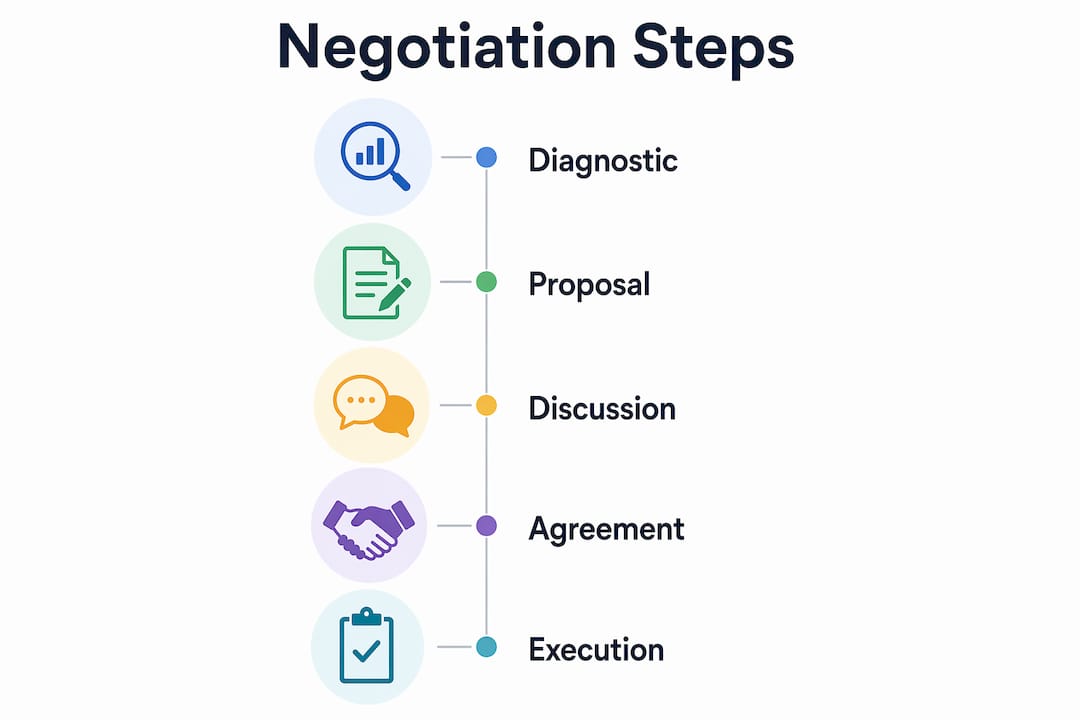
How to execute the negotiation process step by step
A clear execution framework prevents the most common failure mode in covenant negotiation: arriving at the documentation stage without having agreed the critical definitions.
| Stage | Action | Output |
|---|---|---|
| Pre-negotiation diagnostics | Stress test covenants against three years of historical cash flow data | Covenant headroom analysis |
| Term sheet review | Build a comparison matrix across all lender proposals | Ranked term sheet with covenant commentary |
| Definition negotiation | Agree EBITDA scope, addbacks, and cash netting before ratios | Agreed definition schedule |
| Ratio and threshold setting | Set covenant levels with explicit headroom targets | Final covenant schedule |
| Legal documentation | Instruct solicitors to embed precise covenant language | Executed facility agreement |
The pre-negotiation diagnostic stage is the most underused step. Investors who arrange bridging finance or development loans without first stress testing their covenants frequently discover the breach threshold sits uncomfortably close to their projected performance. Discovering this before signing gives you the leverage to push back. Discovering it six months into a loan does not.
Equity cure rights deserve explicit attention at the documentation stage. The cure mechanism, the number of permitted cures per loan life, and the cure period must all be written into the facility agreement with precision. Vague drafting on cure rights is a common source of lender-borrower disputes.
Pro Tip: Ask your solicitor to produce a covenant compliance certificate template before the facility is signed. Running through it with live numbers reveals ambiguities in the definitions that are far easier to resolve before drawdown than after.
What common mistakes occur in covenant negotiations?
The most damaging mistake is delaying covenant negotiation until after the heads of terms are signed. Covenant engineering before signing is critical. Post-signature, leverage to adjust brittle covenants disappears permanently. Investors who treat covenants as boilerplate and focus only on rate and term pay for that oversight throughout the loan life.
Other frequent pitfalls include:
- Accepting overly tight covenants without headroom analysis. A leverage covenant set at 5.0x when your base case projects 4.8x leaves no room for a single bad quarter. Frequent technical breaches require lender waivers, which cost time, legal fees, and goodwill.
- Neglecting the definitions schedule. Investors who negotiate hard on ratios but accept the lender’s standard definitions often find their effective headroom is far narrower than the headline ratio implies. The definitions schedule is not boilerplate.
- Underestimating cash flow variance. Property income is lumpy. Lease renewals, void periods, and capital expenditure cycles all create quarters where income dips sharply. Covenants must be calibrated against this reality, not against a smooth annual average.
- Ignoring the lender’s perspective. Lenders use covenants to monitor credit quality and intervene early. Understanding what the lender needs from a covenant package makes it easier to offer them meaningful protections in exchange for operational flexibility. Reviewing real estate debt structures in comparable transactions gives you a clear picture of what lenders consider standard.
- Treating all covenants as equally negotiable. Some covenants, particularly loan-to-value tests in senior secured lending, are near-immovable. Spending negotiating capital on these wastes time. Focus effort on the definitions, headroom levels, and cure mechanics where genuine flexibility exists.
Key takeaways
Effective covenant engineering, completed before facility signature, is the single most important factor in securing financing terms that support long-term property investment performance.
| Point | Details |
|---|---|
| Negotiate before signing | Post-signature leverage disappears; all covenant engineering must happen before drawdown. |
| Definitions drive headroom | EBITDA addbacks and cash netting affect real headroom more than headline ratio levels. |
| Use scenario theatre | Stress tests built on historical data educate lenders and support flexible covenant terms. |
| Secure equity cure rights | Explicit cure rights prevent binary default outcomes from temporary covenant shortfalls. |
| Compare term sheets on covenants | A structured comparison matrix reveals material differences that rate comparisons miss. |
The part most investors get wrong
The most common mistake I see is treating covenant negotiation as a legal formality rather than a commercial negotiation. Investors spend weeks arguing over margin and arrangement fees, then accept the lender’s standard covenant schedule without reading the definitions. That is the wrong order of priority.
The definitions schedule in a facility agreement can add or remove millions of pounds of effective headroom. I have seen transactions where a single EBITDA addback, negotiated correctly, moved a borrower from a projected covenant breach in year two to comfortable headroom throughout the loan term. That outcome was not achieved by negotiating the ratio. It was achieved by negotiating the definition.
The other thing I would stress is the value of running real stress scenarios with lenders before terms are agreed. Most lenders respond well to a borrower who presents a credible downside case and explains how the proposed covenant structure survives it. It signals competence and reduces the lender’s instinct to impose conservative buffers. Covenant engineering should be educational, not adversarial. When you frame the conversation that way, lenders become partners in designing a structure that works for both sides. That is the approach James William & Co takes on every transaction, and it consistently produces better outcomes than adversarial negotiation.
The property finance trends shaping 2026 point toward tighter credit conditions and more active covenant monitoring by lenders. Investors who understand how to engineer their covenant packages now will be better positioned when those conditions bite.
— James
How James William & Co can help structure your covenant package
Property investors who want specialist support on bespoke covenant negotiation work with James William & Co as a debt structuring partner, not just a broker. The firm brings lender relationships across family offices, private credit funds, and specialist UK lenders, combined with deep experience in multi-layered debt stacks and complex refinances.
James William & Co operates as a capital concierge, managing the entire process from pre-negotiation diagnostics through to executed facility documentation. Whether you are structuring a ground-up development, a large-scale acquisition, or a complex refinance, the firm’s specialist property finance team provides a single point of contact for every stage of the deal. Contact James William & Co to discuss your next transaction.
FAQ
What is a bespoke covenant package in property finance?
A bespoke covenant package is a set of tailor-made contractual covenants negotiated between a borrower and lender to reflect the specific cash flows and risk profile of a property deal. Unlike standard covenant schedules, bespoke packages include customised definitions, headroom levels, cure rights, and testing mechanics.
When should covenant negotiation begin?
Covenant negotiation must begin before heads of terms are signed. Post-signature, the borrower loses all leverage to adjust covenant terms, making pre-signature covenant engineering the most critical stage of the financing process.
What are equity cure rights and why do they matter?
Equity cure rights allow a sponsor to inject equity capital to remedy a covenant breach within a defined cure period, preventing a technical breach from triggering a formal default. Negotiating explicit cure rights is standard practice in private credit transactions and provides a meaningful safety net for property investors.
How do covenant definitions affect headroom?
Covenant definitions, particularly EBITDA addbacks, cash netting provisions, and pro forma adjustments, determine the effective headroom a borrower has before breaching a covenant. Negotiating favourable definitions can provide substantially more operational flexibility than adjusting the headline ratio alone.
What is the difference between maintenance and incurrence covenants?
Maintenance covenants are tested periodically, regardless of borrower action, and give lenders ongoing visibility of financial health. Incurrence covenants are only triggered when the borrower takes a specific action, such as raising additional debt, making them less restrictive in day-to-day operations.
Recommended
Related Topics
Speak to a specialist
Discuss your finance with James directly
Whole-of-market specialist finance — bridging, development, commercial and residential. No call centres, no obligation. James reviews every enquiry personally.
New to specialist finance? How unbiased broker advice works · Deals we have completed
Explore Related Finance