
Published · Updated
property development funding tips7 Top Property Development Funding Tips for UK Developers
By James Dawes, CeMAP, Founder, James William & Co Capital

Securing the right finance for your UK property development project can be overwhelming. Every project has its own challenges, and relying on a single funding source may leave you exposed to unexpected risks and missed opportunities. The variety of available finance options and debt structures means there are smart ways to tailor funding to your project, but knowing how to combine them effectively makes all the difference.
This list gives you practical strategies straight from proven property finance research. You will discover how to diversify your funding to improve financial resilience, understand multi-layered debt structures for greater flexibility, and design safe covenant packages that protect both your interests and those of your lenders.
If you want clear, actionable insights to strengthen your project’s financial position and prepare for the complexities of UK property development, these expert-backed methods will show you exactly where to start.
Table of Contents
- 1. Assess Your Project’s Funding Needs Precisely
- 2. Build Strong Relationships With Specialist Lenders
- 3. Diversify Your Finance Options For Maximum Flexibility
- 4. Understand Multi-Layered Debt Structures
- 5. Leverage Bridging Loans For Rapid Project Moves
- 6. Optimise Refinancing Strategies For Complex Projects
- 7. Secure Bespoke Covenant Packages For Safer Deals
Quick Overview
| Key Insight | Detailed Explanation |
|---|---|
| 1. Precisely Assess Funding Needs | Conduct a detailed analysis of all costs associated with your project, including land, construction, and contingencies. Accurate funding assessment is crucial for success. |
| 2. Build Relationships with Lenders | Cultivating strong relationships with specialist lenders can provide you with tailored financial solutions and more funding opportunities beyond standard options. |
| 3. Diversify Your Funding Sources | Create a multi-layered financing strategy with various funding options to enhance financial resilience and adapt to market changes. This can mitigate risks in project execution. |
| 4. Understand Multi-Layered Debt | Familiarise yourself with different types of debt structures in property development, allowing you to optimise capital allocation and manage risk effectively. |
| 5. Leverage Bridging Loans | Use bridging loans as rapid financing solutions to address urgent funding needs and enable swift action on time-sensitive property deals. |
1. Assess Your Project’s Funding Needs Precisely
Successful property development begins with crystal-clear financial planning. Understanding your exact funding requirements is not just a preliminary step but the foundation of your entire project’s financial strategy.
Every property development project has unique funding demands that require meticulous analysis. You need to go beyond surface-level budgeting and dive deep into comprehensive financial mapping. This means calculating precise development costs that encompass multiple critical elements:
- Land acquisition expenses
- Construction and materials costs
- Planning and architectural fees
- Regulatory compliance expenditures
- Contingency reserves for unexpected challenges
- Potential refinancing or exit strategy costs
Accurate funding assessment can make the difference between a profitable development and a financial disaster.
To assess your funding needs precisely, you must develop a multi-layered financial model that accounts for potential market fluctuations and project-specific variables. This involves creating detailed spreadsheets that track every potential expense and income stream with granular financial forecasting.
Property developers should also consider multiple funding sources and their respective implications. This might include:
- Traditional bank development loans
- Private equity investments
- Mezzanine financing options
- Joint venture partnerships
- Specialist property development funds
Professional tip requires considering not just the quantum of funding but the strategic flexibility of your financing structure. Each funding source will have different covenant requirements, interest rates, and repayment terms that can significantly impact your project’s overall financial health.
Pro tip: Engage a specialist mortgage broker who understands complex property finance to help you develop a comprehensive and nuanced funding strategy that matches your specific project requirements.
2. Build Strong Relationships With Specialist Lenders
In the competitive world of UK property development, your network can be as valuable as your capital. Cultivating robust relationships with specialist lenders is not merely a networking exercise but a strategic imperative for securing complex project financing.
Successful developers understand that specialist lenders are far more than transactional partners. They are potential collaborators who can provide nuanced financial solutions tailored to unique development challenges. These relationships require consistent effort, transparency, and demonstrable professional credibility.
Building genuine relationships with specialist lenders can unlock funding opportunities beyond standard lending criteria.
To effectively build these critical relationships, consider the following strategic approaches:
- Maintain impeccable financial records and project documentation
- Demonstrate consistent performance on previous developments
- Communicate proactively and transparently about project risks and opportunities
- Develop a track record of successful project completions
- Show deep understanding of your specific property development segment
Specialist lenders are looking for developers who represent low-risk, high-reliability investment prospects. This means going beyond basic financial metrics and showcasing your comprehensive project management capabilities.
Key relationship-building tactics include:
- Attend property finance networking events
- Join professional development associations
- Engage with specialist property finance networks
- Share detailed project case studies
- Provide regular project update reports
Understanding each specialist lender’s specific investment appetite is crucial. Different lenders have varied risk tolerances, preferred property types, and geographical focus areas. Your approach must be tailored and personalised.
Pro tip: Invest time in understanding each specialist lender’s unique investment philosophy and align your project presentations to demonstrate how you meet their specific investment criteria.
3. Diversify Your Finance Options for Maximum Flexibility
Successful property development requires financial agility and strategic funding approaches. Diversifying your finance options is not just a risk management strategy but a critical competitive advantage in the complex UK property market.
Funding diversity represents financial resilience. By creating a multi-layered financing strategy, you protect your development projects from potential funding constraints and market volatilities.
Financial flexibility can transform potential obstacles into opportunities for strategic growth.
The key to effective diversification lies in understanding and strategically combining different funding mechanisms:
- Traditional bank development loans
- Bridging finance for short-term needs
- Mezzanine financing for additional leverage
- Joint venture equity partnerships
- Private investor capital
- Specialist property development funds
Each funding source offers unique benefits and comes with specific risk profiles. Property development finance strategies require careful assessment of project timelines, risk exposures, and repayment capabilities.
Strategic diversification involves:
- Analysing each project’s specific financial requirements
- Matching funding sources to project phases
- Understanding each funding mechanism’s terms
- Maintaining relationships across multiple financial channels
- Remaining adaptable to changing market conditions
Your financing mix should reflect project complexity. Some developments might benefit from blended funding approaches that combine multiple sources to optimise capital structure and minimise risk.
Complex property developments often require sophisticated financing solutions that go beyond traditional lending models. This might involve creating bespoke financial packages that combine different funding streams strategically.
Pro tip: Develop a comprehensive financial modelling approach that allows you to quickly pivot and reconfigure your funding strategy as project dynamics evolve.
4. Understand Multi-Layered Debt Structures
Property development financing is not a one-dimensional endeavour but a sophisticated orchestration of multiple debt layers. Understanding these intricate financial structures can mean the difference between project success and potential financial distress.
Multi-layered debt structures represent strategic financial engineering. They enable developers to optimise capital allocation by combining different funding sources with unique risk profiles and economic characteristics.
Complex debt structures provide flexible financial solutions for sophisticated property developments.
Typical debt layers in property development include:
- Senior secured debt (lowest risk)
- Mezzanine financing
- Bridging loans
- Subordinated debt
- Equity-based financing
Property development finance strategies reveal that each debt layer serves a specific purpose within the overall capital stack. Understanding these nuances is crucial for effective financial management.
The hierarchy of debt layers involves:
- Prioritising senior debt with lowest interest rates
- Complementing with higher-cost mezzanine financing
- Balancing risk and returns across different tranches
- Maintaining clear repayment triggers
- Protecting investor and lender interests
Strategic debt layering provides multiple advantages. By carefully structuring your financing, you can access higher total funding while maintaining flexible risk management approaches.
Key considerations in multi-layered debt structures include understanding:
- Specific covenant requirements
- Individual debt instrument terms
- Repayment priority sequences
- Potential cross-default triggers
- Interest rate differentials
Successful developers treat their capital stack as a dynamic ecosystem rather than a static financial arrangement. This requires continuous monitoring and potential reconfiguration as project dynamics evolve.
Pro tip: Engage financial specialists who can help you design bespoke multi-layered debt structures that align precisely with your specific development project’s risk profile and funding requirements.
5. Leverage Bridging Loans for Rapid Project Moves
In the fast-paced world of property development, timing can be the difference between securing a prime opportunity and watching it slip away. Bridging loans represent a strategic financial instrument that enables developers to move swiftly and decisively in competitive market conditions.
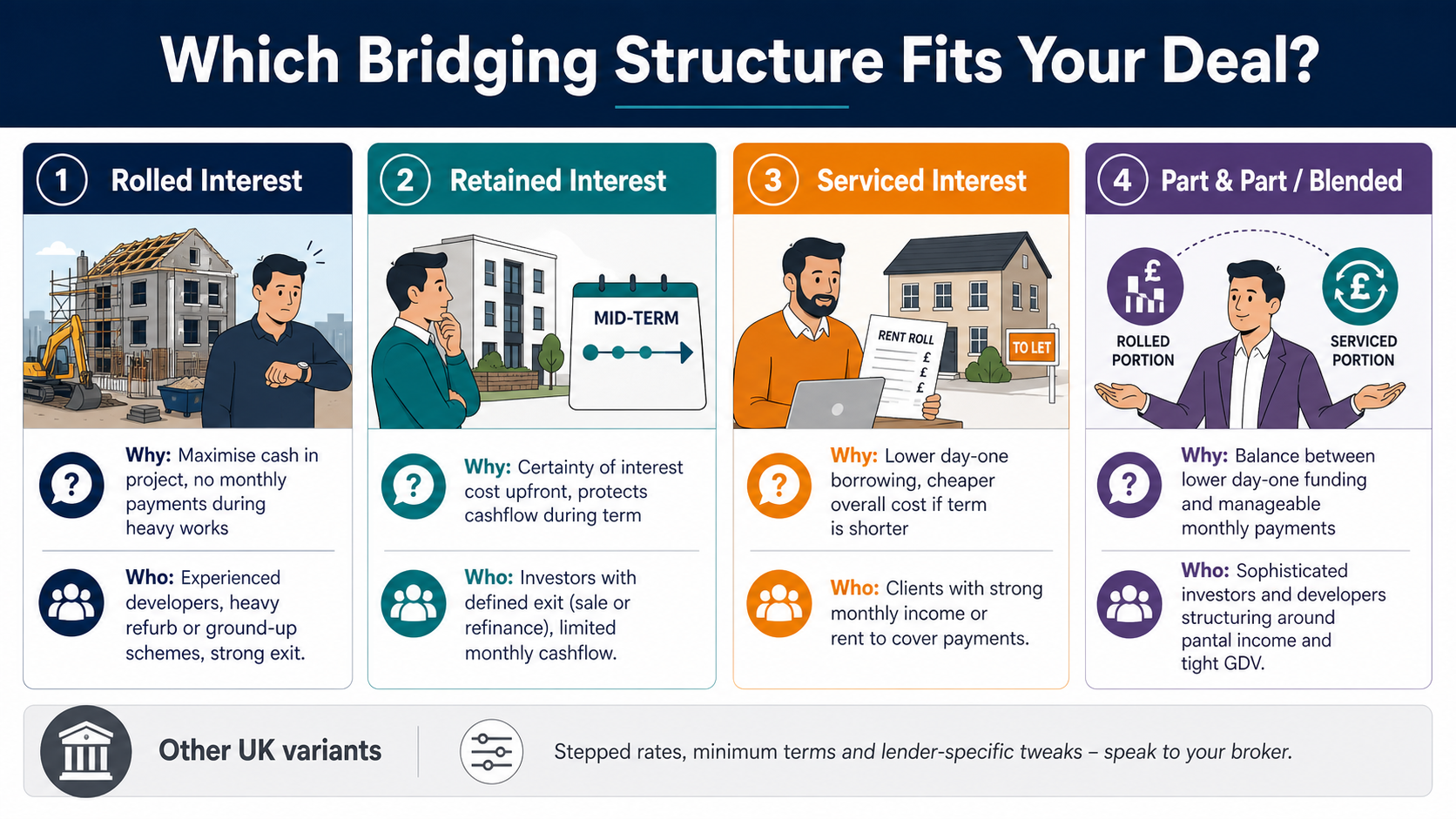
Bridging finance provides short-term funding solutions designed to bridge critical financial gaps in property development projects. These flexible financial tools allow developers to act quickly when traditional financing might be too slow or complex.
Bridging loans are the Swiss Army knife of property development financing: versatile, rapid, and precisely engineered.
Key advantages of bridging loans include:
- Extremely rapid funding approval processes
- Flexibility across different project stages
- Ability to secure time-sensitive property acquisitions
- Quick access to capital without lengthy bank assessments
- Potential for complex property transaction structures
Strategic implementation of bridging loans requires understanding their unique characteristics:
- Assess short-term funding requirements
- Calculate precise repayment strategies
- Understand interest rate structures
- Plan exit financing mechanisms
- Evaluate overall project financial implications
Sophisticated developers view bridging loans as strategic acceleration tools. They are not merely emergency funding but calculated financial instruments that can unlock time-critical opportunities.
Consider bridging loans for scenarios such as:
- Purchasing properties at auction
- Completing rapid property renovations
- Facilitating quick land acquisitions
- Managing property development transition periods
- Supporting complex multi-phase development projects
Understanding the nuanced property finance landscape allows developers to integrate bridging loans seamlessly into their broader financial strategy.
Pro tip: Always develop a crystal-clear exit strategy before securing a bridging loan, ensuring you have a comprehensive plan for transitioning to long-term financing.
6. Optimise Refinancing Strategies for Complex Projects
Refinancing represents more than a financial transaction it is a strategic opportunity to restructure and optimise your property development’s financial architecture. Sophisticated refinancing strategies can unlock significant value and provide critical flexibility across different project stages.
Successful developers view refinancing not as a reactive measure but as a proactive financial engineering tool. By understanding and anticipating market dynamics developers can transform their project’s financial potential.
Refinancing is the strategic chess move in property development financial planning.
Key refinancing considerations include:
- Timing of refinancing initiatives
- Current market interest rates
- Property valuation trajectories
- Existing loan covenant structures
- Long-term project financial objectives
- Potential tax implications
Effective refinancing requires a systematic approach:
- Conduct comprehensive financial audit
- Analyse current loan terms meticulously
- Assess market lending conditions
- Develop multiple refinancing scenarios
- Negotiate with multiple financial institutions
Project complexity demands nuanced refinancing approaches. Each development requires a bespoke strategy that considers unique financial characteristics and market positioning.
Strategic refinancing scenarios might involve:
- Reducing overall interest expenditure
- Extending loan repayment timelines
- Accessing additional development capital
- Restructuring debt stack configurations
- Mitigating potential financial risks
Understanding property finance landscape enables developers to craft refinancing strategies that adapt dynamically to changing market conditions.
Pro tip: Maintain meticulous financial documentation and cultivate strong relationships with multiple lenders to enhance your refinancing negotiation capabilities.
7. Secure Bespoke Covenant Packages for Safer Deals
In the intricate landscape of property development financing, covenant packages represent your strategic defence mechanism. These carefully crafted legal and financial frameworks protect both lenders and developers by establishing clear performance expectations and risk management protocols.
Bespoke covenant packages are not standardised templates but precision-engineered financial instruments tailored to each project’s unique characteristics. They create a transparent roadmap that aligns investor expectations with developer capabilities.
Custom covenants transform potential financial risks into manageable, predictable parameters.
Key elements of sophisticated covenant packages include:
- Phased capital drawdown mechanisms
- Performance milestone triggers
- Comprehensive financial reporting requirements
- Risk mitigation contingency measures
- Operational flexibility clauses
- Detailed default and remedy provisions
Strategic covenant development involves:
- Understanding project-specific risk profile
- Negotiating balanced reporting requirements
- Establishing clear performance metrics
- Creating flexible intervention mechanisms
- Protecting developer operational autonomy
Financial protection requires nuanced negotiation. Developers must strike a delicate balance between lender security and project flexibility.
Effective covenant packages address critical considerations such as:
- Project timeline management
- Financial performance thresholds
- Potential market volatility scenarios
- Investor reporting transparency
- Contingency funding arrangements
Property development finance strategies demonstrate that well-structured covenant packages can significantly enhance project credibility and investor confidence.
Pro tip: Engage specialised legal and financial advisors who understand both lender expectations and developer operational dynamics to craft truly bespoke covenant packages.
Below is a comprehensive table summarising the main strategies for successful property development discussed throughout the article.
| Topic | Details | Key Actions |
|---|---|---|
| Assess Funding Needs Precisely | Evaluate comprehensive cost elements, such as acquisition, construction, and contingencies. | Develop detailed financial models and consult mortgage specialists. |
| Build Relationships With Lenders | Foster connections with specialist lenders to access tailored financing. | Attend networking events and demonstrate a reliable project track record. |
| Diversify Finance Options | Use multiple funding sources for financial flexibility. | Match funding mechanisms to project stages and assess risks. |
| Understand Debt Structures | Incorporate multi-layered debt structures for project financing. | Prioritise senior debt and maintain flexible repayment plans. |
| Employ Bridging Loans | Leverage short-term finance for rapid acquisitions or transitions. | Assess repayment strategies and plan exit financing. |
| Optimise Refinancing Strategies | Use refinancing to enhance value and adapt to market conditions. | Analyse current loan terms and negotiate with lenders. |
| Utilise Bespoke Covenant Packages | Craft transparent agreements tailored to the project. | Engage professional advisors to ensure balanced covenant packages. |
Elevate Your Property Development Funding Strategy Today
Navigating the complexities of UK property development finance requires more than basic lending knowledge. If you are striving to precisely assess funding needs, build strong relationships with specialist lenders, or craft bespoke multi-layered debt structures the expertise of a specialist mortgage broker can be the game changer. At James William & Co Capital, we understand the critical importance of bespoke covenant packages, rapid bridging loans and optimised refinancing strategies to secure your project’s financial success and flexibility.
Unlock tailored funding solutions with our “capital concierge” approach. Whether you are managing complex refinancing, structuring mezzanine debt or seeking joint venture equity partnerships, our network of family offices, private credit funds and specialist lenders delivers rapid, bespoke finance designed to meet your unique project requirements. Act now to transform your property development challenges into strategic opportunities by connecting with us at James William & Co Capital. For detailed insights and advice on property development finance strategies and to explore how multi-layered debt structures can work for you visit our website today.
Frequently Asked Questions
How can I accurately assess my funding needs for property development?
To assess your funding needs precisely, start by calculating all potential development costs, including land acquisition, construction, and professional fees. Create a detailed financial model to track these expenses and consider potential market fluctuations.
What types of funding sources should I consider for my property development?
Explore various funding sources, including traditional bank loans, private equity investments, and specialist property development funds. Develop a financing mix that matches the specific requirements of your project to improve financial flexibility.
How can I build strong relationships with specialist lenders?
Cultivating strong relationships requires consistent communication and transparency about your project’s risks and opportunities. Attend networking events and join professional associations to connect with potential lenders in your field.
What are bridging loans and how can they benefit my development project?
Bridging loans provide short-term financing that allows you to secure funding quickly for time-sensitive opportunities. Assess your short-term financial needs and plan an exit strategy to transition to long-term financing efficiently.
How can I optimise my refinancing strategies?
To optimise your refinancing, conduct a comprehensive audit of your current financial situation and assess market conditions. Develop multiple refinancing scenarios that explore various loan terms and repayment options to maximise financial benefits.
What elements should I include in a bespoke covenant package?
A bespoke covenant package should include phased capital drawdown mechanisms, performance milestone triggers, and risk mitigation measures tailored to your project. Engage in negotiations to ensure that the covenants maintain flexibility for your development while protecting lender interests.
Recommended
Related Topics
Speak to a specialist
Discuss your finance with James directly
Whole-of-market specialist finance — bridging, development, commercial and residential. No call centres, no obligation. James reviews every enquiry personally.
New to specialist finance? How unbiased broker advice works · Deals we have completed
Explore Related Finance