
Published · Updated
property finance document checklistProperty finance document checklist: the UK developer's guide
By James Dawes, CeMAP, Founder, James William & Co Capital

TL;DR:
- A property finance document checklist includes borrower and project documents necessary for UK property loans. Using a two-layer approach to separate personal qualification from project details accelerates lender approval. Proper preparation of these documents reduces delays and ensures successful property financing.
A property finance document checklist is the compiled set of borrower and project documents that lenders require before underwriting any UK property loan. Without a complete submission, lenders issue repeated information requests that delay credit decisions by weeks. The checklist serves two distinct purposes: qualifying the borrower and appraising the project. James William & Co structures every client submission around this two-layer approach, separating personal financial evidence from project-specific documentation to align with how specialist lenders actually underwrite deals. Getting this right from the outset is the single most effective way to accelerate approval.
1. What borrower qualification documents are essential for property finance applications?
Lenders require documents proving income, employment, assets, debts, and credit history before they will underwrite any loan. This applies equally to a straightforward buy-to-let mortgage and a complex development facility. The borrower qualification layer of your checklist covers everything personal, before a single project document is submitted.

Income documents form the foundation. Employed borrowers need payslips from the last two months, a current employment contract, and two years of P60s. Self-employed borrowers need two to three years of SA302 tax calculations and corresponding tax year overviews from HMRC, plus full accounts if trading through a limited company. Directors drawing dividends need both salary and dividend evidence.
Asset documentation proves you have the funds to complete. Bank statements covering the last three months are standard. If the deposit or equity contribution sits in an investment account or ISA, a current statement showing the balance is required. Where funds have been gifted, a signed gifted deposit letter and the donor’s bank statement are also needed.
Liabilities and expenses are equally scrutinised. Mortgage applications consider recurring liabilities such as credit cards, personal loans, and hire purchase agreements. For each liability, lenders want the account type, current balance, monthly payment, and creditor name. Undisclosed liabilities discovered at credit check stage create serious credibility problems.
Identity verification is non-negotiable under UK Anti-Money Laundering regulations. A current passport or photocard driving licence satisfies photographic ID requirements. Proof of address must be dated within three months and typically takes the form of a utility bill, council tax statement, or bank letter.
Pro Tip: Keep a dedicated folder, updated quarterly, containing your latest payslips, bank statements, and HMRC documents. Lenders routinely reject documents older than three months, and scrambling to gather fresh copies under time pressure is entirely avoidable.
Rental income, if relevant, requires an Assured Shorthold Tenancy agreement and a letting agent statement showing the last twelve months of receipts. Credit history considerations are handled by lenders directly through Experian or similar credit reference agencies, but you should obtain your own report in advance to identify and resolve any anomalies before submission.
2. Which project and property-specific documents are required for development and investment finance?
Development finance underwriting is driven by project viability, not just borrower strength. A development finance pack includes planning drawings, levies, cost breakdown, phased works schedule, contractor information, borrower assets and liabilities, and exit strategy. Lenders assess whether the project stacks financially before they assess whether the borrower can service the debt.
Planning and legal documents sit at the top of the project pack. Full planning permission, approved drawings, and any Section 106 agreements or Community Infrastructure Levy notices must be included. Restrictions or overage clauses affecting the site’s profitability need to be disclosed upfront, not discovered during legal due diligence.
The table below summarises the core document categories for a development finance application.
| Document category | Examples |
|---|---|
| Planning and consents | Full planning permission, approved drawings, S106 agreement, CIL notice |
| Cost and programme | Detailed cost breakdown, phased schedule of works, contingency allowance |
| Professional team | Architect appointment, QS report, main contractor details and CV |
| Borrower track record | Schedule of completed schemes, assets and liabilities statement |
| Exit strategy | Sales comparables, GDV appraisal, agent’s letter, refinance evidence |
The project cost breakdown must be detailed and independently verified where possible. A quantity surveyor’s report carries significantly more weight than a contractor’s quote alone. Lenders want to see a contingency allowance, typically 10%–15% of build cost, included within the appraisal. A phased schedule of works tells the lender when drawdowns will be required and how the project progresses to completion.
The borrower’s development track record is a document in its own right. A schedule of completed schemes, with values, timescales, and lender references where available, materially strengthens a first-time or early-stage developer’s application. Lenders have proprietary criteria but consistently require detailed planning, costings, schedules, and exit strategies for development financing.
The exit strategy must be credible and evidenced. For residential schemes, a local agent’s letter confirming gross development value (GDV) and absorption rate is standard. For commercial or mixed-use schemes, comparable letting evidence or a head of terms from a prospective tenant strengthens the case considerably.
Pro Tip: Compile your project pack as a single, indexed PDF before approaching any lender. A consolidated pack reduces follow-up requests and signals to the lender that you operate professionally. Disorganised submissions are one of the most common causes of avoidable delays in development finance approvals.
3. How to prepare documentation for auction and bridging finance
Auction and bridging finance operates on compressed timescales. Lenders aim for conditional offers within 24–48 hours if all documentation aligns, with auction settlements typically required within 28–42 days of the hammer falling. That timeline leaves no room for document chasing.
The property auction finance checklist differs from a standard mortgage application in one critical respect: speed of submission matters as much as completeness. Every document must be ready before you bid, not after.
The core documents required are:
- Proof of identity and address: passport or driving licence plus a utility bill or bank statement dated within three months
- Property details: title register extract from HM Land Registry, auction catalogue listing, and any survey or valuation obtained pre-auction
- Proof of deposit funds: bank statements confirming the 10%–25% deposit is available and unencumbered
- Buildings insurance: evidence of cover, or confirmation that cover can be placed on exchange
- Exit strategy: a written, evidenced plan showing how the bridging loan will be repaid, whether by sale, refinance, or development exit
Bridging loans tied to auctions emphasise proof of liquidity and exit plans with tight settlement deadlines. A lender who cannot verify your deposit and exit route quickly will not issue a conditional offer in time. The narrative quality of your application matters far less than the clarity and completeness of those two specific items.
Engage a specialist broker such as James William & Co before auction day. A broker with existing lender relationships can obtain a decision in principle against the property type and your profile before you register to bid. For guidance on the full process, the article on arranging bridging finance covers the procedural steps in detail.
4. What additional documents are required for corporate borrowers and developer SPVs?
Corporate borrowers and special purpose vehicles (SPVs) face a separate layer of documentation requirements that personal borrowers do not encounter. Under English and Welsh law, corporate mortgages require documentation proving capacity, governance approvals, and security agreements defining the mortgagor and mortgagee correctly. A security document that fails to identify the correct corporate entity is invalid.
The table below compares the key differences between personal and corporate mortgage document requirements.
| Document type | Personal borrower | Corporate borrower or SPV |
|---|---|---|
| Identity verification | Passport, driving licence | Certificate of incorporation, register of members |
| Authority to borrow | Not required | Board resolution, articles of association |
| Security document | Personal mortgage deed | Corporate mortgage deed with correct mortgagor and mortgagee |
| Governance due diligence | Not required | Director details, PSC register, corporate structure chart |
| Financial evidence | Personal tax returns, payslips | Audited accounts, management accounts, director loan schedules |
Early attention to corporate capacity, approvals, and governance documents is critical for SPV mortgage security validity and smooth transaction completion. A board resolution authorising the granting of security must be in place before the mortgage deed is executed. Missing or defective resolutions discovered at completion stage can invalidate the entire security package.
Proper governance documentation is critical for SPVs granting mortgage security to avoid delays or invalid security documents later in the process. For offshore vehicles or multi-entity structures, lenders also require a corporate structure chart, confirmation of beneficial ownership, and evidence of the SPV’s purpose and trading history. The solicitor’s role in verifying these documents is substantial. A detailed overview of solicitor responsibilities during property finance transactions explains what legal due diligence covers at each stage.
Key takeaways
A complete property finance document checklist, structured across borrower qualification and project documentation layers, is the most reliable way to reduce lender delays and secure credit decisions at speed.
| Point | Details |
|---|---|
| Two-layer structure | Separate borrower qualification documents from project documents to match lender underwriting workflow. |
| Income and asset evidence | Provide payslips, SA302s, bank statements, and liability schedules dated within three months. |
| Development project pack | Include planning permission, QS-verified cost breakdown, schedule of works, and a credible GDV-backed exit strategy. |
| Auction and bridging speed | Submit all documents before bidding; lenders prioritise deposit proof and exit strategy over narrative quality. |
| Corporate and SPV governance | Board resolutions, articles of association, and PSC registers must be in place before any security document is executed. |
What I have learnt from years of structuring property finance submissions
The most common mistake I see from developers and investors is treating the document checklist as an afterthought. They secure a site, agree heads of terms, and then start gathering paperwork. By that point, they have already lost two to three weeks they cannot recover.
The two-layer approach, separating borrower qualification from project documentation, is not just a filing convention. It reflects how lenders actually underwrite. Credit teams and asset managers work in parallel. If you submit everything in one undifferentiated bundle, you slow both teams down. A well-indexed pack, with a cover sheet mapping each document to the lender’s checklist, signals competence before a single number is reviewed.
I have also seen deals fall apart at the corporate governance stage. An SPV formed quickly to hold a site often lacks a properly drafted board resolution or has articles that restrict borrowing without shareholder consent. These are not minor technicalities. They are fundamental to whether the security is valid. Sorting them out under time pressure, with a completion date looming, is expensive and avoidable.
My honest advice is this: treat your document pack as a live asset. Keep it current, keep it indexed, and review it before every new transaction. The developers who move fastest are not the ones with the best deals. They are the ones whose paperwork is always ready.
— James
How James William & Co Capital supports your property finance submissions
Property finance documentation is complex, and the cost of getting it wrong is measured in lost deals and missed deadlines.
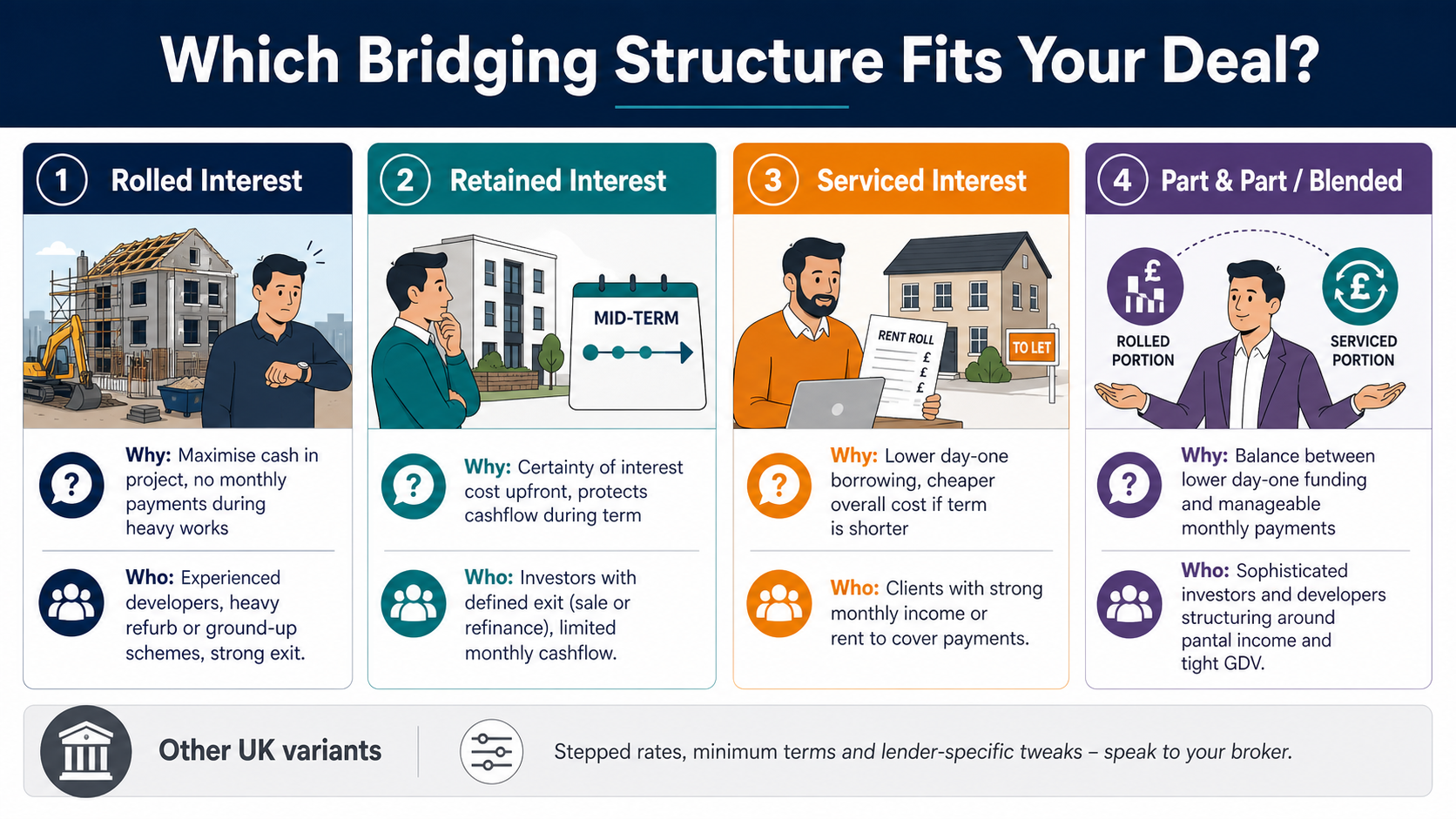
James William & Co operates as a capital concierge for UK developers, investors, and high-net-worth clients, providing end-to-end support from initial document preparation through to lender negotiation and completion. The firm works across development finance, bridging, commercial mortgages, mezzanine debt, and JV equity, with access to family offices, private credit funds, and specialist lenders who move quickly when submissions are complete. Whether you are structuring a ground-up development or a time-sensitive auction purchase, James William & Co brings the lender relationships and structuring expertise to get your deal done. Speak to the team about your next transaction through the specialist property finance service.
FAQ
What documents do lenders require for a UK property finance application?
Lenders require proof of income, assets, liabilities, and identity for borrower qualification, plus planning permission, cost breakdowns, and exit strategies for project-specific finance. The exact list varies by loan type, but income and asset verification is required for every application.
How far in advance should I prepare documents for auction bridging finance?
All documents should be ready before you register to bid at auction. Lenders issue conditional offers within 24–48 hours only when deposit proof and exit strategy documentation are already submitted and verified.
What is the difference between a personal and corporate mortgage document checklist?
Personal borrowers provide identity, income, and asset documents. Corporate borrowers and SPVs must also provide a certificate of incorporation, board resolution authorising the security, articles of association, and a PSC register to satisfy governance requirements under English law.
Why do development finance lenders require a quantity surveyor’s report?
A QS report independently verifies the project cost breakdown, which lenders use to set drawdown schedules and assess project viability. A contractor’s quote alone carries insufficient weight for most specialist development lenders.
What counts as an acceptable exit strategy for a bridging loan?
An acceptable exit strategy is a written, evidenced plan showing repayment by sale, refinance, or development completion. For sale exits, a local agent’s letter confirming market value and expected sale period is standard supporting evidence.
Recommended
Related Topics
Speak to a specialist
Discuss your finance with James directly
Whole-of-market specialist finance — bridging, development, commercial and residential. No call centres, no obligation. James reviews every enquiry personally.
New to specialist finance? How unbiased broker advice works · Deals we have completed
Explore Related Finance