
Published · Updated
role of real estate debtRole of Real Estate Debt in UK Property Finance
By James Dawes, CeMAP, Founder, James William & Co Capital

Securing efficient capital for ambitious property ventures in the United Kingdom often starts with one crucial decision: how to structure debt for maximum flexibility and control. Real estate debt is more than just a borrowing tool—it is a sophisticated financing instrument that shapes every stage of acquisition, development, and risk management. For high-net-worth developers and institutional investors, understanding these complex arrangements spells the difference between predictable returns and hidden exposure.
Table of Contents
- Defining Real Estate Debt in Property Finance
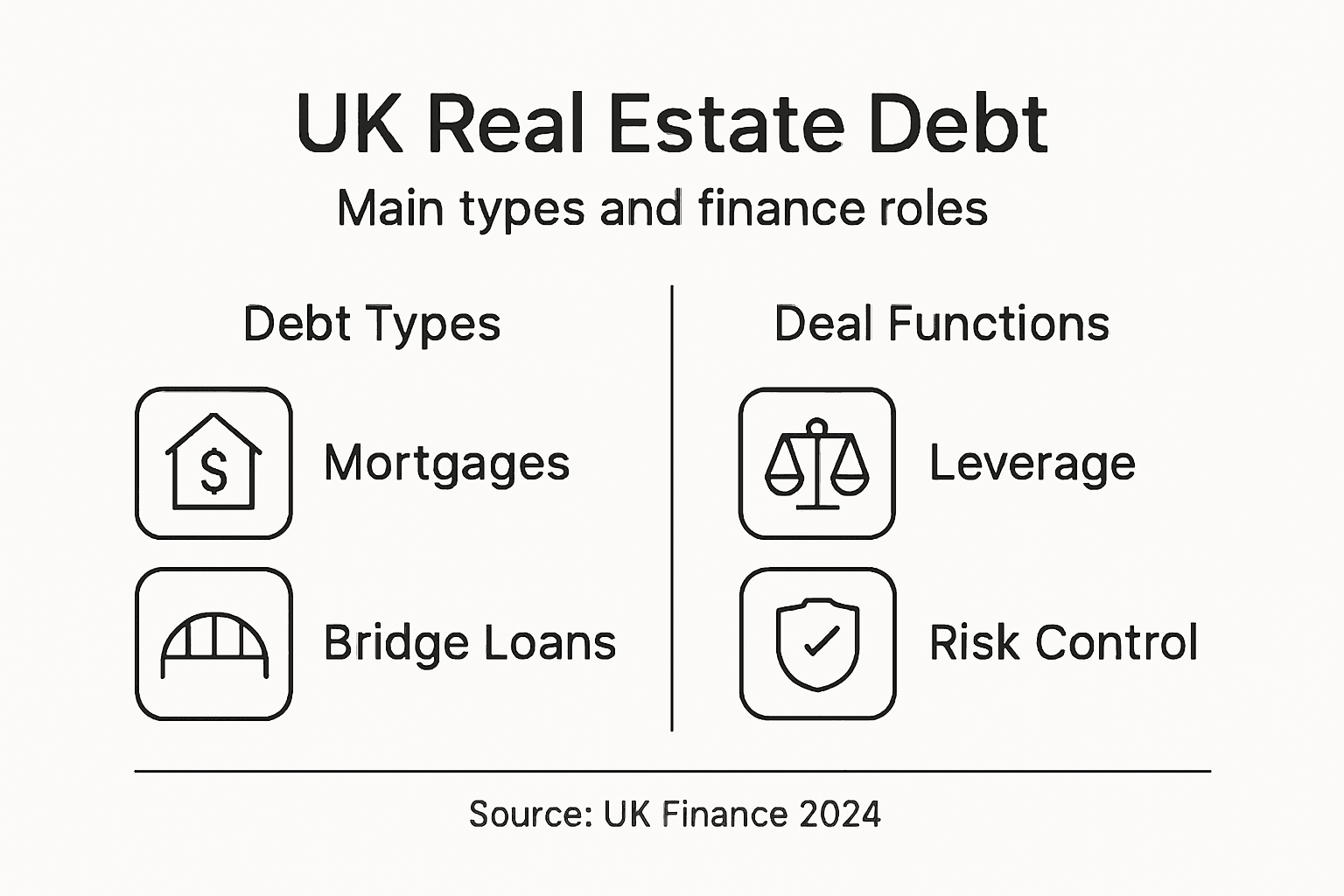
- Main Types of Real Estate Debt Structures
- How Debt Functions in UK Property Deals
- Sophisticated Debt Structuring Techniques Explained
- Risks, Obligations and Lender Requirements
Key Takeaways
| Point | Details |
|---|---|
| Understanding Real Estate Debt | Real estate debt involves loans secured against property assets, facilitating capital deployment and risk management in the property market. |
| Types of Debt Structures | Key types include residential mortgages, development finance, and bridging loans, each with distinct characteristics and risk profiles. |
| Debt Functionality in Transactions | Property debt enables buyers to leverage future income and adjust strategies in response to fluctuating market conditions. |
| Importance of Risk Management | Effective property financing requires a balance between risk assessment and robust lender protections to safeguard against defaults. |
Defining Real Estate Debt in Property Finance
Real estate debt represents a sophisticated financial instrument within property finance, fundamentally characterised by loans secured against property assets. In the UK property market, these financial arrangements involve complex interactions between borrowers, lenders, and underlying property values, creating intricate mechanisms for capital deployment and risk management.
Within this landscape, real estate debt encompasses several critical financing structures, including:
- Mortgage loans: Traditional property purchase financing
- Development finance: Funding for ground-up construction projects
- Bridging loans: Short-term financing to facilitate property transactions
- Commercial property loans: Debt instruments for income-generating real estate
The legal framework surrounding these debt instruments is particularly nuanced. Real estate debt trends reveal that while most loans perform effectively, lenders maintain robust mechanisms to protect their financial interests. These include comprehensive underwriting processes, stringent covenant packages, and potential enforcement actions in cases of payment defaults.
Property loan obligations are fundamentally secured against the property itself, meaning the asset serves as collateral. This structure provides lenders with a clear mechanism for debt recovery, balancing borrower accessibility with institutional risk management.
Debt Structuring Considerations:
- Loan-to-value ratios
- Interest rate mechanisms
- Repayment terms
- Covenant complexity
- Security package design
Pro tip: Always conduct thorough due diligence on debt structures, examining not just headline terms but the underlying risk allocation and potential enforcement mechanisms.
Main Types of Real Estate Debt Structures
Real estate debt structures in the United Kingdom represent sophisticated financial instruments with nuanced variations designed to accommodate diverse property investment strategies. These debt mechanisms are meticulously crafted to balance risk, provide flexibility, and enable sophisticated capital deployment across residential, commercial, and developmental property sectors.
Real estate debt constructs typically encompass several primary categories:
- Residential Mortgages: Standard home purchase financing
- Buy-to-Let Mortgages: Investment property lending
- Commercial Property Loans: Income-generating real estate financing
- Development Finance: Ground-up construction and renovation funding
- Bridging Loans: Short-term transitional property financing
Each debt structure carries distinct risk profiles and underwriting considerations. Lease-based financial arrangements introduce additional complexity, particularly in commercial and residential leasehold properties, where ground rent and contractual obligations create unique debt servicing frameworks.

To better understand the main types of real estate debt, compare their core attributes below:
| Debt Type | Typical Duration | Key Objective | Collateral Requirements |
|---|---|---|---|
| Residential Mortgage | 20-30 years | Home ownership financing | Property as security |
| Commercial Property Loan | 5-15 years | Income-generating property investment | Business asset as security |
| Development Finance | Up to 5 years | Fund construction or renovation | Site and work-in-progress |
| Bridging Loan | 6-18 months | Short-term transaction facilitation | Property or land |
| Buy-to-Let Mortgage | 2-25 years | Rental property investment | Investment property |
The sophisticated nature of these debt structures demands comprehensive understanding of multiple financial parameters:
- Interest rate mechanisms
- Loan-to-value ratios
- Repayment term configurations
- Security package design
- Risk mitigation strategies
Professional investors prioritise debt structures that offer maximum flexibility while maintaining robust risk management protocols.
Pro tip: Always analyse the underlying debt structure’s covenant package, examining not just headline financial terms but the granular enforcement mechanisms and potential scenario-based outcomes.
How Debt Functions in UK Property Deals
Property debt represents a critical financial mechanism enabling sophisticated real estate transactions across the United Kingdom. Household property debt fundamentally transforms property acquisition by allowing buyers to leverage future income potential against immediate asset procurement.
The intricate functioning of debt in property deals involves multiple sophisticated mechanisms:
- Enabling property purchases beyond immediate cash reserves
- Distributing financial risk between lenders and borrowers
- Providing flexible capital deployment strategies
- Creating wealth accumulation opportunities
- Facilitating market liquidity and transactional velocity
Rising house prices significantly influence debt dynamics, compelling borrowers to adjust their mortgage strategies to maintain property accessibility. This cyclical relationship between property values and borrowing creates complex financial ecosystems where debt serves as both a facilitator and a strategic instrument.
Key debt functioning parameters include:
- Mortgage term configurations
- Interest rate mechanisms
- Loan-to-value risk assessments
- Repayment structure designs
- Collateral valuation methodologies
Sophisticated property investors understand debt not as a constraint, but as a strategic financial tool for portfolio expansion.
Pro tip: Develop a comprehensive understanding of your debt structure’s granular details, examining not just headline terms but potential scenario-based financial implications.
Sophisticated Debt Structuring Techniques Explained
Debt structuring represents a nuanced financial engineering process that transforms complex property investment strategies into executable financial frameworks. Advanced financial modelling enables property investors to develop intricate capital deployment mechanisms that optimise risk and potential returns.
Key sophisticated debt structuring techniques include:
- Mezzanine financing arrangements
- Multilayered debt stack configurations
- Complex covenant package design
- Dynamic risk allocation strategies
- Customised loan instrument development
- Cross-collateralisation approaches
Credit risk management emerges as a critical component in these advanced structuring approaches, requiring investors to capture nuanced interactions between borrowing constraints, property quality, and potential investment performance. Successful techniques demand granular understanding of capital market dynamics and precise financial engineering.
Here’s a summary of advanced debt structuring techniques and their investment benefits:
| Structuring Technique | Key Use Case | Investment Benefit |
|---|---|---|
| Mezzanine Financing | Supplement senior debt | Enhances return potential |
| Multilayered Debt Stack | Large complex projects | Manages risk between tranches |
| Cross-Collateralisation | Diverse asset portfolios | Increases security flexibility |
| Covenant Package Design | Protect lender interests | Reduces enforcement risk |
The most effective debt structuring methodologies incorporate:
- Comprehensive financial scenario modelling
- Adaptive risk mitigation protocols
- Flexible repayment mechanism design
- Strategic capital allocation frameworks
- Integrated performance monitoring systems
Sophisticated debt structuring transforms financial constraints into strategic opportunities, turning potential limitations into competitive advantages.
Pro tip: Develop a holistic understanding of your debt structure’s intricate components, focusing on scenario-based risk analysis and potential strategic adaptations.
Risks, Obligations and Lender Requirements
Property lending involves a complex ecosystem of stringent regulatory frameworks and comprehensive risk management protocols. Responsible lending principles demand meticulous assessment of borrower capabilities, ensuring financial institutions maintain robust safeguards against potential default scenarios.
Primary risk categories in real estate debt include:
- Borrower credit risk
- Property valuation inaccuracies
- Market volatility exposure
- Legal compliance challenges
- Repayment capability assessments
- Collateral quality verification
Lender regulatory frameworks mandate comprehensive due diligence processes that extend far beyond traditional financial evaluations. These requirements encompass:
- Extensive documentation verification
- Detailed affordability assessments
- Rigorous title investigation
- Indemnity insurance validation
- Ongoing risk monitoring protocols
The intricate landscape of lending obligations requires sophisticated risk management strategies that balance institutional protection with borrower accessibility.
Successful property financing hinges on a delicate equilibrium between calculated risk and prudent financial engineering.
Pro tip: Develop a comprehensive risk mitigation strategy that anticipates potential scenarios, incorporating multiple layers of financial and legal protection.
Unlock Strategic Real Estate Debt Solutions with James William & Co Capital
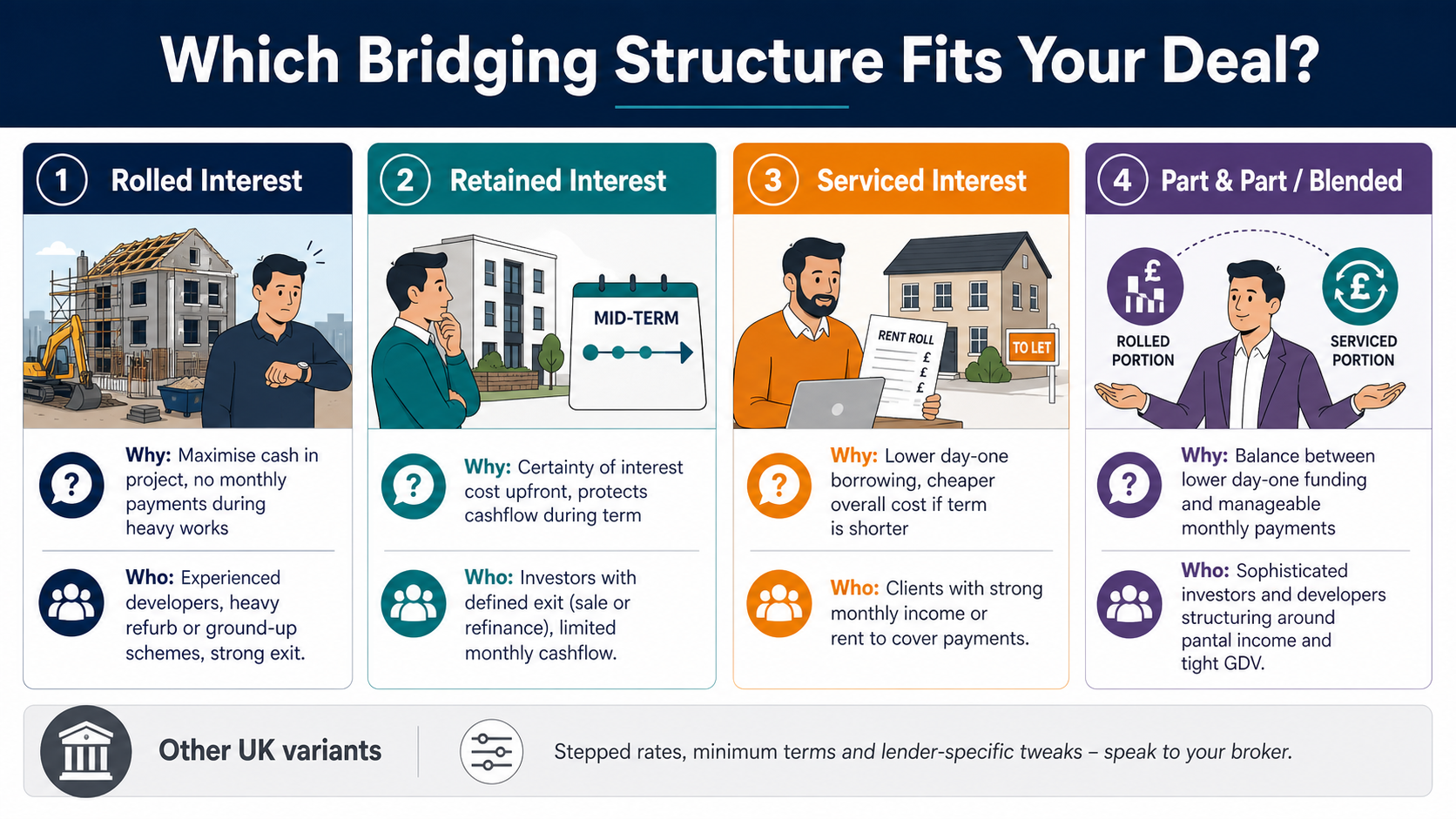
Navigating the complexities of real estate debt in UK property finance requires more than just understanding loan types and risk management. Many borrowers and investors face challenges such as structuring multilayered debt stacks, managing covenant packages, and dealing with short-term bridging or development finance requirements. This article highlights the intricacies of these debt structures and the critical need for sophisticated financial engineering tailored to individual property projects.
James William & Co Capital specialises in exactly these challenges. Whether you are a high-net-worth individual, property developer, or institutional investor, our bespoke capital concierge approach provides you with expert guidance and seamless execution on all types of property and business funding. From mezzanine debt to commercial mortgages and joint venture equity, we arrange fast, customised solutions that protect your interests while maximising your investment potential.
Take control of your property financing strategy today by partnering with the experts in complex UK real estate debt structuring. Visit James William & Co Capital now to explore how we can transform your borrowing into strategic opportunity. For detailed insights on sophisticated funding options, see our structured property finance services. Do not wait until market volatility affects your deal – contact us to secure your tailored financing solution with confidence.
Frequently Asked Questions
What is real estate debt?
Real estate debt refers to loans secured against property assets, serving as a financial instrument to facilitate property acquisition and investment. This includes mortgages, development financing, and commercial property loans.
What are the main types of real estate debt structures available?
The primary types of real estate debt structures include residential mortgages, buy-to-let mortgages, commercial property loans, development finance, and bridging loans, each serving different purposes and carrying unique risk profiles.
How does debt function in property transactions?
Debt in property transactions allows buyers to leverage future income potential against immediate purchases, enabling them to acquire properties beyond their cash reserves. It also balances financial risks between lenders and borrowers while facilitating market liquidity.
What are the key risks associated with real estate debt?
Key risks include borrower credit risk, property valuation inaccuracies, market volatility, legal compliance challenges, and the quality of collateral. Comprehensive risk management is essential for both lenders and borrowers in navigating these risks.
Recommended
Related Topics
Speak to a specialist
Discuss your finance with James directly
Whole-of-market specialist finance — bridging, development, commercial and residential. No call centres, no obligation. James reviews every enquiry personally.
New to specialist finance? How unbiased broker advice works · Deals we have completed
Explore Related Finance