
Published · Updated
real estate funding sources7 Key Real Estate Funding Sources for UK Developers
By James Dawes, CeMAP, Founder, James William & Co Capital

Securing the right funding for property development can feel like a maze when you are faced with so many financial products and strict requirements. Whether you are pursuing a major project or need quick access to cash, knowing which financing method fits your goals and situation is the first step to success. The UK market offers traditional bank loans, speedy bridging loans, complex development finance options, and other tailored solutions to help you push your projects forward.
This list will uncover the specific features, benefits, and crucial considerations for each leading type of property development finance in the United Kingdom. By reading on, you will learn exactly how each method works and which approaches can best support your ambitions at any stage. Discover strategies and expert tips that could shape the outcome of your next property investment.
Table of Contents
- 1. Traditional Bank Loans For Property Investment
- 2. Bridging Loans For Fast Transaction Needs
- 3. Development Finance For Large-Scale Projects
- 4. Private Credit Funds And Family Offices Access
- 5. Mezzanine Debt Strategies For Extra Capital
- 6. Jv Equity Partnerships To Share Risk And Rewards
- 7. Offshore And Bespoke Debt Structures Explained
Quick Summary
| Takeaway | Explanation |
|---|---|
| 1. Establish strong relationships with banks | Maintaining good relationships can improve your chances of securing loans with more favourable terms. |
| 2. Develop clear exit strategies for bridging loans | Before taking on bridging loans, ensure you have a plan for repayment to avoid financial pitfalls. |
| 3. Prepare comprehensive investment narratives for private credit | Present not only financial projections but also social and environmental impacts to attract potential investors. |
| 4. Conduct thorough due diligence for JV partnerships | Ensure alignment of objectives and responsibilities to mitigate risks in joint ventures. |
| 5. Engage financial experts for bespoke debt structures | Specialist advisors help navigate complex regulatory environments and financing frameworks effectively. |
1. Traditional Bank Loans for Property Investment
Traditional bank loans remain the cornerstone of property development financing in the United Kingdom, providing developers with essential capital to transform real estate opportunities into tangible projects. These structured financial products offer a reliable pathway for property professionals seeking substantial investment resources.
Bank loans for property development typically involve comprehensive assessments of several key factors:
- Credit history evaluation
- Project feasibility analysis
- Income verification
- Property valuation
- Risk assessment
The UK mortgage market continues to demonstrate resilience, with gross lending projected to rise modestly despite ongoing economic challenges. Banks assess developers through rigorous criteria, examining not just the immediate project but the broader financial landscape and potential long-term returns.
Traditional bank loans provide structured financing with predictable repayment terms, offering developers a straightforward path to property investment.
Key advantages of traditional bank loans include:
- Lower interest rates compared to alternative financing
- Structured repayment schedules
- Potential tax deductions on interest payments
- Established regulatory frameworks
- Clear lending criteria
Developers must prepare comprehensive documentation including detailed business plans, projected cash flows, and thorough property development strategies. Many banks now require extensive risk mitigation evidence and sustainable development plans.
Expert tip: Cultivate strong relationships with bank managers and maintain impeccable financial records to improve your loan approval prospects.
2. Bridging Loans for Fast Transaction Needs
Bridging loans represent a dynamic and flexible financing mechanism for property developers seeking rapid capital deployment in time-sensitive transactions. These short-term financial instruments enable professionals to navigate complex property acquisition scenarios with unprecedented speed and agility.
Understanding the nuanced landscape of bridging finance is crucial for modern property developers. Bridging loans can be regulated or unregulated, each carrying distinct legal implications and borrower protections.
Key characteristics of bridging loans include:
- Ultra-fast arrangement times
- Secured against property assets
- Typically short-term (few weeks to 12 months)
- Higher interest rates compared to traditional financing
- Flexible repayment structures
Bridging loans provide property developers with a strategic financial tool to capitalise on time-critical investment opportunities.
Developers frequently utilise bridging loans for scenarios such as:
- Purchasing properties at auction
- Completing urgent property renovations
- Covering temporary funding gaps
- Facilitating quick property portfolio expansions
- Bridging financial periods between property transactions
These loans are particularly valuable when traditional banking processes would introduce prohibitive delays. Rapid capital deployment becomes possible, allowing developers to secure competitive opportunities that might otherwise slip away.
Expert tip: Always develop a clear exit strategy before securing a bridging loan, ensuring you have a definitive plan for repayment within the loan’s term.
3. Development Finance for Large-Scale Projects
Development finance represents the financial lifeblood of ambitious property transformation projects in the United Kingdom. These sophisticated funding mechanisms enable developers to unlock potential in complex infrastructure and urban regeneration initiatives that reshape entire communities.
Major infrastructure projects demand strategic financial governance that goes far beyond traditional financing models. Successful large-scale developments require intricate funding structures that balance risk management with strategic investment potential.
Key components of development finance include:
- Public-private partnership funding
- Comprehensive risk assessment frameworks
- Phased investment tranches
- Flexible capital deployment
- Robust governance mechanisms
Development finance transforms visionary project concepts into tangible urban landscapes through sophisticated financial engineering.
Developers must navigate multiple funding considerations:
- Securing initial project capitalisation
- Managing ongoing financial milestones
- Demonstrating long-term economic viability
- Ensuring community and stakeholder alignment
- Maintaining strict financial reporting standards
The National Audit Office emphasises that successful projects are not merely about budget compliance but also about delivering meaningful societal value. This requires developers to think beyond immediate financial returns and consider broader economic and community impacts.
Expert tip: Develop comprehensive financial models that illustrate your project’s potential economic and social benefits, creating a compelling narrative for potential investors and stakeholders.
4. Private Credit Funds and Family Offices Access
Private credit funds and family offices represent a sophisticated alternative financing ecosystem for property developers seeking flexible and strategic capital solutions. These sophisticated investors offer nuanced funding approaches that transcend traditional banking constraints.
Family offices increasingly apply impact investing principles to real estate investments, creating unique opportunities for developers with aligned vision and robust project strategies.
Key characteristics of private credit and family office funding include:
- Bespoke investment structures
- Flexible capital deployment
- Long-term investment perspectives
- Reduced bureaucratic constraints
- Value-aligned investment approaches
Private credit funds provide developers with innovative financing solutions beyond conventional banking frameworks.
Developers can leverage these funding sources through:
- Demonstrating strong project governance
- Presenting comprehensive impact assessments
- Developing clear strategic narratives
- Showcasing potential social and environmental benefits
- Building trust through transparent reporting
The Association of Real Estate Funds emphasises the importance of robust governance and investor protection in these sophisticated funding relationships. Successful developers understand that these investors seek more than financial returns they want meaningful project impact.
Expert tip: Prepare comprehensive investment decks that articulate not just financial projections but also the broader societal and environmental value of your development project.
5. Mezzanine Debt Strategies for Extra Capital
Mezzanine debt represents a sophisticated financial instrument that bridges the gap between traditional senior debt and equity financing for ambitious property developers. This hybrid funding approach offers developers a nuanced mechanism to unlock additional capital beyond conventional lending structures.
Devolved governments support mezzanine financing strategies that accelerate local development initiatives and manage complex project risks effectively.
Key characteristics of mezzanine debt include:
- Flexible capital structures
- Higher risk and return profiles
- Subordinated to senior debt
- Partial equity conversion options
- Customisable repayment terms
Mezzanine debt provides developers with strategic financial flexibility beyond traditional lending constraints.
Developers can leverage mezzanine financing through:
- Demonstrating robust project feasibility
- Presenting comprehensive risk mitigation strategies
- Showcasing strong development track records
- Developing innovative project value propositions
- Maintaining transparent financial reporting
The unique positioning of mezzanine debt allows developers to access additional growth capital without significantly diluting existing equity stakes. This approach enables more complex and ambitious property development projects that might otherwise remain financially unfeasible.
Expert tip: Prepare detailed financial models that clearly illustrate how mezzanine financing enhances your project’s overall capital efficiency and potential returns.
6. JV Equity Partnerships to Share Risk and Rewards
Joint Venture (JV) equity partnerships represent a strategic approach for property developers to distribute financial risk while accessing enhanced capital and expertise. These collaborative arrangements enable multiple stakeholders to combine resources and leverage collective strengths in complex real estate development projects.
Innovate UK supports collaborative investment models that align public and private sector capabilities for sustainable development.
Key characteristics of JV equity partnerships include:
- Shared financial responsibilities
- Complementary skill sets
- Reduced individual project risk
- Expanded investment capacity
- Diversified expertise pools
JV partnerships transform complex property developments from individual challenges into collective opportunities.
Developers can maximise JV partnerships through:
- Identifying complementary partner strengths
- Establishing clear governance frameworks
- Defining transparent equity distribution
- Creating robust performance metrics
- Developing comprehensive exit strategies
The UK Stewardship Code emphasises the importance of responsible governance and transparency in such collaborative investment structures. Successful JV partnerships require meticulous planning and aligned strategic objectives.
Expert tip: Conduct thorough due diligence on potential JV partners and draft comprehensive partnership agreements that clearly outline roles, responsibilities, and potential conflict resolution mechanisms.
7. Offshore and Bespoke Debt Structures Explained
Offshore and bespoke debt structures represent sophisticated financial engineering techniques that enable property developers to navigate complex funding landscapes with unprecedented flexibility. These tailored financial arrangements transcend traditional lending models by creating customised solutions for unique project requirements.
Offshore energy sectors demonstrate advanced financing strategies that provide developers with nuanced approaches to capital structuring.
Key characteristics of offshore and bespoke debt structures include:
- Highly customised contractual terms
- Cross-border investment capabilities
- Complex risk management strategies
- Regulatory compliance flexibility
- Enhanced financial engineering
Bespoke debt structures transform challenging financial scenarios into strategic funding opportunities.
Developers can leverage these sophisticated financing approaches through:
- Comprehensive regulatory understanding
- Detailed project risk assessments
- Advanced financial modelling
- Strategic international partnerships
- Innovative contractual negotiations
These structures offer remarkable financial flexibility that traditional lending frameworks cannot match. By engineering complex debt arrangements, developers can unlock funding potential for projects that might otherwise seem financially unfeasible.
Expert tip: Engage specialist financial advisors with international expertise to navigate the intricate legal and financial complexities of offshore and bespoke debt structures.
Below is a summary table encapsulating the various property development financing strategies and their detailed characteristics discussed in the provided article.
| Financing Strategy | Description | Key Considerations |
|---|---|---|
| Traditional Bank Loans | Structured financial products offering predictable repayment terms and low interest rates. | Detailed documentation and thorough credit evaluation required. |
| Bridging Loans | Short-term finance for urgent capital needs in property transactions. | Higher interest rates, suitable for time-sensitive opportunities. |
| Development Finance | Funding tailored for large-scale property development initiatives. | Requires robust risk management and strategic alignment. |
| Private Credit Funds/Family Offices | Flexible capital sources with bespoke investment structures. | Emphasis on project impact and comprehensive governance. |
| Mezzanine Debt | A hybrid of debt and equity offering additional project funding. | Higher risk, suitable for bridging capital needs beyond traditional loans. |
| JV Equity Partnerships | Collaborative investment approaches to share risks and resources. | Reliance on mutual interests and detailed role delineation. |
| Offshore/Bespoke Debt Structures | Specialised financing solutions for unique property development scenarios. | Requires specialist expertise and adherence to regulatory compliance. |
Unlock Tailored Property Development Finance Solutions Today
Navigating the diverse landscape of UK real estate funding can feel overwhelming, especially when balancing traditional loans, bridging finance, mezzanine debt and intricate JV equity partnerships. The challenge lies in securing the right capital structure that addresses urgent transaction timelines, risk allocation, and long-term project viability all at once. Whether you need rapid bridging loans, sophisticated multi-layered debt arrangements or strategic partnerships with family offices and private credit funds, expert guidance is essential.
At James William & Co Capital, we understand these complexities and offer a unique “capital concierge” approach that streamlines your funding journey. By acting as your dedicated debt structuring partner, we provide bespoke solutions tailored to your project’s precise needs including development finance, mezzanine debt strategies and complex refinance packages. Our extensive network of specialist lenders enables access to fast, flexible and innovative funding that traditional banks may not offer.
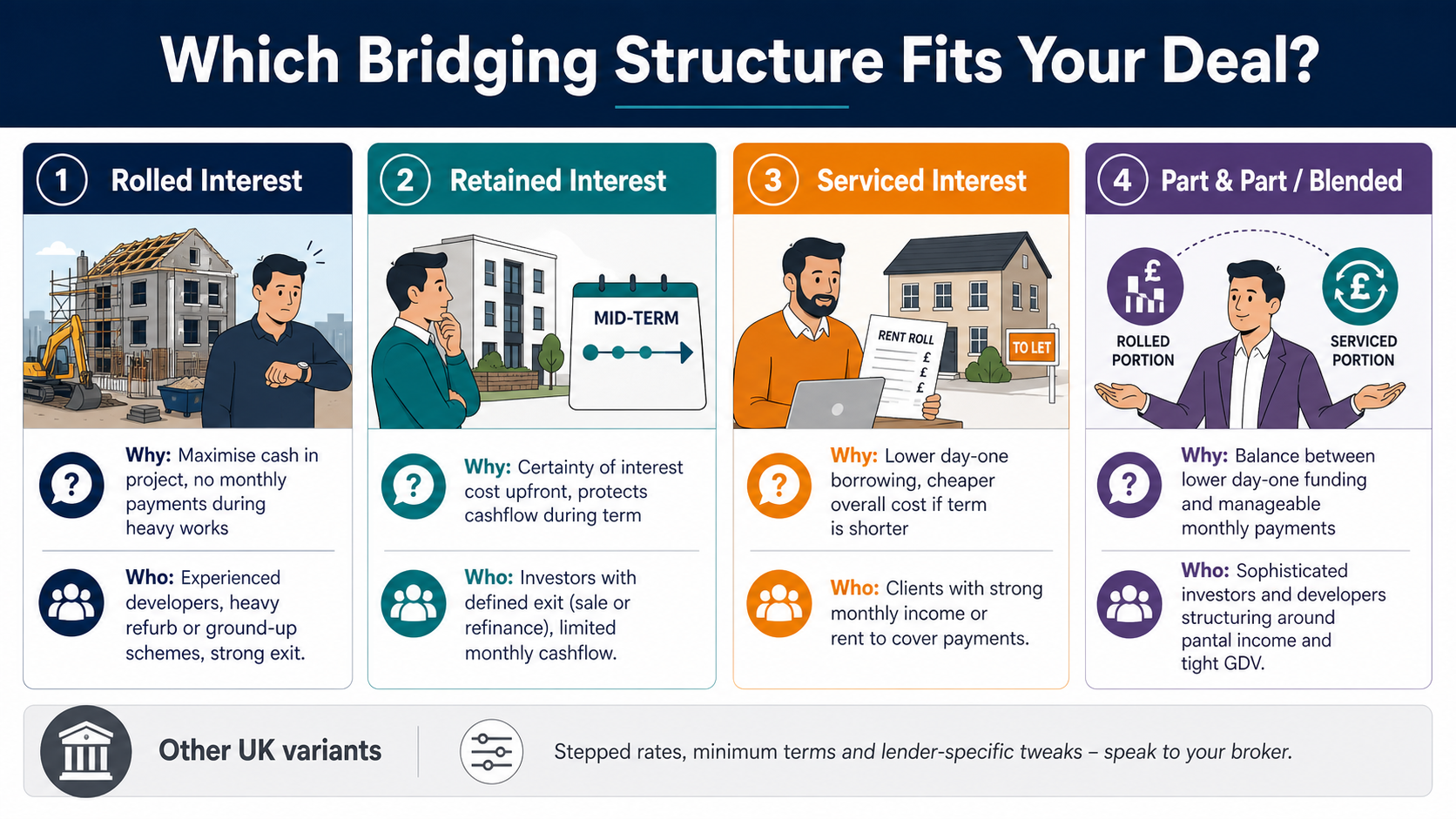
Unlock the financial agility your property projects demand. Visit us today at James William & Co Capital to explore how our expert mortgage brokers and capital structuring services can help you secure the optimal funding solution with speed and confidence. Don’t let financing hurdles slow your developments—contact us now and transform your real estate ambitions into reality.
Learn more about our development and bridging finance solutions and discover the difference of a truly personalised lending strategy.
Frequently Asked Questions
What are traditional bank loans for property investment?
Traditional bank loans are structured financial products that provide developers with essential capital to finance property development projects. To obtain one, prepare a detailed business plan, projected cash flows, and a thorough development strategy for submission to your bank.
How quickly can I access bridging loans for time-sensitive property transactions?
Bridging loans can be arranged rapidly, often within a few days to a few weeks, depending on the lender. To expedite the process, have all necessary documentation and a clear exit strategy ready when applying.
What is development finance and when should I consider it?
Development finance is a funding mechanism specifically designed for large-scale property transformation projects. Consider this option when you have ambitious plans that require substantial investment, ensuring you have robust financial models to illustrate economic viability.
How can private credit funds and family offices support my property development?
Private credit funds and family offices offer flexible, bespoke funding solutions for developers seeking capital beyond traditional bank loans. To attract these investors, demonstrate strong governance, develop clear strategic narratives, and present comprehensive impact assessments.
What are the advantages of using mezzanine debt for property projects?
Mezzanine debt offers additional capital while allowing you to maintain more equity compared to traditional financing. Prepare detailed financial models to show how this type of debt can enhance your project’s overall capital efficiency and returns.
How can joint venture equity partnerships mitigate financial risk in property development?
Joint venture equity partnerships allow developers to share financial responsibilities and leverage each partner’s strengths, thereby reducing individual project risk. Identify complementary skills in potential partners and establish clear governance frameworks to maximise the partnership’s effectiveness.
Recommended
- James William & Co Capital | Specialist Property Finance
- James William & Co Capital | Specialist Property Finance
- James William & Co Capital | Specialist Property Finance
- James William & Co Capital | Specialist Property Finance
- Financing Options for Investors: Building Wealth in Real Estate | Bold Street AI
Related Topics
Speak to a specialist
Discuss your finance with James directly
Whole-of-market specialist finance — bridging, development, commercial and residential. No call centres, no obligation. James reviews every enquiry personally.
New to specialist finance? How unbiased broker advice works · Deals we have completed
Explore Related Finance