
Published · Updated
why structured finance mattersStructured Finance for UK Property Investors Explained
By James Dawes, CeMAP, Founder, James William & Co Capital

Structured finance is often dismissed as a last resort for distressed projects, yet this misconception blocks high-net-worth developers and institutional investors from unlocking one of the most powerful tools for large-scale UK property developments. In reality, structured finance is a proactive strategy that layers capital instruments to manage complex risk profiles, optimize funding costs, and accelerate deal execution. This guide clarifies what structured finance truly is, why it matters in 2026, and how you can leverage it to achieve superior project outcomes.
Table of Contents
- What Is Structured Finance And Why It Matters
- Structured Finance Vs Traditional Lending: Key Differences
- Key Components And Instruments In Structured Finance
- Roles And Expectations Of Institutional Investors
- Common Misconceptions About Structured Finance
- Risk Management And Capital Optimization In Structured Finance
- Tailored Finance Solutions For Complex Property Projects
- Conclusion: Leveraging Structured Finance For Future Success
- Explore Specialist Structured Finance Solutions With James William & Co Capital
Key Takeaways
| Point | Details |
|---|---|
| Structured finance layers capital instruments | Combines senior debt, mezzanine finance, and equity tailored to project-specific risks and cash flows. |
| Offers flexibility beyond traditional lending | Enables phased capital deployment, customized covenants, and risk-sharing mechanisms unavailable in standard loans. |
| Institutional investors drive UK development targets | Half of UK institutional investors managing £405.6 billion support structured finance for residential projects. |
| Myths create unnecessary barriers | Structured finance is not only for failing projects; it optimizes capital structures for growth and complex developments. |
| Expert advisory accelerates outcomes | Brokers and advisors design bespoke financing strategies, reducing risk and improving deal certainty. |
What is Structured Finance and Why It Matters
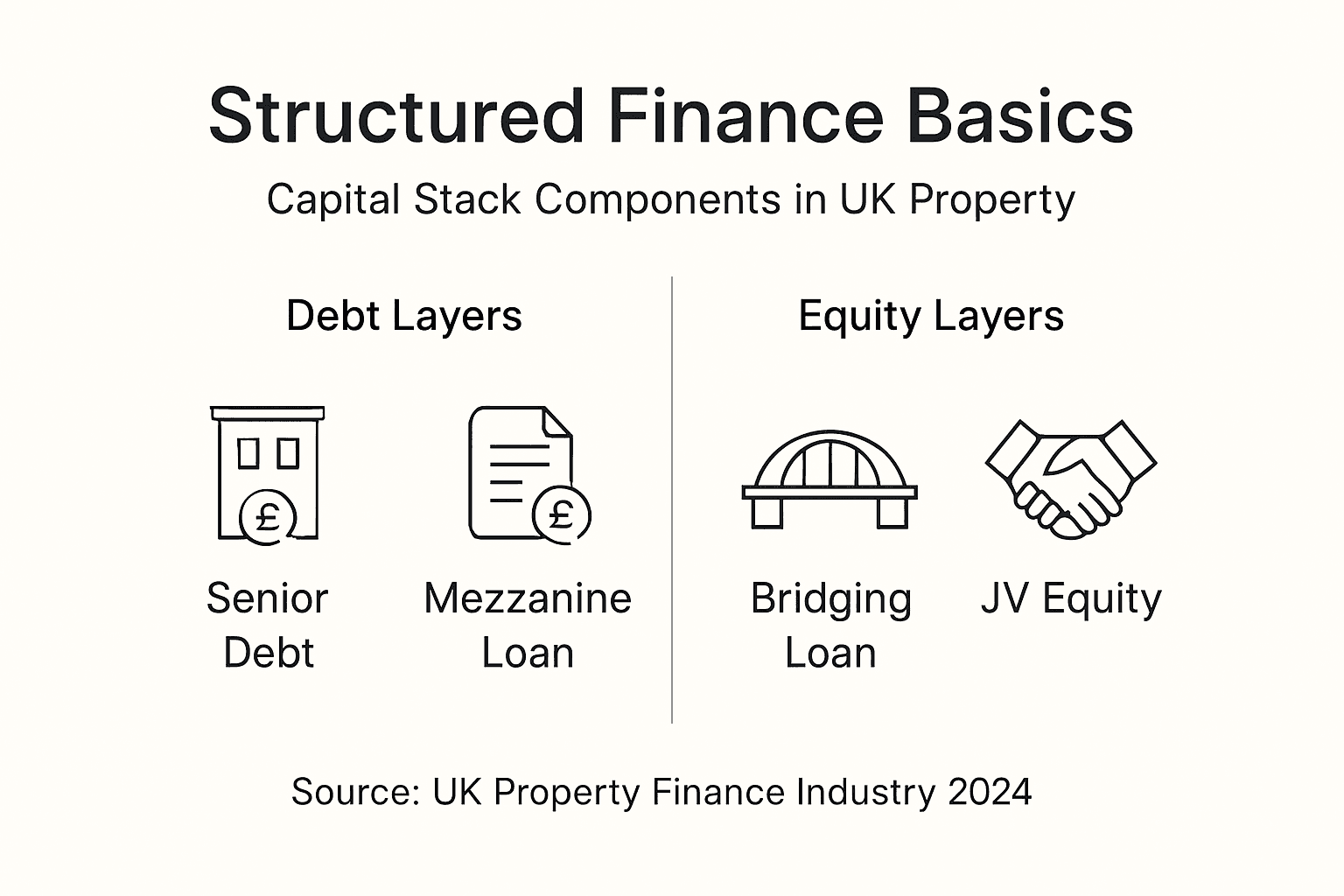
Structured finance combines multiple capital instruments like senior debt, mezzanine financing, and equity to meet the unique cash flow and risk profile of large UK property developments. This approach creates a layered capital stack where each instrument occupies a specific position based on security, cost, and risk exposure. Unlike traditional single-lender arrangements, structured finance for UK developers allows you to tailor funding to project milestones, construction phases, and anticipated sales timelines.
Why does this matter? Large-scale projects often exceed the risk appetite or lending limits of individual banks. Structured finance fills this gap by distributing risk across multiple capital providers, each compensated according to their position in the stack. You preserve ownership while optimizing your cost of capital, accessing funds that would otherwise remain out of reach.
The core components include:
- Senior debt: First-charge security, lowest interest rates, strict covenants
- Mezzanine finance: Subordinated debt with higher returns, often includes equity participation
- Preferred equity: Sits between debt and common equity, offers fixed returns with upside potential
- Joint venture equity: Strategic partners share capital and project risks
Each instrument addresses different risk layers. Senior debt covers the majority of capital needs at the lowest cost. Mezzanine finance bridges the gap when senior lenders cap their exposure. Equity fills the remainder, aligning investor interests with project success. This flexibility enables phased capital deployment, reducing idle capital costs and matching funding to actual construction progress.
Structured Finance vs Traditional Lending: Key Differences
Structured finance is increasingly essential due to limits on traditional bank lending caused by rising interest rates, tighter regulations, and cautious credit committees. Banks face strict loan-to-value ratios, rigid covenant packages, and lengthy approval processes that slow complex deals. When your project involves multiple phases, offshore structures, or non-standard security arrangements, traditional lending often proves inadequate.
Structured finance solves these limitations by layering mezzanine and equity capital to fill funding gaps. You gain bespoke deal terms rather than accepting standardized banking covenants. This approach supports complex projects with phased funding aligned to construction milestones and anticipated sales, reducing refinancing risk and improving cash flow management.
| Feature | Traditional Lending | Structured Finance |
|---|---|---|
| Approval speed | 12-16 weeks | 4-8 weeks with experienced advisors |
| Flexibility | Rigid covenants, standardized terms | Customized risk-sharing, tailored structures |
| Capital sources | Single bank or syndicate | Layered instruments from multiple providers |
| Risk management | Limited options beyond security | Phased deployment, profit-sharing, subordination |
| Cost of capital | Lower headline rates but less flexibility | Higher blended rates but optimized overall structure |
The differences extend beyond cost. Traditional loans require full drawdown and immediate interest payments, even when capital sits idle during early construction phases. Structured finance allows you to draw funds as needed, reducing carry costs. Mezzanine providers often accept interest rollovers, preserving cash flow during pre-sales phases.
Key advantages include:
- Tailored covenant packages: Negotiate terms that reflect actual project dynamics rather than standardized banking rules
- Speed of execution: Experienced brokers expedite approvals by presenting deals to pre-qualified capital sources
- Risk mitigation: Distribute project risk across senior, mezzanine, and equity layers
Pro Tip: Focus on certainty of execution rather than chasing the lowest headline rate. A structured finance deal that closes in six weeks with flexible terms often outperforms a cheaper bank loan that takes four months and requires restrictive covenants.
Key Components and Instruments in Structured Finance
Understanding each instrument’s role helps you design an optimal capital stack. Senior debt forms the foundation, typically covering 55-65% of total project costs at rates between 7-10% in 2026. Lenders take first-charge security over the asset, demanding robust cash flow projections and detailed construction programmes. This instrument offers the lowest cost but imposes strict covenants on draw schedules, contractor approvals, and sales release mechanisms.
Mezzanine finance sits between senior debt and equity, covering an additional 15-25% of costs at rates between 15-25%. Mezzanine lenders accept subordinated security positions, compensating for higher risk through elevated returns and often participation in profit upside. This instrument provides crucial flexibility when senior lenders cap their exposure below your total funding requirement.

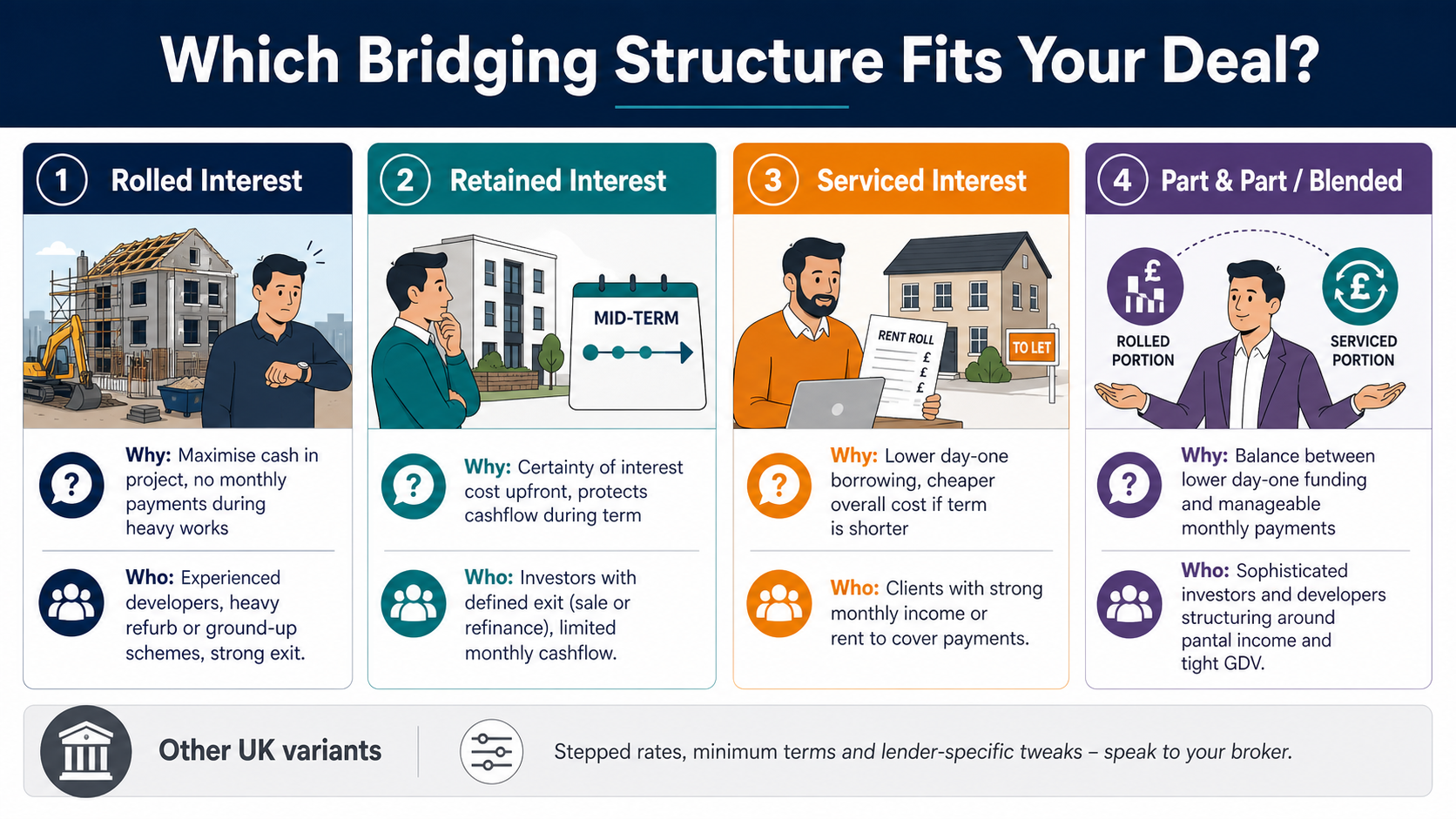
Bridging loans address short-term capital needs, typically for 12-24 months at rates between 12-18%. You might use bridging finance to acquire a site quickly before securing longer-term development funding, or to bridge timing gaps between project completion and refinancing. Speed matters here; experienced brokers arrange structuring development finance within weeks rather than months.
Joint venture equity completes the stack, preserving your ownership control while sharing profit risks with strategic partners. Institutional investors or family offices contribute 20-35% of project capital in exchange for preferred returns and profit-sharing arrangements. This approach reduces your equity requirement while bringing governance and risk management expertise to the project.
| Instrument | Typical Cost | Security Position | Key Features |
|---|---|---|---|
| Senior debt | 7-10% | First charge | Lowest cost, strict covenants, 55-65% LTV |
| Mezzanine finance | 15-25% | Subordinated | Profit participation, flexible terms, 15-25% of costs |
| Bridging loans | 12-18% | First or second charge | Short-term, rapid deployment, 12-24 months |
| JV equity | 15-20% preferred return | Equity stake | Profit sharing, governance rights, 20-35% of capital |
Each instrument suits different project phases. Senior debt funds core construction costs. Mezzanine finance covers cost overruns or fills gaps when senior lenders reach their limit. Bridging loans accelerate site acquisitions. JV equity reduces your cash requirement while bringing experienced partners into the deal.
Pro Tip: Negotiate mezzanine terms that allow interest rollovers during construction, preserving cash flow for unforeseen expenses. Your capital stack should match your project’s anticipated cash generation profile, not just minimize headline costs.
Roles and Expectations of Institutional Investors
Half of UK institutional investors managing £405.6 billion in assets agree that institutional investment is central to meeting UK residential building targets through structured finance models. These investors manage pension funds, insurance assets, and sovereign wealth portfolios, seeking steady income streams and long-term holdings that match their liability profiles. Large-scale UK property developments align perfectly with these objectives, particularly when structured to deliver predictable returns.
Institutional investors favor forward funding arrangements where they commit capital before construction starts, securing early asset control and influencing project specifications. This approach provides you with funding certainty while giving investors visibility into project progress and risk management. Their involvement brings professional governance, demanding detailed reporting and milestone-based draw schedules that actually improve project discipline.
ESG commitments increasingly shape institutional investment in UK property. Investors prioritize developments demonstrating energy efficiency, sustainable materials, and social value contributions. Meeting these criteria unlocks substantial capital pools that traditional lenders cannot match. You gain not just funding but alignment with partners who share long-term value creation goals.
Key institutional priorities include:
- Risk-adjusted returns: Target 12-18% IRR with downside protection through subordinated debt positions
- Portfolio diversification: Seek exposure across residential, commercial, and mixed-use developments
- Asset quality: Focus on prime locations with strong rental or sales demand fundamentals
- Operational excellence: Partner with experienced developers demonstrating track records of on-time, on-budget delivery
Their scale enables participation in projects exceeding £50 million, where traditional bank funding falls short. Forward funding models reduce your refinancing risk, providing committed capital throughout the development cycle. This certainty allows you to negotiate better terms with contractors and accelerate project timelines.
Common Misconceptions About Structured Finance
Myth: Structured finance is only for distressed or failing projects. Reality: It is a proactive tool used to optimize capital structures for growth and complex developments. Many successful developers use structured finance misconceptions to their advantage, accessing flexible capital that traditional lenders cannot provide. Distressed situations represent a small subset of structured finance applications; the majority support viable projects requiring sophisticated capital solutions.
Myth: Structured finance always entails excessive cost and complexity. Reality: Tailored structuring balances cost effectiveness and returns. While mezzanine rates appear high in isolation, the blended cost of a layered capital stack often proves more efficient than rejecting a project due to insufficient traditional funding. Complexity is managed through experienced advisors who structure deals aligned with your risk tolerance and return objectives.
Myth: Structured finance replaces traditional lending entirely. Reality: It complements traditional finance to meet scale and complexity requirements. Most large UK developments combine senior bank debt with mezzanine and equity layers. Banks provide cost-effective senior funding up to their risk limits; structured finance fills the gap beyond those limits. This hybrid approach optimizes your overall cost of capital while maintaining funding certainty.
Clearing these misconceptions enables better financing decisions and confidence. You avoid leaving viable projects unfunded due to misunderstanding available capital sources. Understanding that structured finance is mainstream rather than exceptional opens opportunities for optimizing your capital structure and accelerating deal execution.
Key truths to remember:
- Structured finance supports profitable, growth-oriented projects
- Costs are tailored to risk; higher returns compensate mezzanine and equity providers for subordinated positions
- Traditional and structured finance work together, not in opposition
- Experienced advisors simplify complexity, making structured deals accessible
Risk Management and Capital Optimization in Structured Finance
Structured finance reduces project risk through customized collateral arrangements and risk-sharing mechanisms adapted to project and market uncertainties. Collateralized debt obligations and asset-backed securities distribute project risks across multiple investors, each accepting exposure aligned with their risk appetite and return requirements. This diversification protects you from single points of failure while ensuring capital providers remain committed throughout the development cycle.
Customized risk-sharing aligns incentives between lenders, investors, and developers. Mezzanine lenders accepting subordinated positions demand higher returns but also bring expertise in construction monitoring and sales strategy. Their involvement improves project governance without diluting your control. JV equity partners contribute capital while sharing profit risks, creating alignment that enhances decision-making quality.
Financing structures closely match construction phases and sales timelines to optimize cash flow. Draw schedules release capital as you achieve specific milestones: site acquisition, planning consent, construction phases, practical completion. This phased approach reduces idle capital costs and ensures funding availability when actually needed. Sales release mechanisms tie debt repayment to unit sales, aligning repayment obligations with revenue generation.
Key risk management features include:
- Subordination agreements: Define priority of claims, protecting senior lenders while allowing mezzanine providers to participate
- Covenant packages: Tailored to project specifics rather than standardized banking rules
- Profit participation: Aligns lender and developer interests in maximizing project value
- Collateral diversification: Spreads security across multiple assets or phases, reducing concentration risk
These mechanisms help you achieve an optimal balance of risk and return suited to project specifics. You gain access to capital that would otherwise remain unavailable while maintaining control over development decisions. Experienced advisors structure these arrangements to protect all parties while preserving your ability to execute your vision.
Tailored Finance Solutions for Complex Property Projects
Forward funding secures capital before construction starts, reducing delays and providing certainty for contractor appointments and material procurement. This approach eliminates refinancing risk during the development cycle, allowing you to focus on execution rather than capital raising. Institutional investors and private credit funds provide forward commitments based on detailed project plans, locking in funding terms before you break ground.
Deal structure and certainty of execution often trump headline interest rates. A structured finance package that closes in six weeks with flexible covenants delivers more value than a marginally cheaper bank loan requiring four months and restrictive terms. Speed matters when acquiring competitive sites or responding to market opportunities. Experienced brokers present your deal to pre-qualified capital sources, accelerating approvals and improving terms through competitive tension.
Expert advisors help navigate legal complexity and optimize loan terms. Structured finance involves sophisticated documentation: intercreditor agreements, subordination deeds, profit-sharing waterfalls, and security arrangements. Advisors ensure these documents protect your interests while meeting lender requirements. They negotiate covenant packages that provide operational flexibility rather than accepting standardized banking terms.
Brokers bridge between developers, investors, and lenders, ensuring aligned interests. They understand capital provider appetites, structuring deals that meet institutional criteria while preserving your control and return objectives. This intermediation accelerates execution and improves pricing through competitive processes.
Key execution steps include:
- Capital stack design: Determine optimal mix of senior debt, mezzanine, and equity based on project characteristics
- Provider selection: Match your project to capital sources with relevant experience and risk appetite
- Term sheet negotiation: Secure favorable pricing and covenants through competitive tension
- Documentation: Execute legal agreements protecting all parties while maintaining operational flexibility
- Ongoing management: Maintain lender relationships and meet reporting requirements throughout the development cycle
Tailored solutions match capital needs to project phases for maximum viability. You draw senior debt for land acquisition and early construction costs. Mezzanine finance covers gaps as the project scales. JV equity fills the remainder, reducing your cash requirement while bringing strategic partners into the deal. This phased approach optimizes your cost of capital and preserves liquidity for unforeseen challenges.
Pro Tip: Engage advisors early in the project lifecycle, ideally before signing site acquisition contracts. Early engagement allows you to structure deals that meet both your objectives and capital provider requirements, accelerating approvals and improving terms.
Conclusion: Leveraging Structured Finance for Future Success
Structured finance offers unmatched flexibility, risk management, and capital optimization for large-scale UK property developments. Market dynamics in 2026 heighten the need for bespoke layered financing as traditional banks face regulatory constraints and cautious credit committees. The ability to layer senior debt, mezzanine finance, and equity according to your project’s specific risk profile and cash flow requirements separates successful developers from those unable to scale.
Partnering with experienced advisors is crucial for structuring sustainable deals that balance cost, flexibility, and execution certainty. The complexity of intercreditor agreements, subordination arrangements, and profit-sharing mechanisms demands expertise that most developers cannot maintain in-house. Advisors navigate these complexities, ensuring your interests remain protected while accessing capital that traditional lenders cannot provide.
Adopting structured finance strategies enhances project and investment success by optimizing your capital stack, accelerating deal execution, and managing risks through tailored covenant packages. You gain access to institutional capital pools, family office networks, and private credit funds that seek exactly the opportunities you are developing. This positions you to meet growth and sustainability goals while maintaining control over your projects and maximizing returns.
Explore Specialist Structured Finance Solutions with James William & Co Capital
If you are navigating complex UK property developments requiring layered capital structures, James William & Co Capital offers specialist structured finance solutions tailored to your specific requirements. Our team designs bespoke capital stacks combining senior debt, mezzanine finance, and JV equity, accelerating deal execution through our network of institutional investors, family offices, and private credit funds.
We provide a capital concierge approach, giving you a single point of contact for end-to-end structuring, negotiation, and execution. Whether you need comprehensive UK funding sources for large-scale acquisitions or complex refinancing solutions, our property finance advisory services deliver rapid, tailored outcomes that optimize your cost of capital while preserving operational control.
FAQ
What types of projects benefit most from structured finance?
Large-scale, complex property developments and multi-layer refinancing projects benefit most from structured finance. Projects requiring flexible, phased capital deployment with customized risk management are ideal candidates, particularly when traditional bank lending proves insufficient.
How does structured finance differ from a traditional bank loan?
Structured finance uses layered instruments and customized risk sharing, unlike traditional loans which offer simpler, less flexible arrangements. It enables tailored capital stacks matching complex project profiles, phased funding aligned to construction milestones, and bespoke covenant packages rather than standardized banking terms.
What role do advisors and brokers play in structured finance deals?
Advisors design bespoke financing strategies aligned with your project needs and risk tolerance. Brokers facilitate negotiations, connect you with appropriate institutional investors and capital providers, and streamline deal execution. Their expertise reduces risk, accelerates funding certainty, and improves terms through competitive processes.
Are there common misconceptions about structured finance I should be aware of?
Structured finance is not only for distressed projects; it optimizes capital structures for growth and complex developments. It complements rather than replaces traditional lending, combining bank debt with mezzanine and equity layers. Costs and complexity are balanced through tailored structuring that matches your specific project requirements and return objectives.
Recommended
Related Topics
Speak to a specialist
Discuss your finance with James directly
Whole-of-market specialist finance — bridging, development, commercial and residential. No call centres, no obligation. James reviews every enquiry personally.
New to specialist finance? How unbiased broker advice works · Deals we have completed
Explore Related Finance