
Published · Updated
end-to-end funding processThe end-to-end funding process for UK property developers
By James Dawes, CeMAP, Founder, James William & Co Capital
TL;DR:
- Getting property funding wrong can lead to costly delays, damaged credibility, and dried-up capital.
- Successful developers approach funding as a structured, parallel process, not a series of sequential steps.
Getting property funding wrong is expensive. Not just in lost deals, but in wasted months, damaged credibility, and capital that dries up at the worst possible moment. The end-to-end funding process for real estate projects is far more layered than most developers expect the first time they attempt it seriously. From financial modelling and lender identification through to drawdown, reporting, and exit, every stage demands preparation, judgement, and the right relationships. This guide breaks down exactly what that process looks like in practice, what trips developers up, and how to run it properly from day one.
Table of Contents
- Key takeaways
- What to prepare before you start the funding process
- The funding lifecycle: from first approach to close
- Common pitfalls in the end-to-end funding process
- What happens after funding closes
- My perspective on running the funding process well
- How James William & Co can support your funding process
- FAQ
Key takeaways
| Point | Details |
|---|---|
| Prepare before you pitch | Financial models, project appraisals, and documentation must be ready before approaching any lender or investor. |
| Run a structured process | Targeting multiple funding sources in parallel creates leverage and prevents deal momentum from stalling. |
| Build in capital buffers | Underestimating capital needs by 20–30% is common; always model contingency into your funding requirement. |
| Expect a multi-month timeline | Funding rounds typically take three to six months from first approach to close; UK development deals are no different. |
| Manage post-funding carefully | Investor reporting, drawdown management, and milestone compliance determine whether future rounds are easier or harder. |
What to prepare before you start the funding process
Most deals that fail in the funding approval process do not fail at the term sheet stage. They fail in the weeks before a single lender is contacted, because the developer has not done the groundwork. A lender or private credit fund can tell within minutes whether a developer has a credible proposition or a half-formed idea dressed up in a pitch deck.
Start with a clear project appraisal. That means gross development value, build costs, land costs, finance costs, and the profit margin you are targeting. Do not round numbers to make them look tidy. Lenders want to see a model that has been stress-tested, not a spreadsheet built to justify a predetermined conclusion.
Here is what your preparation pack should include before you approach any funding source:
- A detailed financial model with sensitivity analysis showing what happens to returns if build costs rise, GDV falls, or the programme runs over
- A professional development appraisal prepared or reviewed by a quantity surveyor
- Planning status clearly documented, including any conditions or abnormals
- Details of the development team, including contractor, architect, and project manager
- A clear statement of how much capital you are seeking, what it will fund, and what security is being offered
- Your track record, presented as a concise schedule of completed schemes with outcomes
Pro Tip: Add a 20 to 30% contingency buffer to your headline capital requirement before you approach lenders. Founders and developers alike consistently underestimate what a project will actually cost once it is running.
Understanding the different types of property finance available in the UK is also part of preparation, not something to research after initial meetings. Senior development finance, mezzanine debt, bridging loans, joint venture equity, and commercial mortgages each have different risk profiles, pricing, and covenants. Knowing which combination suits your project before you sit down with a funder positions you as someone worth engaging with. You can read more about UK property finance options to map this before you begin outreach.
The funding lifecycle: from first approach to close
This is where the complete funding process either holds together or falls apart. Running it well requires treating it like a structured sales process, not a series of informal conversations.
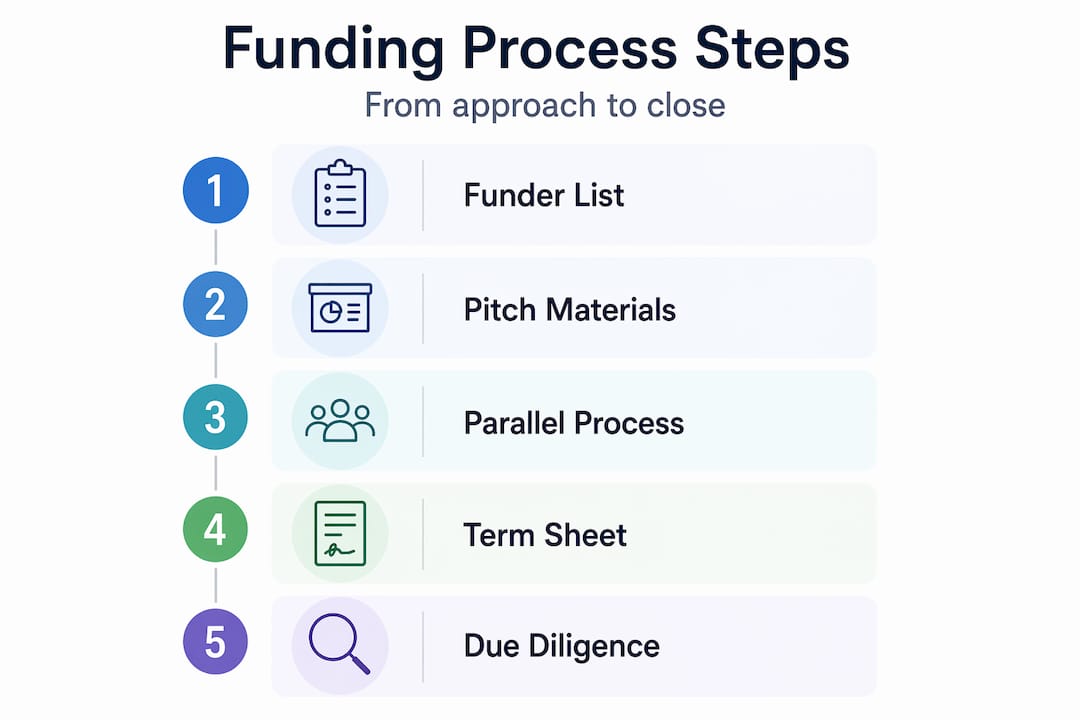
Step one: build a targeted funder list
Do not approach one lender at a time and wait for a response before moving on. Successful fundraising involves building a list of tiered targets and running parallel conversations. For UK property development, that means segmenting your targets: high street banks, specialist development lenders, private credit funds, family offices, and mezzanine providers. Each tier has different appetite, speed, and price.
Step two: prepare your pitch materials
Your information memorandum or project brief should be concise and specific. It needs to cover the opportunity, the numbers, the team, the planning position, and the exit. Lenders do not need fifty pages. They need to understand the risk and return in under ten minutes. Attach your financial model and appraisal as supporting documents.
Step three: manage the process in parallel
Here is a practical overview of what each stage typically looks like and how long to allow:
| Stage | What happens | Typical timeframe |
|---|---|---|
| Initial outreach and indicative terms | First contact, information shared, credit appetite assessed | One to two weeks |
| Heads of terms / term sheet | Lender issues indicative terms for review | One to three weeks |
| Due diligence | Valuation, legal review, QS report, credit approval | Four to eight weeks |
| Legal completion | Facility documentation, drawdown conditions met | Two to four weeks |
| Total | First approach to drawdown | Three to six months |
Funding rounds in practice rarely follow a straight line. Expect one or two iterations at the term sheet stage as lenders adjust their position based on what due diligence reveals. Build this time into your programme from the start.
Step four: negotiate the term sheet properly
The term sheet is not a formality. This is where you negotiate the things that matter most: margin, fees, loan-to-cost, loan-to-GDV, drawdown mechanics, monitoring surveyor requirements, and any recourse provisions. Get a property finance solicitor involved at this stage rather than at legal completion. Changes made after heads of terms are agreed become significantly harder to negotiate.
Step five: navigate due diligence and credit approval
Due diligence is the part of the funding process management that developers most underestimate. The lender’s solicitors will require title, planning documents, building contract, professional team appointments, and insurance details. Their valuer will inspect the site and produce an independent assessment of GDV and build costs. Allow time for this. Delays here are almost always caused by incomplete documentation from the borrower’s side.

Pro Tip: Prepare a due diligence data room before you approach lenders. Include planning consent, title register, architect’s drawings, QS cost plan, and professional team CVs. The faster you can respond to lender requests, the faster you close.
Common pitfalls in the end-to-end funding process
Even experienced developers make avoidable mistakes. The ones that cause the most damage tend to cluster around the same issues.
- Underestimating costs. Capital shortfalls mid-project are one of the most common causes of development distress. If your funding is too tight and your contingency is insufficient, you will either dilute your equity by raising emergency capital or face a default on your facility.
- Targeting the wrong lenders. Not every lender funds every type of scheme. Approaching a lender with no appetite for your asset class or geography wastes everyone’s time and creates a record of declines. Research lender appetite before you approach.
- Poor follow-up. Funding success relies on consistent, trust-based relationship management over time. A single email with no follow-up is not a funding process.
- Inadequate legal preparation. Title issues, restrictive covenants, and missing planning conditions that surface during legal due diligence can delay or kill transactions. Instruct a solicitor to review your title before you go to market.
- Running a sequential rather than parallel process. Approaching funders one at a time is the single biggest structural mistake. It removes your leverage, extends your timeline, and gives the impression that you have already been declined elsewhere.
“The developers who close funding quickly are almost never the ones with the best deal. They are the ones who are best prepared and who run the process like professionals.”
Maintaining momentum matters. Preparation and targeting are the two factors most closely correlated with funding success or failure. A structured pipeline overview, tracked through a CRM or even a well-maintained spreadsheet, keeps multiple conversations moving simultaneously without any falling through the gaps. Automated tracking tools and data-led monitoring can further sharpen how you manage funder interactions at scale.
What happens after funding closes
Closing the facility is not the end of the process. For many developers, the post-funding phase is where relationships are built or destroyed.
Key obligations to manage after drawdown:
- Drawdown schedule compliance. Development finance is drawn in tranches against certified works. Understand the draw mechanics in your facility agreement and have your monitoring surveyor aligned with your programme before you start on site.
- Investor and lender reporting. Regular updates on progress, cost position, and programme keep your funder engaged and prevent surprises. Lenders who are kept informed are significantly easier to work with when problems arise.
- Cost management. Track actual spend against your appraisal throughout the project. If costs are running ahead of budget, address it early rather than hoping the overrun resolves itself.
- Preparing for the exit or refinance. Whether your exit is a sale or a refinance onto a term loan, the groundwork starts well before practical completion. Begin conversations with agents or refinance lenders at least three months before you anticipate needing them.
- Building your track record. Every scheme completed on programme, on budget, and repaid cleanly adds to the credibility that makes the next funding process faster and cheaper. Keep a clear record of outcomes to present in future proposals.
Transparency is not optional in this phase. General partners who build trust through consistent communication secure significantly better terms on subsequent rounds. The same dynamic applies to property development finance.
My perspective on running the funding process well
In my experience, the developers who consistently close funding quickly share one characteristic: they treat the process as seriously as the project itself. Not as a necessary irritation to get through before the real work starts, but as a discipline that requires the same rigour as a construction programme.
I have seen deals collapse not because the project was wrong, but because the developer went to market with an incomplete appraisal, approached a single lender at a time, and had no data room ready when due diligence requests arrived. Every one of those problems is entirely preventable.
What I have found particularly valuable is running a parallel process from day one. When you have three or four conversations progressing simultaneously, you have real leverage. Term sheets sharpen. Timelines compress. Lenders know they are not the only option on the table, and that changes the dynamic entirely.
The other thing I would press on is the relationship dimension. Fundraising is trust-based, not transactional. The lenders and private credit funds worth working with will want to understand your track record, your programme, and how you manage problems. The time you invest in building those relationships before you need them is never wasted. The developers I work with who have strong relationships across their funder network consistently access better pricing and faster execution than those who approach the market cold each time.
— James
How James William & Co can support your funding process
For developers and investors managing the full funding lifecycle, having specialist support at every stage changes what is possible. James William & Co operates as a capital concierge for UK property transactions, covering everything from initial structuring and lender identification through to term negotiation, due diligence coordination, and close.
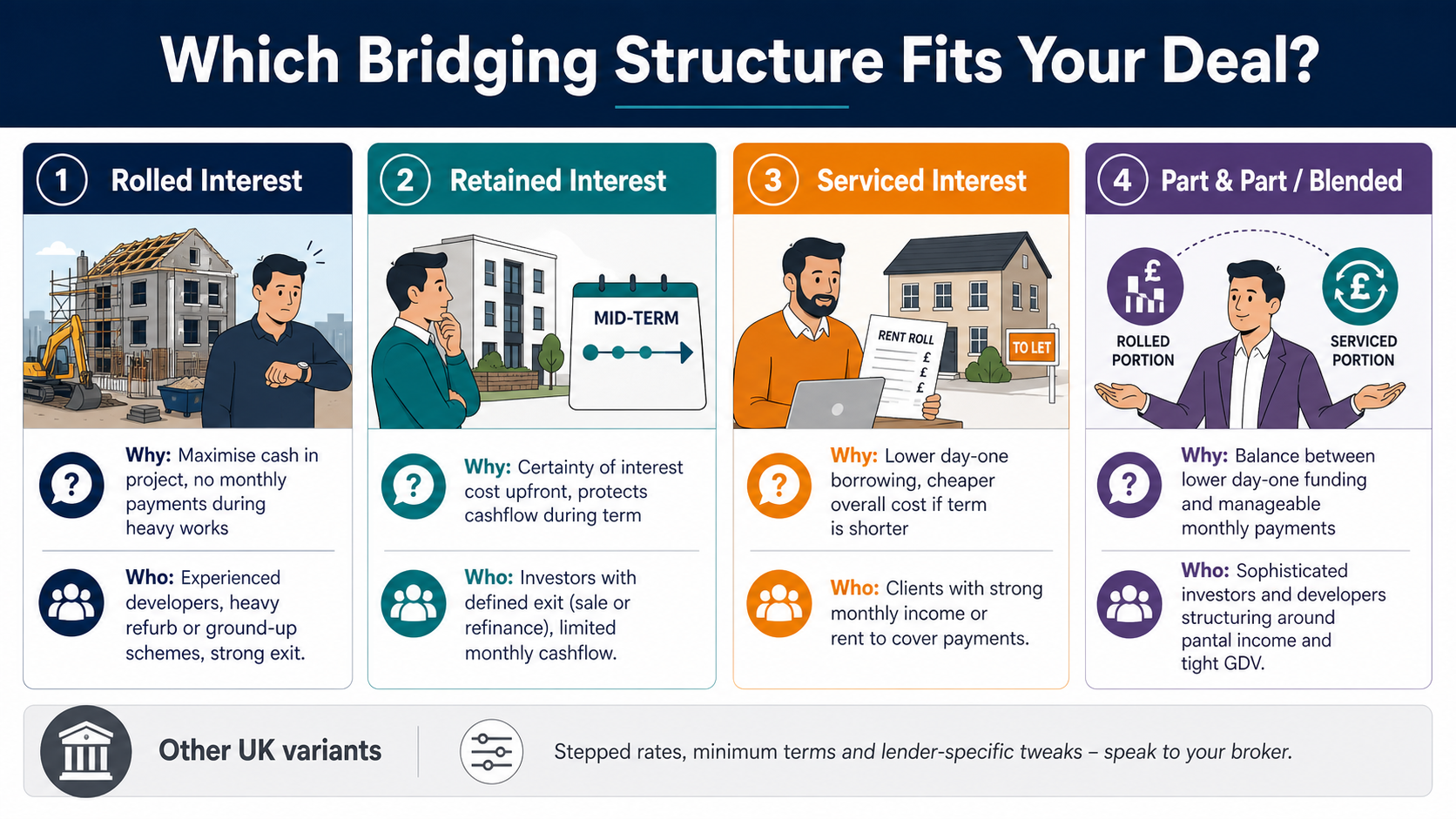
Whether you are arranging senior development finance, layering in mezzanine debt, or structuring a joint venture for a larger scheme, the team at James William & Co provides a single point of contact for the entire process. For London-based projects, the firm’s specialist property finance solutions are built for the pace and complexity the capital demands. You can also review real-world examples of transactions structured and closed at completed project case studies. Contact the team for a confidential discussion about your project.
FAQ
What is the end-to-end funding process for property development?
The end-to-end funding process covers every stage from financial modelling and lender identification through to drawdown, ongoing reporting, and final repayment or exit. For UK property development, it typically spans three to six months from first approach to close.
How long does the funding approval process take in the UK?
The funding approval process for development finance in the UK typically takes four to eight weeks from term sheet to credit approval, with legal completion adding a further two to four weeks. Total timelines from first outreach to drawdown are commonly three to six months.
What documents do lenders require during due diligence?
Lenders typically require planning consent, title documents, a QS cost plan, professional team appointments, a development appraisal, and building contract details. Having these prepared in advance in a data room significantly reduces delays.
Why do developers underestimate capital needs?
Capital requirement estimates commonly fall 20 to 30% short of actual project costs due to unforeseen build complications, programme overruns, and finance costs. Building a contingency into your initial funding ask is standard practice among experienced developers.
What is the biggest mistake in the funding lifecycle?
Running a sequential rather than parallel process is the most common structural error. Approaching one funder at a time removes leverage, extends the timeline, and significantly reduces your chance of closing on competitive terms.
Recommended
Related Topics
Speak to a specialist
Discuss your finance with James directly
Whole-of-market specialist finance — bridging, development, commercial and residential. No call centres, no obligation. James reviews every enquiry personally.
New to specialist finance? How unbiased broker advice works · Deals we have completed
Explore Related Finance