
Published · Updated
property finance workflowMaster the UK Property Finance Workflow for Success
By James Dawes, CeMAP, Founder, James William & Co Capital

Securing the right funding for ambitious property projects in the United Kingdom can feel daunting, especially when multi-layered debt and evolving risk profiles are involved. For British developers and institutional investors, each financing decision carries significant weight from acquisition through to completion. This guide draws on real market insights to help you master each step, from financial viability assessment to detailed due diligence, ensuring your capital stack delivers both flexibility and control for complex developments.
Table of Contents
- Step 1: Assess Project Requirements And Funding Needs
- Step 2: Structure Optimal Finance Solutions
- Step 3: Engage Lenders And Negotiate Terms
- Step 4: Coordinate Due Diligence And Documentation
- Step 5: Finalise Completion And Verify Funding Outcomes
Quick Summary
| Key Point | Explanation |
|---|---|
| 1. Accurately assess project costs | Define the project scope precisely and obtain detailed cost estimates to establish realistic funding requirements. |
| 2. Structure funding layers thoughtfully | Create a capital stack that aligns with the project’s risk profile, ensuring each funding source serves a specific purpose. |
| 3. Engage and negotiate with lenders efficiently | Present your project confidently, using detailed documentation to build trust and demonstrate your financial understanding. |
| 4. Coordinate extensive due diligence | Anticipate lender requirements and organize documentation to verify your project’s viability and compliance with all obligations. |
| 5. Finalise funding and reconcile outcomes | Conduct a thorough project reconciliation and ensure all contractual commitments are fulfilled before closing financing. |
Step 1: Assess project requirements and funding needs
Before you approach any lender or commit capital to a transaction, you need a crystal-clear picture of what your project actually requires. This isn’t about guessing or relying on rough estimates. You’re building the foundation for every funding decision that follows, so getting this right determines whether your deal works financially or falls apart when you present it to sophisticated lenders.
Start by defining your project scope in concrete terms. What are you actually building, renovating, or acquiring? How many units, square footage, or phases are involved? What’s your timeline from acquisition through completion? You need to establish the gross development value that the project will generate at completion, then work backwards from there. This means understanding your end market, comparable sales in the area, and realistic rental or sales projections. Next, layer in your build costs with granular detail. Don’t use industry averages. Get genuine quotes from contractors, specialist consultants, and trade suppliers who understand your specific project. Include hard costs like construction and materials, soft costs like professional fees and planning charges, and crucially, a realistic contingency buffer that accounts for project-specific risks. A financial viability assessment helps you understand whether your cost structures make sense against your development objectives and how different financing scenarios affect your overall returns.
Once you’ve mapped costs and values, you can calculate your actual funding requirement. This includes the land or acquisition price, all development costs, professional fees, interest during development, and a working capital buffer for contingencies. This is where most developers underestimate. You need to account for your preferred developer profit margin, any contributions required for planning obligations, and the timing of when cash must be deployed. Sophisticated lenders—particularly those structuring multi-layered debt arrangements with mezzanine facilities or complex covenant packages—will scrutinise how you’ve arrived at these figures. They want to see that you’ve stress-tested your assumptions, considered the impact of planning delays or cost inflation, and built in realistic buffers. The difference between investment viability and planning viability also matters here. Your project may be acceptable from a planning perspective but require refinement to deliver your target returns.
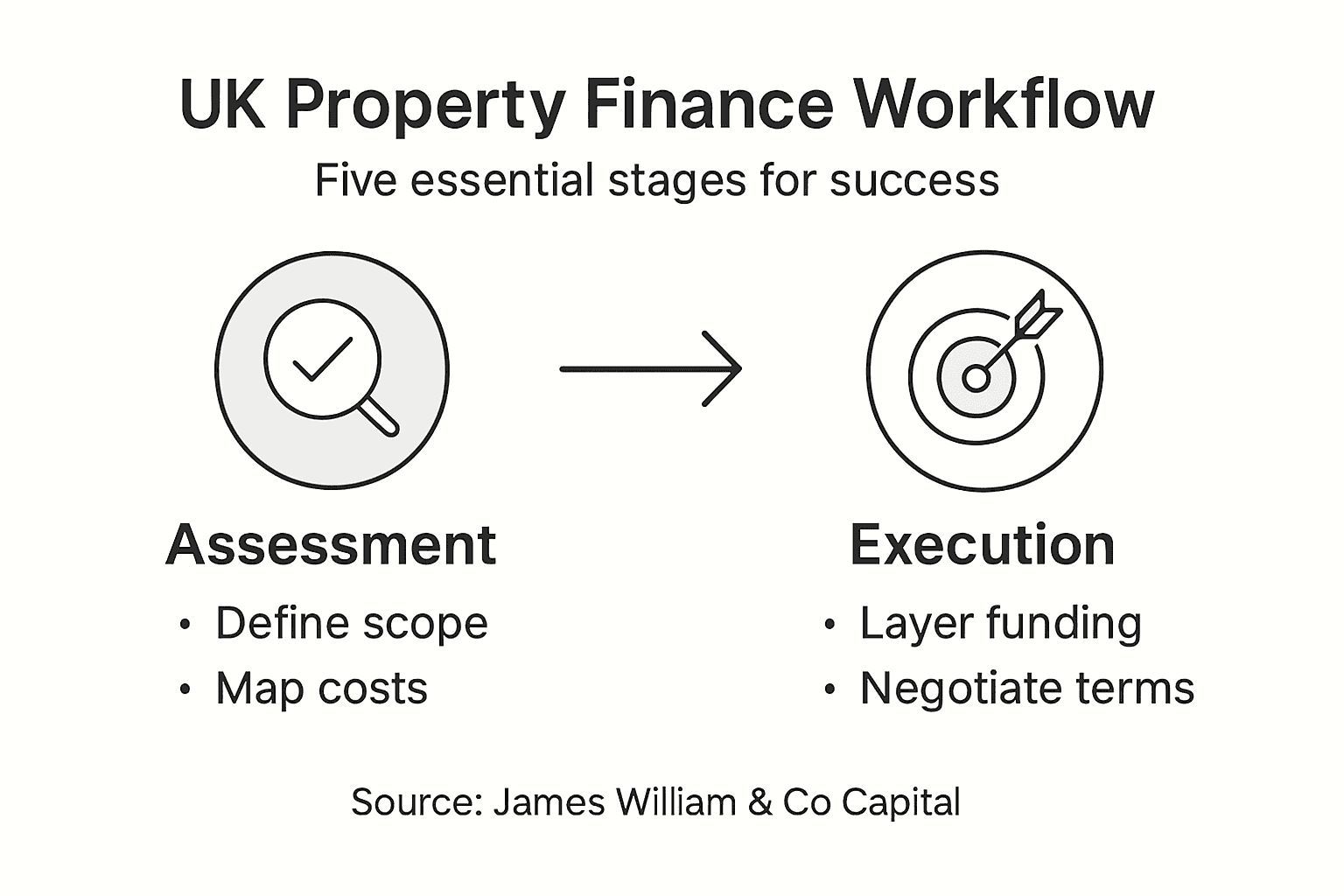
Pro tip: Prepare a detailed funding requirement schedule that maps each cost input against specific milestones and payment schedules, then stress-test it with 10 to 15 percent cost inflation and 3 to 6-month programme delays to show lenders you’ve genuinely considered downside scenarios.
Step 2: Structure optimal finance solutions
Now that you understand exactly what your project needs, the real work begins: finding the right combination of funding sources that delivers both speed and cost efficiency. This isn’t about chasing the cheapest money available. You’re building a capital stack that aligns with your project’s risk profile, development timeline, and exit strategy. The goal is orchestrating multiple funding layers so each component works in concert rather than creating competing interests or cash flow bottlenecks.

Start by thinking about your funding sources as distinct layers, each serving a specific purpose. Senior debt typically forms your foundation, covering up to 60 percent loan-to-cost from traditional lenders or specialist providers. This is your cheapest capital because it sits first in line if something goes wrong. Above that, you might layer stretch senior lending with higher loan-to-cost ratios for additional flexibility, then mezzanine debt filling financing gaps at higher costs, developer equity contributing 10 to 30 percent, and potentially structured equity arrangements. The specific mix depends on your project type, risk profile, and timeline. A blended capital stack approach allows you to optimise across cost, speed, and risk, meaning you might use faster specialist lenders for early acquisition and construction stages, then refinance into traditional mortgages once the project demonstrates lower risk. Mixed-use developments, phased builds, or complex conversions require this kind of dynamic flexibility because your risk profile changes as the project progresses.
The practical challenge is synchronising these layers so liquidity aligns with your construction milestones. You need senior debt facilities structured with appropriate drawdown tranches, mezzanine debt with matching maturity dates, and equity deployment scheduled to cover contingencies without sitting idle. This is where many developers stumble. They secure funding but don’t coordinate the timing, leaving them short of cash at critical moments or paying interest on funds they haven’t yet deployed. Consider how each funding source will be drawn, what conditions trigger each tranche, and how you’ll handle cost overruns or programme delays. Work backwards from your construction schedule. If you’re acquiring in month one and starting on-site in month three, your senior facility needs sufficient commitment for acquisition plus working capital. If your mezzanine debt matures before exit, you need a clear refinancing plan. This orchestration also matters for covenant management. Different lenders have different requirements, and balancing interest reserves, loan-to-value thresholds, and performance covenants across multiple debt layers requires sophisticated structuring. Optimal financing structures balance cost, speed, and risk by adjusting funding channels as your project evolves, not by locking in rigid terms that create friction if circumstances change.
Here’s a summary comparing major types of funding layers in a typical property development capital stack:
| Funding Layer | Typical Loan-to-Cost (%) | Cost Level | Main Role in Capital Stack |
|---|---|---|---|
| Senior Debt | Up to 60 | Lowest cost | Foundation; primary construction loan |
| Stretch Senior | 60–70 | Moderate | Bridges gap for larger projects |
| Mezzanine Debt | 10–20 of total stack | High | Fills finance gap, boosts leverage |
| Developer Equity | 10–30 | Variable (opportunity cost) | Risk buffer; aligns developer interests |
| Structured Equity | Flexible | Highest risk-based | Enhances returns or covers shortfalls |
Pro tip: Build a detailed waterfall model showing precisely when each funding source is drawn, when it’s repaid, and what triggers each deployment, then stress-test it against three scenarios: best-case programme, realistic programme with 8-week slippage, and worst-case with 12 to 16-week delays and 15 percent cost overruns.
Step 3: Engage lenders and negotiate terms
You’ve mapped your project requirements and designed your capital stack. Now comes the phase that separates successful deals from stalled ones: presenting your opportunity to lenders in a way that compels them to commit, then negotiating terms that actually work for your project. This isn’t about pitching; it’s about building confidence that your deal is structured intelligently and your team can execute.
Begin by identifying which lenders match your specific requirements. Traditional banks, specialist property finance providers, mezzanine funds, and alternative lenders all operate with different appetites, speed, and flexibility. A development requiring 18 months to completion with strong pre-sales might suit institutional debt. A mixed-use conversion with planning uncertainty needs lenders comfortable with bespoke covenant structures. Your funding stack design should already guide this segmentation. When you engage lenders, lead with your financial viability case and development expertise, not with desperation. Lenders can sense when a developer hasn’t done their homework. Bring compelling documentation: your cost appraisals with supplier quotes, detailed timelines with realistic contingencies, your track record on previous projects, and third-party validation where possible. Architects’ specifications, planning approvals, and contractor letters of intent all strengthen your narrative. The conversation should centre on risk and mitigation. Yes, your project will make money. But more importantly, you understand what could go wrong and you’ve built buffers into your plan. Interest reserves, cost contingencies, extended construction schedules. These aren’t admissions of weakness. They’re proof you’re thinking like a lender.
Negotiation starts the moment you hand over your submission. Some lenders will push for aggressive terms: higher interest rates, tighter loan-to-value ratios, stringent covenant requirements, or onerous pre-conditions for each drawdown tranche. Your task is balancing cost against practical feasibility. A covenant that sounds reasonable in lender documentation can become a nightmare if your project timeline slips slightly or market conditions shift during construction. When negotiating individual terms, understand the lender’s real concern behind each demand. If they’re insisting on a 65 percent loan-to-value despite your 70 percent requirement, they’re worried about downside protection. Perhaps you agree to a tighter interest reserve or additional cost contingency escrow instead of reducing the advance. If they want quarterly financial reporting instead of annual, they’re concerned about visibility during construction. Perhaps you propose this applies only during the active construction phase. These aren’t surrenders. They’re refinements that show you’re reasonable and commercially aware. Engaging with specialist property finance partners who understand multi-layered debt structuring can be invaluable here. They know how to navigate conversations across different lender types simultaneously, coordinate competing interests, and identify creative solutions that satisfy senior lenders, mezzanine providers, and equity holders without creating contradictory obligations. Timing matters too. Don’t negotiate every term at once. Lock down the big structures first (amount, duration, interest rate, loan-to-value). Once those are agreed, the operational details become easier. And always get everything in writing. Verbal assurances about flexibility or future refinancing options evaporate the moment interest rates rise or a lender changes leadership.
Pro tip: Prepare a “lender wish list” during your capital stack design showing your ideal terms, then develop a three-tier fallback position for each critical term before you submit anything, so you can negotiate decisively without discovering mid-conversation that a concession makes your deal unworkable.
Step 4: Coordinate due diligence and documentation
Your lenders are now committed in principle. Before funds hit your account, they’ll demand comprehensive due diligence and documentation that proves everything you’ve claimed about your project is accurate and defensible. This phase often catches developers off guard because it’s not just about paperwork. It’s a systematic verification of your entire project structure, and if gaps emerge, deals can unravel quickly. Getting ahead of this process means coordinating multiple workstreams simultaneously, anticipating what lenders will question, and building an evidence trail that speaks for itself.
Start by understanding what your specific lenders require. Each facility agreement will outline their due diligence requirements, which typically include legal documentation, technical reports, planning approvals, environmental assessments, and financial schedules. Don’t wait for lenders to ask. Prepare comprehensive submission packs proactively, organised by category. Your legal team should compile all title documentation, lease agreements, planning permissions, building regulation approvals, and any restrictive covenants affecting the property. Your technical advisers need to produce a development specification, site surveys, structural engineer reports, and cost consultant reports supporting your budgeted build costs. Financial documentation includes your detailed appraisal with all cost assumptions itemised, cash flow forecasts showing month-by-month fund deployment, and reconciliation of your assumptions against comparable market data. Development monitoring and due diligence processes ensure lenders can verify that expenditure aligns with your projected milestones and that you’re adhering to all planning and contractual obligations. This means building systems now that will track and report this information throughout the project.
The critical coordination piece is timing and consistency. If your legal documentation states the development is 18 months but your cash flow shows 22 months, lenders will question which assumption is correct and demand clarification. If your planning permission shows 180 residential units but your appraisal models 170 units, they’ll want to understand the discrepancy. These aren’t innocuous inconsistencies. They signal either carelessness or worse, deliberate misrepresentation. Assign one person responsibility for co-ordinating all documentation submissions. They should maintain a master checklist of every lender requirement, track what’s been submitted, what’s outstanding, and what follows-up is pending. Create a single source of truth for key project parameters. Build these assumptions into a master schedule that all advisers reference. Your architect works from this schedule. Your cost consultant validates costs against this specification. Your legal team ensures the documentation reflects this reality. When lenders ask questions, responses should come consistently from your co-ordinator rather than different team members providing conflicting answers. Site visits and inspections are part of due diligence too. Lenders will visit the development site and speak with your contractor, architect, and quantity surveyor. Prepare your team for these conversations. They should understand the project timeline, cost assumptions, and key risks. If your lender’s surveyor identifies potential ground issues your own surveyor missed, that’s a serious problem discovered too late. Get ahead of it by commissioning comprehensive site investigations before formal due diligence begins. Finally, expect the process to take longer than you’d like. Lenders move methodically. They’ll ask follow-up questions on documentation, request additional reports, or ask for clarifications that require your advisers to research and respond. This isn’t obstruction. It’s lenders protecting their capital and satisfying their own compliance obligations. Stay organised, responsive, and professional throughout. Slow due diligence that progresses smoothly beats rapid due diligence that uncovers problems requiring renegotiation.
This table highlights key documentation categories for due diligence and their purposes:
| Documentation Type | Example Documents | Purpose for Lender |
|---|---|---|
| Legal Documentation | Title, lease, planning permissions | Confirms ownership and legal status |
| Technical Reports | Surveys, engineering, cost consultant reports | Verifies construction feasibility |
| Financial Evidence | Appraisals, cash flow forecasts | Assesses viability and fund management |
| Compliance Certificates | Building control, s.106 discharge | Ensures regulatory obligations met |
Pro tip: Create a master documentation register at the outset listing every lender requirement, assign ownership for each item to a specific team member with clear deadlines, and conduct a full internal audit of all documentation before submitting anything, comparing every figure against your original appraisal and catching inconsistencies before lenders do.
Step 5: Finalise completion and verify funding outcomes
You’re approaching the finish line. Your project is substantially complete, construction is nearing handover, and the time has come to verify that everything has unfolded as planned and that your funding has delivered the outcomes you and your lenders expected. This final phase isn’t about celebration yet. It’s about closing out the finance facility properly, reconciling actual costs against budgeted costs, confirming that all contractual obligations have been met, and ensuring your lenders are satisfied with their return or refinancing pathway.
Begin by conducting a comprehensive project reconciliation with your quantity surveyor and cost consultant. Compare actual build costs against your original appraisal, line by line. Where did you save money? Where did costs exceed budget? Understand the reasons. Did contingencies absorb cost inflation as planned, or did unforeseen site conditions require additional expenditure? Did programme delays extend your interest costs beyond assumptions? This reconciliation matters because sophisticated lenders track actual performance against forecast, and material variances trigger conversations about value, profitability, and whether your forecasts were realistic or optimistic. Simultaneously, verify that all infrastructure, planning obligations, and legal requirements have been satisfied. Have you completed the s.106 contributions required by planning? Have all reserved matters been discharged? Is the building fully compliant with Building Regulations? These items can block lender sign-off if unresolved. Engage your lawyers to confirm that no outstanding obligations remain and that all discharge documents are in place. Your lenders will want sight of the local authority completion certificate and any other third-party approvals demonstrating the project is finished to specification. Next, work through your facility agreement to confirm you’ve complied with every covenant and pre-condition. Have you maintained the interest reserve at required levels throughout construction? Have you stayed within your loan-to-cost parameters? Have your quarterly financial reports been submitted on schedule? If you’ve breached a covenant, have you obtained a waiver from your lender? These compliance details matter enormously because a covenant breach can trigger acceleration of debt repayment, even if your project is performing well. Now verify your exit strategy. If you’re refinancing into a long-term mortgage, coordinate with your refinancing lender to ensure they’re advancing funds on schedule and that you’ll have sufficient liquidity to discharge your development finance and cover any shortfalls. If you’re selling, ensure your purchaser’s finance is confirmed and completion is guaranteed. If you’re retaining as an investment, prepare your business plan and covenant schedule for the hold period. Working with specialist debt structuring partners throughout this process ensures your refinancing or exit strategy is coordinated seamlessly, especially when multi-layered debt requires sequential repayment or when mezzanine providers need specific outcomes to satisfy their own investors.
Finally, document everything. Create a project completion report summarising actual versus forecast costs, timeline, risk management, and key decisions. This becomes your track record for future funding applications. Lenders who see successful project delivery and realistic cost management are more inclined to commit capital to your next deal. If this project underperformed, understand why and ensure you’ve implemented process improvements so future projects benefit from these lessons. Provide your lenders with final financial statements, completion certificates, and confirmation that all debt has been discharged or refinanced. Thank them. They took a commercial risk on your team and your project. Maintaining strong relationships with lenders who’ve supported you through complexity often leads to repeat business and better terms on future transactions.
Pro tip: Prepare your project completion report three months before estimated completion so you can gather all documentation methodically, identify any outstanding items early enough to resolve them, and present lenders with a clear picture of project performance rather than scrambling to assemble evidence at the last moment.
Master Your UK Property Finance Workflow with Expert Support
Navigating the complex challenges of structured property finance requires precision and deep expertise. From accurately assessing funding needs and structuring multi-layered capital stacks to negotiating lender terms and managing rigorous due diligence, every step demands experience to avoid costly delays or cash flow issues. If you are faced with synchronising senior debt, mezzanine funds, and equity contributions while stress-testing your project against risks like programme delays or cost inflation, you are not alone. Achieving seamless coordination and confidence in your finance workflow means working with a partner that understands each critical nuance of UK property development lending.
At James William & Co Capital, we specialise in acting as your debt structuring partner, offering tailored advice across bridging and development finance, mezzanine debt, and bespoke covenant packages. We work closely with developers, investors, and high-net-worth clients to deliver rapid, sophisticated funding solutions optimised for your specific project risk profile and timeline. Our capital concierge approach provides a single point of contact to coordinate negotiations, structure complex capital stacks, and ensure your project financing aligns perfectly with construction milestones and exit strategies. Discover how our expertise can transform your funding challenges into actionable results today by exploring Our Services and securing a strategy designed to power your next UK development success.
Frequently Asked Questions
How can I accurately assess my project requirements and funding needs for property development?
To accurately assess your project requirements, clearly define your project scope and gather detailed quotes from contractors and suppliers. Create a funding requirement schedule that maps all costs against milestones to ensure you account for potential variables.
What should I consider when structuring my capital stack for a property project?
When structuring your capital stack, consider layering different funding sources based on their purpose and associated costs. Aim to balance senior debt, mezzanine debt, and developer equity to optimise for cost, speed, and risk while ensuring liquidity aligns with project milestones.
How do I effectively engage lenders and negotiate terms for my property finance?
To engage lenders, prepare comprehensive documentation that showcases your project’s viability and your team’s capability. During negotiations, focus on balancing costs with practical feasibility by understanding lenders’ underlying concerns and propose refinements that satisfy both parties.
What types of documentation are essential for the due diligence process in property finance?
Essential documentation includes legal documentation (title, lease agreements), technical reports (site surveys, engineering assessments), and financial evidence (cash flow forecasts, appraisals). Organise these documents proactively to streamline the due diligence process and prevent potential delays.
How should I approach the final reconciliation of costs and obligations upon project completion?
Upon completion, conduct a thorough reconciliation of actual costs versus budgeted costs with your quantity surveyor. Confirm that all planning obligations and contractual requirements have been met, and document everything to maintain a strong relationship with your lenders for future projects.
What steps can I take to ensure my funding outcome aligns with project expectations?
To ensure your funding outcome aligns with expectations, track actual performance against forecasts throughout the project lifecycle. If discrepancies arise, be prepared to reconcile them with your lenders, demonstrating that you have strategies in place to manage potential risks.
Recommended
Related Topics
Speak to a specialist
Discuss your finance with James directly
Whole-of-market specialist finance — bridging, development, commercial and residential. No call centres, no obligation. James reviews every enquiry personally.
New to specialist finance? How unbiased broker advice works · Deals we have completed
Explore Related Finance