
Published · Updated
why use financial covenantsWhy use financial covenants in funding agreements
By James Dawes, CeMAP, Founder, James William & Co Capital

TL;DR:
- Financial covenants set ongoing financial benchmarks in loan agreements to alert lenders early of potential issues. They promote proactive communication, help manage risk, and often lead to better loan terms for borrowers. Proper calibration and diligent reporting improve relationships and reduce costs by avoiding default-triggering breaches.
Financial covenants are contractual clauses in loan agreements that require borrowers to maintain specified financial benchmarks throughout the life of a facility. They serve as the primary early warning mechanism in structured lending, giving lenders a defined trigger to open dialogue before a borrower reaches genuine distress. For UK property developers, investors, and business owners managing complex funding agreements, understanding why financial covenants matter is not optional. They shape loan pricing, lender relationships, and the entire governance framework around a deal.
Why use financial covenants as a risk management tool
Financial covenants function as ongoing financial checkpoints, tested most commonly on a quarterly basis. A maintenance covenant requires the borrower to comply with set metrics at each test date, regardless of whether any specific action has been taken. The most widely used metrics are the leverage ratio, which typically caps total debt at 5.0 times annual earnings, and the interest coverage ratio, which requires earnings to cover interest expense by at least 3.0 times.

The critical point most borrowers miss is this: a breach does not require a missed payment. A technical default occurs the moment a covenant metric is breached, giving the lender the legal right to demand immediate repayment of the full loan balance. That is significant leverage, and it exists precisely to force a conversation before the situation deteriorates further.
Covenants are calibrated with deliberate headroom. Leverage covenants are typically set with a 25–35% cushion against projected EBITDA. That buffer is not generosity. It is designed to absorb normal trading volatility without triggering a false default, while still catching genuine deterioration early enough to act.
The practical benefits of this structure are:
- Proactive dialogue. A covenant breach opens a formal channel between lender and borrower before insolvency risk becomes real.
- Early intervention. Lenders receive current financial data at each test date, allowing them to assess risk in real time rather than waiting for annual accounts.
- Defined remedies. Both parties understand the consequences of a breach in advance, reducing uncertainty and legal ambiguity.
- Structured reporting. Credit agreements include detailed reporting frameworks that keep lenders informed regardless of company performance.
Pro Tip: When reviewing a term sheet, map each covenant metric against your last three years of actual financials before accepting the proposed thresholds. A covenant that looks comfortable at signing can become a problem after one difficult quarter.
What are the benefits of financial covenants for borrowers and lenders?
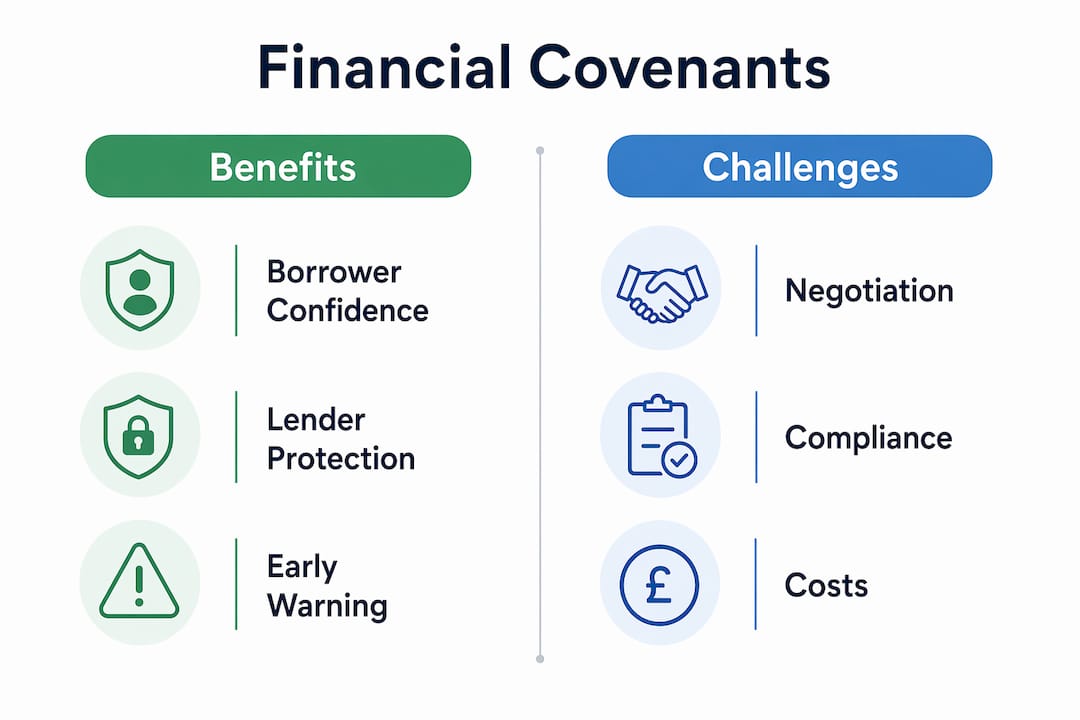
The benefits of financial covenants extend well beyond enforcement. Borrowers who accept well-structured covenants often receive materially better loan terms in return. Loans with structured covenants can result in lower interest rates, reduced collateral requirements, and increased borrowing capacity. Lenders price risk. A borrower who accepts ongoing financial monitoring is demonstrably lower risk than one who does not.
The governance benefits are equally significant. Financial covenants shape corporate governance by defining the performance metrics that leadership must monitor continuously. That discipline is not imposed from outside. It becomes embedded in how the business is run, aligning financial reporting with strategic decision-making.
For borrowers who maintain consistent compliance, the compounding effect is substantial:
- Credibility capital. Consistent covenant compliance builds trust with lenders, improving conditions in future financing rounds and increasing lender willingness to waive minor breaches without penalty.
- Stronger refinancing position. A track record of clean compliance is one of the most persuasive documents you can bring to a refinancing conversation.
- Reduced friction in drawdowns. Lenders who trust your reporting are faster to approve further advances on revolving facilities or development tranches.
- Operational clarity. Knowing your covenant thresholds forces regular financial review, which catches internal inefficiencies that might otherwise go unnoticed.
The cost of getting this wrong is equally concrete. Amendment fees and interest rate increases following a covenant breach typically range from 50 to 200 basis points. On a £10 million facility, that is £50,000 to £200,000 in additional annual cost, plus legal fees and management time. Compliance is not just good governance. It is measurably cheaper.
Pro Tip: Treat your covenant compliance certificate as a board-level document, not an administrative task. The quality of your reporting signals operational competence to your lender as much as the numbers themselves.
What types of financial covenants appear in funding agreements?
Financial covenants fall into two primary categories, and the distinction matters when negotiating terms.
Maintenance covenants require continuous compliance, tested at set intervals. They are the standard in traditional bank lending and most UK real estate debt structures. A borrower must meet the metric at every test date, whether or not any specific event has occurred.
Incurrence covenants only test compliance when a specific action is attempted, such as taking on new debt or completing an acquisition. They are more common in high-yield bond markets and covenant-lite structures. They offer more day-to-day flexibility but provide lenders with less ongoing visibility.
The most common financial ratios used in UK funding agreements are:
- Leverage ratio. Total net debt divided by EBITDA. A cap of 5.0x is typical in property and corporate lending.
- Interest coverage ratio. EBITDA divided by net interest expense. A floor of 3.0x is standard.
- Loan-to-value ratio. Particularly relevant in real estate debt structures, where the covenant tests the outstanding loan against the current property valuation.
- Debt service coverage ratio. Net operating income divided by total debt service, commonly used in commercial mortgage and development finance.
- Liquidity covenant. A minimum cash or available liquidity threshold, often used alongside leverage covenants in private credit.
| Covenant type | Test trigger | Primary purpose | Typical consequence of breach |
|---|---|---|---|
| Maintenance | Quarterly test date | Ongoing financial health monitoring | Technical default, waiver negotiation |
| Incurrence | Specific borrower action | Limits on new debt or acquisitions | Blocks the proposed action |
| LTV | Periodic valuation | Asset coverage protection | Margin call or partial repayment |
| DSCR | Quarterly or annual | Cash flow sufficiency | Lender intervention, cash sweep |
Hybrid structures exist in revolving credit facilities, where maintenance covenants apply only when the facility is drawn above a certain threshold. This gives borrowers flexibility during periods of low utilisation while maintaining lender protection when exposure is high.
What are the challenges in negotiating and managing financial covenants?
Calibration is the single most consequential decision in covenant structuring. Miscalibrated covenants cause unnecessary technical defaults that damage lender relationships and trigger costly amendments, even when the underlying business is performing well. Setting thresholds too tight creates operational strain. Setting them too loose removes the early warning function entirely.
The practical challenges borrowers face most frequently are:
- Seasonal volatility. Businesses with uneven revenue cycles can breach quarterly covenants during low periods even when annual performance is sound. Negotiate test dates that align with your financial calendar.
- Acquisition or capex events. A large investment can temporarily distort leverage ratios. Incurrence covenants or agreed carve-outs protect against this.
- Reporting accuracy. Timely and accurate financial reporting is a contractual obligation, not a courtesy. Late or inaccurate compliance certificates can themselves constitute a breach.
- Amendment costs. When a breach occurs, lenders generally prefer to negotiate a waiver rather than accelerate the loan. That preference comes at a price, typically 50–200 basis points plus arrangement fees.
The negotiation of covenant headroom is where experienced advisers earn their value. A borrower who accepts a leverage covenant at 4.0x when their business regularly operates at 3.8x EBITDA has almost no buffer. Pushing for 5.0x with a 25–35% cushion built into the base case is standard practice in well-structured deals. Understanding how to structure development finance in the UK context means knowing which metrics lenders will flex on and which they will not.
Pro Tip: Always model a downside scenario before accepting covenant thresholds. If your worst-case EBITDA projection still clears the covenant with a 20% margin, the terms are workable. If not, negotiate before you sign.
Key takeaways
Financial covenants are the most effective mechanism in structured lending for aligning lender protection with borrower discipline, and their calibration determines whether they serve both parties or burden only one.
| Point | Details |
|---|---|
| Covenants as early warning tools | Quarterly testing allows lenders to intervene before distress escalates, not after. |
| Technical default risk | A breach triggers lender remedies even without a missed payment, making calibration critical. |
| Borrower benefits are real | Compliant borrowers access lower rates, reduced collateral, and stronger refinancing positions. |
| Calibration determines outcome | Covenants set with a 25–35% EBITDA cushion protect both parties from false defaults. |
| Breach costs are quantifiable | Amendment fees and rate increases of 50–200 basis points make compliance measurably cheaper than breach. |
Covenants are not the enemy: a view from the deal table
The most common mistake I see borrowers make is treating financial covenants as an obstacle to negotiate away. The instinct is understandable. Nobody wants contractual constraints on their business. But that framing misses what covenants actually do in a well-structured deal.
A lender who insists on tailored, properly calibrated covenants is a lender doing serious due diligence. That is the lender you want. Covenant-lite structures feel attractive at signing, but they remove the formal mechanism that forces a productive conversation when things get difficult. In private credit markets especially, where lenders cannot easily trade loans to reduce exposure, covenants are the primary tool for early intervention. Removing them does not remove the lender’s concern. It just removes the structure for addressing it.
What I have found consistently is that borrowers who engage seriously with covenant reporting build a qualitatively different relationship with their lenders. Clean compliance certificates, delivered on time, with clear commentary on performance, signal operational competence. That signal compounds. When you eventually need a waiver, an amendment, or a new facility, the lender’s starting position is trust rather than suspicion.
The calibration conversation is where most deals go wrong. Borrowers accept thresholds without stress-testing them against realistic downside scenarios. Lenders sometimes push for tighter terms than the deal actually requires. The right answer is always a covenant package that reflects the actual risk profile of the business, with enough headroom to absorb normal volatility without triggering false defaults. Getting that balance right is a structuring skill, not a legal formality.
— James
Specialist finance structured around your covenant framework
James William & Co Capital works with UK property developers, investors, and high-net-worth clients who need funding agreements built around their specific financial profile, not a standard template.
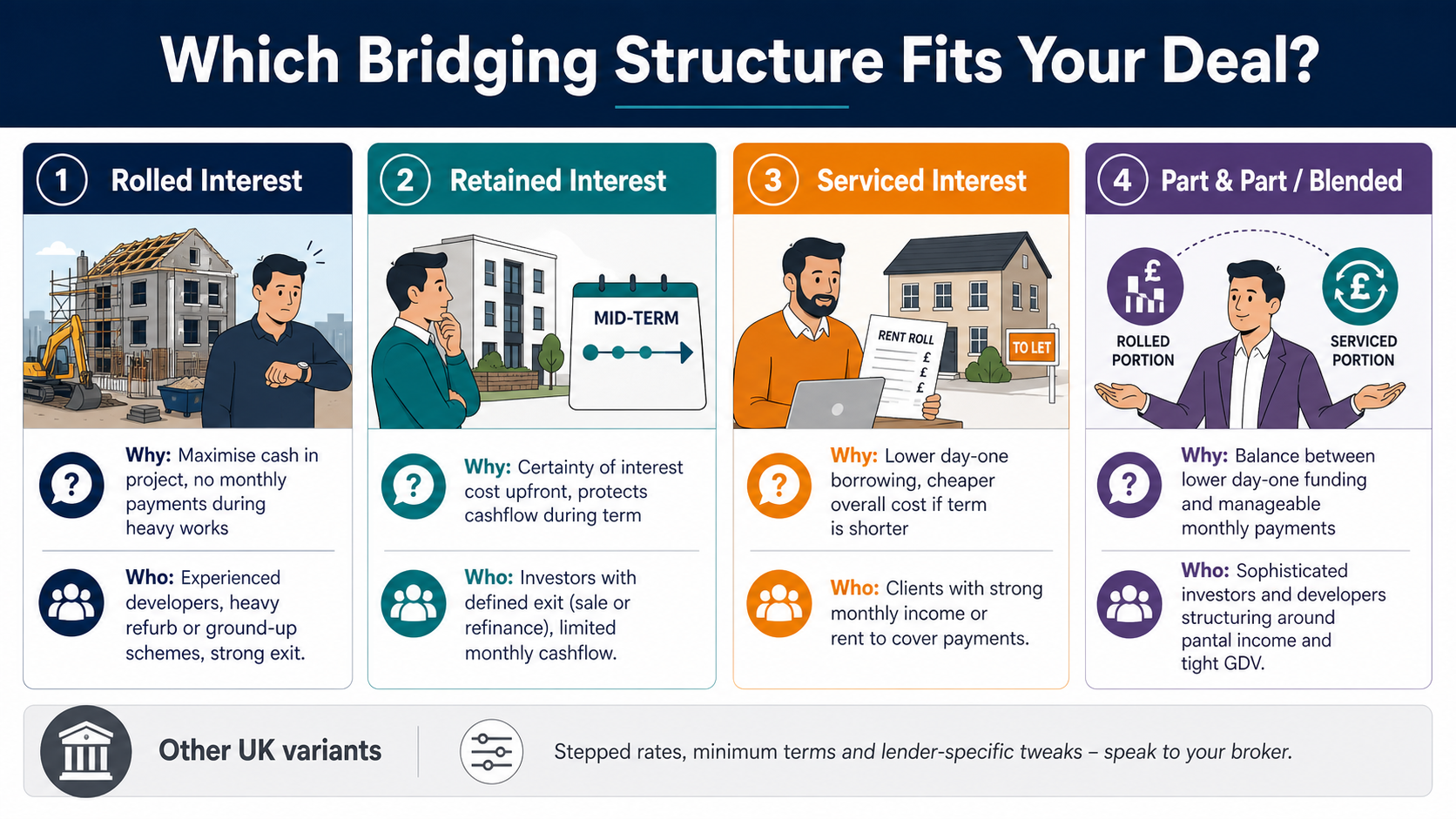
Whether you are arranging bridging finance for a property deal or structuring a multi-tranche development facility, the covenant framework within your loan documentation has a direct impact on your cost of capital and operational flexibility. James William & Co brings deep experience in negotiating bespoke covenant packages across bridging finance, development finance, commercial mortgages, and mezzanine debt. The firm’s network of private credit funds and specialist lenders means terms are structured to fit the deal, not the other way around. Speak to the team at James William & Co Capital to discuss how your next facility can be structured with the right covenant framework from the outset.
FAQ
What are financial covenants in a loan agreement?
Financial covenants are contractual requirements in a loan agreement that oblige the borrower to maintain specified financial metrics, such as leverage or interest coverage ratios, throughout the term of the facility. Breach of a covenant constitutes a technical default even if all loan payments are current.
Why are financial covenants important for lenders?
Financial covenants give lenders a formal mechanism to monitor borrower health on a quarterly basis and intervene before financial distress escalates. They are particularly critical in private credit markets where lenders cannot easily sell loan positions to reduce exposure.
What happens if a financial covenant is breached?
A covenant breach triggers a technical default, giving the lender the legal right to demand immediate repayment of the full loan balance. In practice, lenders typically prefer to negotiate a waiver, but amendment fees and interest rate increases of 50–200 basis points are standard consequences.
What is the difference between maintenance and incurrence covenants?
Maintenance covenants require continuous compliance tested at set intervals, typically quarterly. Incurrence covenants only apply when the borrower attempts a specific action, such as taking on new debt, offering more day-to-day flexibility but less ongoing lender visibility.
How should borrowers negotiate covenant thresholds?
Borrowers should model a realistic downside scenario before accepting any covenant threshold, targeting a 25–35% cushion between projected EBITDA and the covenant trigger level. Thresholds that look comfortable at signing can become binding constraints after one difficult trading quarter.
Recommended
Related Topics
Speak to a specialist
Discuss your finance with James directly
Whole-of-market specialist finance — bridging, development, commercial and residential. No call centres, no obligation. James reviews every enquiry personally.
New to specialist finance? How unbiased broker advice works · Deals we have completed
Explore Related Finance