
Published
mmc development financeMMC Development Finance: How to Fund Modern Methods of Construction
By James Dawes, CeMAP, Founder, James William & Co Capital

MMC development finance is ordinary development finance applied to a scheme built with modern methods of construction: modular, panelised, volumetric or other offsite systems. The loan covers the same things (land, build costs, professional fees), but lenders look harder at the construction system, the manufacturer, the warranty and the cash you pay out before anything is on site. Get those four right and an MMC scheme is fundable. Leave them vague and the terms tighten or the lender list shrinks.
We arrange structured property finance for UK developers and investors, and MMC schemes are where preparation makes the biggest difference to price and speed. This guide sets out what a lender wants to see and where the risks sit. It also covers how we would structure the debt.
TL;DR
- Lenders fund MMC schemes on the same basis as traditional ones, up to a maximum of 70% of gross development value at some lenders, but they assess the construction system, manufacturer and warranty case by case.
- Assurance matters: a recognised scheme such as BOPAS, a warranty acceptable to the lender and a clear manufacturer due diligence pack remove most of the valuation uncertainty.
- The main MMC-specific risk is cash going out to a factory before the lender has security over what has been built. Structure payments, inspections and title to modules around it.
- Lock the design early. Late changes after manufacturing starts are costly and cause delays, and lenders price that risk.
- A broker with direct access to specialist lenders and private credit can place schemes that high street banks decline on construction type alone.
Table of Contents
- What development finance covers on an MMC scheme
- How lenders assess an MMC project
- Assurance, warranty and mortgageability
- The document pack lenders ask for
- Managing the risks: what the guidance says
- Does MMC improve viability?
- Structuring the debt for an MMC scheme
- Our perspective
- Talk to us about your MMC scheme
- A practical checklist before you approach lenders
- FAQ
- Sources
What development finance covers on an MMC scheme
A development loan funds the acquisition of the site, the construction costs and the professional fees. At Aldermore, for example, that is up to a maximum of 70% of loan to gross development value, and MMC is among the construction methods it will consider. Other lenders set their own limits, and specialist lenders and private credit funds often go further when the security and the sponsor justify it.
The structure is familiar. You put in equity, usually in the land, the lender advances a senior facility in stages against monitored progress, and some schemes add a mezzanine or joint venture equity layer to reduce the cash you commit. What changes with MMC is the timing of cost.
Why MMC changes the cash profile
In traditional construction, cost follows work on site. Valuers and monitoring surveyors see the brickwork go up and the lender releases money against it. In an offsite scheme, a large share of the value is created in a factory, often weeks or months before modules arrive. Manufacturers frequently ask for deposits and stage payments tied to production slots, not to site progress.
That is the heart of the lender’s concern. Industry guidance on mitigating financial risk in modular projects points to significant initial capital expenditure before the funder’s security improves, and to manufacturer insolvency leaving modules stranded. A funder looking at your appraisal is asking one question: if the manufacturer fails, what do we own and can we get it?

How lenders assess an MMC project
There is no single rulebook. Lenders treat MMC case by case, and appetite varies by system and by lender type. The Building Societies Association noted that building societies, which dominate the self-build market, are often more receptive to MMC but assess it case by case and can set concentration limits on specific construction systems. Although that paper dates from 2016, the principle still describes how credit committees behave: familiar systems are easier than novel ones, and exposure to any one system gets capped.
The Cambridge modular housing report makes the wider point. It says a lack of evidence confirming the benefits of offsite and modular techniques constrains uptake, and that lenders and insurers can be risk-averse because they see innovation as high risk. Your job is to replace that perception with evidence.
The five things a credit team looks at
- The system. Is it proven, with completed schemes, third-party testing and a track record with other funders?
- The manufacturer. Financial standing, order book, factory capacity and what happens if it stops trading.
- Assurance and warranty. Will the finished homes carry a structural warranty the lender accepts, and will they be mortgageable for buyers or investors at exit?
- The contract. Who carries design, delay and defect risk, and how is payment tied to inspected progress?
- The exit. Sale to owner-occupiers, a block sale, build to rent refinance or a hold. Each needs the product to be financeable by the next lender.
Assurance, warranty and mortgageability
This is the area where most MMC applications stall, so it deserves the most preparation.
BOPAS and similar accreditation
The Buildoffsite Property Assurance Scheme, BOPAS, is a risk-based assessment of a construction system. John Carter, commercial director for commercial real estate at Aldermore, wrote that BOPAS approval is a must for most lenders considering MMC developments because it removes uncertainty about the construction for valuation purposes. If your chosen system has accreditation, say so at the first conversation. If it does not, ask the manufacturer what it has instead and expect the lender to ask for more.
Structural warranty
A warranty or latent defects cover from a provider the lender accepts is usually a condition of drawdown, and it also determines whether buyers’ lenders will lend on the finished homes. Ask the warranty provider early whether it has approved the specific system, and get that in writing before you commit to the manufacturer. Some providers need additional design review, site inspections at the factory, or both, and that has to be in your programme.
What the buyer’s lender will see
Exit finance matters as much as entry. The UK Finance Disclosure Form, used in residential conveyancing, asks sellers to specify the primary construction materials and method, including MMC, offsite, volumetric, pods or panelised construction. Your development lender is thinking about the day a buyer’s solicitor completes that form. Homes that sit outside mainstream mortgage criteria shrink your buyer pool and weaken the exit.
The document pack lenders ask for
A lender will want the standard development pack: appraisal, planning consent, build contract, cost plan, professional team appointments, sponsor track record and a statement of assets and liabilities. For MMC add:
- System technical data, test certificates and any BOPAS or equivalent assessment.
- Warranty provider’s written position on the system and the scheme.
- Manufacturer accounts, order book summary, insurance and details of any parent company guarantee or performance bond.
- The supply and installation contract, with payment milestones, title transfer and design freeze terms.
- Factory inspection arrangements and a quality plan.
- A site logistics plan covering crane, transport and programme, since delivery slots drive the cash flow.
- Reference schemes completed with the same system, ideally including valuations and sales evidence.
Packaging this well is where a broker earns the fee. A lender that sees a complete, consistent pack on day one spends less time hunting for reasons to decline.
Managing the risks: what the guidance says
The most useful risk advice on MMC is practical, and several points are directly relevant to a lender’s conditions.
Lock the design early
Government MMC guidance recommends that contracts require design freeze for manufacturing-related elements by a specified point, because late changes can be costly and cause delays. For a lender this is a cost-overrun issue. A contingency sized for a traditional job may not cover redesign once factory production has started.
Bring suppliers in early
The Institution of Structural Engineers warns that late involvement of key suppliers, fabricators and contractors can produce details that compromise structural integrity, including fire resistance. Lenders’ monitoring surveyors read the same material. Evidence that the manufacturer was engaged at design stage reads as lower risk.
Protect the money you pay out early
The contractual mitigations discussed in the Modular Matters paper include factory inspections, marking offsite items so they can be reclaimed, and agreed milestones before payments are released. We would add that the lender should be named in any collateral warranty or step-in arrangement, so the security follows the product.
Check the manufacturer’s pipeline
Law firm Addleshaw Goddard notes that MMC manufacturers should aim to work on multiple projects at once so that planning or funding delays on one scheme do not halt the factory. A manufacturer dependent on one client, or on yours, is a counterparty risk. Ask about its order book before the lender does.
Does MMC improve viability?
Developers often assume offsite means cheaper and faster. The evidence is mixed, and a credit team will treat your appraisal accordingly. An academic review of 12 completed UK housing projects found that only two recorded higher offsite costs than traditional methods, while the reported outcomes ranged from preliminary savings and time savings to no established cost benefit and higher costs.

So use MMC assumptions you can defend. If the case for the scheme rests on a shorter programme, show the interest saving that comes from it, and show the downside case with the programme at traditional length. Lenders stress-test, and an appraisal that only works at the optimistic end gets priced for it. Shorter build periods can reduce interest rolled up over the term, but only if the factory, transport and site works actually align.

Structuring the debt for an MMC scheme
This is where our view of the market comes in. The right structure depends on how much of your cost is front-loaded.
| Structure | When it suits an MMC scheme | What to watch |
|---|---|---|
| Senior development loan only | Established system, accredited, strong sponsor equity | Lender may limit advances for offsite deposits |
| Senior plus mezzanine | You want to reduce equity while the factory needs deposits | Intercreditor terms, blended cost, stress-tested margins |
| Joint venture equity | Larger schemes where partner capital replaces cash | Profit share, control rights and exit timing |
| Bridging then development refinance | Site acquired quickly, planning or system assurance still in progress | Exit depends on the development facility being approved |
Our articles on stacked debt and tight margins and the shifting development finance landscape go into the mechanics. If you are choosing between sources of capital, our guide to real estate funding sources for UK developers sets out the options side by side.
Negotiating deposits and stage payments
The single most useful negotiation is with the manufacturer, not the lender. Agree payments against inspected production stages, with title to completed modules passing to you on payment and the lender able to take them over. Where the manufacturer insists on a larger deposit, the gap may be bridged by equity or mezzanine, but price it knowingly.
Public funding in the background
Government support exists, though it is not a substitute for a lender. The National Housing Delivery Fund provides £5 billion in capital grant funding for infrastructure and land from 2026 to 2030, in support of the ambition to build 1.5 million homes. The earlier Home Building Fund, which had considered smaller loans for innovative housing solutions, has been withdrawn as of 19 June 2026, so do not build a funding plan around it. Check the GOV.UK pages for current eligibility, since this is the kind of support that changes.
Our perspective
Most MMC schemes we see do not fail on the building. They struggle because the finance was designed for a traditional build and the MMC elements were bolted on later. A lender has been asked to fund a product it cannot easily value, with cash leaving the borrower before there is anything to inspect.
Our approach is to start from the funder’s side of the table. We work out what a credit committee will need to be comfortable, then build the pack and the structure to answer it before the application goes in. Because we can approach specialist lenders and private credit funds as well as banks, we can match the scheme to a funder that already understands the system, instead of educating one from scratch.
We also think developers should be wary of treating speed as the headline benefit. Speed is real only when the design is frozen, the manufacturer is secure and the funding is in place before production slots are booked. Finance that arrives late can erase the saving MMC was meant to deliver.
— James William Dawes
Talk to us about your MMC scheme
We arrange development finance, mezzanine and joint venture equity for UK developers, with a single point of contact from first appraisal through to drawdown. If you are weighing an offsite system, or already have a manufacturer lined up, we can review the structure and tell you how funders are likely to see it before you commit to deposits.
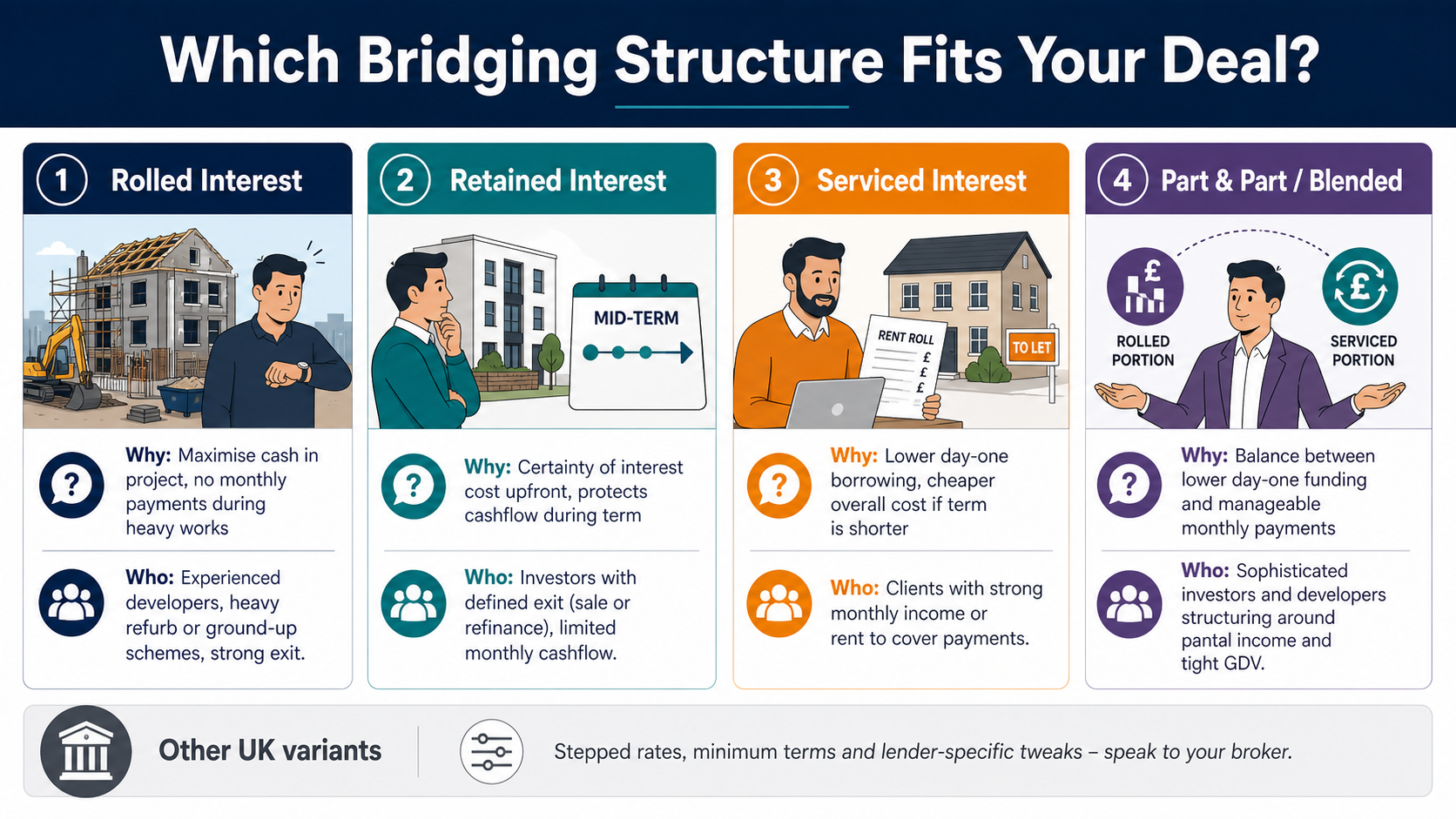
If you need the site secured first, our bridging finance can hold the acquisition while the development facility is arranged. You can also see the development lenders we work with.
A practical checklist before you approach lenders
- Confirm the system’s accreditation and the warranty provider’s written acceptance.
- Obtain the manufacturer’s accounts, insurance and order book summary.
- Freeze design for factory-made elements and record the date in the contract.
- Agree payment stages against inspected production, with title passing on payment.
- Prepare an appraisal with a traditional-programme downside case.
- Identify the exit and check buyers’ lenders will accept the construction type.
- Decide whether equity, mezzanine or JV capital is needed for early deposits.
For wider planning, our property development funding tips cover the points that apply whatever the build method.
FAQ
Will a lender fund an MMC scheme at the same loan to value as a traditional build?
Sometimes, but not automatically. Some lenders lend up to 70% of gross development value on MMC schemes they consider acceptable, while others reduce advances or cap exposure to a single system. The deciding factors are the system’s assurance, the manufacturer’s strength and your experience.
Do I need BOPAS for MMC development finance?
Not legally, but a senior lender at Aldermore has described it as a must for most lenders considering MMC. If your system lacks it, expect more questions on testing, warranty and valuation, and a narrower lender list.
Can I fund factory deposits with a development loan?
That depends on the lender. Many are reluctant to advance against goods that are not yet on site or in their security. Options include equity, mezzanine or JV capital for the deposit, or a contract giving you title to modules as they are made and inspected.
Is MMC mortgageable for the people buying the homes?
Many systems are, but it depends on the system, the warranty and each buyer’s lender. Buyers’ solicitors will complete a form that asks the construction method, so check with the warranty provider and mortgage lenders before you set sale prices.
How early should I speak to a broker?
Before you pay any deposit to a manufacturer. Lender requirements can change the contract terms, the payment stages and the programme, and it is far cheaper to adjust those before signing.
Sources
- FAQs: Property Development Finance, Aldermore Bank
- Laying the foundations for MMC, Building Societies Association
- Modular Housing Report, University of Cambridge
- Quality Assurance a Must for Lenders Considering MMC projects, UK Construction Online
- UK Finance Disclosure Form
- Modular Matters 2024: Mitigating Financial Risks in Modular Construction
- MMC Guidance Note, GOV.UK
- Modern methods of construction: risks, Institution of Structural Engineers
- MMC Hammer Blow, Addleshaw Goddard
- Offsite Construction Methods: What We Learned from the UK, MDPI
- National Housing Delivery Fund, GOV.UK
- Home Building Fund development finance (withdrawn), GOV.UK
Recommended
- The Shifting Development Finance Landscape
- Conversion Finance vs New Build: Which Funding Fits?
- How to Structure a Development Finance Deal When Margins Are Tight
- Nonresident Developer Finance in England: Tax and AML Can Delay Deals
You must keep up your repayments to avoid repossession. We are not a lender. James William & Co Capital Ltd is an Appointed Representative of Flexi Network Ltd, FRN: 1060247. Flexi Network Ltd is authorised and regulated by the Financial Conduct Authority, FRN: 948658. Flexi Network Ltd is an authorised credit broker and not a lender. You can verify both on the Financial Services Register at register.fca.org.uk.
Related Topics
Speak to a specialist
Discuss your finance with James directly
Whole-of-market specialist finance — bridging, development, commercial and residential. No call centres, no obligation. James reviews every enquiry personally.
New to specialist finance? How unbiased broker advice works · Deals we have completed
Explore Related Finance