
Published · Updated
promote structures real estateWorked Example and Checklist: UK Promote Structures After April 2026
By James Dawes, CeMAP, Founder, James William & Co Capital

A promote is the sponsor’s performance-linked share of profit in a waterfall, and it only crystallises after investors receive their agreed returns. GOV.UK’s 2025 to 2026 reforms have reshaped how that profit is taxed, and specialist firms now build those rules into how they structure and review deals.
TL;DR:
- The catch-up tier often gives sponsors a larger profit share than the headline promote percentage suggests, especially in early profit stages.
- Changes from April 2026 will tax carried interest as income rather than capital gains, with a 72.5% multiplier based on asset holding periods.
- Properly drafting waterfall clauses in the Articles of Association reduces dispute risk more effectively than relying on shareholders’ agreements alone.
- Negotiators should verify the hurdle type, promote percentage at each tier, and scrutinize clawback and crystallisation clauses before finalizing terms.
- Stress-testing promote structures against funding viability and tax implications with specialist brokers helps prevent deal collapse due to structural weaknesses.
Table of Contents
- How the waterfall and promote mechanics actually work
- A worked example: tiers, splits and the maths behind a promote
- UK tax changes on carried interest and what they mean in practice
- Drafting mistakes that turn a promote into a dispute
- A checklist for negotiating or reviewing a promote
- What most investors get wrong about promote structures
- How to Support promote structuring
- Where to read the primary guidance
- Sources
- FAQ
How the waterfall and promote mechanics actually work
A waterfall is the contractual order in which cash moves between investors and the sponsor as a deal produces returns. Before anyone talks about a promote, investors get their capital back, then a preferred return (often called the hurdle), and only then does the sponsor’s performance share begin to appear.
The building blocks are consistent across most UK deals:
- Return of capital: investors recover the money they put in before any profit is split.
- Preferred return or hurdle: a minimum return, commonly expressed as an IRR percentage or a fixed annual rate, paid to investors next.
- Catch-up: a tier that lets the sponsor accelerate towards its target promote percentage once the hurdle clears.
- Promote tiers: the sponsor’s share rises in steps as returns climb, often with a lower split at the first tier and a higher one above a second hurdle.
Two structural choices matter beyond the tiers themselves. A deal-by-deal waterfall calculates the promote on each asset separately, while a whole-of-fund waterfall nets gains and losses across the portfolio before paying out, which tends to favour investors. Separately, an IRR hurdle rewards speed (money returned quickly scores better than the same amount returned slowly), while a fixed preferred return ignores timing altogether. Legal guidance notes that promote terms typically sit in the limited partnership agreement or shareholders’ agreement, and that the industry norm for carried interest is around 20% of profits, with the detail of allocation rules driving both commercial and tax outcomes. Reading those clauses closely, rather than relying on a summary term sheet, is the only reliable way to know what you have actually agreed to.
A worked example: tiers, splits and the maths behind a promote
Most UK promote structures follow a recognisable sequence, even though the exact percentages vary by deal size and sponsor track record.
- Tier one, return of capital: investors receive back the full amount invested.
- Tier two, preferred return: investors receive a hurdle return, commonly 8% IRR, before any profit split begins.
- Tier three, catch-up: the sponsor receives a disproportionate share of further profit until it reaches its target promote percentage of total profit above the hurdle.
- Tier four, promote split: remaining profit is split, often 80/20 in the investors’ favour, sometimes stepping to 70/30 or 65/35 above a second, higher hurdle.
Say an investor puts in £1,000,000 and the deal returns £1,400,000 on exit. The first £1,000,000 repays capital.
The catch-up tier is the part most investors underestimate, because it can hand the sponsor a larger share of early profit than the headline 80/20 split suggests. Legal guidance on carried interest confirms that allocation mechanics, not the headline percentage, determine the real outcome for both sides.

UK tax changes on carried interest and what they mean in practice
From the tax year beginning in April 2026, qualifying carried interest sits within the Income Tax framework rather than being taxed as a capital gain. Gov confirms that carried interest becomes subject to Income Tax and Class 4 National Insurance contributions, with qualifying carried interest treated as 72.5% of qualifying profits for the purposes of calculating trading profits.
Whether a promote qualifies for that 72.5% multiplier depends on the asset-level average holding period (AHP) condition. The government’s consultation response confirms this AHP test will define qualifying status, and that no minimum co-investment requirement will be introduced, a decision that avoids disadvantaging newer sponsors who cannot commit significant personal capital alongside investors.
Practical steps that follow from this:
- Model after-tax returns for both investor and sponsor under the new Income Tax treatment, not the old capital gains assumptions.
- Test holding periods against the AHP condition before assuming a deal’s promote will qualify for the reduced multiplier.
- Take tax advice early, particularly where feeder vehicles, fund-of-funds structures or internationally mobile team members are involved.
Advisory briefings on the Finance Bill 2026 changes urge firms with UK operations to review their structures and residency patterns well ahead of the April 2026 start date.
Drafting mistakes that turn a promote into a dispute
Most promote disputes trace back to where and how the waterfall was written down, not to the percentages themselves.
- Avoid relying solely on a shareholders’ agreement. Practitioner guidance on joint venture drafting warns that waterfall terms embedded only in a private agreement can fail to bind a transferee or survive an insolvency event, whereas the same terms set out as class rights in the Articles of Association carry through automatically.
- Define the valuation basis precisely. Guidance on property joint venture structuring points to vague terms like “fair value” as a recurring cause of deadlock; specify open market value, name the deductions allowed, and appoint an independent valuer, such as a RICS president nomination, to resolve disagreements.
- Check SDLT and partnership tax triggers whenever cash or assets move between vehicles in a multi-layer structure, since transfers that look routine can create liabilities under Finance Act 2003 Schedule 15.
Pro Tip: Ask your lawyer to show you exactly where in the document the waterfall sits, Articles, LPA or side letter, before you sign anything.
A checklist for negotiating or reviewing a promote
Before agreeing terms, run through these points in order.
- Check the hurdle rate and whether it is IRR-based or fixed, since this changes how timing affects the sponsor’s promote.
- Confirm the promote percentage at each tier, not just the headline split.
- Read the catch-up clause closely to see how much profit it diverts before the stated split applies.
- Ask about clawback provisions that let investors recover an overpaid promote if later losses erase earlier gains.
- Identify crystallisation events, the exact moments (sale, refinance, fund wind-up) that trigger a promote payment.
- Model the AHP position for tax purposes, and get specialist legal or tax advice before signing if the structure involves multiple vehicles or offshore elements.
What most investors get wrong about promote structures
The promote percentage gets most of the attention in negotiations, yet it rarely decides the actual outcome. The catch-up mechanism, the choice between an IRR hurdle and a fixed preferred return, and the holding period now dictated by the AHP tax test do far more to shape what each side receives. The firms doing this well treat the waterfall as a funding and tax design question from the outset, not a clause to negotiate after the capital stack is already fixed.
— James William Dawes
How to Support promote structuring
Getting a promote right is as much a funding question as a legal one: a waterfall that looks fair on paper can still collapse a deal if the debt beneath it cannot support the structure. Specialist brokers work with developers and investors to stress-test promote terms against funding viability and tax consequence before they go into a term sheet.
- Development finance, joint venture equity and mezzanine finance structured around the waterfall you are negotiating.
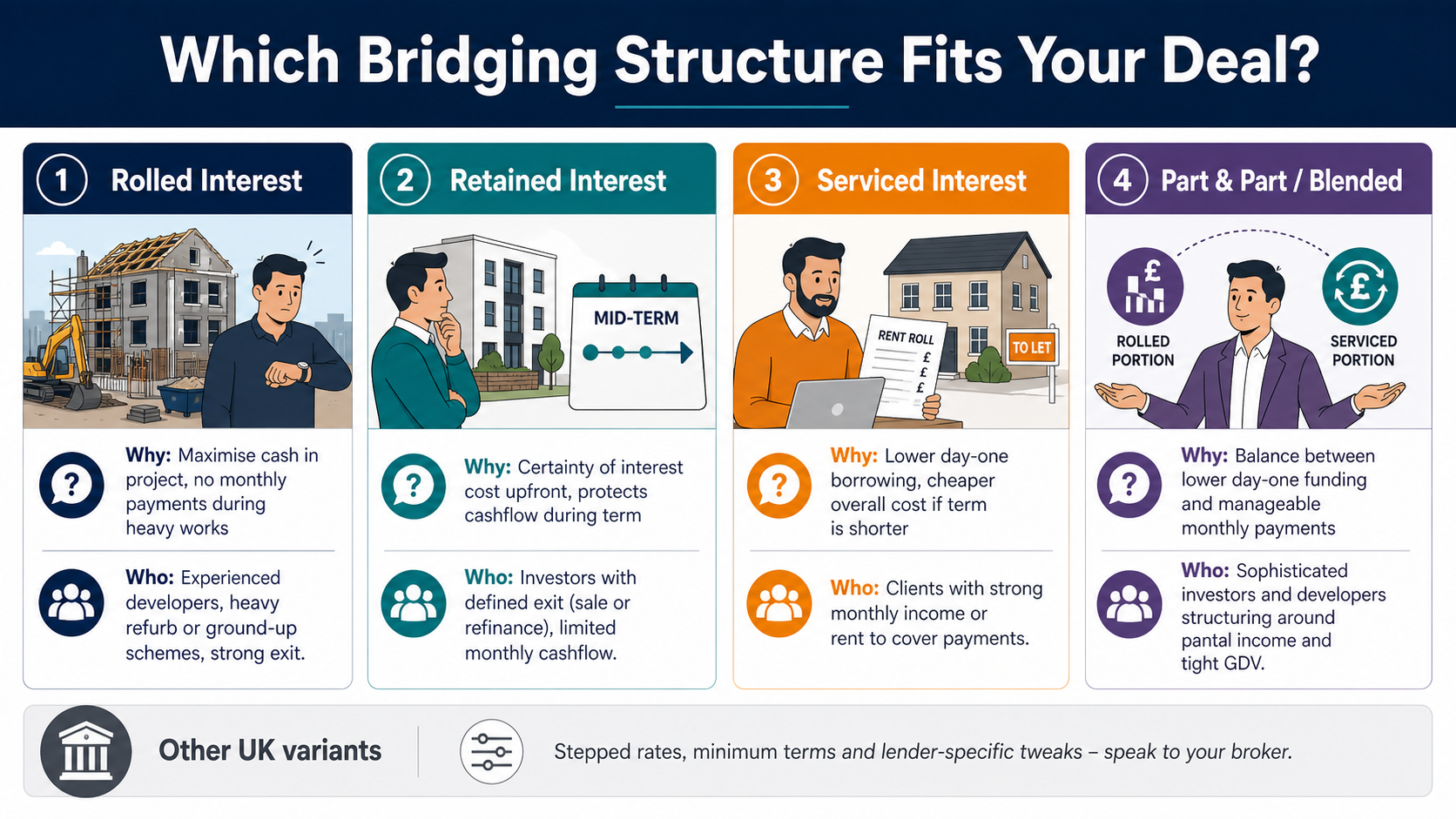
- Bridging finance where timing between tiers or a crystallisation event creates a short-term funding gap.
- A deal review covering lender appetite for promoted equity, modelling support, and referral to tax counsel on AHP and qualifying status.
| Service | What it covers |
|---|---|
| Development finance, JV equity, mezzanine finance | Capital stacks built around promote and waterfall terms |
| Bridging finance | Short-term funding around crystallisation or refinance events |
| Deal review | Lender appetite, modelling input, tax referral |
If you are structuring a promote and need the debt side to hold up under it, start with our development finance, joint venture equity and mezzanine finance page to request a deal review.
Where to read the primary guidance
- Gov
- The government’s carried interest consultation response
- LexisNexis guidance on carried interest and fund documentation
- For modelling support, see Consult EFC’s investor-grade financial modelling guidance
Sources
- Revised tax regime for carried interest
- The Tax Treatment of Carried Interest - Consultation on Qualifying Conditions (Summary of responses)
- Carried interest in UK private equity funds: structure, allocation, CGT/IBCI taxation and 2026 reforms
- Joint venture property: drafting and enforceability advice
FAQ
What is a promote structure in real estate?
A promote is the sponsor’s share of profit in a property deal, paid only after investors have received their capital back and an agreed preferred return. It sits inside a waterfall alongside tiers for catch-up and the final profit split, with terms typically set out in the limited partnership or shareholders’ agreement.
Is promote the same as carry?
Yes, “promote” and “carried interest” describe the same mechanism, with “promote” the more common term in UK real estate and “carried interest” used more widely in private equity and fund documents. Both now fall under the revised Income Tax treatment for qualifying arrangements.
How does the average holding period affect my promote?
The consultation response confirms this asset-level test applies without a minimum co-investment requirement.
Should waterfall terms go in a shareholders’ agreement or the Articles?
Waterfall terms are safer when set out as class rights in the Articles of Association rather than left solely in a shareholders’ agreement, because practitioner guidance warns the latter can fail to bind a transferee or survive insolvency. Specialist legal drafting is worth commissioning before the structure is finalised.
Recommended
Related Topics
Speak to a specialist
Discuss your finance with James directly
Whole-of-market specialist finance — bridging, development, commercial and residential. No call centres, no obligation. James reviews every enquiry personally.
New to specialist finance? How unbiased broker advice works · Deals we have completed
Explore Related Finance