
Published · Updated
development finance case studyClose Funding Gaps: 3 UK Development Finance Case Studies
By James Dawes, CeMAP, Founder, James William & Co Capital

A development finance case study tells you exactly how a deal was priced, how much equity the developer had to find, and what happened at exit. This article walks through three UK-style examples, breaks down how lenders size a facility, and gives you the questions to put to a broker before you sign anything.
TL;DR:
- Smaller development deals under £1 million typically face higher fees, as underwriting costs are proportionally larger compared to larger schemes.
- Lenders determine their facility size based on the lower of loan to gross development value or loan to cost, often requiring detailed cashflow and valuation analysis.
- Developers can reduce their equity requirements by layering mezzanine debt or negotiating deferred land payments, rather than relying solely on high-leverage senior loans.
- Critical questions to ask lenders include the control of leverage calculation, drawdown triggers, fees, and covenants to avoid surprises or default risks during construction.
- Structuring a deal with a specialist broker often provides access to multi-layered financing options, including mezzanine and joint venture equity, tailored to specific project risks and timelines.
Table of Contents
- Development finance case study examples from UK schemes
- How the capital stack and loan sizing actually work
- Valuation, cashflow and tax effects that change your terms
- Questions to ask a lender and red flags to watch
- How James William & Co Capital structures a comparable deal
- What separates developers who get financing right
- Get a development finance structure built around your scheme
- Sources
- FAQ
Development finance case study examples from UK schemes
Three deal patterns come up repeatedly across the UK market, and each teaches a different lesson about structuring.
The lender was a specialist challenger bank rather than a mainstream high street name, chosen because the asset class fell outside typical retail mortgage criteria. Exit was a straight sale of all six units within four months of practical completion. The lesson: sub-£1m and near-£1m schemes carry proportionally higher fees because underwriting costs barely change with loan size, so smaller facilities often run at higher margins than a £5m scheme with an identical risk profile.
Case B: mid-sized multi-unit, 24 apartments. This scheme used a blended approach: senior debt at 60% loan to cost (LTC), topped up with a mezzanine tranche that pushed total leverage closer to 80% of costs. Monitoring surveyor visits happened monthly against a fixed drawdown schedule, with each tranche released only after the quantity surveyor confirmed work completed matched the build programme. Arrangement fees sat around 2% of the facility, with an exit fee layered on top. The mezzanine piece cost more than the senior debt, but it meant the sponsor kept a larger equity stake rather than bringing in a joint venture partner.

Case C: planning-led scheme, prime London postcode. Here the funding challenge wasn’t construction cost, it was planning risk. A specialist lender provided a facility that funded the site through the planning process, with development finance following once consent was secured. ASK Partners’ Streatham residential planning loan is a useful public example of exactly this pattern, showing how a lender can structure multi-tranche support across a delayed consent timeline when the sponsor has a strong track record. Facilities like this tend to run longer, carry higher pricing to reflect the uncertainty, and often see the equity share renegotiated once planning risk clears.

Real published transactions back up these patterns. Shawbrook’s £13m facility at 70% LTGDV and Hampshire Trust Bank’s £11.9m facility for 58 homes in Ashford both sit within the leverage ranges you’d expect from a mainstream specialist lender on a straightforward residential scheme.
How the capital stack and loan sizing actually work
Lenders don’t simply ask “what percentage of the finished value do you want?” They run two calculations and use whichever produces the smaller number.
- Loan to GDV (LTGDV): a percentage of the projected gross development value once the scheme is complete and sold.
- Loan to cost (LTC): a percentage of total build and land costs, including professional fees and contingency.
- The controlling cap: whichever of the two produces the lower loan amount is the one that actually governs the facility size, because lenders cap exposure against both metrics and take the more conservative figure.
Leverage ranges vary sharply by lender type. Deposit requirements typically fall within a broad range, depending on lender appetite, track record, and the scheme’s risk profile.
Developers reduce their own equity contribution in a handful of ways: negotiating deferred land payment with the vendor, layering in a second charge or mezzanine facility to bridge the gap between senior debt and total cost, or bringing in joint venture equity from a partner who takes a profit share instead of a fixed return.
Pro Tip: Don’t compare lenders on headline interest rate alone. Work out the True Monthly Cost, which folds in arrangement fees, exit fees, monitoring surveyor costs, and any non-utilisation charges on undrawn facility. Two lenders quoting the same rate can differ by tens of thousands of pounds once fees are added.
Valuation, cashflow and tax effects that change your terms
Underwriters value development schemes using the residual method: gross development value minus total costs, including profit, gives the residual land value. Both a basic residual calculation and a discounted cashflow (DCF) version feature in RICS guidance on development property valuation, and the DCF version matters more on longer, phased schemes because it captures how sales proceeds and costs land across the build timeline rather than assuming everything happens at once.
- GDV is sensitive to sales assumptions, so a 5% fall in projected values can move the residual land value by a much larger percentage.
- Lenders expect phasing inputs (build programme, sales release schedule) to feed the internal rate of return and net present value calculations behind their credit decision.
- Whether HMRC treats you as trading or investing changes how interest is handled: trading businesses can capitalise finance costs into work in progress and get full relief, while individuals holding residential property as an investment face Section 24 restrictions that limit interest deductibility against rental income.
- Independent QS reports and RICS valuations aren’t a box-ticking exercise. Underwriters lean on them heavily when the developer’s own cost plan looks optimistic.
Questions to ask a lender and red flags to watch
A short checklist before you sign a term sheet saves far more than it costs to ask.
- Is the facility sized on LTGDV, LTC, or both, and which cap actually controls the loan amount?
- What triggers each drawdown, and how often does the monitoring surveyor visit?
- What’s the retention percentage, and when is it released?
- What’s the True Monthly Cost once arrangement, exit and monitoring fees are added to the headline rate?
- Are there covenants around minimum sales rate or cost overrun that could trigger default even if the build itself is on track?
Red flags worth pausing on: vague drawdown triggers, exit fees that scale with facility size rather than time, and any covenant tied to third-party valuations you haven’t seen yet. Before any lender meeting, prepare your QS report, build programme, and contingency schedule. Turning up without them signals you haven’t stress-tested the numbers.
How James William & Co Capital structures a comparable deal
Some brokers work as a capital concierge: acting as a single point of contact who sources and negotiates across specialist lenders, private credit funds and family offices, rather than the developer having to run three or four separate conversations. On a recent-style structuring exercise, a scheme facing a funding gap between senior debt and total cost was closed using a mezzanine layer rather than diluting the sponsor’s equity through a joint venture partner, preserving more of the eventual profit for the developer while still meeting the lender’s minimum equity requirement.
That’s the kind of decision worth testing against your own numbers before you commit to a structure. If you want a second opinion on how your scheme would size up, consider requesting an appraisal directly from a specialist broker.
What separates developers who get financing right
Most costly mistakes in development finance come from the same two habits: underestimating fees when comparing lenders, and treating exit as a formality rather than something to stress-test against a slower sales market. Developers who model more than one exit route, sale and refinance, and who bring a broker in before they’ve fallen in love with a site, consistently negotiate better terms because lenders see genuine contingency thinking rather than hope.
— James William Dawes
Get a development finance structure built around your scheme
A specialist mortgage broker can provide an alternative to running your own lender search scheme by scheme. Rather than approaching banks one at a time and comparing headline rates in isolation, you can get access to specialist lenders, private credit funds and family offices through a single point of contact who structures the whole stack—senior debt, mezzanine and joint venture equity—around your specific site and timeline.
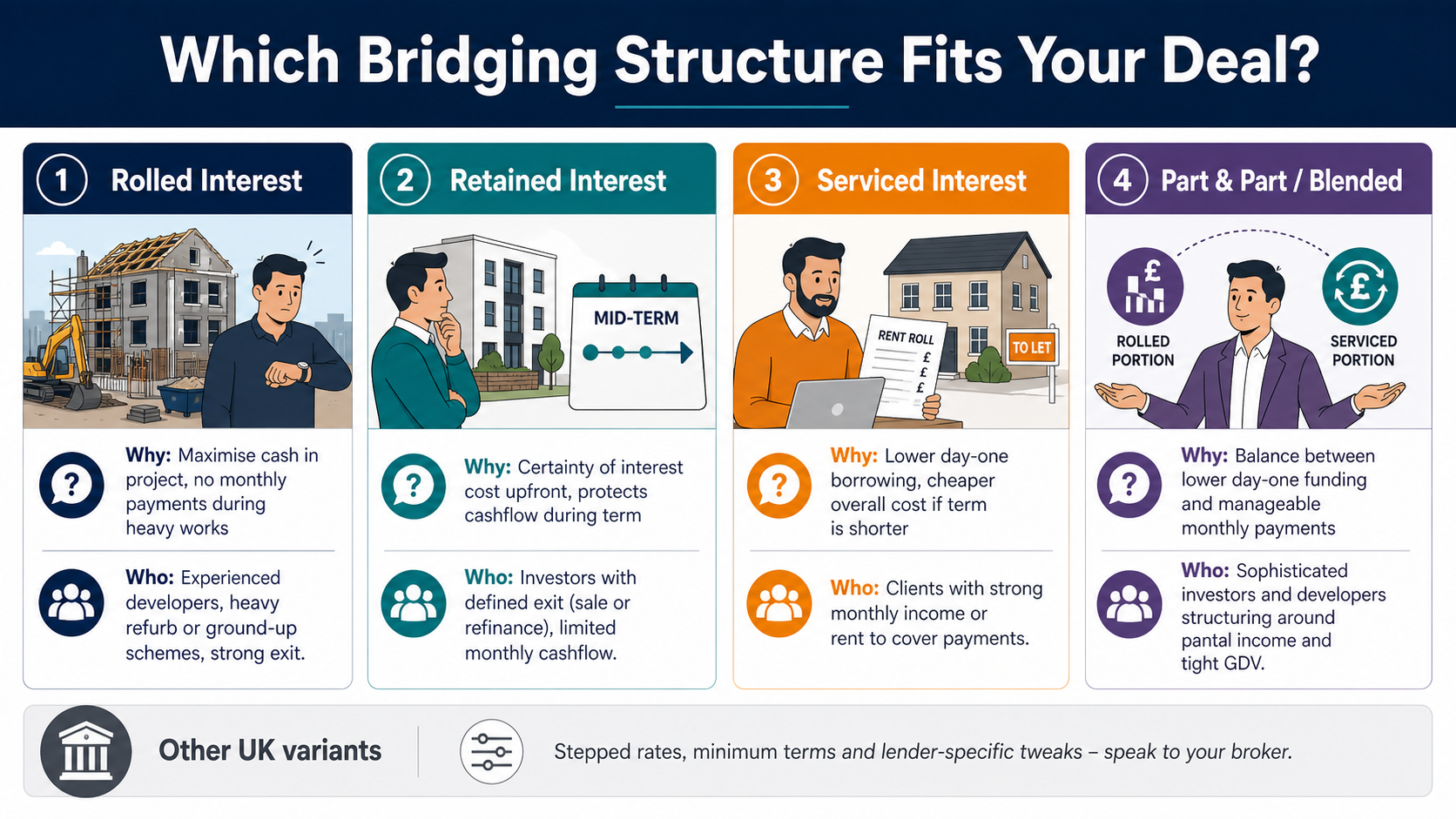
Services cover:
- Development finance, including mezzanine debt and joint venture equity for ground-up and conversion schemes
- Bridging finance for acquisition or planning-stage funding ahead of a full development facility
- Commercial mortgages for investment or trading premises linked to a wider development strategy
- Structuring across multi-layered debt stacks, offshore vehicles and bespoke covenant packages for larger or more complex schemes
If you’ve got a site, a set of numbers, and a funding gap you haven’t closed yet, request a case appraisal through the development finance page and get a structure back before you go back to the vendor.
Sources
- Valuation of development property
- Land
- Property development finance tax: Trader vs investor | Property Tax Partners
- A residential planning loan case study – Streatham, London - ASK
This article is general information, not a substitute for advice from a qualified financial advisor. Consult a qualified financial professional about your own circumstances before acting on anything here.
FAQ
What are some examples of case studies in finance?
Development finance case studies typically show the loan amount, LTGDV or LTC ratio, security taken, and exit route, such as a specialist lender providing a £13m facility at 70% LTGDV for a residential scheme, as seen in published lender transaction summaries. Planning-led case studies, like ASK Partners’ Streatham example, show multi-tranche funding across a delayed consent timeline.
Who are the top development finance lenders in the UK?
The UK market spans mainstream banks, challenger banks, and specialist private lenders, each with different leverage appetite and pricing. Rather than naming a single “best” lender, a broker like James William & Co Capital compares options across its network of specialist lenders and private credit funds to match the lender to your scheme’s risk profile.
How to get 100% development finance?
A pure 100% loan to cost facility is rare because lenders almost always require some developer equity, typically 10% to 40% of total costs depending on risk and track record. Developers get closer to full funding by combining senior debt with mezzanine finance or joint venture equity to cover the gap, rather than relying on one lender for the whole stack.
Is property development worth it in 2026?
Returns still depend heavily on site cost, build inflation, and sales assumptions at exit, and current interest rate levels mean total finance cost eats a larger share of profit than it did a few years ago. Schemes that stress-test their exit against a slower sales market and negotiate the capital stack carefully remain viable, but thin-margin deals are far less forgiving of surprises than they used to be.
Recommended
Related Topics
Speak to a specialist
Discuss your finance with James directly
Whole-of-market specialist finance — bridging, development, commercial and residential. No call centres, no obligation. James reviews every enquiry personally.
New to specialist finance? How unbiased broker advice works · Deals we have completed
Explore Related Finance