
Published
completion timelines development loansCompletion Timelines for Development Loans in England
By James Dawes, CeMAP, Founder, James William & Co Capital

A development loan in England usually completes in weeks, not days, and the timetable is set less by the lender than by how ready your title, planning, costs and corporate structure are on day one. Treat the timeline as a critical path: valuation, legal due diligence and lender conditions run side by side, and the slowest of them decides your completion date. Clean files shorten it. Open points lengthen it.
This guide is for developers, investors and their advisers. It explains the stages, what each depends on, where deals slip, and how the first completion differs from the staged drawdowns that follow. If you want a lender-ready file built and run for you, our development finance team acts as your single point of contact from application to completion.
TL;DR
- Completion is the first release of funds. Later drawdowns follow stage by stage as work is certified, so plan cash flow for both.
- The critical path is normally third-party work: valuation, a cost review, legal due diligence and any planning conditions.
- Common causes of delay are title defects, unclear ownership structures, planning-cost exposure and uncooperative third parties.
- Pre-commencement planning conditions can hold up the start of work. Councils should normally decide discharge requests within 8 weeks of a valid submission.
- A complete pack at the outset, with one coordinated team, is the most reliable way to protect your date.
Table of Contents
- What “completion” means on a development loan
- A realistic timeline, stage by stage
- What most often delays completion
- How to keep the timeline tight
- Drawdowns after completion
- The right timeline for your project type
- Promo: one team from structuring to completion
- Our perspective
- FAQ
- Sources
What “completion” means on a development loan
Two events are often confused. Loan completion is when the facility is signed, conditions precedent are satisfied and the first advance is released, usually to buy the site or refinance it. Drawdowns are the later advances that fund the build, released as work reaches agreed stages.
A lender will not release the later tranches on trust. A monitoring surveyor, an independent construction professional appointed to protect the lender’s security, normally inspects the site and certifies progress before each advance. That is why a development loan feels slower than a bridging loan: the lender is funding something that does not yet exist, so it checks the project, the numbers and the borrower more closely.
For straightforward site purchases or short-term needs, bridging finance can be arranged on a faster path. Development finance is a different product, and the timetable should be planned as such.

A realistic timeline, stage by stage
The ranges below are planning allowances for a typical, well-documented scheme, not promises. Lenders, projects and borrowers differ, and a complex stack will take longer. Use them to build your own programme and to test any date a lender or broker gives you.
| Stage | What happens | Planning allowance |
|---|---|---|
| 1. Packaging | Appraisal, cost plan, planning documents, borrower information, experience schedule | Days to a couple of weeks, depending on how much already exists |
| 2. Indicative terms | Lenders review the pack and quote headline terms | A few days |
| 3. Credit approval and term sheet | Detailed underwriting, then a formal offer subject to conditions | One to two weeks |
| 4. Third-party reports | Valuation, cost and build-programme review, sometimes planning and environmental checks | Two to four weeks, often in parallel |
| 5. Legal due diligence | Title, searches, planning conditions, corporate structure, security | Two to six weeks, longer with complexity |
| 6. Facility documents and conditions | Final loan agreement, insurance, professional appointments, KYC | One to two weeks, overlapping stage 5 |
| 7. Completion and first advance | Funds released | Same day, once everything is satisfied |
Add these as a critical path, not a sum. Stages 4 to 6 overlap, so a well-run deal often completes within roughly six to ten weeks from a full pack, while one with open title or planning points can run well beyond that. Your own programme should carry a contingency, because a single unresolved condition can hold the whole advance.
Packaging: the stage you control
This is where most of the time is won or lost, and it costs nothing in third-party fees. A lender-ready pack typically includes:
- the site address, title information and purchase or refinance details;
- planning permission, decision notice and any conditions;
- an appraisal showing gross development value (GDV), build costs, finance costs and profit;
- a cost plan and build programme from a credible contractor or consultant;
- evidence of your track record and an asset and liability statement;
- the ownership chart for the borrowing entity, with the people behind it.
We build this pack with the developer before it goes to market, and we take the lender conversations on so that you are not answering the same question from several credit teams. Our approach is a “capital concierge” model with a single point of contact from structuring through negotiation to execution.
Credit approval and terms
Indicative terms are quick. Formal credit approval takes longer, because the lender’s committee will test the exit, the GDV, the contingency and your experience. Schemes with tight margins, mezzanine or joint venture equity alongside senior debt usually need more than one lender to agree, and the timetable follows the slowest party. Our guide on structuring development finance when margins are tight explains how stacked debt changes the process.
Valuation and cost review
The lender instructs the valuer and a monitoring surveyor, usually at your cost, and the two reports often run together. The valuation tests land value and GDV. The cost review tests whether your budget and programme are deliverable. If the valuer disagrees with your GDV, the loan amount can drop, and that can send you back to credit or to your equity partner. A well-evidenced appraisal with comparable sales reduces that risk.
Legal due diligence
The lender’s solicitors investigate title, searches, planning, and the borrower. This is where unglamorous issues surface. Herrington Carmichael, a law firm, lists the common causes of refusal or delay as unresolved title defects, unexpected exposure on planning costs, uncooperative third parties, unclear corporate ownership structures and insufficient ownership tenure or lease terms. It also advises early, thorough legal due diligence, and we agree: instruct your own solicitor before the lender’s report lands.

What most often delays completion
Title and third-party issues
Restrictive covenants, rights of way, missing documents and unregistered land all need answers before the lender will take security. Where a neighbour, landlord or management company must consent, their pace becomes yours. Where problems are found, lenders will normally require them to be resolved before funds are released or as a condition subsequent, a condition that must be met after completion. Ask your solicitor which points can be moved after completion, and agree that with the lender early.
Planning conditions
A permission with pre-commencement conditions means certain details must be approved before work begins. Government guidance says the local planning authority should give notice of its decision on a discharge request within 8 weeks, counted from the day after a valid request is received. A lender may want key conditions discharged before the first build advance, so submit discharge applications as soon as permission is granted, not when you are about to start on site.
Ownership structure and borrower checks
Layered holding companies, trusts and offshore vehicles are common among sophisticated borrowers, and each layer adds identity and source-of-funds work for the lender. Overseas principals face extra checks and, often, tax questions that affect structuring. If that describes your deal, read our piece on how tax and anti-money-laundering checks can delay non-resident developer finance and gather the evidence before applying.
Valuation shortfalls
A valuation below expectations can reduce proceeds and force a re-cut of the capital stack. The earlier you know your realistic GDV, the sooner you can tell your lender and any equity partner.
Costs you did not budget for
Fees for valuation, monitoring and legal work are normally payable even if a deal does not proceed, which is another reason to settle the structure before you instruct. If you are a landlord or sole trader, note that the tax treatment of arrangement fees differs by circumstance, and how UK landlords treat mortgage arrangement fees for tax is worth reading with your accountant.
How to keep the timeline tight
- Assemble the full pack before you approach lenders. An incomplete pack restarts the clock each time something is requested.
- Instruct your solicitor early. Ask them to review title and planning conditions before terms are agreed, so that issues are known and priced.
- Draw the ownership chart. Show every entity and beneficial owner, with documents to support it.
- Submit planning discharge applications at once. Do not wait until the lender asks.
- Choose lenders that fit the scheme. A lender whose appetite does not match your GDV, location or tenure will decline late. Our development finance lender panel is a useful starting point for how that matching works.
- Agree the conditions list in the term sheet. Know what is a condition precedent and what can follow completion.
- Use one point of contact. Several advisers asking the same questions slows everything. We act as that single point, coordinating you, the solicitors, the valuer and the lender.
We arrange these for developers as part of our work on development finance, from senior debt through to mezzanine and joint venture equity, drawing on a network of family offices, private credit funds and specialist lenders beyond mainstream banks.
Drawdowns after completion
Once the first advance has been made, the timeline changes. The build is funded in tranches. For each one you typically submit a drawdown request with an updated cost schedule, contractor invoices and progress evidence. The monitoring surveyor inspects, certifies the work and the lender releases funds.
The practical point is the gap between finishing a stage and receiving the money. Your contractors will expect payment on their own terms, so hold working capital to cover the interval between certification and funds landing. Build that buffer into the appraisal and cash-flow forecast from the start, not after the first tight month.
Some facilities fund the land and a share of build costs first and require your equity to go in before lender money. Check the order in the term sheet, as it changes how much cash you need on day one.
Late-stage points
Towards practical completion, the lender will look at the exit: sales, a refinance onto a term loan, or a development exit facility. Plan that route early enough that repayment does not collide with the facility end date. Our guide to how to structure development finance in the UK covers term and exit planning.
The right timeline for your project type
- Small schemes and refurbishments: often lighter on third-party work, but lenders may still require a cost review and monitoring. Experience matters more because the lender has less project value to lean on.
- Ground-up residential: planning conditions, building regulations and cost plans take the most time.
- Mixed-use or commercial-led: pre-lets, tenant covenants and valuation approach can lengthen credit.
- Stacked debt or JV equity: more parties, more documents and an inter-creditor agreement, so allow longer.
Promo: one team from structuring to completion
If you are planning a scheme and want a timetable you can hold lenders to, we structure development finance, mezzanine debt and joint venture equity for UK developers and investors, with a single point of contact managing the process. Start with our development finance page and tell us the site, the planning position and your target completion date.
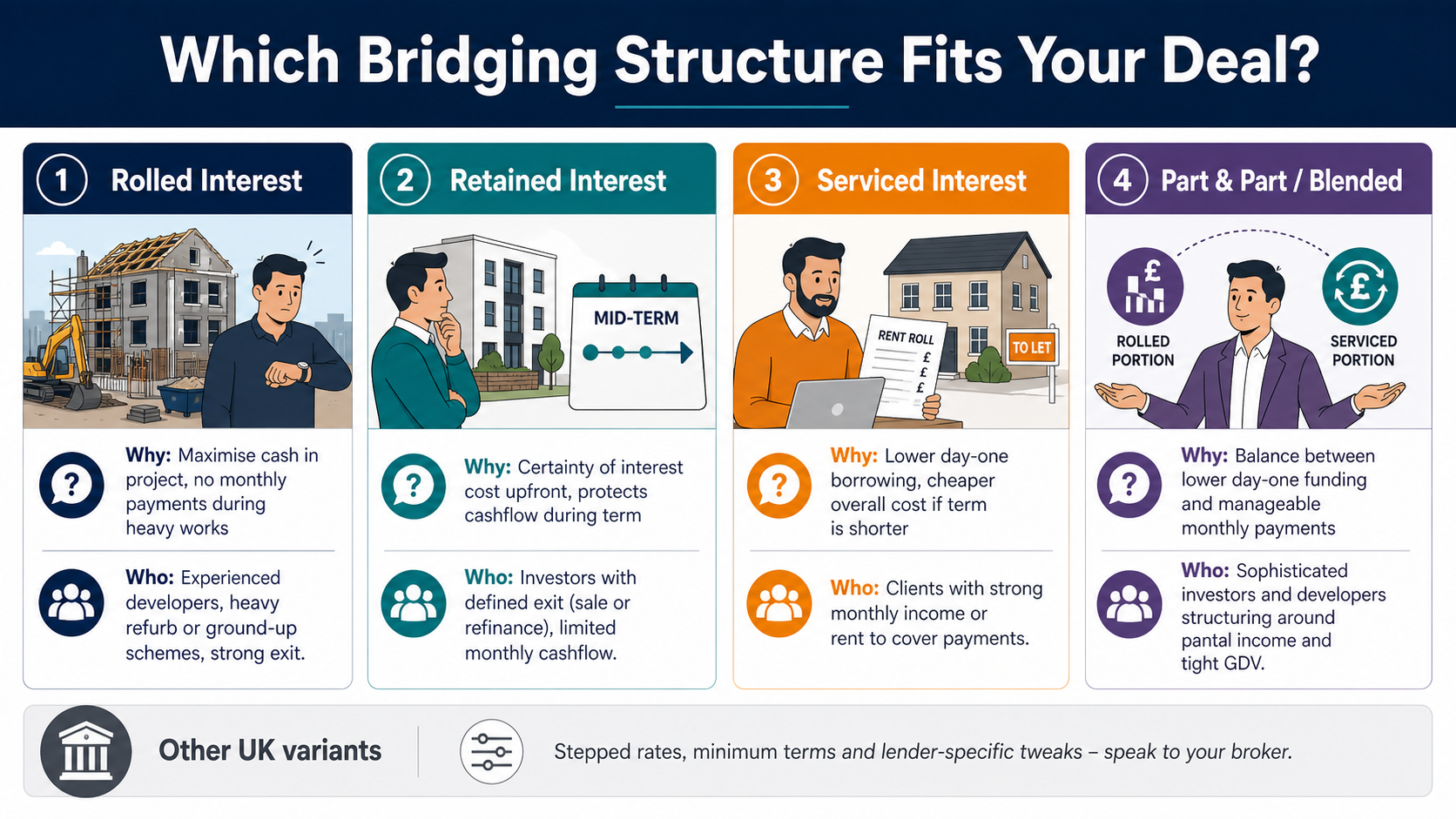
If your timetable depends on a short-term purchase first, our bridging finance service can fund the acquisition while the longer facility is arranged.
Our perspective
Most developers ask us how long a loan will take. The better question is what would stop it completing on the date you need.
In our view, speed is built before a lender sees the deal. A clean pack, an early solicitor, a clear ownership chart and an honest appraisal remove the questions that cause delay. We work with specialist lenders, family offices and private credit funds that can move quickly when the file is strong, and our job is to make the file strong and keep one person accountable for the programme.
We also think developers underestimate the drawdown phase. Winning terms is one achievement. Keeping the build funded week by week is another, and the structure you choose at the start decides how smooth it is.
James William Dawes
FAQ
How long does a development loan take to complete in England?
There is no fixed period, because it depends on how ready the borrower, site and structure are. A well-documented single-lender scheme can complete within roughly six to ten weeks of a full pack, while title, planning or ownership issues can extend it. Plan with contingency rather than the best case.
What is the difference between completion and drawdown?
Completion is when the facility is signed and the first advance is released. Drawdowns are later advances that fund the build, released as a monitoring surveyor certifies progress. Each drawdown has its own short timetable, so keep working capital in reserve.
What causes the most delays?
Title defects, unclear ownership structures, planning-cost exposure and slow third parties are the common causes. Valuation shortfalls and undischarged pre-commencement planning conditions also hold deals up. Early legal work and a complete pack address most of them.
Do planning conditions affect when funds are released?
They can. A lender may require certain conditions to be discharged before funding or as a condition subsequent. Councils should normally decide discharge requests within 8 weeks, so apply as soon as permission is granted.
Can I shorten the timeline with a bridging loan first?
If you need to secure a site quickly, a bridging loan can fund the purchase while the development facility is arranged. The two facilities should be planned together so that the refinance and exit are clear from the start.
Sources
- Property Development Finance: What Lenders Look for Before Funding, Herrington Carmichael
- Use of planning conditions, GOV.UK
Recommended
- Nonresident Developer Finance in England: Tax and AML Can Delay Deals
- The Shifting Development Finance Landscape
- Bridging vs Development Finance: Which Fits Your Project?
You must keep up your repayments to avoid repossession. We are not a lender. James William & Co Capital Ltd is an Appointed Representative of Flexi Network Ltd, FRN: 1060247. Flexi Network Ltd is authorised and regulated by the Financial Conduct Authority, FRN: 948658. Flexi Network Ltd is an authorised credit broker and not a lender. You can verify both on the Financial Services Register at register.fca.org.uk.
Related Topics
Speak to a specialist
Discuss your finance with James directly
Whole-of-market specialist finance — bridging, development, commercial and residential. No call centres, no obligation. James reviews every enquiry personally.
New to specialist finance? How unbiased broker advice works · Deals we have completed
Explore Related Finance