
Published
hotel development finance requirementsHotel Development Finance Requirements in England
By James Dawes, CeMAP, Founder, James William & Co Capital

To borrow for a hotel development in England, you need four things in place: a sponsor with credible experience, meaningful equity of your own, a site with planning consent for hotel use, and a costed build with a clear exit. Lenders then price the deal on how well those four hold together. There is no single published rulebook, because terms depend on the lender, the scheme and the operator, but the checklist below is what we prepare every hotel client against.
TL;DR
- Lenders assess the sponsor first: relevant development or hospitality experience, a net worth statement and a credible professional team.
- You will normally need to put in equity, and lenders size the loan against both cost and end value. Exact levels vary by lender and scheme.
- Planning for hotel use (Use Class C1), site control and a fixed-price or well-evidenced build budget are the core project tests.
- Expect security over the site, plus personal or corporate guarantees on many deals.
- A complete, well-organised pack up front shortens the route from indicative terms to drawdown.
Table of Contents
- What lenders mean by hotel development finance
- Who can apply: sponsor experience and financial strength
- Equity, loan-to-cost and loan-to-value
- What makes the project itself viable
- Security, guarantees and other commitments
- Documents to prepare
- How a lender assesses and approves the application
- Our perspective on hotel development finance
- How we can help
- Common mistakes that slow a hotel application
- FAQ
- Sources
What lenders mean by hotel development finance
Hotel development finance funds the acquisition of a site and the cost of building or converting it into a hotel, released in stages as work progresses. It sits within the wider family of development finance, but it is underwritten with more weight on operations than a housing scheme. A block of flats is judged on what it will sell for. A hotel is judged on what it will earn, and on who will run it.
That difference shapes every requirement that follows. The lender is lending against a trading business as well as a building, so the sponsor, the operator and the trading forecast all carry weight alongside the bricks and mortar.
Hotels in England and Wales fall within Use Class C1 under the Use Classes Order 1987, which matters in practice because a lender will want to see that the site has, or will obtain, consent for that use rather than a different one.

Who can apply: sponsor experience and financial strength
Lenders do not restrict hotel development finance to a single type of borrower. Experienced developers, hotel operators, investors, family offices and companies expanding an existing portfolio all apply. What they look for is plausibility: does this team have a realistic prospect of delivering a project of this size?
The things a lender usually weighs:
- Track record. Completed schemes of comparable scale, ideally with hospitality or commercial construction in the mix. A developer of small residential schemes can still be considered for a hotel, but the case usually needs reinforcing, for example with an experienced project manager or a joint venture partner.
- Operator strategy. Will you run the hotel, lease it to an operator, or sign a management contract? A strong, established operator behind the finished asset supports the exit. If you plan to run it yourself, expect questions on your sector experience and staffing plan.
- Financial strength. An assets and liabilities statement, evidence of liquidity beyond the equity you are committing, and a view of your other borrowing.
- The professional team. Architect, quantity surveyor, main contractor and, where relevant, a hospitality consultant. Lenders lend to teams as much as to individuals.
- Structure and ownership. Many hotel projects sit in a special purpose vehicle, sometimes with offshore or multi-party ownership. Lenders will want to see through the structure to the people behind it. If any principal is based abroad, read our guide on non-resident developer finance in England, because tax and anti-money-laundering checks can add time.
Where experience or equity is the missing piece, it does not always end the conversation. We often look at whether a joint venture partner or a mezzanine layer can fill the gap, which leads neatly to the capital stack.

Equity, loan-to-cost and loan-to-value
Lenders do not fund 100% of a hotel build from senior debt. You will be asked to commit your own money, and the amount depends on how the lender sizes the loan. Two measures dominate:
- Loan-to-cost (LTC): the loan as a share of total project cost, including land, build, professional fees and finance costs.
- Loan-to-value (LTV) or loan-to-gross development value: the loan as a share of the completed hotel’s value, usually assessed by a RICS valuer on a basis that reflects trading performance.
The lender will typically apply both tests and lend the lower figure. A scheme that is cheap to build relative to its value is held back by the cost test. A scheme with high costs is held back by the value test.
There is no universal equity percentage. The sponsor’s contribution depends on the lender, the strength of the operator covenant, the planning position, the contractor arrangements and your own track record. Be wary of any article that gives one fixed figure for every hotel. A stronger sponsor with a pre-agreed operator generally has more room to negotiate than a first-time hotel developer.
How equity can be provided
- Cash from your own resources.
- The land itself, where you already own the site and it has been valued. Lenders will usually count the value of the land as equity, subject to what you paid and when.
- Other assets used as additional security, for example a charge over a separate property.
- Mezzanine finance or joint venture equity sitting behind the senior loan, which can reduce the cash you put in. We explain how this works in how to structure a development finance deal when margins are tight and in our piece on the shifting development finance landscape.
More layers mean more parties, more intercreditor documentation and more negotiation, so the stack has to be designed deliberately from the start, not bolted on halfway through.
What makes the project itself viable
Once a lender is comfortable with you, the underwriting turns to the scheme. These are the project tests we see on almost every hotel deal.
Planning and consents
A lender will want detailed planning permission for hotel use in place before the first drawdown, or at least a clear route to it. Conditions attached to the consent, section 106 obligations and any highways or heritage constraints should be understood and costed. For a conversion, such as offices or a former pub becoming a hotel, the change of use must be settled.
Beyond planning, the finished building must meet building regulations, and the operating hotel will need a fire risk assessment under the Regulatory Reform (Fire Safety) Order 2005. Lenders and their monitoring surveyors expect fire strategy to be designed in from the outset, not retrofitted.

Site control
You need to own the site or hold a binding contract to buy it. If the acquisition is time-pressured, for example an auction or a distressed seller, a short-term loan can secure the site first and be refinanced into development finance once the scheme is ready. Our guide on how to arrange bridging finance for property deals covers that route.
Build costs and contractor
Expect the lender’s monitoring surveyor to review your budget line by line. They will test the contractor’s experience, the form of contract, programme, contingency and whether fixtures, furniture and equipment (FF&E) have been budgeted, since hotels need far more of these than housing. Hotels often carry pre-opening costs too: recruitment, training, marketing and initial working capital. Include them, because an under-costed scheme is the quickest way to lose lender confidence.
Projected trading performance
This is where a hotel diverges from housing. The lender will want a feasibility or market study covering occupancy, average daily rate, revenue per available room, seasonality and the competing supply in the area. They will also want to see a stabilised trading forecast that supports the valuation and the repayment plan. Assumptions need to be defensible against local evidence, not copied from a national average.
Exit strategy
Development loans are repaid by a sale of the completed hotel, a refinance onto a commercial mortgage, or a sale to an operator or investor. Lenders want to see the exit tested: what happens if the opening is delayed by six months, or trading is slower than forecast in year one? A realistic term plus a margin of safety on the interest roll-up is part of good structuring.
Security, guarantees and other commitments
The lender’s main protection is a first legal charge over the site and the building as it is constructed. Beyond that, depending on the lender and the strength of the deal, you may be asked for:
- Personal guarantees from the principals, sometimes limited to a defined sum or to specific risks such as cost overruns.
- Corporate guarantees from related companies in the group.
- A debenture over the borrowing company’s assets.
- Additional security over other property to compensate for lower equity.
- Cost overrun and completion undertakings, meaning you commit to fund any shortfall to finish the scheme.
- Assignments of building contracts, collateral warranties from the professional team and the contractor, and insurance cover with the lender’s interest noted.
- Operator arrangements, such as a lease, management agreement or franchise agreement, assigned or subject to a lender’s step-in rights.
The covenant package is negotiable and depends on lender appetite. It is one of the areas where an experienced broker adds most value, since the same project can attract quite different guarantee requirements from different lenders.
Documents to prepare
A complete pack saves time at every stage. Lenders will ask for most of the following, and having it organised before you approach the market makes your proposal easier to read and quicker to credit-approve.
| Area | What to have ready |
|---|---|
| Applicant | Photo ID and proof of address for principals, structure chart, company documents, details of beneficial owners |
| Financial position | Assets and liabilities statement, recent bank statements, tax information, evidence of the source of the equity and of wealth |
| Experience | CV or track record with completed projects, details of the development team and any operator |
| Site | Title documents, purchase contract or heads of terms, surveys, ground investigation, utilities and access information |
| Planning | Planning decision notice, conditions, drawings, section 106 or CIL position |
| Costs | Build cost plan, contractor tender or contract, programme, FF&E and pre-opening budget, contingency |
| Trading | Feasibility or market study, trading forecast, operator or brand agreement |
| Valuation | Any existing valuations and your expected end value |
| Exit | Sale or refinance plan, and the assumptions behind it |
If you are an existing hospitality business, lenders will also want two to three years of accounts and management information. Where an equity raise or shareholder structure is part of the deal, it helps to understand independent business valuation for fundraising, since the way a business or project is valued shapes what investors and lenders are prepared to support.
Anti-money-laundering checks are standard, so be prepared to evidence where your equity has come from. Gaps here are among the most common causes of delay.
How a lender assesses and approves the application
The route from enquiry to funds is usually in stages.
- Initial review. The broker reviews your experience, equity, site and costs, and tests the deal against the lender market.
- Indicative terms. Lenders respond with headline terms on loan size, pricing, fees, security and conditions. These are not binding.
- Credit approval. The lender’s credit committee considers the full pack. They may ask for more information on the operator, the trading forecast or your structure.
- Valuation and monitoring surveyor. The lender instructs a valuer and a monitoring surveyor to review value, costs and programme.
- Legal work. Solicitors act for both sides on title, planning, building contracts and security, and the facility agreement is finalised.
- Drawdown. Funds for the land are released first, followed by staged build drawdowns that the monitoring surveyor certifies against progress.
The factors that most commonly move terms are the strength of the operator covenant, the sponsor’s experience at this scale, the equity committed, the location and the quality of the trading evidence. A modest uplift in any of these can change the pricing or the leverage on offer.
Our perspective on hotel development finance
Hotel schemes rarely fail because the idea is poor. They struggle when the finance is assembled in the wrong order: the lender is approached before the operator is agreed, the equity is unevidenced, or the capital stack is improvised once costs move.
Our approach is to build the case first. We look at the sponsor’s experience honestly, work out where the gaps are, and then structure around them, whether that means a senior loan with mezzanine behind it, a joint venture equity partner, or a short-term facility to secure the site while planning completes.
Because we work with specialist lenders, private credit funds and family offices beyond the high street banks, we can take a complex hotel scheme to the parts of the market built for it. One point of contact manages the structuring, the negotiation and the execution, so you are not coordinating several parties under time pressure.
If you are weighing up a hotel project, bring us the numbers early. A conversation before you exchange costs far less than a restructure after.
James William Dawes
How we can help
We arrange development finance, mezzanine debt and joint venture equity for UK property developers, investors and high-net-worth clients, with a single point of contact from first conversation through to drawdown. For hotel schemes we start by testing your project against the requirements above, then take a packaged proposal to lenders on our development finance lender panel.
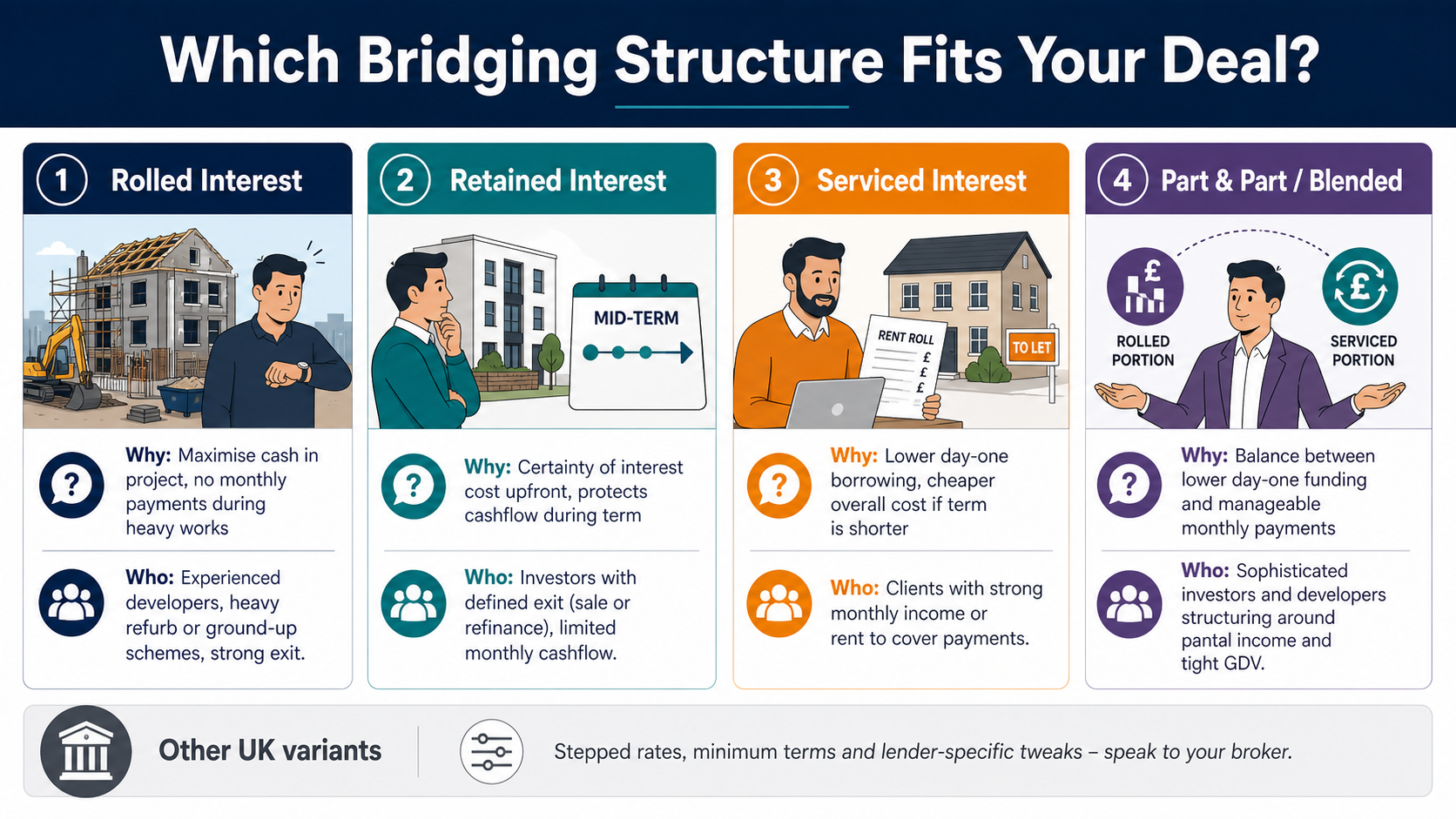
If you need to secure a site before planning or funding is finalised, we can also look at bridging finance as the first step. For an example of hospitality lending we have arranged, see our case study on a £240k commercial term facility for a Newquay bed and breakfast. To discuss your own scheme, start on our development finance page.
Common mistakes that slow a hotel application
- Approaching lenders before the operator is settled. The exit depends on it, so agree heads of terms first.
- Under-budgeting FF&E and pre-opening costs. These sit outside the build contract but inside the lender’s total cost.
- Relying on a single national trading average. Local evidence carries more weight with a valuer.
- Leaving source-of-funds evidence until late. Compliance checks cannot be rushed once credit has approved.
- Treating the capital stack as an afterthought. Decide on senior, mezzanine and equity together. Our overview of types of property finance for UK developers and real estate funding sources for UK developers is a good place to compare the options.
FAQ
Do I need hotel experience to get development finance?
Not always, but you do need to show the project is plausible. Lenders look at your overall development record, the operator you have lined up and the strength of your professional team. Where experience is thin, a joint venture partner, an established operator or an experienced project manager can make the case stronger.
How much equity do I need for a hotel development?
There is no fixed figure. It depends on the lender, the sponsor’s track record, the operator covenant and how the loan is sized against cost and value. Land you already own can count towards equity, and mezzanine finance or joint venture equity can reduce the cash you commit.
Will I have to give a personal guarantee?
Many lenders ask for personal or corporate guarantees, sometimes limited in amount or scope. The requirement varies with the strength of the scheme, the equity and the structure. It is a negotiable part of the terms, and a broker can compare how different lenders approach it.
Does the hotel need planning permission before I apply?
Lenders generally want planning for hotel use secured before funds are drawn for the build. Hotels fall within Use Class C1 in England, so the consent must match that use. If you need to buy the site first, short-term finance can bridge the gap while planning is progressed.
What documents do lenders want to see?
Expect identity and structure documents, a net worth statement, evidence of where your equity comes from, planning papers, a costed build budget and contractor details. For a hotel you should also provide a feasibility study and trading forecast, and the operator agreement if one is in place.
Sources
- The Town and Country Planning (Use Classes) Order 1987, Schedule, Part C
- The Regulatory Reform (Fire Safety) Order 2005
- Independent business valuation for fundraising
Recommended
- Nonresident Developer Finance in England: Tax and AML Can Delay Deals
- The Shifting Development Finance Landscape
- £240k Commercial Term Facility for a Newquay Bed & Breakfast | Case Study
You must keep up your repayments to avoid repossession. We are not a lender. James William & Co Capital Ltd is an Appointed Representative of Flexi Network Ltd, FRN: 1060247. Flexi Network Ltd is authorised and regulated by the Financial Conduct Authority, FRN: 948658. Flexi Network Ltd is an authorised credit broker and not a lender. You can verify both on the Financial Services Register at register.fca.org.uk.
Related Topics
Speak to a specialist
Discuss your finance with James directly
Whole-of-market specialist finance — bridging, development, commercial and residential. No call centres, no obligation. James reviews every enquiry personally.
New to specialist finance? How unbiased broker advice works · Deals we have completed
Explore Related Finance