
Published · Updated
mixed use development financeMixed Use Development Finance in England: RICS Valuations First
By James Dawes, CeMAP, Founder, James William & Co Capital

Most UK mixed use developments are funded with senior development finance as the base, short term bridging where speed or stabilisation is needed, and mezzanine debt or joint venture equity to fill any residual gap. Lenders will test your valuation inputs, planning position and exit route before anything else, so prepare those first. Where time is tight, bring in a specialist broker early to structure and market the debt.
TL;DR:
- Prepare planning history, viability assumptions including Section 106 obligations, a cost plan, signed commercial leases, and separate residential and commercial valuations before lender review.
- Lenders expect at least two valuation methods, such as residual and discounted cash flow, plus downside tests for slower commercial lettings or discounted sales.
- Mezzanine can lift combined borrowing to roughly 85% to 90% of total cost without profit dilution, while joint venture equity shares downside and profits.
- Indicative terms usually take one to two weeks, legal work four to eight weeks, and monitoring inspections govern later staged drawdowns.
- Bridging suits fast purchases, refurbishment, or lease up, but lenders value it against current property value rather than projected completed value.
Table of Contents
- Funding options for mixed use schemes: bridging, development finance and equity
- What lenders want to see on mixed use applications
- Valuation and modelling: residual, DCF and sensitivity testing
- Structuring the capital stack and tax considerations
- Process and timetable: enquiry to draws, monitoring and exit
- Costs and budgeting for mixed use development finance
- How we approach mixed use financing at James William & Co Capital
- Speak to a specialist about structuring your mixed use finance
- FAQ
- Sources
Funding options for mixed use schemes: bridging, development finance and equity
Each product in the stack does a different job, and mixed use schemes often need several of them working together.
Bridging finance suits auction purchases, short term refinancing and refurbishment or lease up periods where you need to complete quickly and refinance later. Lenders typically price bridging against the property’s current value rather than its projected end value, and tenors usually run from a few months to around two years. This flexibility is one reason bridging has moved from a niche rescue tool to a mainstream financing route for managing timing around mixed use completions.
Development finance is drawn in stages against build milestones, with a monitoring surveyor verifying progress before each release. Lenders assess both loan to cost and loan to gross development value (GDV), and mixed use schemes need a careful split of GDV between residential, retail and commercial elements because each carries a different risk profile and sale or letting timetable.
Development exit finance refinances a completed or near completed scheme once the build risk has passed, often used to release the main development facility while the commercial units are let or the residential units are sold. Mezzanine debt sits behind senior debt, carries a higher coupon to reflect its subordinated position and requires an intercreditor agreement setting out each lender’s rights. Joint venture equity suits developers who prefer to share the financial risk rather than add more debt, trading some of the profit for a partner who absorbs part of the downside.
- Bridging: short term, valued on current use, fast to arrange.
- Development finance: staged drawdowns against GDV and cost, monitored throughout build.
- Mezzanine: subordinated debt behind senior finance, higher cost, no dilution.
- JV equity: shared risk and profit, no repayment obligation if the scheme underperforms.
You can see how these products interact in more depth in our guide to types of property finance for UK developers.
What lenders want to see on mixed use applications
Underwriters on mixed use deals look beyond the headline numbers, and a well-prepared application moves far faster through credit committee.
- Planning status and viability assumptions, including any Section 106 obligations and affordable housing requirements, since these directly affect loan sizing. Gov sets out that appraisals should reflect existing use value plus a reasonable premium and must include policy compatible obligations; lenders routinely reject appraisals that leave these out.
- Letting and sales evidence for each element: estimated rental value and any pre-lets for the commercial space, and a rent roll or off-plan sales record for the residential units.
- Developer track record, the management contract, build cost evidence and contractor security such as a JCT form of contract and performance bonds.
- Security structure, including any leasehold interests or ground rents, since lenders typically reduce the permissible loan to value where the commercial proportion of the scheme is higher.
Pro Tip: Pull together your planning history, cost plan and any signed pre-lets into a single pack before your first lender call. It cuts weeks off the credit process.
Developers frequently underestimate planning linked liabilities at the initial appraisal stage, and that gap often surfaces later as a funding shortfall once the lender’s own valuer rebuilds the numbers.
Valuation and modelling: residual, DCF and sensitivity testing
Lenders expect a valuation that has been checked against more than one method, and mixed use schemes make that cross check particularly important because the commercial element behaves differently from the residential one.

RICS guidance on valuing development property requires valuers to use at least two appropriate methods, typically the residual approach alongside a discounted cash flow or market comparison, and to cross check the outputs rather than rely on one model. The residual method starts from GDV and deducts build costs, contingency, professional fees and developer profit to arrive at a land value or funding headroom; a DCF approach then times those cash flows against the phasing of the scheme, which matters more on mixed use projects where commercial lettings can lag residential sales.
Key inputs lenders will interrogate include:
- GDV split by use, built up separately for residential, retail and commercial space.
- Build costs and contingency, usually benchmarked against a quantity surveyor’s cost plan.
- Professional fees, finance costs and developer profit margin.
- Phasing assumptions that show when each element is expected to complete and sell or let.
RICS also advises that mixed use valuations should be stress tested with scenario modelling, because the commercial element often drags on overall value under a downside case. Running a scenario with slower commercial take up, or sales at a discount to base case, shows a lender the headroom that remains if the market softens, and that headroom is what ultimately determines the loan to value and loan to GDV they will offer.
Structuring the capital stack and tax considerations
Capital stacks follow a clear order of priority: senior debt sits first, mezzanine or subordinated debt sits second, and equity absorbs the first loss last. An intercreditor agreement, or deed of priority, formalises that ranking and sets out what each lender can and cannot do, which matters because senior lenders will usually restrict further encumbrances and require approval rights over major decisions once mezzanine sits behind them.
- Decide priority first: agree which lender ranks senior, which ranks mezzanine and what approval rights each holds before negotiating pricing.
- Weigh cost against dilution. Say a scheme needs an extra £2 million beyond senior debt: mezzanine adds that £2 million as a loan with a higher coupon but no loss of profit share, while JV equity brings in the same £2 million in exchange for a share of the eventual profit. Mezzanine typically stretches combined borrowing to around 85 to 90% of total cost, while a joint venture partner shares the downside if the scheme underperforms.
- Model the tax position before signing anything: interest on debt is often deductible against profits, whereas JV distributions are a share of profit rather than an expense, so the two routes can land very differently once tax is factored in.
- Confirm lender consents and the deed of priority in writing, and bring in tax counsel early rather than retrofitting advice once terms are agreed.
Mezzanine can look cheaper on paper for a scheme that performs to plan, but a joint venture shares the downside and removes coupon pressure during the build, so it is worth modelling both before committing. You can read more on how stacked debt is typically arranged in our piece on the shifting development finance landscape.
Process and timetable: enquiry to draws, monitoring and exit
A realistic timetable keeps a mixed use scheme on budget, since every week of delay adds to the interest bill.
- Initial enquiry to indicative terms usually takes one to two weeks, provided the cost plan and planning position are ready to share.
- Legal due diligence and documentation typically run four to eight weeks, longer where leasehold structures or multiple security elements are involved.
- First drawdown follows legal completion, with subsequent draws released against a monitoring surveyor’s inspection reports and a pre-agreed claims schedule; retentions are usually held back until practical completion.
- Exit is sized well ahead of completion, either by refinancing to a term commercial mortgage once the commercial units are let, or by marketing the completed units for sale.
Delays usually come from missing paperwork rather than credit decisions, so having title information, planning consents and a signed building contract ready at enquiry stage speeds everything that follows. Our guide to why developers use development finance covers the monitoring process in more detail.
Costs and budgeting for mixed use development finance
Pricing varies by product and by how much risk the lender is carrying on the mixed use proportion of the scheme.
- Bridging typically sits at lower loan to value than development finance, reflecting its shorter term and reliance on current value.
- Senior development finance is usually quoted against loan to cost and loan to GDV, with margin reflecting the mixed use split.
- Mezzanine adds a second layer of cost on top of senior debt, priced for its subordinated position behind the senior debt lender.
Beyond the headline rate, budget for arrangement fees, monitoring surveyor fees, exit fees and legal costs on both sides of the transaction. Developers often overlook VAT on professional fees, sales agent commission, marketing spend and the interest that capitalises during the build rather than being paid monthly, all of which erode the margin if they are left out of the model.
Bridging has shifted from a last resort to a core part of many developers’ funding plans: 36% of developers used bridging finance in 2025, with market surveys also reporting longer tenors and larger loan sizes over the same period. That trend matters for mixed use schemes, where bridging increasingly bridges the gap between purchase and a staged development facility rather than acting purely as rescue finance.
Our guide to real estate funding sources for UK developers sets out further detail on how these costs compare across products.
How we approach mixed use financing at James William & Co Capital
Our view is that most mixed use funding problems are presentation problems: lenders decline schemes that are financially sound but arrive with an incomplete appraisal or an unclear exit. A capital concierge approach, where one point of contact manages lender selection, structuring and negotiation, removes a lot of the back and forth that otherwise stalls credit decisions.
We typically recommend mezzanine where the shortfall is modest and the developer wants to retain full profit, and joint venture equity where the gap is larger or the scheme carries more execution risk. We model both routes side by side for clients before any terms are agreed, because the right answer depends on the numbers, not on habit.
Before a first briefing, bring your cost plan, planning history and any signed pre-lets or sales evidence.
— James William Dawes
Speak to a specialist about structuring your mixed use finance
We arrange bridging, development finance, mezzanine debt and joint venture equity for developers working on mixed use schemes across England.
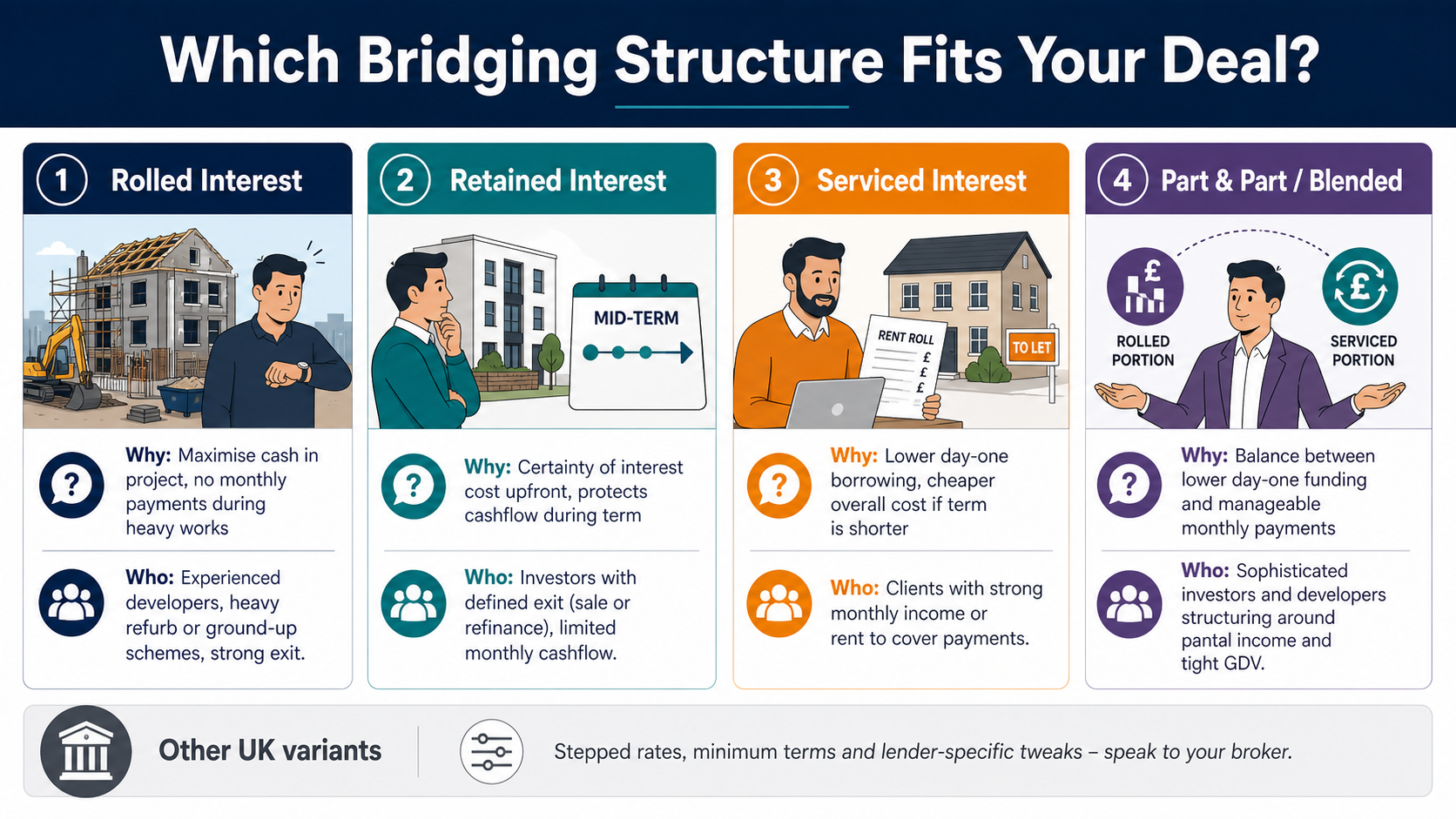
Our development finance, joint venture equity and mezzanine finance service covers the full capital stack for ground up and part built mixed use schemes, and our bridging finance service supports purchases, refurbishments and stabilisation ahead of a longer term facility. Where a scheme needs party wall agreements sorted before works start, this practical guide to party wall agreements is a useful reference for avoiding delays. Get in touch to request a capital structuring review or ask about relevant case studies.
FAQ
What is mixed use development finance?
Mixed use development finance funds schemes that combine two or more uses, typically residential alongside retail, office or leisure space, usually drawn in stages against build progress. Lenders assess each use separately within the overall loan to cost and loan to GDV calculation, since residential and commercial elements carry different risk and sale or letting timetables.
How much deposit or equity do I need for a mixed use scheme?
The equity required depends on the lender’s view of loan to cost and loan to GDV for the specific mix of uses, so there is no single figure that applies to every scheme. Where senior debt does not cover the full requirement, mezzanine debt can extend combined borrowing to roughly 85 to 90% of total cost, with the remainder funded by developer or joint venture equity.
Can bridging finance be used for mixed use developments?
Yes, bridging finance is commonly used for mixed use schemes to fund a purchase, a refurbishment or a stabilisation period before refinancing onto development or term finance. Bridging has become a mainstream tool in this space, with 36% of developers using it in 2025 according to market survey data.
What do lenders look at first when assessing a mixed use application?
Lenders focus first on planning status, viability assumptions including Section 106 and affordable housing obligations, and the valuation methodology behind the GDV. GOV.UK viability guidance confirms that appraisals omitting policy compatible obligations are routinely rejected, so getting this right early avoids delays later in underwriting.
Should I choose mezzanine debt or joint venture equity?
The choice depends on whether you want to retain full profit at a higher financing cost, which favours mezzanine, or share profit in exchange for shared downside risk, which favours a joint venture. Modelling both routes against your specific cost plan and GDV split, ideally with a specialist broker, is the most reliable way to decide which structure suits a particular scheme.
Sources
- Valuation of development property (RICS)
- Gov
- Interpath & BDLA UK Bridging Market Survey 2025 - Business Money
- Mezzanine and JV finance (Property Tax Partners)
Recommended
Related Topics
Speak to a specialist
Discuss your finance with James directly
Whole-of-market specialist finance — bridging, development, commercial and residential. No call centres, no obligation. James reviews every enquiry personally.
New to specialist finance? How unbiased broker advice works · Deals we have completed
Explore Related Finance