
Published · Updated
auction bridging financeAuction bridging finance: how to win and complete on time
By James Dawes, CeMAP, Founder, James William & Co Capital

If you’re bidding on an auction lot, get an indicative decision in principle (DIP) from a bridging lender before hammer day, not after. The moment the gavel falls you’re contractually committed, usually to a 20–28 day completion, so finance, valuation and legal work all need to start moving in parallel on day one.
- Finance: convert your DIP into a formal offer and get the case fully packaged with your broker.
- Valuer access: arrange entry to the property the morning after the sale so the surveyor isn’t waiting on you.
- Conveyancing: your solicitor should already have reviewed the legal pack and be ready to exchange information with the lender immediately.
Before you even raise a paddle, have your 10% deposit cleared and sitting in an accessible account, your ID and three months of bank statements ready, and your solicitor’s direct contact details in your pocket.
Pro Tip: Ring your solicitor and broker the morning of the auction to confirm they’re both reachable that afternoon. Auction day moves fast, and a voicemail is not a plan.
Key Takeaways
Completing an auction purchase on time depends on securing lender appetite, solicitor access and valuation slots before the hammer falls, not after.
| Point | Details |
|---|---|
| Get a DIP before bidding | An indicative decision in principle sets your realistic maximum bid before you’re contractually committed. |
| Run three tracks in parallel | Start finance, valuer access and conveyancing simultaneously the moment you win the lot. |
| Base your bid on net advance | Fees and retained interest reduce the gross loan; bid against the cash that actually lands. |
| Read the legal pack early | Restrictive covenants, short leases and tenant arrears are the most common causes of collapsed completions. |
| Use a broker for speed | James William & Co Capital coordinates lender, valuer and solicitor through a single point of contact to keep auction deadlines achievable. |
Table of Contents
- What is auction bridging finance and when do you need it?
- How fast can you actually get auction bridging finance arranged?
- How much would a £200k bridging loan cost?
- Who qualifies for auction bridging and what documents do lenders ask for?
- Why do auction deals collapse and what should you watch for?
- What should you have in place before you bid?
- How does a specialist broker speed up auction bridging?
- Auction finance is due diligence, not an afterthought
- Get your decision in principle sorted before auction day
- Sources
- FAQ
What is auction bridging finance and when do you need it?
Auction bridging finance is a short-term secured loan designed to complete a property purchase within the fixed deadline an auction imposes, typically because the property can’t be mortgaged conventionally in time, or at all. It fills the gap a standard mortgage can’t, because high street lenders rarely complete inside a month.
Whether the facility is regulated depends on what happens to the property. Buying a home to live in yourself pulls the loan into FCA-regulated territory, with the consumer protections that brings. Buying to let, refurbish, or develop generally keeps it unregulated business lending, which moves faster with fewer procedural hoops.
You’ll see auction bridging used most often for:
- Residential properties that fail mortgage lending criteria, such as those with no working kitchen or bathroom.
- Commercial and mixed-use lots where high street appetite is thin.
- Development land bought with planning conditions still outstanding.
- Ex-local authority or non-standard construction stock that mainstream lenders decline outright.
Specialist lenders will typically advance up to 70 to 75% loan-to-value on residential and certain commercial assets, which is worth knowing before you set your maximum bid.
How fast can you actually get auction bridging finance arranged?
Many specialist bridging cases move from DIP to funds in 7 to 14 working days, assuming your documents are ready and the valuer can access the property without delay. That’s the number to hold your completion date against.

UK auction houses generally set completion at 20 to 28 days after the fall of the hammer, so a well-prepared bridging case has real breathing room. A poorly prepared one doesn’t.
The sequence that works looks like this:
- Get your DIP in place before you bid, based on the lot’s guide price and your worst-case borrowing scenario.
- Instruct a solicitor before the auction, or the moment the hammer falls, so title checks start immediately.
- Book valuer access for the morning after the sale rather than waiting for the lender to chase you.
Pro Tip: Ask your broker to name the exact valuer panel member likely to be instructed. Some lenders use panels with patchy regional coverage, and a valuer three counties away can cost you a week you don’t have.
How much would a £200k bridging loan cost?
Expect somewhere in the region of £8,000 to £12,000 in total costs over a six-month term, once you add the arrangement fee, monthly interest and legal and valuation fees. The exact figure depends heavily on the lender, the asset and your loan-to-value.
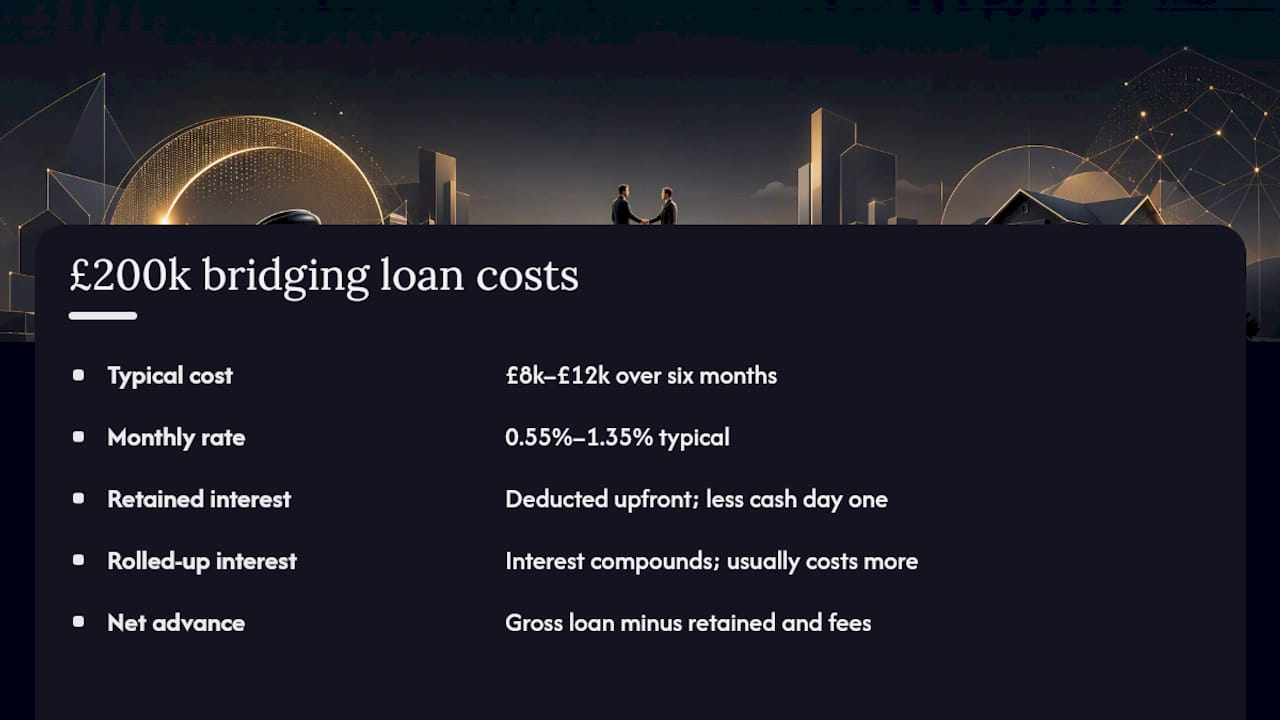
Monthly rates on auction bridging typically sit between roughly 0.55% and 1.35% depending on the asset class and how strong your exit looks to the lender.
Retained interest is deducted from the loan upfront, so you never have to find monthly payments during the term, but it also means less cash lands in your account on day one. Rolled-up interest compounds instead, which can suit a longer hold but usually costs more overall.
Pro Tip: Base your maximum bid on the net advance, not the gross loan figure. The gap between the two is exactly the buffer most overstretched bidders forget about.
Who qualifies for auction bridging and what documents do lenders ask for?
Most experienced investors, special purpose vehicles and trading businesses with a credible exit plan can secure an auction bridge without much friction. Buying a property as your own home pushes the loan into regulated territory, with stricter affordability checks attached.
Lenders typically want:
- Photo ID and proof of address for every named borrower or director.
- Proof that the 10% deposit sits in your own funds and is separate from the bridging facility itself.
- Three to six months of bank statements.
- Recent accounts or tax returns for self-employed applicants and trading businesses.
- Evidence of your exit route, such as an agent’s sale appraisal or a mortgage offer or agreement in principle.
- The auction legal pack and any existing survey or structural reports.
Common sticking points include adverse credit history, unresolved CCJs, unusual title structures such as flying freeholds, and asset classes lenders simply won’t touch, like properties with short leases.
Why do auction deals collapse and what should you watch for?
The three biggest killers of an auction completion are finance that wasn’t lined up beforehand, undisclosed title or tenancy problems buried in the legal pack, and a lender valuation that comes in below what you priced into your bid.
Red flags worth hunting for in the legal pack include:
- Restrictive covenants that limit what you can do with the property.
- Leases with fewer than 70 years remaining, which many lenders won’t finance.
- Tenants in arrears, or unclear possession rights.
- Missing certificates for gas, electrics, or building control sign-off.
On the lender side, valuers often apply a conservative or forced-sale basis rather than open-market value, and construction types that fall outside standard categories can shrink your available loan-to-value sharply.
Valuers for bridging lenders frequently apply a forced-sale or conservative market-value approach, and where a property needs specialist reports, such as a structural engineer’s assessment or a damp survey, the lender may withhold funds until those are supplied or reduce the LTV accordingly.
Auction contracts are also unconditional the moment the hammer falls. Under UK auction law, failing to complete means forfeiting your deposit, and potentially facing further liability if the vendor resells at a loss.
What should you have in place before you bid?
Complete this checklist before you register your paddle number:
- An indicative DIP from a bridging lender, or a direct line to a broker who can move fast on the day.
- A solicitor instructed and the legal pack already reviewed for the specific lots you’re targeting.
- Your 10% deposit cleared and accessible, not tied up elsewhere.
- Valuer access confirmed or at least pre-arranged for the morning after the sale.
- A documented exit strategy with a net-advance figure you’ve actually calculated, not guessed at.
Get these confirmations in writing beforehand: your solicitor’s availability across the auction’s likely completion window, the lender’s genuine appetite for that specific lot type, and who’s covering the initial valuation and legal costs if the deal falls through.
Set a contingency budget and a hard walk-away price before you bid, and know that a vendor may grant a short extension for a fee, but you can never rely on it.
Pro Tip: Write your walk-away price on a card and put it in front of you at the auction. Room energy pushes people past sensible numbers more often than any spreadsheet predicts.
How does a specialist broker speed up auction bridging?
A specialist broker organises lender appetite before you bid, packages your case properly, and coordinates the valuer and solicitor so finance, valuation and legal work run alongside each other rather than in sequence.
The process typically runs like this:
- Pre-auction appraisal of the lot and your likely borrowing capacity.
- A DIP secured against your target price range, before you register to bid.
- Solicitor coordination so title checks and lender legal reporting happen concurrently.
- Valuer instruction arranged the moment the hammer falls, not days later.
- Funds choreographed to land within the auction house’s completion window.
James William & Co Capital works this way through a network of private credit funds and specialist lenders, giving clients a single point of contact rather than a string of separate calls to chase.
Execution at speed under pressure is what separates a completed auction purchase from a forfeited deposit, and that’s precisely where a coordinated broker relationship earns its keep.
Case studies illustrating this kind of rapid execution are available through James William & Co Capital’s case studies.
Auction finance is due diligence, not an afterthought
Preparation before the auction, not negotiation after it, is the single biggest determinant of whether a purchase completes. I’d argue most buyers still treat finance as a formality to sort out once they’ve won, when it should sit alongside reading the legal pack as a pre-bid task.
The operational rule I keep coming back to: run finance, valuation and legal work as three genuinely parallel workstreams, and set your maximum bid against your calculated net advance, never the gross loan figure.
Get your decision in principle sorted before auction day
Ringing round lenders after you’ve won is the slow way to do this, and it’s the reason completions slip. James William & Co Capital gives you one point of contact who already has relationships across private credit funds and specialist lenders, so your DIP, valuer access and solicitor coordination move together instead of queuing up one after another.
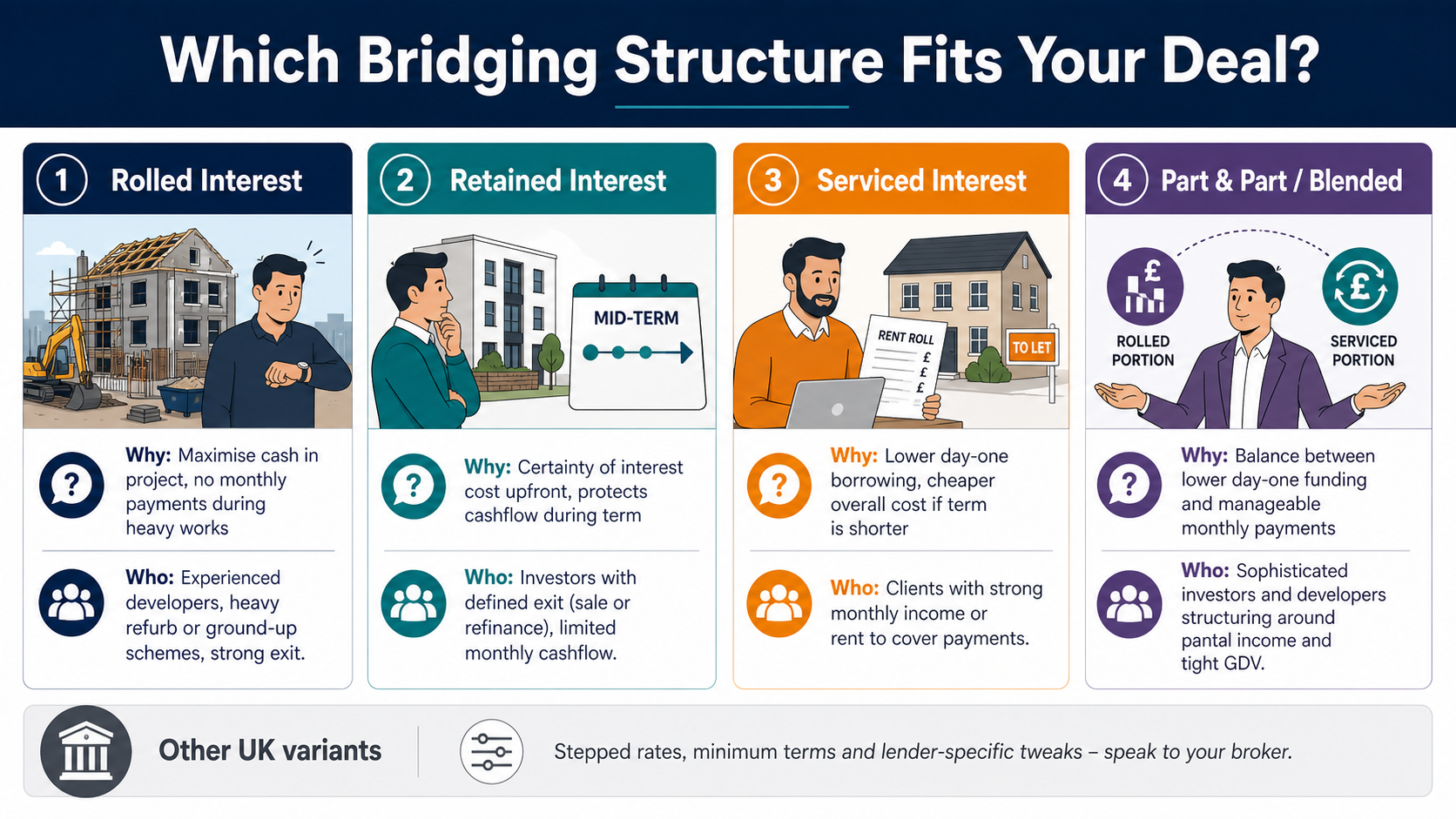
On an initial call, expect a straightforward document checklist, a realistic turnaround estimate for your specific lot type, and clarity on fees before you commit to anything. This capital concierge approach exists because auction timelines don’t leave room for a broker who needs three days to come back to you.
If you’ve got a lot in mind, get your deposit funds ready now and contact James William & Co Capital for an indicative decision in principle and a solicitor referral before you register to bid.
Sources
For the legal foundations of auction conduct, the RICS professional statement on auctioneers selling real estate sets out how sale conditions bind both parties once the hammer falls. LexisNexis’s guide to buying property at auction covers registration, deposit rules and completion deadlines in more technical detail.
For practical preparation, Attwells Solicitors’ auction property guide explains the solicitor’s coordination role, and readers wanting a general introduction to bridging mechanics can also see this New Zealand bridging finance explainer, useful for the underlying concept though not for UK-specific rules. Always take professional legal advice on contract or title issues before you bid.
This article is general information, not a substitute for advice from a qualified financial advisor. Consult a qualified financial professional about your own circumstances before acting on anything here.
- Auction finance under pressure: why 28-day completion still breaks deals (Property Investor Today)
- Auction Bridging Finance (Squared Money)
- Auction finance: Bridging loans for UK SMBs (FundBiz)
FAQ
How much would a £200k bridging loan cost?
Expect roughly £8,000 to £12,000 in total costs over a six-month term once you include the arrangement fee, retained interest and legal and valuation fees, leaving a net advance around £185,500 depending on the lender’s rate.
Which lenders offer bridging finance in the UK?
A range of specialist bridging lenders operate across the UK, each pricing differently by asset type and loan-to-value; working with a broker like James William & Co Capital gives you access to a wider panel, including private credit funds, than approaching one lender directly.
What does Martin Lewis say about bridging loans?
Consumer finance commentary generally flags bridging loans as expensive short-term borrowing that should only be used with a clear, evidenced exit strategy, not as a substitute for a mortgage you can’t otherwise obtain.
How does bridging finance work in the UK?
A bridging lender advances funds secured against the property, usually up to 70 to 75% loan-to-value, for a short term of a few months to around two years, repaid when you sell, refinance onto a mortgage, or complete a development.
What’s the biggest reason auction purchases fail to complete?
Finance that wasn’t arranged before bidding is the leading cause, closely followed by undisclosed issues in the legal pack and lender valuations coming in lower than expected.
Recommended
Related Topics
Speak to a specialist
Discuss your finance with James directly
Whole-of-market specialist finance — bridging, development, commercial and residential. No call centres, no obligation. James reviews every enquiry personally.
New to specialist finance? How unbiased broker advice works · Deals we have completed
Explore Related Finance