
Published · Updated
build to rent financeBuild to Rent Finance: How UK Lenders Assess Schemes
By James Dawes, CeMAP, Founder, James William & Co Capital

Build to rent finance is development lending structured around long-term rental income rather than unit sales, typically funding land, construction and stabilisation through a single facility of 18 to 36 months. Lenders size these deals on projected yield and exit certainty, not comparable sale prices, which changes what they want to see from you. If you’re at feasibility stage, the single most useful move is engaging a specialist broker early and locking down your exit route before you commit to land.
TL;DR:
- Lenders assess rental yield and occupancy targets, with a typical net yield requirement of 5 to 7 percent post-stabilization, varying by region.
- Funding usually involves multiple instruments, including senior facilities, mezzanine debt, JV equity, and forward funding, to cover the full project lifecycle.
- BTR loan-to-GDV ratios cap around 70 percent, with up to 90 percent LTC on credible schemes, and costs include higher interest, legal fees, and contingency reserves.
- Exit strategies rely on refinancing after stabilisation or forward sale to institutional buyers, making early exit certainty and rental performance critical.
- Securing specialist advice and structuring a comprehensive finance stack from feasibility stage improves chances of approval and optimizes deal terms.
Table of Contents
- What is build to rent development finance?
- What metrics do lenders assess for BTR schemes?
- What funding structures are available for BTR projects?
- How much does BTR finance cost, and how long does it take?
- What are the refinance and exit routes for BTR schemes?
- How do you prepare a BTR finance application?
- What do UK BTR case studies show about successful funding?
- Who structures BTR finance deals like these?
- Five priorities for developers starting a BTR project
- How James William & Co Capital can help structure your BTR finance
- Sources
- FAQ
What is build to rent development finance?
Build to rent (BTR) development finance funds a scheme through four phases: land acquisition, construction, stabilisation (the lease-up period once units complete) and exit, usually via refinance or forward sale. That’s a meaningfully longer lifecycle than a typical sale-led scheme, where the lender’s exposure ends the moment units complete and sell.
The gross development value (GDV) calculation is the real divergence. Sale-led lenders benchmark GDV against comparable transactions on the open market. BTR lenders calculate it by capitalising projected rental income at an appropriate yield, so your rent roll and void assumptions carry as much weight as your build cost plan.
That’s why lenders scrutinise operational management almost as closely as construction competence. A scheme with a strong build partner but no credible lettings or management strategy will struggle to get past credit committee, because the lender is effectively underwriting a business, not just a building.
What metrics do lenders assess for BTR schemes?
Lenders build their credit case around a handful of figures, and knowing these before you apply saves weeks of back and forth.
- Loan-to-GDV (LTGDV): typically up to around 70%, calculated against the yield-based valuation rather than a sales comparable.
- Loan-to-cost (LTC): can reach up to 90% on strong schemes with credible sponsors.
- Net rental yield: lenders generally want to see 5 to 7% post-stabilisation to support a smooth refinance.
- Gross yield: often needs to clear 7 to 8% to absorb management costs and voids, with the exact threshold shifting by region.
- Stabilisation occupancy: lenders usually want a defined lease-up target, often 90%+ occupancy, hit within an agreed window before releasing certain covenants.
Regional variation matters here. A scheme in Manchester or Leeds might clear gross yield hurdles comfortably where an equivalent London scheme, with higher capital values, needs a longer lease-up runway to prove the same net return. Lenders read your numbers against the postcode, not just the spreadsheet.
What funding structures are available for BTR projects?
Most UK BTR schemes don’t rely on a single loan. They sit on a capital stack built from several instruments, each doing a different job.
- Senior development facilities cover the bulk of construction cost, typically running the full 18 to 36 month build and stabilisation term, with repayment expected at refinance or sale.
- Mezzanine debt and preferred equity sit behind senior debt to close a funding gap, usually where LTC on the senior facility alone won’t stretch to cover the full cost plan.
- JV equity brings in a capital partner alongside the sponsor, and the equity split directly affects how a lender views risk. A sponsor with meaningful skin in the game gets better terms than one relying entirely on external equity.
- Forward funding and forward-commit arrangements see an institutional buyer agree to purchase the completed scheme (or fund it as it’s built), giving the lender exit certainty from day one rather than relying on a future refinance market.
Forward funding has become one of the strongest tools available on larger schemes precisely because it removes refinance risk from the lender’s underwriting, which usually shows up in better pricing for you.
How much does BTR finance cost, and how long does it take?
BTR debt tends to price 0.5 to 1% higher than equivalent sale-led development finance. That premium reflects the longer commitment lenders are making and the added operational risk of a lease-up period rather than a straightforward sale.
Beyond the headline rate, expect:
- Arrangement fees, typically charged as a percentage of the facility on drawdown.
- Legal fees for both lender and borrower counsel, higher than a standard facility given the forward-funding or forward-commit documentation involved.
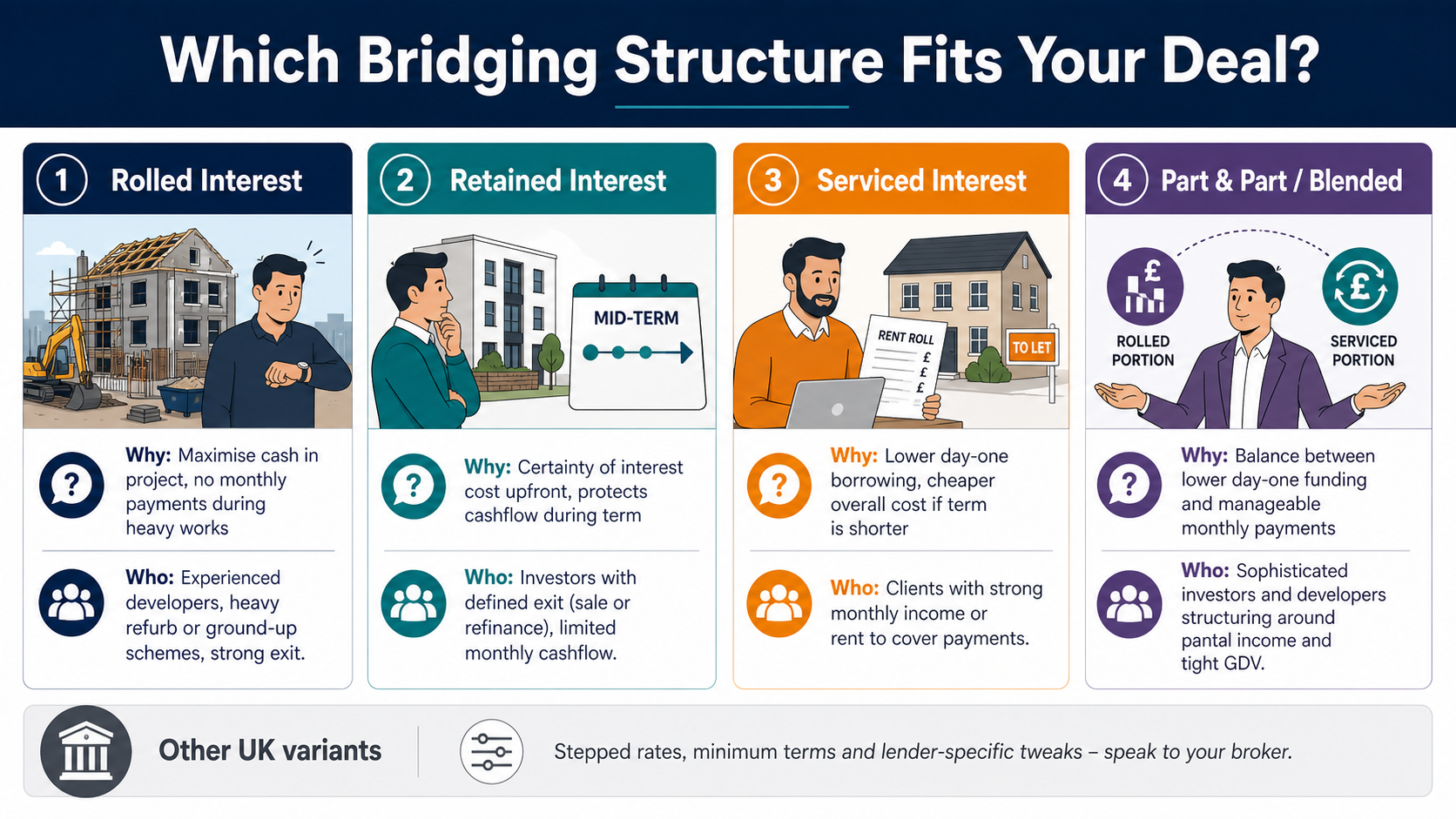
- Interest retention held back from the facility to cover rolled-up interest during the build.
- Contingency requirements of 10 to 15% of construction costs, which lenders will insist on rather than treat as optional.
Timelines vary by complexity, but a well-prepared application can move from initial approach to term sheet within four to six weeks, with drawdown following legal completion. The build and stabilisation phase itself runs 18 to 36 months, including a 3 to 6 month letting period once units complete.
What are the refinance and exit routes for BTR schemes?
Two exit routes dominate the UK market, and which one you’re aiming for shapes decisions you make at feasibility stage.
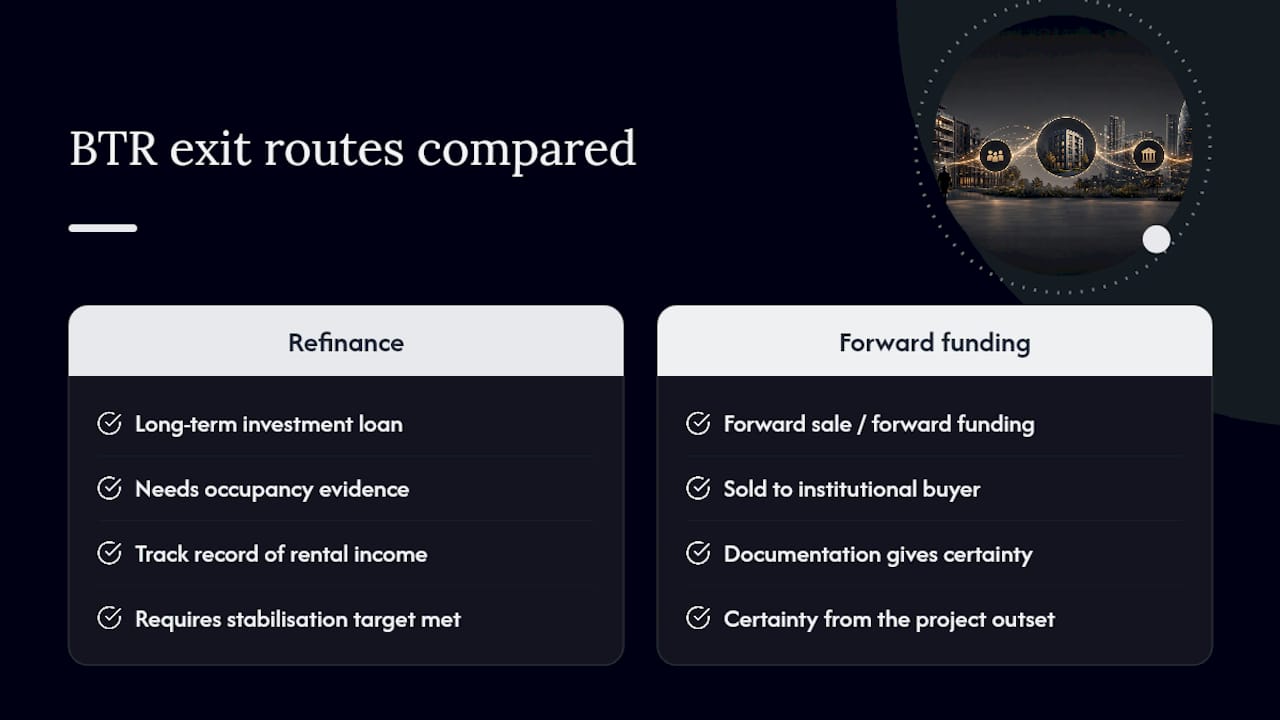
The first is refinancing onto a long-term investment loan once the scheme stabilises. Lenders offering these facilities want occupancy evidence, typically hitting your stabilisation target, plus a track record of actual rental income against your original projections. A gap between forecast and delivered rent is the single biggest reason refinances stall.
The second, and often the stronger route on larger schemes, is forward sale or forward funding to an institutional buyer. BTR is recognised as a distinct asset class in UK planning and investment markets, and forward-funding documentation gives both lender and sponsor certainty from the outset rather than betting on market conditions at stabilisation.
Timing matters. Early indicators, pre-let interest, local rental comparables, operator letters of intent, all feed into how confidently you can negotiate margin at the outset. Present exit certainty early and lenders price the risk down accordingly.
How do you prepare a BTR finance application?
Lenders assessing BTR facilities want evidence of an operating business, not just a construction schedule. Build your application around these documents.
- Cost plan and cashflow showing build cost, drawdown schedule and contingency allowance.
- Market rent comparables for the specific location, ideally drawn from recently let comparable schemes rather than asking prices.
- Operating model setting out who manages the asset post-completion and how void and arrears risk is handled.
- Operator letters of intent or management agreements, even in draft form, which materially strengthen a case at credit committee.
- Stress-tested projections showing performance under a slower lease-up or softer rental growth scenario, not just the base case.
Pro Tip: Lenders trust conservative assumptions far more than optimistic ones. A cost plan with a realistic contingency and a rental forecast that assumes a slower lease-up than you actually expect will get through credit committee faster than an aggressive best-case scenario.
Because many BTR facilities aren’t advertised publicly and lender appetite varies enormously by sponsor track record and location, appointing a debt-structuring broker at feasibility stage, alongside specialist legal counsel familiar with forward-funding documentation, typically shortens the whole process.
What do UK BTR case studies show about successful funding?
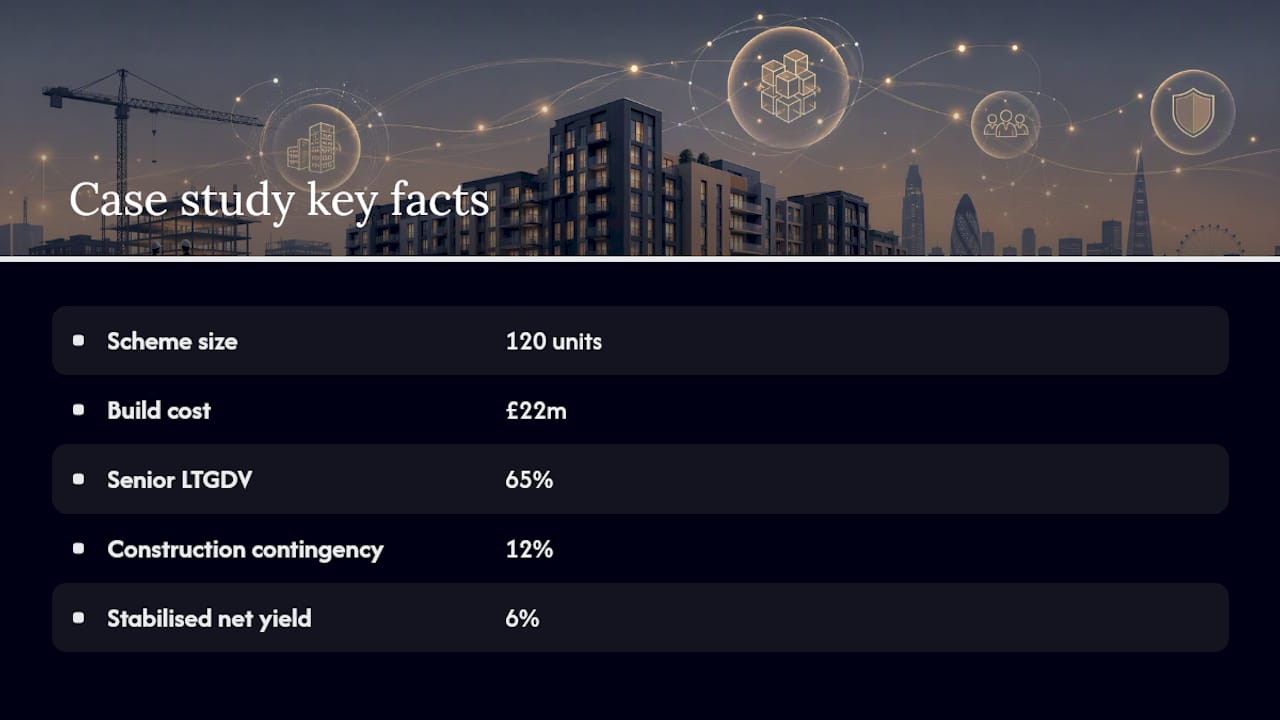
A useful worked example: a 120-unit regional scheme with a £22 million build cost might secure senior debt at 65% LTGDV, layer in mezzanine to bridge the remaining equity gap, and carry a 12% contingency against construction cost, comfortably inside typical lender expectations. Hitting a 6% net yield at stabilisation then supports a clean refinance onto a long-term investment loan.
On the public record, Aldermore’s £27.8 million facility backing a Leicester BTR scheme illustrates how lender-backed development finance gets structured around rental-led fundamentals rather than a sales exit, with documentation built for institutional-grade exit routes from the outset.
The pitfalls tend to repeat across the sector: schemes that leave exit planning until stabilisation, rental assumptions pitched to justify the loan size rather than reflect the local market, and sponsors who underestimate how much regional yield variation affects lender appetite outside London and the South East.
Who structures BTR finance deals like these?
James William & Co Capital operates as a capital concierge for UK property developers and institutional investors, giving each client a single point of contact for structuring, negotiating and executing BTR facilities. The firm arranges bridging finance, ground-up development lending, mezzanine debt and JV equity, often across multi-layered debt stacks involving family offices and private credit funds.
That range matters on BTR schemes specifically, where the right answer is rarely a single loan but a stack combining senior debt with mezzanine or preferred equity, priced and sequenced to protect your exit position.
Five priorities for developers starting a BTR project
Get exit certainty on the table before you commit to land, not after construction starts. Stress-test your rental assumptions against a slower lease-up, not your best case. Secure management or operator commitments early, ideally in writing. Size interest cover and operational reserves for a longer runway than you expect to need. And bring in structured finance advice before, not after, you exchange on the site.
— James William Dawes
How James William & Co Capital can help structure your BTR finance
There’s no shortage of routes into BTR funding, direct approaches to high street lenders, specialist BTR funds, or piecing together a stack yourself. The trouble is that most BTR facilities aren’t advertised publicly, and lender appetite shifts constantly by sponsor track record, location and scheme size. Chasing that alone costs time you don’t have at feasibility stage.
James William & Co Capital structures debt stacks combining senior development finance, mezzanine debt and JV equity, and introduces schemes to the family offices and private credit funds actively lending against BTR fundamentals right now. The firm gets involved from feasibility, before land exchange, so your exit strategy is built into the facility from day one rather than bolted on at stabilisation.
If you’re weighing up a BTR scheme anywhere in the UK, get in touch with the James William & Co Capital team to talk through your cost plan and exit options before you commit.
Sources
Further reading on lender criteria, documentation and market context: the Estates Gazette report on a live Leicester transaction, LexisNexis legal guidance on BTR documentation, and James William & Co Capital’s own guide to development finance structuring.
- Build-to-Rent Development Finance UK: Lender Assessment Guide
- Aldermore backs Leicester BTR scheme with £27.8m loan | Estates Gazette
- What Is Build To Rent and How Does It Work? | Online Mortgage Advisor
- Build to rent transactions: key considerations for finance lawyers | LexisNexis
FAQ
What is the 2% rule for renting?
The 2% rule, where monthly rent should equal roughly 2% of a property’s purchase price, is a US buy-to-let screening tool and rarely applies in the UK, where BTR lenders instead assess net yields of 5 to 7% annually.
Can I invest in build to rent?
Yes. Institutional investors, family offices and increasingly private developers invest in BTR either by developing schemes directly or through forward-funding arrangements, where capital is committed before or during construction in exchange for the completed asset.
Who are the top build-to-rent developers in the UK?
The UK BTR pipeline runs to hundreds of thousands of units across major operators and institutional investors, with activity concentrated in regional cities and the South East; specific developer rankings shift as new schemes complete each year, so figures are best checked against current industry trackers rather than quoted as fixed.
Is it still worth being a landlord in 2026?
Traditional buy-to-let faces tighter margins from tax and regulatory changes, but BTR development offers a different economics, institutional-scale yields, professional management and forward-funding exits, which is why developers structure it as a distinct asset class with its own lending criteria rather than treating it like a portfolio of individual rentals.
How long does build to rent finance typically take to arrange?
A well-prepared application can reach term sheet stage in four to six weeks, with the full facility running 18 to 36 months through construction and stabilisation before refinance or sale.
Recommended
Related Topics
Speak to a specialist
Discuss your finance with James directly
Whole-of-market specialist finance — bridging, development, commercial and residential. No call centres, no obligation. James reviews every enquiry personally.
New to specialist finance? How unbiased broker advice works · Deals we have completed
Explore Related Finance