
Published · Updated
care home finance ukAvoid CQC Delays: 5 Care Home Finance Routes in England
By James Dawes, CeMAP, Founder, James William & Co Capital

Care home finance in England runs on five practicable routes: bridging loans for speed, development finance for ground-up builds, commercial mortgages for stabilised refinancing, mezzanine debt and joint venture equity for gap funding. Before approaching any lender, assemble your planning and CQC registration evidence and instruct a specialist structuring broker to build the debt stack around it.
TL;DR:
- Most care home financing strategies require early planning of CQC registration and regulatory readiness to avoid delays and application rejections.
- The typical debt stack involves development finance during construction, followed by lower-cost commercial mortgages once the home is operational and stabilized.
- Structuring a Propco/Opco split or joint venture enhances enforceability and risk management, with bespoke lender covenanting reflecting regulatory and trading performance.
- A specialist broker can broaden lender access, negotiate complex layered debt structures, and ensure regulatory conditions are embedded from the start to reduce execution risk.
- External factors like demographic growth and rising regulatory standards increase both the demand for care sector loans and the complexity of delivering compliant, finance-ready schemes.
Table of Contents
- Which finance options are commonly used for care home projects
- Regulatory and CQC requirements lenders will insist on
- How to structure the deal: Propco, Opco and layered debt
- What lenders underwrite and the covenants they use
- Timeline and cost planning: how long and how much to budget
- Sustainability-linked finance: when it helps and when it hurts
- How a specialist capital-structuring broker reduces execution risk
- Government funding and subsidies for care home finance in the UK
- Impact of demographic and regulatory trends on care home finance
- Risks and challenges specific to care home finance
- Case studies of care home finance projects in the UK
- A practitioner’s view on what actually moves deals forward
- How James William & Co Capital structures care home finance
- Sources
- FAQ
Which finance options are commonly used for care home projects
Each route suits a different point in the asset’s life. Bridging finance covers acquisition speed or a short funding gap and carries a higher rate reflecting that speed, typically repaid on refinance or sale within months. Development finance is drawn in stages against a build programme, with lenders releasing funds as construction milestones are certified and covenants tied to cost overruns and programme slippage.
Commercial mortgages come into play once a home is trading and occupancy has stabilised, offering lower margins against a proven income stream rather than a projection. Where senior debt alone will not stretch to the required leverage, mezzanine finance or joint venture equity fills the gap, sitting behind the senior lender and pricing in the additional risk through higher returns or profit share. Sale-and-leaseback structures give an established operator a way to release capital tied up in freehold property while remaining in occupation, though it means trading the ownership stake for liquidity.
- Bridging: fast completion, higher cost, best for acquisition or short-term gaps.
- Development loans: staged drawdowns against build milestones, with construction-linked covenants.
- Commercial mortgages: lower-cost refinance for stabilised, trading assets.
- Mezzanine and JV equity: subordinated capital that increases leverage where senior debt falls short.
- Sale-and-leaseback: releases equity from freehold ownership in exchange for a lease commitment.
Regulatory and CQC requirements lenders will insist on
No lender will commit serious capital to a care home project without sight of a credible route to CQC registration. Registration is mandatory for any provider carrying out regulated care activity in England, and the regulator expects premises and supporting documentation to be substantially ready before an application is even submitted.
Lenders will typically want evidence of the planning position, including Class C2 use where relevant, a confirmed building specification, fire and safeguarding compliance, and a financial viability statement prepared to the CQC’s own template. That statement forms part of the registration assessment itself, not just a lender’s own due diligence file.
Timing catches out developers more often than cost does. CQC assessment can run to several months, and incomplete or premature applications are commonly rejected, which resets the clock. Building CQC readiness into the earliest project milestones, rather than treating it as a late-stage formality, protects both the drawdown schedule and the lender relationship.
How to structure the deal: Propco, Opco and layered debt
Most institutional-grade care home deals separate the property-owning entity from the operating business, and the choice of structure shapes what a lender will lend against and how it enforces if things go wrong.
- Propco/Opco split: the property company holds the real estate as lender security while the operating company runs the regulated business, giving lenders a cleaner enforcement path that does not disrupt residents’ care.
- Joint ventures: a developer, operator and capital partner allocate construction risk, operational risk and exit risk between them, usually reflected in differing return profiles and control rights.
- Mezzanine and preferred equity: subordinated capital sits behind the senior lender, raising achievable leverage but adding a second layer of covenants and information rights the borrower must satisfy.
- Sale-and-leaseback: converts freehold value into cash while the lease terms then govern the operator’s flexibility to refinance or exit later.
Sector analysis on the care home market notes that lenders increasingly expect bespoke Propco/Opco structures and covenanting tied to trading and regulatory performance rather than treating a care home like a standard commercial property loan.
What lenders underwrite and the covenants they use
Development and trading loans are underwritten differently. A development loan is assessed largely on loan-to-cost and the projected mature value once built and stabilised, while a trading loan against an operating home leans on coverage ratios drawn from actual income.
Expect lenders to model loan-to-value or loan-to-cost limits, debt service coverage ratio, EBITDA-to-debt multiples and net asset cover, alongside care-specific covenants. Many facilities now include minimum CQC rating clauses and notification obligations, and a rating downgrade during the loan term can constitute an event of default under the documentation lenders require for trading care homes.
Due diligence packs typically include:
- Management information and trading history for existing operations.
- Cost plans, procurement route and building contract evidence for development schemes.
- CVs and track record for the proposed registered manager and senior operator.
- The CQC financial viability statement and any prior inspection reports.
Lenders value an experienced operator and a well-documented mobilisation plan, and that documentation materially reduces how a facility is priced and covenanted at the outset.
Timeline and cost planning: how long and how much to budget
Planning consent and CQC readiness together can take from several months to a few years depending on site complexity and local authority workload, and that period should be treated as part of the finance timeline, not a precursor to it. Construction programmes for a purpose-built home typically run well over a year, and lenders then expect a further 12 months or more of mobilisation and occupancy ramp before a home is considered stabilised.
Your financial model needs to capture every major cost category: land, planning and design fees, professional and legal costs, construction and fit-out, recruitment and pre-opening operating costs, and the financing cost accrued during the build itself before any income arrives. Occupancy ramp assumptions should be conservative rather than aspirational, since slower-than-planned filling is one of the most common causes of covenant stress on trading loans. Building a refinance contingency into the exit plan, rather than assuming a seamless switch to a commercial mortgage the day stabilisation is reached, protects against a market or timing mismatch at exactly the point the development loan matures.
Sustainability-linked finance: when it helps and when it hurts
Green and sustainability-linked loans are becoming a more visible lever in care home development. Eligibility usually turns on energy performance targets, delivered carbon reduction against a baseline, and ongoing monitoring and reporting commitments through the loan term. Sector commentary on care home development notes that rising sustainability demands are adding real complexity to project viability, even as they open a route to better terms.
Where a scheme can meet realistic ESG criteria, the commercial upside is genuine: potential margin improvement and covenant flexibility. The trade-off is higher upfront capital expenditure and an ongoing reporting burden that must be resourced for the life of the facility. Sustainability-linked finance tends to suit larger, purpose-built schemes with the design flexibility to hit energy targets from day one, and the right approach is to negotiate KPIs that reflect what the building can actually deliver rather than an aspirational target set to win a marginal pricing improvement.
How a specialist capital-structuring broker reduces execution risk
A capital-concierge style broker earns its fee by doing three things a developer or operator rarely has the time or relationships to do alone: reaching lenders beyond the mainstream high street, building a multi-layered debt stack that fits the specific asset, and negotiating covenants that survive contact with a live construction or trading programme.
Ask a prospective broker for representative examples of deals they have structured, the breadth of their lender network across banks, private credit funds and specialist care-sector lenders, and evidence of how quickly they can move on a time-pressured completion. The right point to instruct one is before you finalise a planning strategy or a CQC submission timetable, not after a term sheet has already narrowed your options. Early instruction protects viability and keeps a favourable refinance exit genuinely open rather than assumed.
Government funding and subsidies for care home finance in the UK
Direct government grants for private care home development are limited, and most developers and operators in England fund schemes through commercial debt and equity rather than subsidy. Where public money does feature, it tends to sit at the local authority or NHS commissioning level, influencing occupancy through fee-paid placements rather than funding the capital cost of the building itself.
This matters for your finance strategy because a lender will look at the mix of privately funded and publicly commissioned residents when assessing income stability, not because a subsidy will reduce the debt required. Sector analysis of the market notes that mainstream banks typically fund only a portion of development cost, commonly up to around 65% of the total, which is precisely the gap that alternative lenders, mezzanine providers and joint venture equity exist to close.
Some capital grant or business rates relief schemes exist at a local authority level for specific regeneration areas, but these vary by council and are not a reliable substitute for a properly structured development finance stack. The practical approach is to model your scheme on commercial finance terms first and treat any local incentive as upside rather than a funding assumption. A broker who understands the wider structured finance market, rather than one source of debt alone, is better placed to identify where such incentives genuinely change the numbers.
Impact of demographic and regulatory trends on care home finance
England’s ageing population continues to underpin lender appetite for the sector, and that demand is a large part of why banks and private credit funds keep entering care home lending despite the operational complexity involved. Sector commentary aimed at lenders describes a growing market with genuine opportunity, but one where underwriting has become more bespoke rather than more relaxed.
Regulatory tightening runs in parallel with demand growth. Building standards, fire safety requirements and CQC’s own expectations around staffing and safeguarding have all become more exacting, and Care England’s analysis of the development landscape points to rising planning, regulatory and sustainability demands making new schemes harder to bring forward than in previous years. That combination, rising demand alongside rising delivery cost and complexity, is precisely why blended and collaborative finance structures are becoming more common rather than less.
For a developer or operator, the practical implication is that a scheme underwritten on yesterday’s assumptions about planning timelines, build cost or staffing cost will struggle to convince a lender today. Viability modelling needs to reflect current regulatory expectations from the outset, not retrofit them once a lender’s due diligence team raises them. This is also why lenders increasingly weight the credibility of the sponsor and operator team as heavily as the numbers on the page: a track record of navigating CQC registration and staffing a home successfully carries real underwriting weight in a tightening regulatory environment.
Risks and challenges specific to care home finance
Care home schemes carry risks that a standard commercial property loan does not. Regulatory risk sits at the top of the list: a CQC registration delay or an unfavourable inspection outcome can stall drawdowns or, on a trading loan, trigger a covenant breach tied to minimum rating clauses.
Construction and cost risk is amplified by the specialist nature of the building itself: fire compartmentation, wet room specifications and accessibility requirements add cost and complexity that a generalist contractor may underprice. Occupancy ramp risk follows close behind, since a home that fills more slowly than modelled puts immediate pressure on debt service coverage at exactly the point a trading loan or refinance is being tested.

Operator risk is often underestimated by developers who are strong on the build but light on care sector experience. Lenders price this in directly, and a weak or unproven operator can make an otherwise sound scheme far harder to finance on reasonable terms. Refinance risk closes the loop: a development loan built on an assumed exit to a commercial mortgage depends on the asset stabilising broadly as modelled and on the refinance market being open and priced reasonably when the facility matures. Sector commentary on lender behaviour notes that downgrades or weak trading metrics can constitute an event of default under care home loan documentation, which makes early, honest viability modelling far more valuable than an optimistic one.
Case studies of care home finance projects in the UK
Recent market activity shows how specialist lenders are structuring bespoke facilities around care home development rather than applying a generic commercial property template. Trade press has reported a specialist lender funding an £20 million, 81-bed care home development through a 25-month facility, reflecting the kind of staged, milestone-driven structure that suits a ground-up build with a defined construction programme and clear registration pathway.
What these transactions tend to share is a strong sponsor relationship and a lender comfortable with the specific risks of care home development rather than property development generally. Sector analysis on funding new care homes highlights that the strongest deals usually bring together an experienced developer, an established operator and a capital partner willing to sit across the full lifecycle from planning through to stabilised trading, rather than a single party trying to hold every risk alone.
The pattern that recurs across successful schemes is preparation: planning and CQC evidence assembled early, a realistic occupancy ramp built into the model from day one, and a debt stack structured with the refinance exit in mind before the first spade goes into the ground. Where those elements are in place, lenders in this market have shown a genuine willingness to commit meaningful capital, even to schemes that would otherwise look complex on paper.

A practitioner’s view on what actually moves deals forward
The gap between a fundable care home scheme and one that stalls rarely comes down to the underlying property. It comes down to how early the sponsor treats CQC readiness and financial viability as finance documents rather than regulatory paperwork to sort out later. Structure the debt stack, the operator evidence and the registration pathway together from day one, and the lender conversation becomes far shorter.
— James William Dawes
How James William & Co Capital structures care home finance
Structuring a care home deal usually means juggling several lenders, a subordinated tranche and a set of regulatory conditions at once, and that is where a single point of contact genuinely saves time and protects your position. A capital concierge broker works across the products a care home scheme typically needs, sourcing lenders beyond the mainstream high street and building the covenant package around your project rather than a generic template.
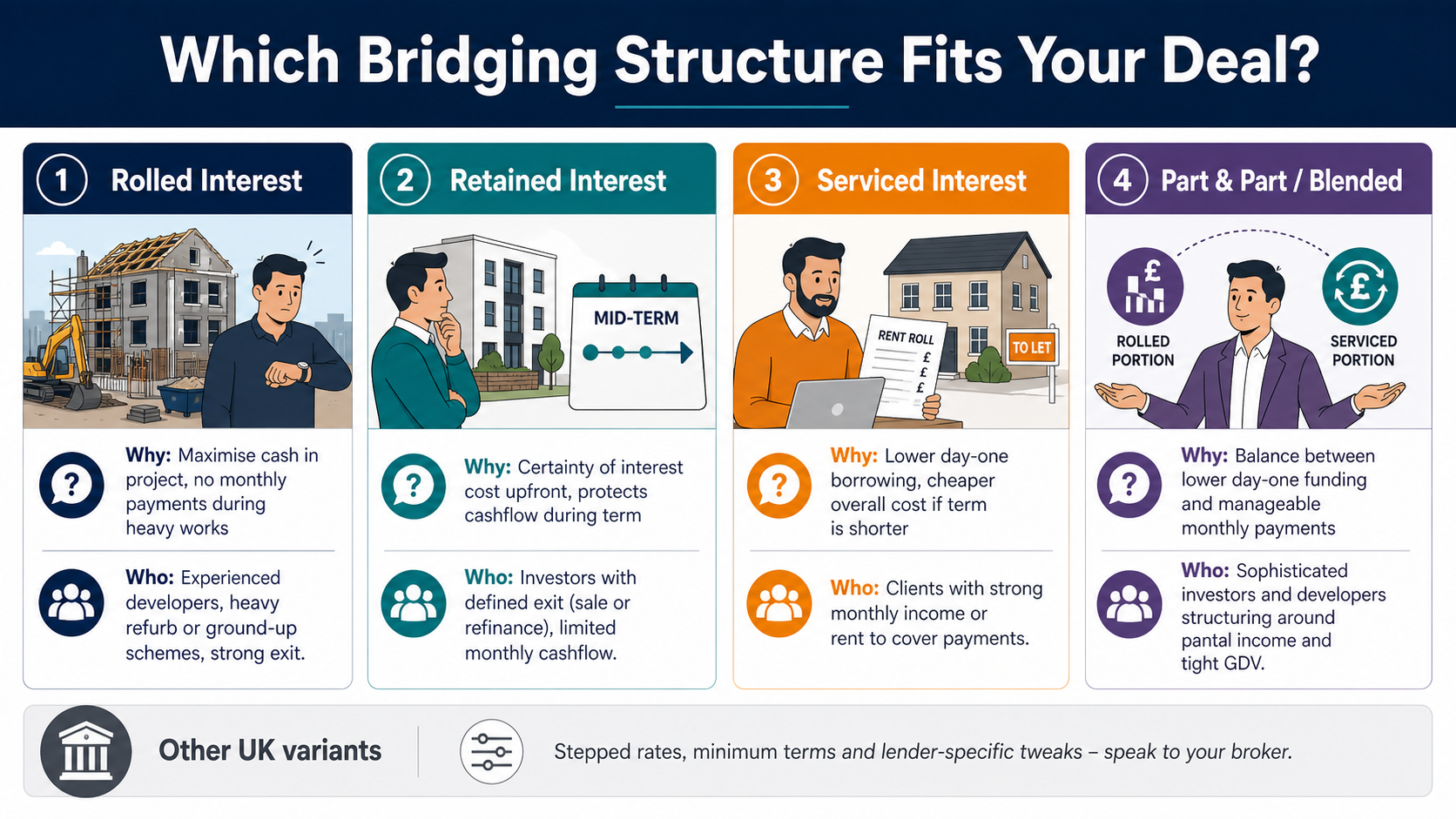
- Development Finance, Joint Venture Equity and Mezzanine Finance for ground-up schemes and leverage gaps beyond senior debt.
- Bridging Finance for acquisition speed or short-term funding ahead of a longer-term facility.
- Commercial Mortgages for refinancing a stabilised, trading care home onto lower-cost terms.
If you are planning an acquisition, a development or a refinance in England, get in touch about development finance, joint venture equity and mezzanine structuring to discuss how the debt stack could work for your project.
Sources
- Register as a provider - Care Quality Commission
- Why care home development is becoming harder than ever - Care England
- Care home finance: opportunities for lenders in a growing market - Mishcon
FAQ
Is CQC registration required before I can get care home finance?
Lenders will expect a clear route to CQC registration rather than a completed one at the earliest funding stage, since registration itself typically requires premises to be substantially ready. For development finance, lenders build the registration timeline into the drawdown schedule alongside construction milestones.
What is a financial viability statement and who prepares it?
A financial viability statement is a CQC-required document setting out how a care provider will remain financially sustainable, prepared to the regulator’s own template. Lenders typically request sight of it as part of their own due diligence, since it overlaps heavily with the trading assumptions in a credit paper.
How much of a care home development will a bank lend?
Mainstream banks commonly fund only part of total development cost, around 65% in many cases, leaving a gap usually filled by mezzanine finance, joint venture equity or a specialist lender willing to stretch leverage further.
Does a CQC rating downgrade affect an existing loan?
Yes, many care home loan facilities include covenants tied to a minimum CQC rating and notification obligations, and a downgrade can constitute an event of default under the documentation lenders use for trading care homes. This makes ongoing regulatory compliance a live finance issue, not just an operational one.
When should I bring in a specialist broker rather than approach lenders directly?
Instructing a specialist structuring broker before you finalise your planning strategy or CQC submission timetable gives you access to a wider lender network and more room to negotiate covenants before a term sheet narrows your options. James William & Co Capital works across bridging, development finance, commercial mortgages, mezzanine and joint venture equity to structure this from the outset.
Recommended
Related Topics
Speak to a specialist
Discuss your finance with James directly
Whole-of-market specialist finance — bridging, development, commercial and residential. No call centres, no obligation. James reviews every enquiry personally.
New to specialist finance? How unbiased broker advice works · Deals we have completed
Explore Related Finance