
Published · Updated
mixed use commercial mortgageCut SDLT in England on Mixed Use Commercial Mortgages: 0% to £150,000
By James Dawes, CeMAP, Founder, James William & Co Capital

A mixed use commercial mortgage funds a property that combines residential and commercial use under one title, and lenders in England typically advance a substantial portion of value depending on the income split between the two elements. Where the commercial portion is genuine, the purchase can also qualify for lower mixed-use Stamp Duty Land Tax bands rather than residential rates. If you’re weighing this route against a standard buy-to-let or commercial loan, speak to a specialist broker before you exchange, because classification decisions made early shape both your rate and your tax bill.
TL;DR:
- Loan-to-value ratios can reach up to 75% if residential income exceeds 55%, but drop to 60-65% when the commercial component dominates.
- Lenders prefer a limited company structure for borrowing, especially for first-time landlords or more complex deals, and the purpose influences the underwriting approach.
- HMRC scrutinizes mixed-use SDLT claims closely, requiring clear evidence that the property’s character genuinely includes non-residential use at completion.
- Affordability checks mainly involve interest cover ratio, with typical requirements around 120-125%, and stress testing is common for vacant commercial units.
- Using specialist brokers can significantly improve chances of securing financing for complex or multi-layered mixed-use properties.
Table of Contents
- Loan sizes, LTV and rates at a glance
- Who qualifies: lending criteria for mixed use borrowers
- How lenders classify and value mixed use property
- Passing the affordability test: ICR, TSDI and EBITDA explained
- Mixed use SDLT in England: the bands, the saving and the audit risk
- Preparing your mixed use mortgage application
- When a specialist broker changes the outcome
- A note on where investors actually get caught out
- How James William & Co Capital structures mixed use finance
- Sources
- FAQ
Loan sizes, LTV and rates at a glance
Semi-commercial deals sit in a wide bracket. Most specialist lenders will consider a wide range of loan sizes from smaller amounts to several million pounds for larger mixed portfolios, with pricing and leverage shifting according to how the property is classified.
- LTV: up to 75% where the residential income or value exceeds roughly 55% of the total, dropping towards 60–65% when the commercial element dominates, per GB Bank’s underwriting approach.
- Rates: commercial mortgage rates on mixed-use assets generally sit above residential buy-to-let pricing, reflecting the added lease and tenant risk.
- Terms: typically 5 to 25 years for term mortgages, though bridging or development finance suits refurbishment, change of use, or short ownership horizons better than a term loan.
- Owner-occupied vs investor pricing: owner-occupiers running a business from the ground floor often secure marginally better terms than pure investors, since lenders view trading income as more stable than third-party rent.
Who qualifies: lending criteria for mixed use borrowers
Lenders will accept individuals, limited companies, SPVs and, less commonly, trusts as borrowing vehicles, though most specialist lenders now prefer a limited company structure for tax efficiency and liability separation. Experience matters more here than on a standard buy-to-let: first-time landlords can still get approved, but portfolio landlords with several units under management typically unlock sharper pricing and higher leverage.
The purpose behind the loan changes the underwriting entirely.
- A purchase is assessed mainly on the property’s income potential and the deposit available.
- A refinance brings existing rent rolls, arrears history and covenant strength into play.
- A capital raise against an existing mixed-use asset invites closer scrutiny of what the funds are used for.
Regulated mortgage contract rules also matter. Confirming this early avoids a lender pulling out mid-application.
Pro Tip: Ask your solicitor to confirm the regulated/unregulated status of the deal before you submit an application, not after. A late reclassification can force you to restart with a different lender panel entirely.
How lenders classify and value mixed use property
Cross that threshold on the residential side, calculated by income or by value, and many lenders will apply buy-to-let style criteria with higher LTVs; fall below it and you’re into commercial territory, where leverage tightens.
Valuers look at the property as a whole rather than component by component, weighing lease strength, tenant covenant and rent levels against comparable evidence. When a commercial unit sits vacant, some lenders will use projected rent based on comparables rather than decline the deal outright.
Several features push lenders towards caution:
- Specialist fittings that would be costly to reverse for another tenant.
- Very short remaining leases on the commercial unit.
- Tied premises with restrictive covenants limiting resale flexibility.
Planning history, the VAT option to tax, business rates and council tax treatment all feed into the underwriter’s file too, since a mismatch between what’s on the title and what’s actually happening on site is one of the fastest ways to stall an application.
Passing the affordability test: ICR, TSDI and EBITDA explained
Affordability for mixed use investment loans usually comes down to one of three checks, and knowing which one applies to your deal saves weeks of back and forth.
- Interest Cover Ratio (ICR): the most common test, comparing rental income against mortgage interest. Lenders typically want ICR around 125%, though some will accept 120%, and where a commercial unit is empty, several will stress test using 90% of the projected market rent rather than refuse the loan outright.
- Total Debt Servicing to Income (TSDI): used more often for owner-occupiers or borrowers carrying multiple debt facilities, this looks at all debt obligations against total income rather than isolating one property.
- EBITDA: relevant where the borrower is a trading business occupying part of the premises, since lenders want to see the business itself can service the debt from operating profit, not just from letting income.
Presenting both calculations, actual and projected, with supporting comparables gives an underwriter less reason to hesitate.
Mixed use SDLT in England: the bands, the saving and the audit risk
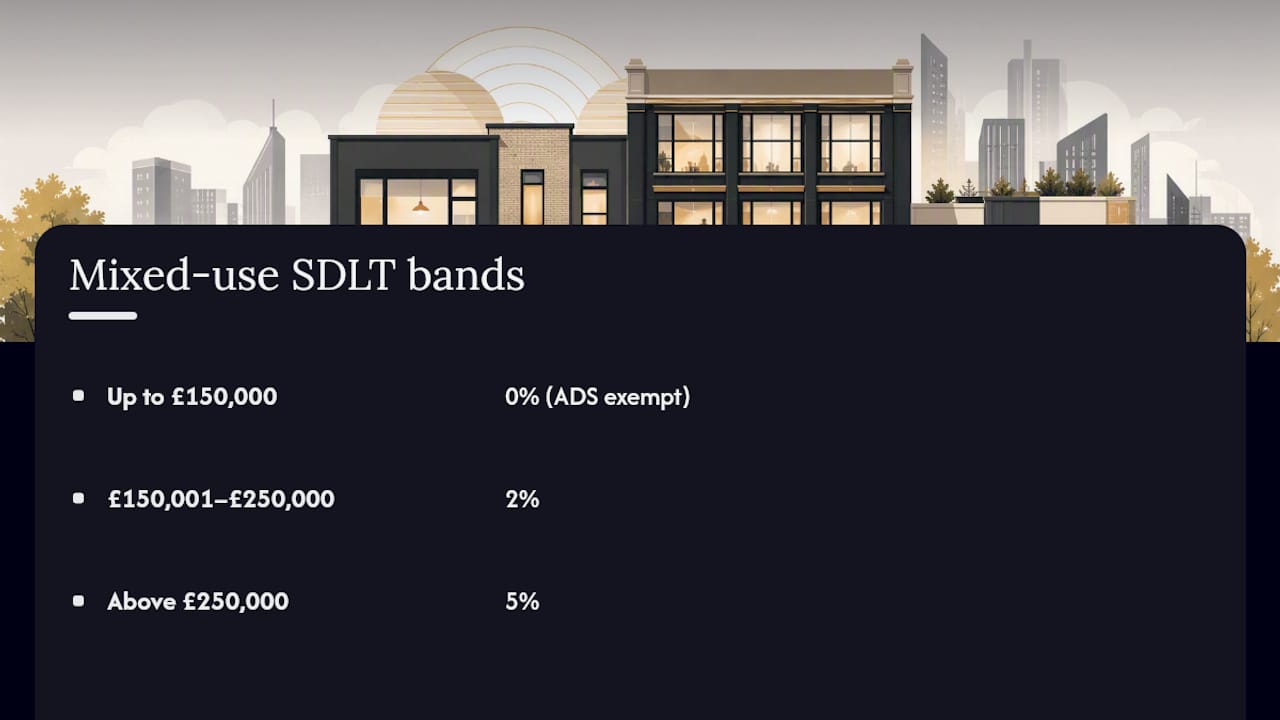
The Stamp Duty saving on a genuine mixed-use purchase is one of the strongest financial arguments for structuring a deal this way. Mixed-use and non-residential purchases in England and Northern Ireland attract 0% SDLT up to £150,000, 2% on the slice between £150,001 and £250,000, and 5% above that, a materially lighter structure than residential rates once you factor in that mixed-use purchases also escape the 5% additional dwelling surcharge entirely.
That saving comes with a catch. HMRC and tax tribunals actively scrutinise marginal mixed-use claims, and the statutory test asks whether the property’s character genuinely includes non-residential land at completion, not whether a token commercial use has been bolted on to save tax. A shop with a flat above, actively let and trading, is a clean case. A garden with occasional grazing rights is not.
Gather your evidence before you complete: signed leases, recent invoices to the commercial tenant, business rates bills and any relevant planning consent. Instruct your conveyancer to build the mixed-use case into the file early, rather than reaching for it retrospectively if HMRC asks questions.
Preparing your mixed use mortgage application
A clean application file is the single biggest lever you have over how fast an offer lands. Lenders and their valuers will want to see the full financial picture of both elements of the property, not just the residential side.
- Signed leases and tenancy agreements (AST for the residential unit, commercial lease for the other).
- Rent roll and at least 12 months of recent rent receipts or invoices.
- Business accounts where the commercial tenant is linked to the borrower.
- Evidence of consistent rentability, particularly for any unit that has had voids.
Surveyors inspecting mixed-use stock will check structural separation between uses, fire compartmentation, and whether the commercial unit has independent access. Your solicitor should confirm title, any restrictive covenants, and whether residential use has ever been extinguished on part of the building, since that history can affect both valuation and lender appetite.
Pro Tip: Deal-killers are rarely about the borrower. They’re usually a lease that’s about to expire, a commercial unit with no independent access, or a covenant nobody checked. Resolve these before submission, not after a valuer flags them.
When a specialist broker changes the outcome
Straightforward semi-commercial purchases with a stable tenant and clean title can often go direct to a specialist lender. Complexity is where a broker earns their fee: multi-layered debt stacks, development overlay on part of the site, offshore ownership structures, or bespoke covenant packages that mainstream underwriters aren’t set up to assess.
A capital-concierge style broker works differently to a standard introducer. Rather than pushing one application through one lender, the job is to map the deal against a wider network of lenders and then structure the debt stack, negotiate terms and run the process to completion under one point of contact. For a portfolio landlord juggling several assets or a developer blending bridging finance with a term exit, that structuring work is often what makes an otherwise unbankable deal work at all.
Expect a broker to ask for the same core documents a lender would want, plus a clear statement of what you’re trying to achieve. Timescales vary with complexity, but a specialist broker is generally faster at getting to a workable term sheet than approaching multiple lenders yourself, because the pre-qualification work has already been done.
A note on where investors actually get caught out
The mistake I see repeated most often isn’t in the underwriting. It’s timing. Investors decide a property is “mixed use enough” to save on Stamp Duty, then only start pulling together leases and invoices after HMRC or a valuer asks for them. By then the evidence often looks assembled for the tax return rather than reflecting how the building was genuinely used at completion, which is exactly the distinction tribunals look for.
The fix is unglamorous but effective: confirm the classification with your solicitor and broker before exchange, not after, and keep the commercial evidence current from day one rather than reconstructing it later.
— James William Dawes
How James William & Co Capital structures mixed use finance
Commercial mortgage brokers arrange finance including commercial mortgages, bridging finance, mezzanine debt and JV equity for the kind of mixed-use deals covered above, structuring the debt stack around income split, tenant mix and exit strategy rather than forcing deals into generic templates.
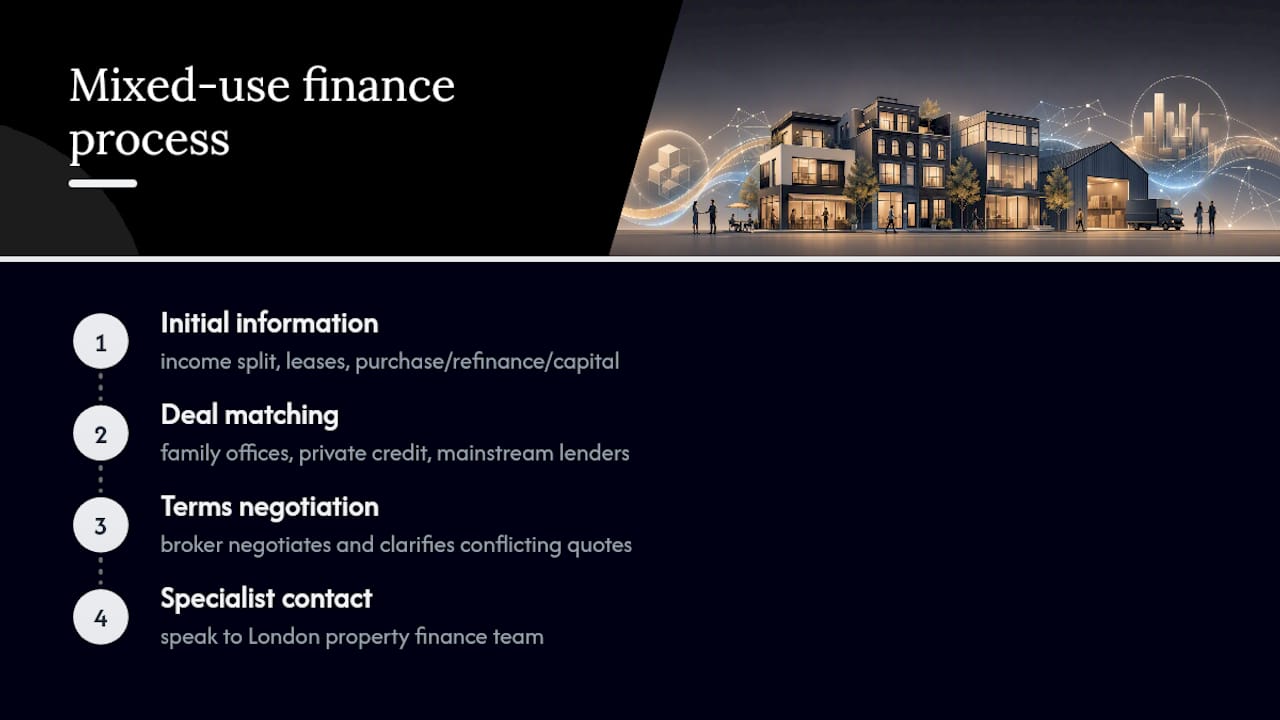
At first contact, expect to be asked for the basics: the income split between residential and commercial elements, current leases or tenancy agreements, and what you’re trying to achieve, whether that’s a purchase, a refinance, or capital raised against an existing asset. From there, the process moves to matching the deal against a lender panel that includes family offices and private credit funds alongside mainstream commercial lenders, and negotiating terms on your behalf rather than leaving you to interpret conflicting quotes.
If you’re weighing up a semi-commercial purchase or need to refinance an existing mixed-use holding, get in touch through the specialist property finance team in London to talk through structuring options before you commit to a lender.
This article is general information, not a substitute for advice from a qualified financial advisor. Consult a qualified financial professional about your own circumstances before acting on anything here.
Sources
- Gov
- SDLT on mixed‑use property: when commercial rates apply (2026/27)
- Semi‑commercial properties at GB Bank – an overview for intermediaries | GB Bank
FAQ
Can you get a mortgage on a commercial property in the UK?
Yes. Commercial mortgages are widely available from mainstream banks, challenger banks and specialist lenders, with terms and leverage depending on the property type, tenant strength and borrower experience.
Can you get a 90% commercial mortgage?
Not typically on a standard commercial mortgage. Most lenders cap leverage on mixed-use and commercial property at 65–75% LTV, and reaching 90% usually means combining a term mortgage with additional finance such as a bridging loan or mezzanine debt against other security.
Who is the best commercial mortgage lender in the UK?
There’s no single best lender, because mixed-use deals vary hugely in structure, and the right fit depends on income split, borrower vehicle and exit strategy. A specialist broker can match your specific deal against a wider lender panel rather than relying on one institution’s criteria.
What qualifies as a mixed-use property?
A mixed-use property combines residential and commercial elements under one title, such as a shop with a flat above or a pub with adjoining accommodation, and HMRC’s statutory test requires the non-residential element to be genuinely commercial at completion rather than token or ancillary.
Recommended
Related Topics
Speak to a specialist
Discuss your finance with James directly
Whole-of-market specialist finance — bridging, development, commercial and residential. No call centres, no obligation. James reviews every enquiry personally.
New to specialist finance? How unbiased broker advice works · Deals we have completed
Explore Related Finance