
Published · Updated
cap and collar loansAvoid tax and term sheet traps: Cap and collar loans for UK borrowers
By James Dawes, CeMAP, Founder, James William & Co Capital

A cap and collar combines buying an interest rate cap with selling an interest rate floor, so a borrower limits the maximum interest payable while cutting the upfront cost of protection compared with a standalone cap. It suits sophisticated borrowers and treasury teams who accept giving up some benefit from falling rates in exchange for cheaper, predictable protection on a floating-rate loan.
TL;DR:
- Collars are more cost-effective when the yield curve is flat or inverted, as the floor premium gains value compared to the cap premium paid.
- The net cost of a collar depends on implied volatility, tenor, and the relationship of strikes to the forward curve, making strike selection crucial.
- Structured collars often contain additional features that can significantly increase liabilities, especially if the notional on the floor exceeds that of the cap.
- Proper documentation, including hedging relationship and strike fixing, is essential for favorable tax treatment and hedge accounting under Regulation 9.
- Shorter, simple collars with clear termination terms are preferable in property finance to avoid open-ended breakage costs and refinancing risks.
Table of Contents
- How a cap and collar works: mechanics and cashflow profile
- When collars are cost-effective: yield curve and pricing drivers
- Types of collars and key risks: simple, no-cost and structured collars
- Accounting and tax treatment: Regulation 9 and hedge accounting implications
- Practical drafting and negotiation points for term sheets
- Suitability: choosing between a collar, a cap or a swap
- Applying collars in structured property finance
- Arranging hedged loan facilities with us
- FAQ
- Sources
How a cap and collar works: mechanics and cashflow profile
The structure has two legs. We buy a cap, which pays out when the reference rate rises above the agreed strike, and we sell a floor, which obliges payment to the counterparty when the reference rate falls below a lower strike. HMRC explains that combining a cap and floor in this way, with premiums netted at outset, can cost considerably less than buying a cap alone, and in many cases the premiums offset almost entirely, giving a “no-cost” or low-cost collar.
At each fixing date, usually matching the loan’s interest period, the reference rate is compared against both strikes:
- Above the cap strike, the hedge provider pays the borrower the difference, capping the effective rate.
- Below the floor strike, the borrower pays the counterparty the difference, so the effective rate never drops below the floor.
- Between the two strikes, no payment is exchanged and the borrower simply pays the floating rate on the underlying loan.
A collar with a cap and a floor fixes the borrower’s effective interest cost between those levels for the life of the structure, regardless of how far the reference rate moves outside that band, which is the core appeal to anyone managing a multi-year floating-rate facility.
When collars are cost-effective: yield curve and pricing drivers
Collar economics depend heavily on the shape of the yield curve. A flat or inverted curve tends to favour collars because the floor premium the borrower receives holds relatively more value against the cap premium being paid, narrowing or eliminating the net cost. A steep upward curve usually works against the borrower, since the floor is worth less and the cap strike needed to generate enough premium offset may sit uncomfortably high.
Implied volatility and tenor also move pricing: longer tenors and higher volatility increase both cap and floor premiums, but the net effect on the collar depends on where the strikes sit relative to the forward curve.
- Check the current shape of the yield curve before fixing strikes, since a flat curve typically makes a tighter collar affordable.
- Compare swap availability, since swaps carry no upfront premium but are often unavailable to borrowers without the credit or security profile lenders want.
Pro Tip: Ask your hedge provider to quote the cap and floor legs separately before accepting a blended collar price, so you can see exactly how much the floor premium is subsidising the cap.
Types of collars and key risks: simple, no-cost and structured collars
A simple collar does what the name suggests: a vanilla cap bought and a vanilla floor sold, with symmetrical, predictable exposure at each fixing. A no-cost collar is simply a simple collar priced so the two premiums net to zero. Both are well understood and straightforward to value.
Structured collars are different. They typically embed additional features, such as digital triggers, barrier strikes or leveraged notional, that increase potential liabilities if rates move unfavourably. The FCA’s review of interest rate hedging products found serious failings in how structured collars were sold to smaller businesses, with customers often failing to understand how large their liability could become if rates fell below the floor, and required redress processes for non-sophisticated customers caught out by these sales.
To identify structured features in a term sheet:
- Check whether the notional on the floor leg matches the cap leg, since a leveraged floor notional increases downside liability disproportionately.
- Look for barrier or digital payout language rather than a straightforward linear payoff.
- Confirm the structure terminates cleanly at maturity rather than embedding options that extend beyond the loan term.
Accounting and tax treatment: Regulation 9 and hedge accounting implications
For UK corporate borrowers, the tax treatment of a collar’s fair value movements matters as much as its cashflow profile; learn more about why lending capitals can be more tax efficient than buying shares in this detailed accounting and tax partner article. Regulation 9 permits certain companies to disregard fair-value profit or loss on interest rate contracts for tax purposes and instead apply an accruals basis, matching the derivative’s actual cash payments against the hedged loan rather than taxing unrealised mark-to-market swings.
This interacts directly with how the collar is accounted for under FRS 102 or IFRS 9, where hedge accounting elections can create timing mismatches between accounting profit and taxable profit if the Regulation 9 election is not made or documented correctly.
- Confirm with your tax adviser whether the borrowing entity qualifies for the Regulation 9 disregard before the collar is executed.
- Document the hedging relationship and designation at inception, since late documentation can undermine the accounting and tax position.
- Review the treatment annually, since amortisation or refinancing can break the matching the election relies on.
Practical drafting and negotiation points for term sheets
The term sheet decides whether a collar behaves as intended. Strike levels and notional amortisation should track the underlying loan’s drawdown and repayment schedule closely, since a mismatch leaves part of the facility unhedged or over-hedged as the loan balance changes.
Fixing conventions matter too. The Bank of England’s best practice guide for GBP loans sets out recommended SONIA conventions, including how legacy LIBOR-style floors should be handled during transition, which is worth checking against any floor strike inherited from an older facility.
- Match notional and amortisation precisely to the loan schedule to avoid unhedged exposure as the balance reduces.
- Agree the breakage calculation methodology and notice period for early termination before signing, not after.
- Clarify counterparty credit terms, including any collateral or margining triggers that could crystallise cash calls mid-term.
Pro Tip: Ask for a worked termination example at two different rate scenarios before signing, so the exit cost mechanics are understood in cash terms rather than formula terms.
A Financial Ombudsman Service decision involving a collar illustrates how a long-dated collar can generate a substantial exit cost when market rates fall well below the floor and the borrower wants to terminate early, a point worth raising directly with any provider quoting a long tenor.
Suitability: choosing between a collar, a cap or a swap
The right instrument depends on budget, tenor and what you are prepared to give up. A short checklist helps narrow it down quickly:
- If you can access a swap and want certainty with no premium, a swap is usually the simplest fix, though it typically requires stronger credit or security than a cap or collar.
- If you can afford the upfront premium and want to keep full benefit from falling rates, a standalone cap preserves that upside.
- If the cap premium is too expensive and you are willing to forego some downside benefit, a collar lowers the cost in exchange for giving up gains below the floor.
A developer on a short hold with a two-year exit typically favours a cheaper collar or cap over a swap’s breakage risk, while a long-hold investor refinancing every five years may prefer a swap’s certainty despite the tighter credit requirement.
Applying collars in structured property finance
In multi-layered debt stacks, we have seen collars work best when the floor and cap notional are amortised against the senior tranche precisely, rather than the blended facility balance, since mismatched amortisation on a structure with mezzanine or JV equity layered above it can leave part of the senior debt unhedged just as refinancing risk peaks.
Our practical bias is towards simple, short-dated collars with a clear termination formula agreed at the outset, because open-ended breakage exposure is the single biggest source of dispute we see. We decline a collar, and recommend a cap or swap instead, whenever the borrower’s exit horizon is uncertain, since uncertain timing is exactly when termination cost volatility does the most damage.
— James William Dawes
Arranging hedged loan facilities with us
Structuring a cap or collar alongside the right loan facility works best when both are negotiated together, not bolted on afterwards. We arrange bridging finance and development finance for borrowers who need rate protection built into a multi-layered debt stack from day one, drawing on direct access to specialist lenders and private credit funds beyond the mainstream banks.
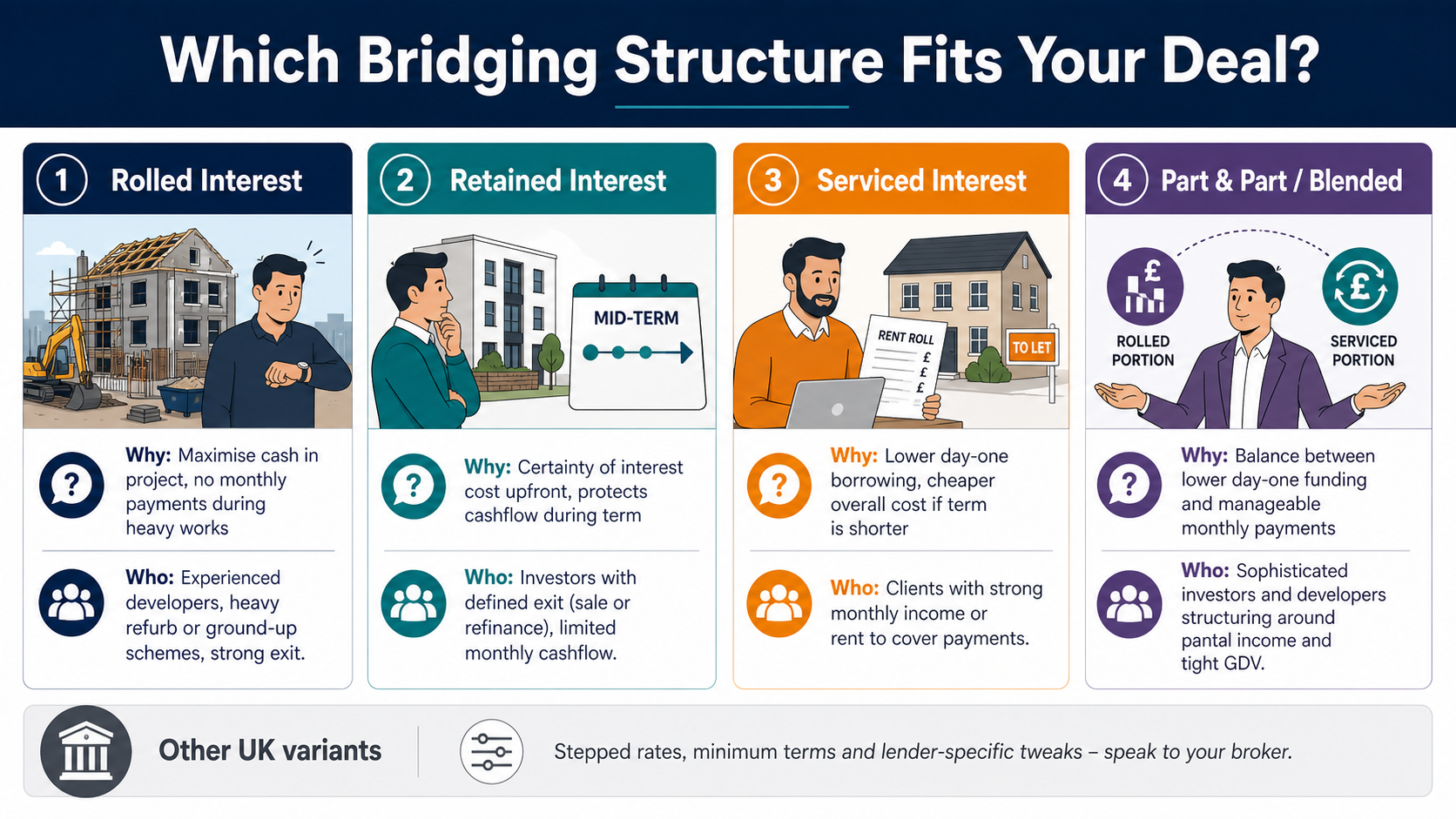
We provide a single point of contact for structuring, negotiating and executing the facility and its hedge together. Get in touch through our commercial mortgages page to discuss your next funding requirement.
This article is general information, not a substitute for advice from a qualified financial advisor. Consult a qualified financial professional about your own circumstances before acting on anything here.

FAQ
What does it mean to cap loans?
Capping a loan means buying an interest rate cap, a derivative that pays the borrower whenever the reference rate rises above an agreed strike. It protects against rising rates while leaving the borrower free to benefit if rates fall, in exchange for an upfront premium.
What does “cap and collar” mean?
A cap and collar refers to the collar structure itself, combining a purchased cap with a sold floor so the borrower’s effective rate stays within an upper and lower band. HMRC’s guidance treats this netting of premiums as the defining feature that distinguishes a collar from a standalone cap.
What is a cap loan?
A cap loan is a floating-rate loan hedged with an interest rate cap, so the borrower’s maximum interest cost is fixed at the cap strike while the rate can still fall freely below it. It carries an upfront premium, unlike a collar, which typically reduces or eliminates that cost.
What does cap mean in banking?
In lending, a cap is the maximum interest rate a borrower will pay on a floating-rate facility, achieved through a cap derivative layered on top of the underlying loan. It is distinct from a fixed rate, since the borrower still pays the floating rate whenever it sits below the cap strike.
How do cap and collar loans differ from a swap?
A swap exchanges floating interest for a fixed rate with no upfront premium but typically requires stronger credit or security, while a collar keeps the loan floating within a band and usually costs less to put in place. Swaps may be unavailable to many borrowers for this reason, making caps and collars the practical alternative.
Sources
- CFM13350 - Understanding corporate finance: derivatives: interest rate collars - HMRC
- FSA interest rate hedging products review - FCA archive
- Best practice guide for GBP loans - Bank of England
- Rate Cap, Swap and Collar: A Cheat Sheet to Managing Rate Risk - Derivative Logic
Recommended
Related Topics
Speak to a specialist
Discuss your finance with James directly
Whole-of-market specialist finance — bridging, development, commercial and residential. No call centres, no obligation. James reviews every enquiry personally.
New to specialist finance? How unbiased broker advice works · Deals we have completed
Explore Related Finance