
Published · Updated
recourse vs non recourseAvoid Personal Liability: Recourse vs Non Recourse for UK Borrowers
By James Dawes, CeMAP, Founder, James William & Co Capital

Recourse loans let lenders pursue you personally once the secured asset is sold and a shortfall remains. Non-recourse loans cap the lender’s recovery at that asset alone, whatever the shortfall. The practical difference is your exposure beyond the collateral, but contracts vary enormously, and carve-outs, guarantees and “bad-boy” clauses can quietly convert a non-recourse deal into something closer to full recourse.
TL;DR:
- Non-recourse loans protect against personal liability unless fraud, misrepresentation, or breaches of covenants occur, which can trigger recourse claims despite the initial structure.
- In UK mortgage lending, almost all residential and commercial mortgages are full recourse, with the lender able to pursue the borrower for any shortfall after property sale.
- Project finance and securitisation typically involve non-recourse loans, where the lender’s recovery is limited to project assets and cash flows, not the sponsor’s other holdings.
- Non-recourse invoice finance often relies on trade credit insurance and includes carve-outs, which can nullify the non-recourse protection if issues like disputes or fraud arise.
- Borrowers should carefully assess their debt structure considering collateral volatility, debtor concentration, and insolvency risks, especially with complex offshore or layered financings.
Table of Contents
- What is the difference between recourse and non-recourse debt?
- How does recourse work in mortgages, invoice finance and project finance?
- What remedies can lenders pursue, and what happens in insolvency?
- Why does non-recourse finance cost more and demand tighter terms?
- When should you choose recourse over non-recourse finance?
- A specialist broker’s view on choosing between the two
- How James William & Co Capital structures recourse and non-recourse deals
- Sources
- FAQ
What is the difference between recourse and non-recourse debt?
A recourse loan gives the lender the right to chase you for any shortfall after selling the security. If a loan is secured against a property that sells for less at repossession, the lender can pursue you for the remaining balance through a deficiency claim. A non-recourse loan restricts the lender to the asset itself. Once that’s sold, the debt is settled, regardless of the gap.
Contracts, not statute, create this distinction in the UK. As Practical Law explains, non-recourse and limited-recourse arrangements are typically built through security documentation, personal guarantees (or their deliberate absence), and special purpose vehicles (SPVs) that ring-fence liability to a single project. “Limited recourse” sits between the two extremes: the lender’s claim is capped at defined cash flows or assets rather than the borrower’s full balance sheet.
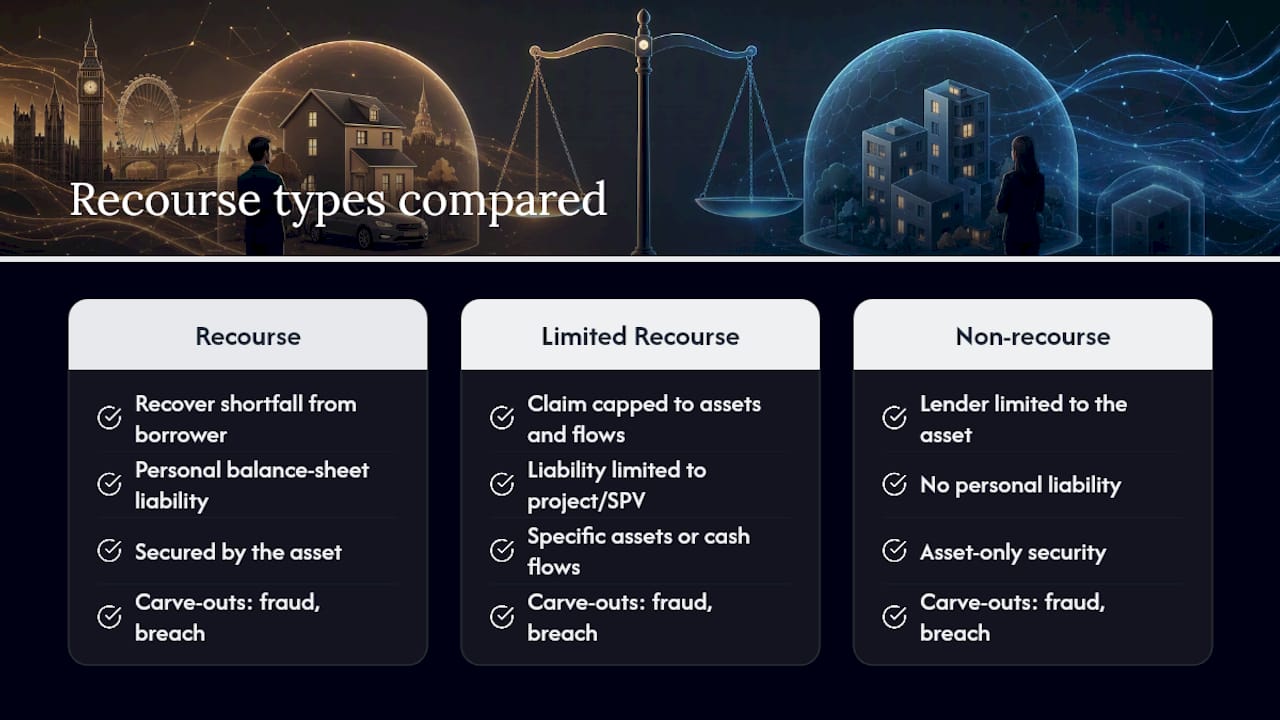
In invoice finance, “without recourse” carries a related meaning: the financier absorbs the loss if a debtor becomes insolvent, rather than clawing the advance back from the seller. But almost every non-recourse structure includes carve-outs. Fraud, misrepresentation and breach of warranty typically switch recourse back on, even in an otherwise non-recourse facility. The LexisNexis glossary calls these “bad-boy” clauses, and they’re standard practice across UK lending, not a red flag on their own.
How does recourse work in mortgages, invoice finance and project finance?
The regime shifts depending on what you’re financing.
Residential and commercial mortgages in the UK are almost always full recourse. If you default and the property sells for less than the outstanding balance, the lender can pursue you for the shortfall through the courts. The exception arises when a borrower structures the purchase through an SPV with no personal guarantee attached, which is increasingly common in commercial property investment and development finance.
Invoice finance splits cleanly into two products. Recourse factoring is cheaper and faster to arrange because the finance provider can reclaim the advance from you if a debtor doesn’t pay. Non-recourse factoring costs more but protects you against debtor insolvency, MarketInvoice’s guide notes, though it excludes disputes, returns and fraud, and usually relies on a trade credit insurer with its own coverage limits.
Project finance and securitisation are where non-recourse lending is genuinely standard. Lenders finance the project itself, wind farms, toll roads, large developments, and their recovery is limited to the project’s assets and cash flows, not the sponsor’s wider balance sheet.
- A defaulting mortgage borrower faces repossession, then a deficiency claim for any shortfall.
- A defaulting non-recourse factoring client is protected if the debtor goes insolvent, but not if the debtor simply disputes the invoice.
- A defaulting SPV in project finance leaves the lender holding the project’s assets, with no claim against the sponsor’s other holdings.
What remedies can lenders pursue, and what happens in insolvency?
Recourse loans give lenders a straightforward path: repossess or foreclose on the asset, sell it, then file a deficiency claim for whatever remains unpaid. That claim ranks as an unsecured debt against you personally, which matters enormously if you’re already juggling multiple facilities, since unsecured creditors queue behind secured ones in any insolvency.
Non-recourse loans limit that recovery route by design, but the limitation isn’t absolute. Fraud, misrepresentation, unauthorised transfers of the secured asset and breaches of specific covenants routinely reopen the lender’s right to pursue you personally, even where the headline structure is non-recourse.
Insolvency law adds a layer of complexity that catches many borrowers off guard. Oxford Law’s 2024 analysis discusses how bankruptcy proceedings can convert claims that looked non-recourse on paper into broader creditor claims once a formal insolvency process begins, a tension rooted mainly in US bankruptcy code but instructive for how easily “non-recourse” can shift under legal pressure. Treat this as a reminder that jurisdiction and insolvency mechanics matter, not as a UK-specific rule; anyone financing cross-border or through complex offshore vehicles should get jurisdiction-specific advice before assuming a non-recourse label holds.
On tax, recourse debt often affects your ability to claim losses or basis differently from non-recourse debt, particularly for property and business structures involving SPVs, so this is worth raising with your accountant at the structuring stage rather than after drawdown.
Why does non-recourse finance cost more and demand tighter terms?
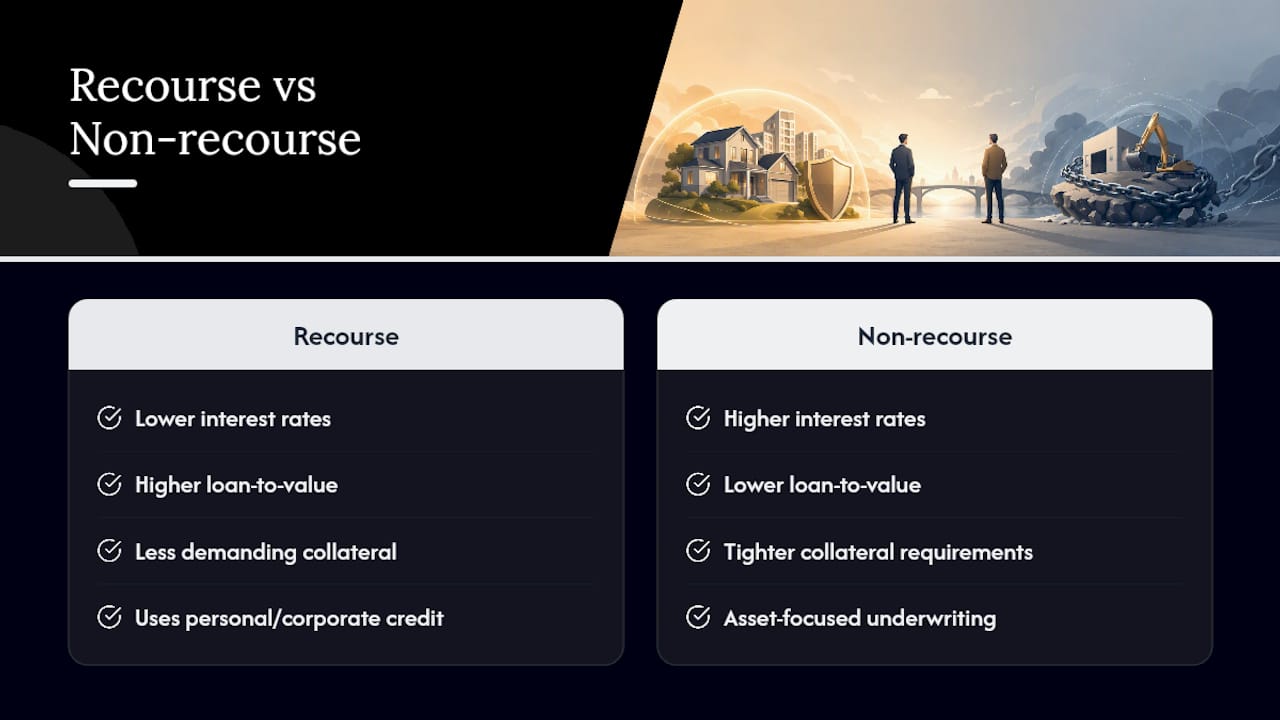
Non-recourse lending shifts risk onto the lender, and pricing reflects that. Expect higher interest rates, lower loan-to-value (LTV) ratios and more demanding collateral requirements than you’d see on an equivalent recourse facility, because the lender has no personal guarantee to fall back on if the numbers go wrong.
Underwriting differs too. A recourse lender can lean partly on your personal or corporate credit history and net worth. A non-recourse lender scrutinises the asset itself far more closely, cash flow projections, debtor concentration, sector volatility, because that asset is the entire security package.
In non-recourse invoice finance, a trade credit insurer usually sits behind the facility, and their coverage limits set the real ceiling on your protection. Before comparing quotes, ask each lender for their loan-to-cost (LTC) versus loan-to-value calculation methodology; the gap between the two often explains why one non-recourse quote comes in far more expensive than another.
When should you choose recourse over non-recourse finance?
Run through this before signing anything:
- Assess your capital buffer. Recourse debt makes sense if you have reserves to absorb a shortfall claim; non-recourse suits thinner balance sheets that can’t stomach personal exposure.
- Check debtor concentration. If your invoice book relies on two or three large customers, non-recourse factoring’s insurer limits may leave gaps exactly where you’re most exposed.
- Weigh collateral volatility. Illiquid or specialist assets (agricultural land, niche commercial property) often carry stricter non-recourse terms because resale value is uncertain.
- Ask the lender directly: what triggers the bad-boy carve-outs, what’s the exact scope of any personal guarantee, and how is “default” defined in the facility agreement.
- Get the qualifying bad-debt definition in writing before assuming non-recourse cover applies to a given customer or scenario.
Pro Tip: Request a draft approval schedule from any non-recourse invoice finance provider before signing, it shows exactly which debtors are covered and at what limit, so there are no surprises when a customer actually goes under.
If your structure involves multiple SPVs, offshore vehicles or a layered debt stack, that’s the point to bring in specialist advice rather than relying on standard broker guidance.
A specialist broker’s view on choosing between the two
Most borrowers only discover which regime they’ve actually signed up to when something goes wrong, and by then the carve-outs are already binding. Standard high street lending rarely needs this level of scrutiny. But once you’re layering mezzanine debt, JV equity or offshore structures across a development, the wording in each facility agreement starts to matter as much as the headline rate. That’s precisely where a structured finance broker earns its fee, reading the small print before you’re committed, not after.
— James William Dawes
How James William & Co Capital structures recourse and non-recourse deals
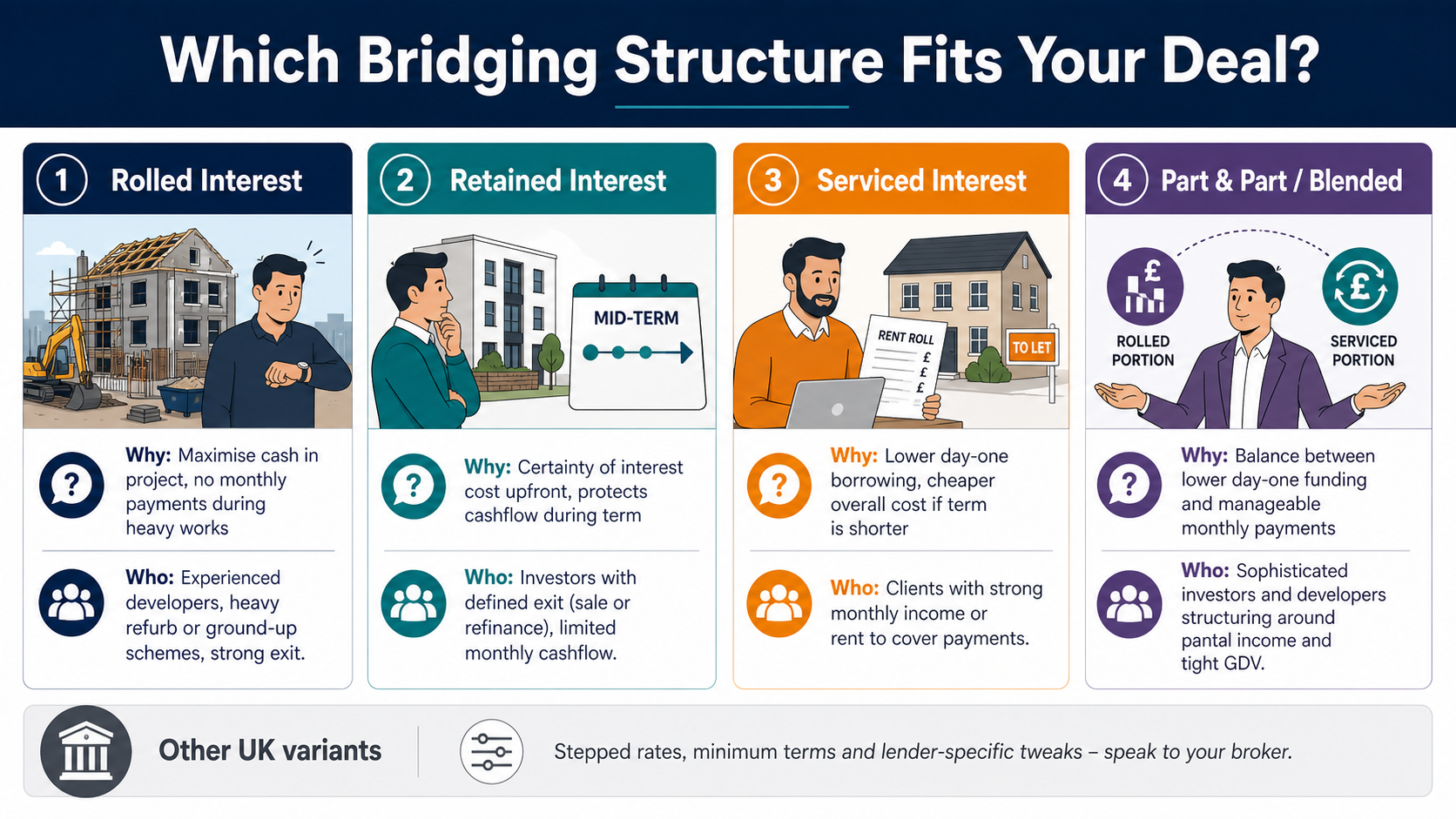
A specialist broker arranges bridging finance, development finance, mezzanine debt and commercial mortgages across the recourse spectrum, often blending SPV structures with limited guarantees to keep personal exposure proportionate to the deal.
If you’re weighing a full recourse commercial mortgage against a limited-recourse SPV structure for your next acquisition, the calculation isn’t just about rate, it’s about what happens if the deal underperforms. James William & Co Capital works as your single point of contact across lenders, family offices and private credit funds, structuring the debt stack so the carve-outs work in your favour rather than against you. For developers weighing bridging finance against longer-term structuring, that upfront structuring conversation often saves far more than it costs. Get in touch through the specialist property finance team to talk through your next transaction before you sign anything.
This article is general information, not a substitute for advice from a qualified financial advisor. Consult a qualified financial professional about your own circumstances before acting on anything here.
Sources
- Limited recourse and non-recourse financing - Practical Law
- Non-recourse loan meaning in UK Law - Glossary - LexisNexis UK
- Recourse vs Non-Recourse Invoice Finance UK 2026 Explained
- The legal anomaly of non-recourse financing
FAQ
What are examples of recourse debt?
Standard residential and commercial mortgages, most personal loans and recourse invoice factoring are all recourse: the lender can pursue you personally for any shortfall after selling the security.
What does non-recourse actually mean?
It means the lender’s recovery is limited to the specified collateral or project assets, with no claim against your other personal or business assets, though fraud and misrepresentation carve-outs almost always still apply.
Is accounts payable recourse or non-recourse?
Accounts payable itself isn’t a loan structure, but invoice finance against your receivables can be arranged either way, with recourse factoring cheaper and faster, and non-recourse factoring costing more for insolvency protection.
What does “without recourse” mean on an invoice?
It signals that the financier bears the loss if the debtor becomes insolvent, rather than reclaiming the advance from the business that sold the invoice, though disputes and fraud are typically excluded from that protection.
Recommended
Related Topics
Speak to a specialist
Discuss your finance with James directly
Whole-of-market specialist finance — bridging, development, commercial and residential. No call centres, no obligation. James reviews every enquiry personally.
New to specialist finance? How unbiased broker advice works · Deals we have completed
Explore Related Finance