
Published · Updated
why use non-bank lendersWhy use non-bank lenders for UK property finance
By James Dawes, CeMAP, Founder, James William & Co Capital

TL;DR:
- Non-bank lenders now finance 41% of the UK commercial real estate loans, reflecting a lasting market shift. They offer more flexibility, higher loan-to-value ratios, and faster decisions compared to traditional banks. Successful borrowers focus on transparent planning, strong exit strategies, and honest communication with these lenders.
Non-bank lenders are defined as financial institutions that provide loans and credit facilities outside the traditional regulated banking system, including private credit funds, family offices, and specialist finance houses. They now account for 41% of outstanding UK commercial real estate loans, with private debt funds holding 22% of that share. That figure is not a temporary blip. It reflects a structural shift in how UK property developers, investors, and business owners fund complex projects. Understanding why use non-bank lenders comes down to three things: speed, flexibility, and a willingness to back deals that high street banks will not touch.
Why use non-bank lenders instead of traditional banks?
Flexibility is the defining advantage of non-bank lending. 92% of UK brokers identify flexibility as the top benefit, with faster execution cited by 74% and willingness to take on complex risks by 58%. Those numbers reflect real transactional experience, not marketing claims.

Non-bank lenders also offer higher loan-to-value ratios than high street banks. Typically, they lend 5–10% more on LTV for commercial investment assets. For a developer funding a £5 million mixed-use scheme, that additional headroom can be the difference between a viable capital stack and a funding gap.
Speed of execution matters enormously on time-sensitive acquisitions. A high street bank credit committee may take weeks to reach a decision. Non-bank lenders, particularly those operating through relationship-based models, can issue credit-backed terms in days. That pace is not accidental. It reflects a fundamentally different decision-making structure.
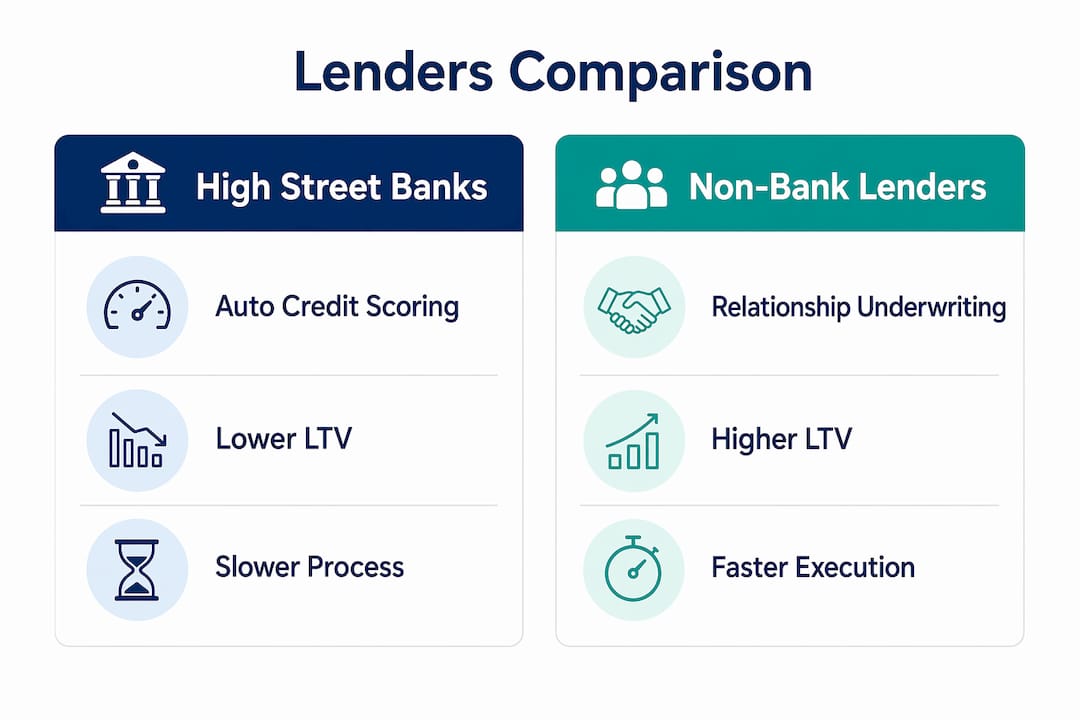
| Factor | High street banks | Non-bank lenders |
|---|---|---|
| Underwriting model | Automated credit scoring | Relationship and commercial story |
| Loan-to-value | Standard market LTV | Typically 5–10% higher |
| Decision speed | Weeks to months | Days to weeks |
| Appetite for complexity | Low | High |
| Loan term range | Varies | 5–25 years |
| Pricing | Base rate plus margin | 1–4% above mainstream rates |
Pro Tip: Never select a lender based on headline rate alone. A lender offering a lower rate but rigid covenants on a planning-led development will cost you more in delays and restructuring fees than a slightly higher-priced lender who understands your project.
How do non-bank lenders assess loans differently?
Non-bank lenders replace automated credit scoring with relationship-based underwriting that focuses on the commercial viability of a project and the borrower’s track record. Decision-makers engage early and assess the full picture rather than disqualifying applicants on rigid metrics. That approach opens the door for developers and investors whose projects do not fit a standard template.
The exit strategy is the most critical document in any non-bank lending application. Lenders require transparent, stress-tested repayment plans that show clearly how the loan will be repaid, whether through refinance, asset sale, or income generation. A weak or vague exit strategy is the fastest way to lose lender confidence.
Borrower transparency also shapes lender appetite significantly. Non-bank lenders favour borrowers who communicate proactively about project challenges. A planning delay disclosed early, with a proposed solution, is manageable. The same delay discovered via a third-party report is not. Early transparency about issues like contractor problems or planning hold-ups consistently produces better outcomes.
This model suits projects with layered capital structures, mezzanine debt, or offshore holding vehicles. Banks cannot process that complexity efficiently. Non-bank lenders, particularly those working alongside specialist brokers like James William & Co Capital, are built for it.
Pro Tip: Before approaching any lender, prepare a one-page commercial summary of your project: total cost, GDV, exit route, and your track record on comparable schemes. Lenders who operate on relationship underwriting will form an opinion within minutes of reading it.
What types of projects benefit most from non-bank lending?
Non-bank lenders are particularly suited to complex borrower structures, heavy refurbishments, planning-led developments, and time-sensitive acquisitions. The following project types consistently benefit from private and specialist lending:
-
Ground-up residential and mixed-use developments. Mainstream banks rarely fund schemes at pre-planning or early planning stage. Non-bank lenders assess the project’s commercial story and back developers with a credible track record, even where planning consent is conditional.
-
Heavy refurbishments and permitted development conversions. Office-to-residential conversions under permitted development rights often involve structural works that exceed standard mortgage thresholds. Non-bank lenders underwrite these on a case-by-case basis, assessing the end value and exit rather than the current condition.
-
Bridging finance for fast acquisitions. Auction purchases and off-market deals require funds within 28 days. Arranging bridging finance through a specialist lender is the standard route for developers who cannot wait for bank credit committees.
-
SME scale-up finance. Business owners seeking growth capital against commercial property or trading assets frequently find that high street banks apply residential-style affordability tests to commercial scenarios. Non-bank lenders assess the business’s cash generation and asset base instead.
-
Transactions rejected or constrained by mainstream banks. Non-bank lenders complement traditional banks by accommodating risks that mainstream lenders avoid. A deal declined by a high street bank is not necessarily a bad deal. It may simply require a lender with a different risk appetite.
The 68% of property finance brokers who now source more than half their client deals from non-bank lenders are not doing so by accident. They are responding to where the market’s genuine appetite for complex transactions sits.
Pro Tip: If your project involves multiple funding layers, such as senior debt, mezzanine, and equity, work with a broker who can structure the full debt stack rather than approaching each lender separately. Fragmented approaches produce fragmented terms.
What are the risks of using non-bank lenders?
Higher pricing is the most direct risk. Non-bank lenders typically price 1–4% above mainstream bank rates, and 67% of brokers identify this as a primary concern. That premium reflects the additional risk appetite and flexibility these lenders provide. It is a cost worth paying when the alternative is a deal that does not proceed at all.
Liquidity risk is the second concern. Non-bank lenders draw capital from private credit funds and family offices rather than retail deposits. In stressed market conditions, some lenders may face capital constraints that affect their ability to draw down tranches on schedule. Selecting lenders with established track records and diversified funding lines reduces this risk materially.
The following considerations apply when assessing any non-bank lender:
- Exit strategy robustness. Your repayment plan must be stress-tested against realistic downside scenarios, not just base-case projections.
- Covenant alignment. Bespoke covenant packages should reflect the actual project timeline, not a generic template. Misaligned covenants create technical defaults that damage lender relationships.
- Enforcement risk. Understand the lender’s enforcement history. Some specialist lenders move quickly to enforce security on default. Others prefer to work through challenges collaboratively.
- Broker expertise. A specialist broker who knows the lender’s credit appetite and internal processes adds genuine value. They reduce the risk of presenting a deal to the wrong lender at the wrong time.
The structural shift toward non-bank lending is driven by bank retrenchment from complex lending. That shift rewards disciplined borrowers who prepare thoroughly and communicate clearly. It penalises those who treat non-bank lenders as a last resort rather than a deliberate choice.
You can explore the full range of UK property funding sources to understand where non-bank lending fits within a broader capital strategy. For developers at the planning stage, property development funding tips provide practical guidance on structuring finance before you approach any lender.
For projects that need an alternative finance provider with direct experience in deals rejected by mainstream banks, Prosper Home Loans operates in this space and is worth considering alongside specialist broker routes.
Key takeaways
Non-bank lenders are the primary financing route for complex UK property and business projects, offering flexibility, higher LTVs, and relationship-based underwriting that high street banks cannot match.
| Point | Details |
|---|---|
| Market position | Non-bank lenders hold 41% of UK commercial real estate loans, a structural shift not a trend. |
| Top advantage | Flexibility is cited by 92% of brokers as the defining benefit of non-bank lending. |
| Underwriting difference | Lenders assess commercial viability and exit strategy, not rigid credit scores. |
| Key risk | Pricing runs 1–4% above mainstream rates; select lenders whose appetite matches your project. |
| Best practice | Transparent borrower communication and a stress-tested exit strategy are non-negotiable. |
The non-bank market has grown up. Borrowers need to as well.
I have spent years watching developers treat non-bank lenders as a fallback when the bank says no. That framing is now outdated and, frankly, costly. The most sophisticated developers I work with approach non-bank lenders first, not because banks are unavailable, but because the right private lender can structure a deal that a bank simply cannot.
The relationship-based underwriting model is genuinely different. When a lender’s credit director sits across from you and asks about your exit, they are not running a checklist. They are forming a view on whether you are the kind of borrower they want to back through a planning delay or a contractor dispute. That judgement call is where deals are won or lost.
What I have seen consistently is that borrowers who invest time in their exit strategy and communicate openly with lenders outperform those who present polished decks but hide problems. Non-bank lenders have seen every version of a deal going wrong. They do not expect perfection. They expect honesty and a credible plan.
The structural shift in this market is real. Banks have retreated from complexity, and private credit has filled that space with discipline and genuine underwriting expertise. The developers and investors who understand this are accessing better terms, faster execution, and lenders who are genuinely invested in project success. Those who still treat non-bank lending as a last resort are leaving both capital and opportunity on the table.
— James William Dawes
How James William & Co Capital structures complex property finance
James William & Co Capital works with UK property developers, investors, and business owners who need finance that goes beyond what a high street bank can offer.
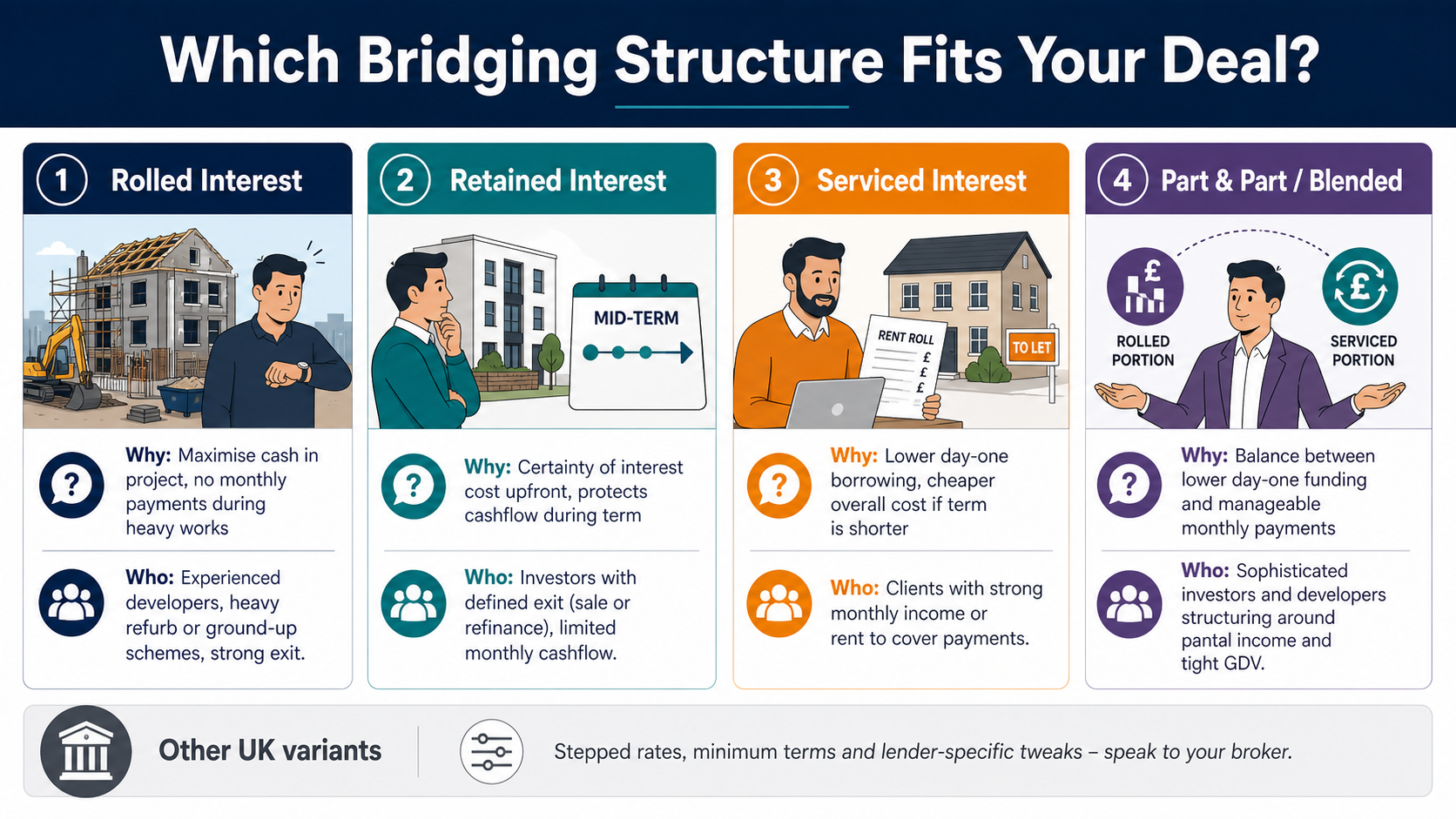
The firm arranges specialist property finance across bridging, development finance, commercial mortgages, mezzanine debt, and JV equity, often within multi-layered capital structures involving offshore vehicles and bespoke covenant packages. Working through a network of private credit funds and family offices, James William & Co Capital delivers tailored solutions at speed. Clients receive a single point of contact for end-to-end structuring, negotiation, and execution. If your project requires a lender who understands complexity, visit James William & Co Capital to discuss your requirements directly.
FAQ
What is a non-bank lender in the UK?
A non-bank lender is a financial institution that provides loans outside the traditional regulated banking system, including private credit funds, family offices, and specialist finance houses. They now hold 41% of outstanding UK commercial real estate loans.
Are non-bank lenders reliable for property finance?
Non-bank lenders are reliable when selected carefully based on their funding track record, lender appetite, and enforcement history. The majority of UK property finance brokers now source more than half their deals from non-bank lenders, reflecting widespread confidence in the sector.
How do non-bank lenders differ from banks in underwriting?
Non-bank lenders use relationship-based underwriting focused on commercial viability, borrower track record, and exit strategy rather than automated credit scoring. This approach suits complex projects that fall outside standard bank criteria.
What are the main disadvantages of non-bank lenders?
The primary disadvantages are higher pricing, typically 1–4% above mainstream bank rates, and potential liquidity risk if the lender’s capital base is constrained. Both risks are manageable with careful lender selection and a well-structured exit strategy.
When should a developer choose private lenders over banks?
Developers should choose private lenders for ground-up developments, heavy refurbishments, fast acquisitions, and any transaction involving complex ownership structures or planning risk. These are scenarios where bank appetite is limited and non-bank flexibility delivers genuine value.
Recommended
Related Topics
Speak to a specialist
Discuss your finance with James directly
Whole-of-market specialist finance — bridging, development, commercial and residential. No call centres, no obligation. James reviews every enquiry personally.
New to specialist finance? How unbiased broker advice works · Deals we have completed
Explore Related Finance