
Published · Updated
bespoke covenant packages processBespoke covenant packages process: a developer's guide
By James Dawes, CeMAP, Founder, James William & Co Capital

TL;DR:
- Bespoke covenant packages tailor terms to project milestones, cash flows, and risk profiles instead of using standard covenants. Developers must provide detailed financial and legal groundwork before negotiations, including cash flow models and due diligence. Proper structuring and ongoing management of these customized covenants reduce the risk of defaults and enhance project finance flexibility.
The bespoke covenant packages process is the method by which property developers and investors create tailored covenant terms that align with complex capital structures and project-specific cash flow realities. Unlike standard Loan Market Association documentation, which applies uniform financial tests across all borrowers, a bespoke package maps covenant obligations directly to project milestones, phased drawdowns, and the risk profile of a specific development. Private credit lenders now routinely offer custom covenant packages that include covenant-lite mechanics and earn-out provisions linked to planning approvals, pre-lets, and construction stages. James William & Co Capital structures these arrangements daily, working across multi-layered debt stacks involving mezzanine debt, bridging finance, and JV equity for UK developers and investors.
What do you need before starting the bespoke covenant packages process?
The bespoke covenant packages process begins with a complete picture of the project’s financial and legal position. Without this foundation, covenant terms cannot be calibrated accurately, and lenders will not engage seriously at credit committee stage.
The most critical input is a detailed cash flow model showing drawdown timing, cost milestones, and projected sales or letting receipts. This model drives every financial covenant test, from loan-to-cost ratios to interest cover calculations. Alongside the cash flow, developers must map the full capital structure, including senior debt, mezzanine layers, and any equity contributions, so that covenant thresholds reflect the actual leverage position rather than a generic benchmark.
Legal prerequisites are equally demanding. Facility agreements in property development require legal mortgage charges, debentures, guarantees, and share charges to secure the loan. Title due diligence, planning status confirmation, and regulatory compliance checks under the Building Safety Act 2022 must all be resolved before covenant drafting begins. As of 2026, ongoing regulatory compliance covenants related to building safety and residential letting are standard inclusions in UK facility agreements. Lenders treat any gap in compliance as a reason to tighten covenant terms or decline altogether.
The table below summarises the prerequisite data and the stakeholder responsible for each input.
| Prerequisite | Stakeholder responsible |
|---|---|
| Detailed cash flow and drawdown schedule | Developer’s quantity surveyor and finance director |
| Capital structure summary | Debt adviser or James William & Co Capital |
| Title and planning due diligence | Developer’s solicitor |
| Building safety and regulatory compliance | Project manager and legal adviser |
| Lender credit requirements and term sheet | Lender’s credit team |
Pro Tip: Prepare a single-page capital structure summary before approaching any lender. It shortens credit committee review time and signals that the borrower understands their own deal.
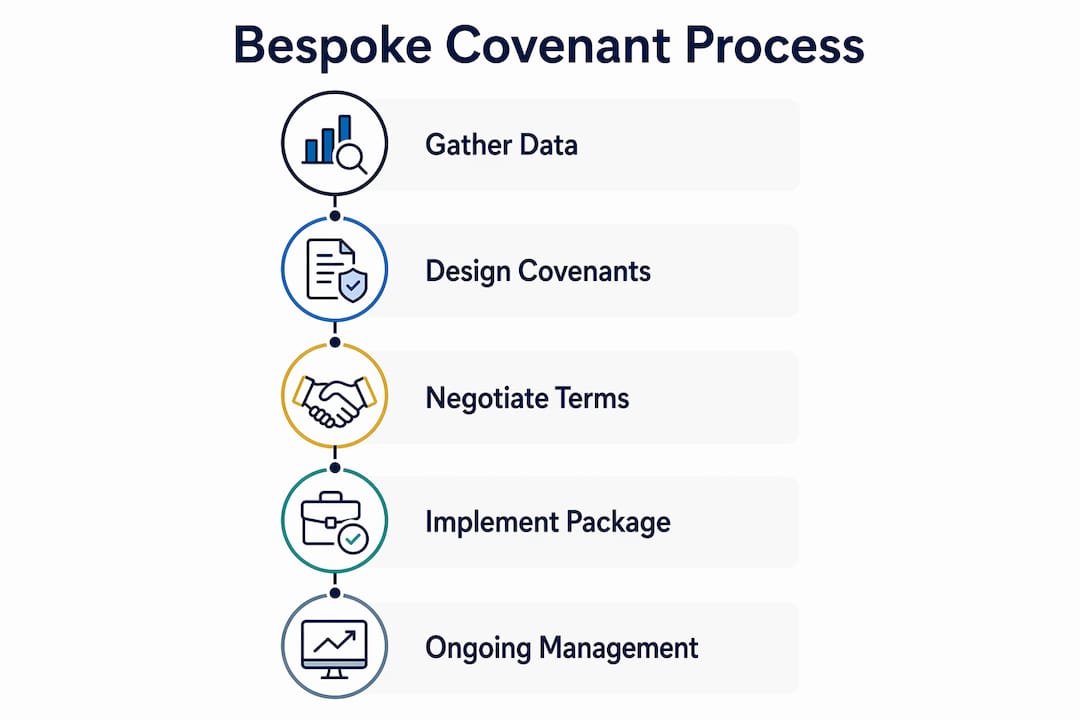
How to structure tailored covenant solutions around project stages
Bespoke covenant design works by anchoring each obligation to a specific project event rather than a calendar date. This is the core difference from standard bank covenants, which test financial ratios on fixed quarterly or annual reporting dates regardless of where the project stands.

Phase-linked drawdown conditions require a certified milestone before the lender releases the next funding tranche. Typical triggers include receipt of planning permission, achievement of a pre-let threshold, practical completion of a construction phase, and sign-off from the monitoring surveyor. Each trigger point becomes a covenant condition, meaning the borrower must demonstrate compliance before accessing further funds.
Phased reporting requirements suit multi-stage developments by matching reporting obligations to site progress rather than imposing standard monthly reports. A ground-up residential scheme, for example, might require quarterly cost reports during the planning phase, monthly reports once construction starts, and weekly updates in the final six weeks before practical completion. This rhythm reduces administrative burden during slower phases and increases lender visibility when risk is highest.
Cost overrun covenants are now a standard feature of bespoke packages in 2026. Mandatory cost overrun provisions require developers to hold contingency funding of 5–10% of project costs before the lender releases further drawdowns. This addresses construction inflation and labour shortages directly, rather than leaving the lender exposed to a funding gap mid-build.
EBITDA definitions in income-producing asset deals require careful attention. Uncapped EBITDA adjustments for projected synergies and cost savings can overstate borrowing capacity and create leverage covenant breaches later. Developers should negotiate explicit caps on add-backs and agree the definition of “adjusted EBITDA” before signing, not during a waiver request.
The table below compares covenant feature categories and their purposes in a bespoke package.
| Covenant category | Purpose in bespoke package |
|---|---|
| Drawdown conditions | Release funds only upon certified milestone completion |
| Phased reporting | Match information obligations to project rhythm |
| Cost overrun reserve | Protect lender against construction cost inflation |
| EBITDA definition | Set agreed basis for leverage and interest cover tests |
| Regulatory compliance | Confirm building safety and letting law adherence |
Pro Tip: Negotiate the EBITDA definition and any permitted add-backs before the term sheet is signed. Revisiting these after heads of terms are agreed costs time and legal fees.
What are the negotiation strategies for bespoke covenant packages?
Negotiating a tailored covenant solution requires developers to enter discussions with a clear exit strategy already documented. Exit strategy clarity is critical when negotiating bespoke covenant packages with lenders, because credit committees need to see a credible repayment route before approving flexibility on financial tests. Whether the exit is a refinance onto a long-term commercial mortgage or a phased residential sale programme, the covenant package must support that route rather than obstruct it.
The following points cover the most important negotiation priorities for developers working through the covenant package development process.
- Cross-default scope. Cross-default clauses should be restricted to the specific SPV responsible for the project. Applying them across an entire portfolio risks triggering enforcement on unrelated assets if one scheme encounters difficulty.
- Cure periods. Negotiate a minimum 20-business-day cure period for financial covenant breaches before the lender can accelerate. This gives the borrower time to inject equity or restructure without facing immediate enforcement.
- Equity injection rights. Agree the right to cure a loan-to-cost or loan-to-value breach by injecting additional equity rather than triggering a default. Lenders in the private credit market generally accept this if the injection restores the ratio within the cure period.
- Monitoring surveyor scope. Define the monitoring surveyor’s authority precisely. An overly broad mandate can slow drawdown approvals and create friction at critical construction phases.
- Waiver mechanics. Agree the process and cost for requesting a covenant waiver upfront. Some lenders charge arrangement fees for waivers; knowing this in advance allows developers to budget accurately.
Bespoke covenant drafting requires higher upfront legal and monitoring costs compared to standard LMA documents. Developers should budget for specialist legal counsel on both sides, a monitoring surveyor retained by the lender, and ongoing compliance reporting costs throughout the facility term. Understanding the real estate debt market helps developers anticipate where lenders will push hardest on covenant terms.
Pro Tip: Ask the lender to share their standard covenant schedule before instructing your solicitor. Identifying the non-negotiable terms early saves significant legal cost.
How to avoid common pitfalls in covenant package development
The most frequent mistake in bespoke covenant design is over-engineering the package. Developers sometimes negotiate so many project-specific carve-outs and adjustments that the covenant schedule becomes internally inconsistent. When a breach occurs, inconsistent definitions create disputes about whether a default has actually been triggered, which delays resolution and increases legal cost for both parties.
A second common error is failing to stress-test covenants against realistic downside scenarios before signing. A covenant set calibrated to a base-case sales programme will breach quickly if the market softens or a pre-let falls away. Developers should model at least two downside scenarios, including a six-month sales delay and a 10% cost overrun, before agreeing financial ratio thresholds with the lender.
The numbered list below sets out the best practices for managing covenant compliance throughout the facility term.
- Appoint a dedicated covenant compliance officer. On larger schemes, assign one person to track all reporting deadlines, ratio tests, and milestone certifications. Missed reporting dates are technical defaults even when the project is performing well.
- Build a covenant calendar into the project programme. Map every reporting obligation, drawdown condition, and ratio test date against the construction programme from day one.
- Review covenants at each project phase transition. When the project moves from planning to construction, or from construction to sales, reassess whether the existing covenant terms still reflect the risk profile accurately.
- Budget for ongoing legal and monitoring costs. Custom covenant agreements incur professional fees from bespoke drafting and ongoing monitoring. These costs are material on larger schemes and should appear in the project appraisal from the outset.
- Engage the lender early if a breach is likely. Lenders respond far better to early disclosure than to a surprise default notification. Most private credit lenders will negotiate a waiver or amendment if approached before the breach date rather than after.
For developers seeking to optimise real estate funding across multiple schemes, maintaining a consistent covenant management framework across all facilities reduces the risk of a breach on one deal triggering reputational damage with lenders on others. Insights from phased covenant reporting in multi-stage developments confirm that early lender engagement at each phase transition materially reduces the frequency of formal waiver requests.
Key takeaways
The bespoke covenant packages process succeeds when developers align financial tests, reporting obligations, and drawdown conditions precisely with project milestones, capital structure, and a documented exit strategy.
| Point | Details |
|---|---|
| Prepare prerequisites thoroughly | Complete cash flow models, capital structure summaries, and legal due diligence before approaching lenders. |
| Anchor covenants to milestones | Link drawdown conditions and reporting to planning, construction, and pre-let events rather than calendar dates. |
| Negotiate cross-defaults carefully | Restrict cross-default clauses to the project SPV to protect unrelated assets from enforcement. |
| Budget for higher legal costs | Bespoke drafting and ongoing monitoring cost more than standard LMA documents; include these in the project appraisal. |
| Stress-test before signing | Model downside scenarios against proposed covenant thresholds before agreeing final terms with the lender. |
Why bespoke covenants are reshaping UK development finance
The shift towards private credit and alternative lenders in UK property finance has changed the covenant conversation fundamentally. When I started structuring development finance deals, the covenant schedule was largely non-negotiable. Banks presented standard LMA terms, and developers either accepted them or walked away. The idea of negotiating phased reporting rhythms or project-specific EBITDA definitions was not on the table.
What I observe now is a genuine willingness from family offices and private credit funds to design covenant packages from first principles. That is a significant change. It creates real opportunity for developers who prepare properly, but it also creates risk for those who treat bespoke flexibility as a shortcut rather than a responsibility.
The developers who struggle most are those who negotiate generous covenant headroom without building the compliance infrastructure to manage it. A covenant package is only as good as the team monitoring it. I have seen well-structured deals unravel because no one tracked the reporting calendar, and a missed submission date triggered a technical default at the worst possible moment in the construction programme.
My practical advice is this: treat the covenant schedule as a live project document, not a filing cabinet item. Review it at every phase transition, stress-test it against your current programme, and call the lender before a breach date, not after. The lenders worth working with will respect that approach. The ones who do not are probably not the right fit for a complex bespoke deal in the first place.
— James William Dawes
Specialist covenant structuring for UK property developers
James William & Co Capital works with UK property developers and investors to structure, negotiate, and manage bespoke covenant packages across the full capital stack.
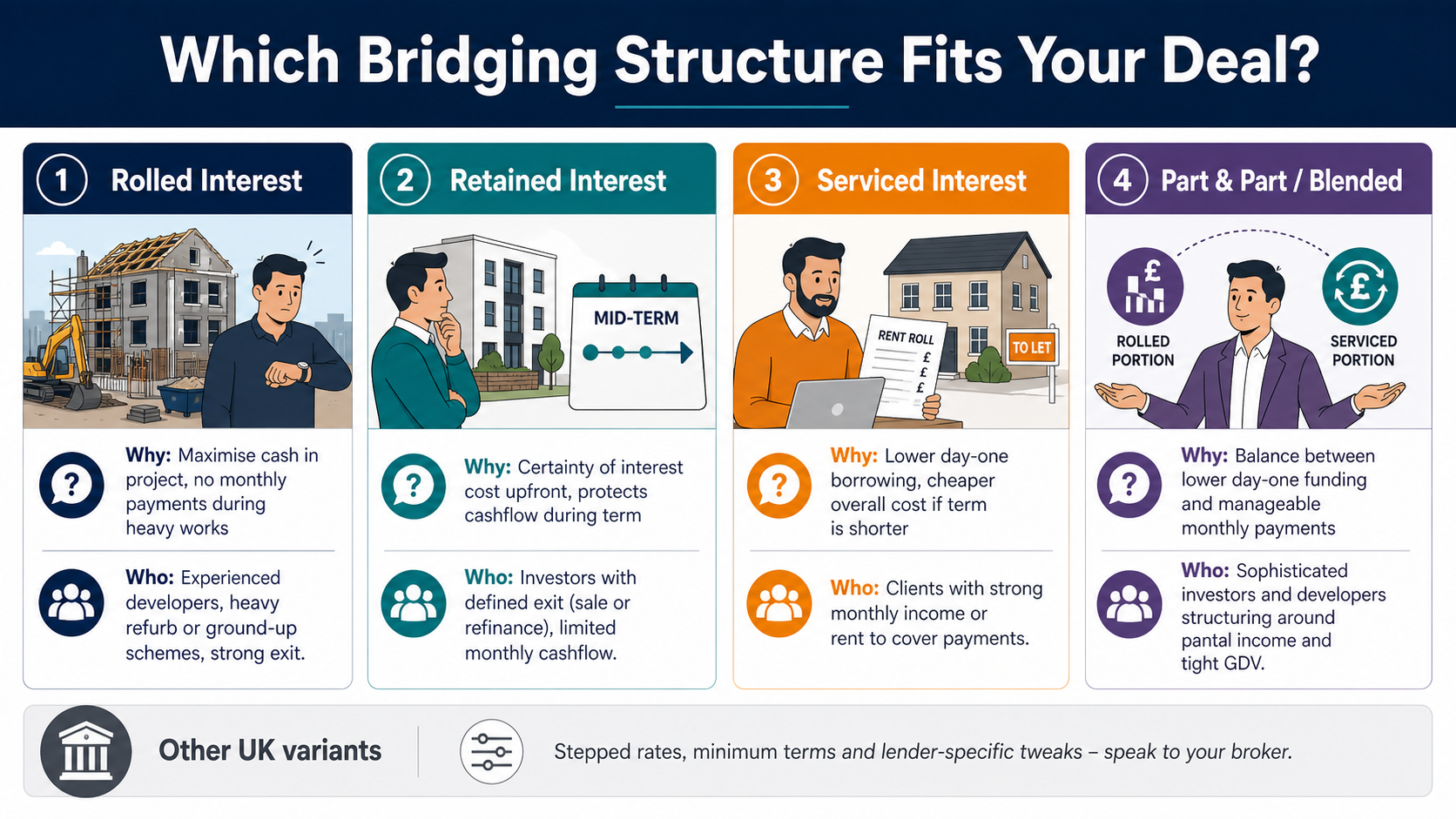
From ground-up residential schemes to large-scale commercial acquisitions, the firm’s capital concierge approach means developers get a single point of contact for every stage of the covenant package development process, from initial term sheet review through to drawdown management and waiver negotiations. James William & Co Capital’s network of private credit funds, family offices, and specialist lenders means tailored covenant solutions are accessible even for complex, multi-layered transactions. Explore specialist property finance to understand how the firm structures covenant packages for high-value UK real estate deals.
FAQ
What is the bespoke covenant packages process?
The bespoke covenant packages process is the structured method of designing, negotiating, and managing covenant terms tailored to a specific development project’s cash flows, milestones, and capital structure. It differs from standard LMA covenants by aligning financial tests and reporting obligations to project events rather than fixed calendar dates.
How do bespoke covenants differ from standard bank covenants?
Standard bank covenants apply uniform financial ratio tests on fixed reporting dates regardless of project stage. Bespoke packages link drawdown conditions, reporting, and ratio tests directly to milestones such as planning approval, pre-let achievement, and construction phase completion.
What are cost overrun covenants in development finance?
Cost overrun covenants require developers to hold contingency funding of 5–10% of project costs before the lender releases further drawdowns. They protect lenders against construction inflation and labour cost increases that could create a funding gap mid-build.
How should cross-default clauses be handled in bespoke packages?
Cross-default clauses should be restricted to the specific SPV responsible for the development rather than applied across an entire portfolio. This prevents a covenant breach on one scheme from triggering enforcement action against unrelated assets held in separate vehicles.
Why do bespoke covenant packages cost more to arrange?
Bespoke covenant agreements require specialist legal drafting on both sides, a lender-appointed monitoring surveyor, and ongoing compliance reporting throughout the facility term. These professional fees are materially higher than the cost of adopting standard LMA documentation.
Recommended
Related Topics
Speak to a specialist
Discuss your finance with James directly
Whole-of-market specialist finance — bridging, development, commercial and residential. No call centres, no obligation. James reviews every enquiry personally.
New to specialist finance? How unbiased broker advice works · Deals we have completed
Explore Related Finance