
Published
compare mortgage lendersCompare Mortgage Lenders in the UK: Banks, Specialists and Brokers
By James Dawes, CeMAP, Founder, James William & Co Capital

The best mortgage lender is the one whose criteria fit your borrower, your property and your timetable, not the one with the lowest headline rate. High street banks and building societies price straightforward residential cases sharply. Investors, developers, limited companies and business owners often need lenders that sit outside that lane, and finding them is what a specialist broker is for. At James William & Co Capital we arrange residential, buy-to-let, commercial, bridging and development finance through lender panels, so you compare real terms for your deal rather than a list of advertised rates.
TL;DR
- UK lenders fall into three groups: high street banks and building societies, challenger and specialist banks, and specialist non-bank lenders. Each sets its own rules on loan size, LTV and borrower type.
- Rates move with Bank Rate and lender repricing. Santander’s intermediary bulletin effective 20 November 2026 lists two-year fixed remortgage rates from 4.92% at 60% LTV with a £999 fee. Treat that as a snapshot, not a quote.
- Fees, early repayment charges, income rules and entity type (individual, limited company, SPV) often change the real cost more than a few basis points of rate.
- For property investors, developers and company borrowers, the lender who accepts your structure matters more than the lowest advertised rate. Our panels cover residential, buy-to-let, commercial, bridging and development lenders.
Table of Contents
- Why a simple league table misleads
- The three lender groups at a glance
- High street banks and building societies
- Challenger and specialist banks
- What rates look like, and what moves them
- What to compare beyond the rate
- Business and SME borrowing
- Property investors and developers
- Homeowners and buyers: where we fit
- Why a broker comparison beats going lender by lender
- Talk to us about your deal
- FAQ
- Sources
Why a simple league table misleads
Published rate tables are built for a narrow borrower: a salaried individual buying or remortgaging a standard home at a stated LTV. LTV, or loan to value, is the loan as a percentage of the property’s value. A table cannot tell you whether a lender will lend to your limited company, accept a property held through an offshore vehicle, or fund a refurbishment before the building is habitable.
The research on commercial lending makes the same point. Mortgage Introducer’s broker directory frames the market as three risk postures: high street banks, challenger or specialist banks, and specialist non-bank lenders. Each sets its own criteria on loan size, LTV, property type and borrower type. Some lenders, InterBay among them, work through intermediaries only, so you cannot apply to them directly.
So the useful comparison has two steps. First, work out which group of lenders will consider your case. Then compare terms inside that group.
The three lender groups at a glance
| Group | Typical examples | What the published figures show | Usually suits |
|---|---|---|---|
| High street banks and building societies | Nationwide, NatWest, Barclays, Lloyds, Santander | Residential two-year fixes from 4.92% at 60% LTV in Santander’s 20 November 2026 bulletin; commercial mortgages from £25,001 at NatWest and Barclays | Standard residential and smaller commercial cases |
| Challenger and specialist banks | Shawbrook, Together, Bank of Ireland, Afin Bank, Loughborough Building Society | Shawbrook £150,000 to £35m, up to 75% LTV, 3 to 25 year terms; Together £50,000 to £5m, up to 70% LTV | Company borrowers, larger loans, self-employed income, non-standard property |
| Specialist non-bank lenders and private credit | Bridging and development funders, family offices, private credit funds | Priced and structured deal by deal | Time-pressured purchases, ground-up development, layered debt |
The loan sizes and LTVs for Shawbrook, Together, NatWest and Barclays come from the Mortgage Introducer directory dated 19 November 2026. Lenders revise these limits, so read them as the shape of the market rather than a fixed offer.
High street banks and building societies
The big names compete hard on standard residential lending and bring brand strengths that matter to some borrowers.
- Nationwide is owned by its members rather than shareholders and offers member-only products.
- NatWest says mortgage customers can overpay by 20% each year, either to cut monthly payments or to clear the mortgage sooner.
- Lloyds offers first-time buyers and home movers a possible discount off the initial rate for Club Lloyds account holders. Halifax mortgage customers now manage accounts through Lloyds, as the Halifax site explains.
- Barclays offers a range of mortgages, with exclusive options for Premier customers.
These perks are real, but they are tied to the bank’s own customer relationship. If your borrowing runs through a company, a portfolio or a development scheme, the question is no longer who has the nicest account bundle. It is who will underwrite the structure.
Challenger and specialist banks
This group is where criteria get more flexible, and where the detail in lender criteria guides starts to matter.
Loughborough Building Society’s intermediary criteria, effective 1 October 2026, show how specific lenders get. They ask for two years’ trading from sole traders, partners and limited company directors. They cap income multiples at 4.5x, rising to 5.5x for high earners with at least £50,000 sole or £75,000 joint income. They allow one-year self-employed applicants at a maximum of 80% LTV where a qualified accountant’s details are provided.
Afin Bank’s criteria guide from March 2026 takes a different line. It accepts a 20% or greater shareholding as self-employed, uses 90% of forecast income for year two, and sets no minimum background income for buy-to-let.
Two lenders, two different answers to the same question: how do you evidence a director’s income? For an accountant or business owner with a variable year, that difference decides the outcome. It is also why we match the borrower to the lender before we discuss rate.
What rates look like, and what moves them
Residential pricing changes often, so read any figure with its date. Rates follow swap markets, which reflect expectations for Bank Rate, and lenders reprice as those expectations shift. The Bank of England changed Bank Rate from 3.75% to 4.00%, as the HSBC UK site notes.
Here is a dated snapshot from lender-published sources:
- Santander’s intermediary bulletin (issue 32, effective 20 November 2026) lists two-year fixed remortgage rates from 4.92% at 60% LTV with a £999 fee, home-mover rates from 4.98% at 60% LTV with a £1,499 fee, and a standard variable rate of 6.75%.
- Bank of Ireland’s intermediary page, correct as at 13 November 2026, shows 75% LTV two-year fixes at 5.17% with a £1,495 fee, or 5.39% with a £495 fee and £300 cashback, with early repayment charges of 3% until 31 January 2028 and 2% until 31 January 2029.
Notice the two Bank of Ireland products. The lower rate carries the higher fee. Which one costs less depends on the loan size and how long you keep the loan, so you should compare them over the deal period, not by the rate alone.
A worked example
Take a £400,000 remortgage at 75% LTV on a two-year fix. Using the Bank of Ireland figures above, the 5.17% product has a £1,495 fee and the 5.39% product has a £495 fee less £300 cashback, a net £195. The fee gap is £1,300. The 0.22 percentage point rate gap on £400,000 is about £880 a year in interest, before any repayment reduces the balance. Over two years the lower rate saves roughly £1,760, so it comes out ahead by around £460 after the extra fee. On a £150,000 loan the rate gap is worth only about £330 a year, and the higher-rate, lower-fee product wins. The right answer shifts with the loan size, which is why a ranking by rate alone fails.

What to compare beyond the rate
A useful comparison covers these points, in roughly this order for professional borrowers:
- Will they lend to your structure? Individual, limited company, LLP, trust or non-UK resident. In the Mortgage Introducer directory, Shawbrook is listed as accepting individuals, LLPs, limited companies, expats and trusts.
- Loan size and LTV. A lender that stops at 70% LTV leaves a larger equity gap than one at 75%, and that gap has to be funded somewhere.
- Total cost over the deal. Fees, early repayment charges and the rate. Borrowers can use the APRC, the annual percentage rate of charge, which folds fees and the full term into one comparable figure. A 0.25 percentage point rate difference adds roughly £25 to £30 a month on a £200,000 loan over 25 years, according to Compare the Market.
- Exit and flexibility. Early repayment charges, overpayment allowances and what happens when the fix ends. Bank of Ireland’s step-down charges above are a typical pattern.
- Speed and certainty. Whether the lender can complete inside your deadline, and whether valuation and legal steps are run in parallel.
- Income evidence. The self-employed and company-director rules above can make or break an application.
Business and SME borrowing
If you need money for an acquisition, equipment or growth, the choice is not only between lenders but between products. Property-backed borrowing, unsecured lending and asset finance behave differently on cost, security and speed. A guide to secured versus unsecured business loans sets out the trade-offs from the borrower’s side. Once you know the shape, we can take the case to the relevant lenders through our business finance and asset finance services. Our business SME lender panel of 20+ covers this ground.
One of our case studies shows the principle: £600k released against a London second home to fund a business acquisition. The borrowing came from property the client already held, which is the kind of structure no rate table can show you.

Property investors and developers
For investors and developers, the lender group depends on the stage of the project.
- Buy-to-let purchase or refinance. Specialist and challenger lenders dominate, and criteria on company ownership, rental cover and portfolio size vary. See our buy-to-let lender panel and buy-to-let mortgages.
- Commercial purchase or refinance. The directory shows how wide the spread is, from £25,001 at the high street banks to £35m at a specialist bank. Our commercial lender panel and commercial mortgages page cover the options.
- Short-term purchase or chain break. Bridging lenders price on speed and the exit. We run a bridging panel of 27+ lenders and a bridging comparison across 200+ lenders.
- Ground-up development. Senior debt, mezzanine and joint venture equity are often combined. Our development finance lenders panel runs to 22+, and our guides on how to structure stacked debt and funding sources for UK developers walk through the sequence.
- Offshore vehicles. Lending through an SPV has its own requirements, set out in our guide to offshore SPV mortgages.
Choosing between a bullet loan, where capital is repaid in one go at the end, and an amortising loan, where it is repaid over the term, is part of the same decision. Our note on bullet versus amortising loans explains why we plan the exit first.
Homeowners and buyers: where we fit
If you are buying a home, a first-time buyer or home mover can use our residential lender panel of 15+ and residential mortgages service. Our focus, though, is borrowers whose finance needs structuring. Buyers of older homes may want a damp survey before committing, and a guide to homebuyer damp surveys gives typical costs of £150 to £500.
Why a broker comparison beats going lender by lender
Going to lenders one at a time means learning each one’s criteria by trial, and each decline or rework costs time. Some lenders only take cases through intermediaries, so a direct search never reaches them. A broker with a panel puts your case in front of the lenders whose rules it already fits.
That is the core of how we work. We give you a single point of contact for structuring, negotiation and execution, with access to specialist lenders, family offices and private credit funds beyond the mainstream banks. For a developer working to a completion date, or an investor refinancing a portfolio, the saving is not a quarter of a point on the rate. It is a lender who says yes to the structure, on time.
Our perspective
Most comparison pages rank lenders by headline rate, because that is the one number every lender publishes. Our clients rarely borrow in the way those tables assume. They borrow through companies, against mixed-use property, across several layers of debt, or against a deadline.
In those cases the question we ask first is who will lend to this structure, and on what covenants. Only then do we compare price. A rate that looks sharp on a table means little if the lender will not accept the vehicle, or cannot complete when the vendor needs it.
That is why we built our service around a single point of contact and a wide lender network. We would rather take your case to the right three lenders than send it to thirty.
James William Dawes
Talk to us about your deal
If you are comparing lenders for a purchase, refinance, development or business acquisition, we can take your numbers to the right part of the market. Tell us the structure, the property and the timetable, and we will come back with the lenders that fit. Start with our specialist property finance team or go straight to bridging finance if time is short.
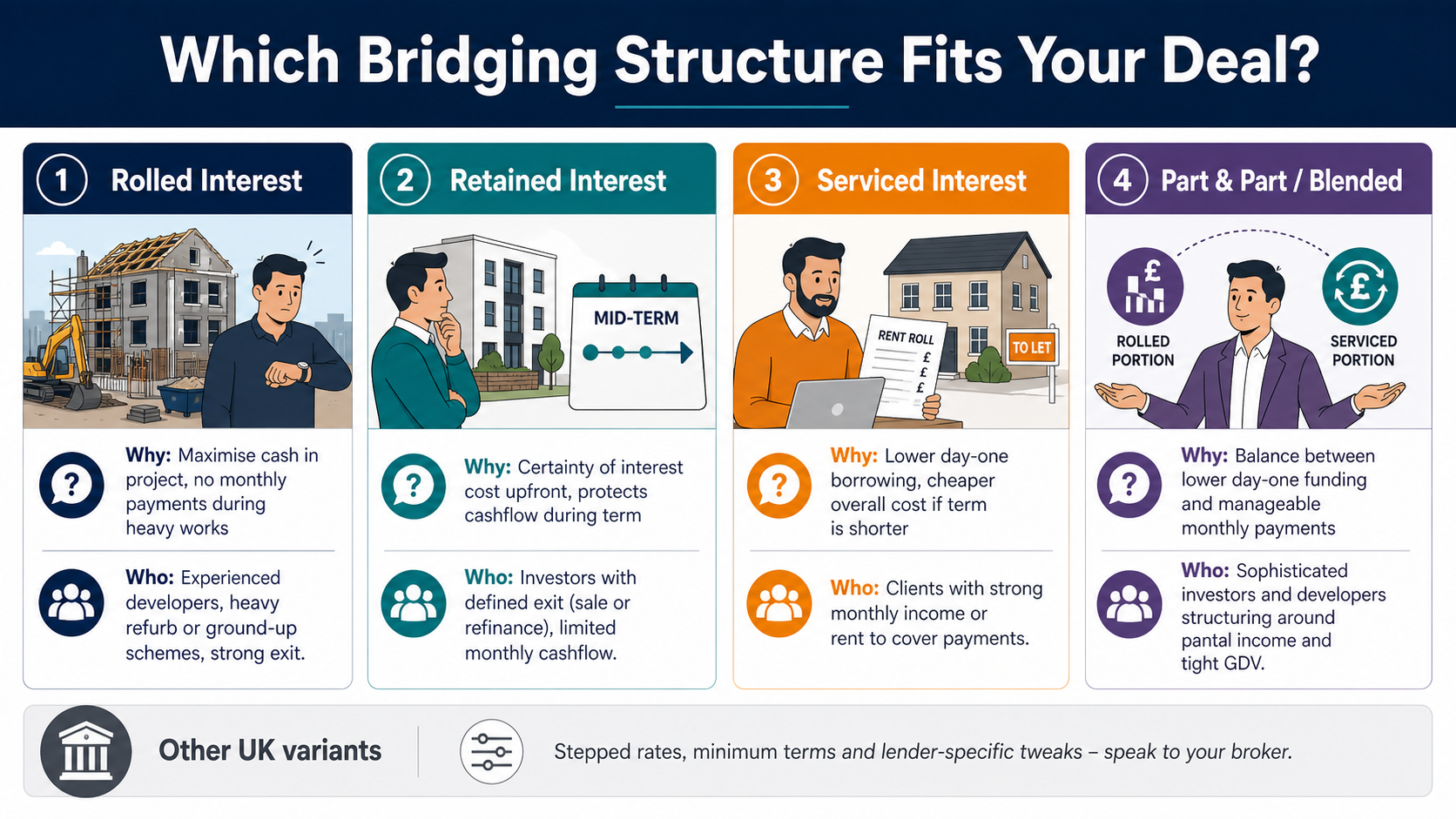
We also work with clients in the South West through our Bristol, Bath and Newquay pages.
FAQ
Who is the best mortgage lender in the UK?
There is no single best lender, because each prices and underwrites different borrowers. Building societies and banks compete hard on standard residential cases, while challenger banks and specialist lenders suit companies, larger loans and non-standard property. We match the borrower to the lender first, then compare price.
Is the lowest rate always the cheapest mortgage?
No. Fees, early repayment charges and the loan size change the total cost. In the Bank of Ireland example above, a 0.22 percentage point lower rate with a higher fee wins on a £400,000 loan but loses on a £150,000 one. Compare the cost over the deal period, using the APRC as a guide.
Why do some lenders not appear on comparison sites?
Some lenders take applications through intermediaries only, so you cannot approach them directly. The Mortgage Introducer directory names InterBay as one. A broker with access to those lenders can place your case with them.
Can a limited company or SPV borrow on a mortgage?
Yes, with lenders that accept that structure. The Mortgage Introducer directory lists Shawbrook as accepting individuals, LLPs, limited companies, expats and trusts. Criteria differ by lender, so the structure should be settled before you apply.
Sources
- Commercial mortgage lenders: a broker’s directory, Mortgage Introducer
- Latest Rates Rate Bulletin, Santander for Intermediaries
- Residential Products, Bank of Ireland for Intermediaries
- Mortgage Lending Criteria for Intermediaries, Loughborough Building Society
- Afin Bank Mortgage Criteria Guide, March 2026
- About Us, Nationwide
- NatWest mortgages
- Club Lloyds Platinum Account, Lloyds Bank
- Barclays personal banking
- Halifax mortgages
- HSBC UK personal banking
- Compare the latest mortgage rates, Compare the Market
- Secured vs Unsecured Loan: Which Is Right for Your UK Business?
- UK Homebuyer Damp Surveys
Recommended
You must keep up your repayments to avoid repossession. We are not a lender. James William & Co Capital Ltd is an Appointed Representative of Flexi Network Ltd, FRN: 1060247. Flexi Network Ltd is authorised and regulated by the Financial Conduct Authority, FRN: 948658. Flexi Network Ltd is an authorised credit broker and not a lender. You can verify both on the Financial Services Register at register.fca.org.uk.
Related Topics
Speak to a specialist
Discuss your finance with James directly
Whole-of-market specialist finance — bridging, development, commercial and residential. No call centres, no obligation. James reviews every enquiry personally.
New to specialist finance? How unbiased broker advice works · Deals we have completed
Explore Related Finance